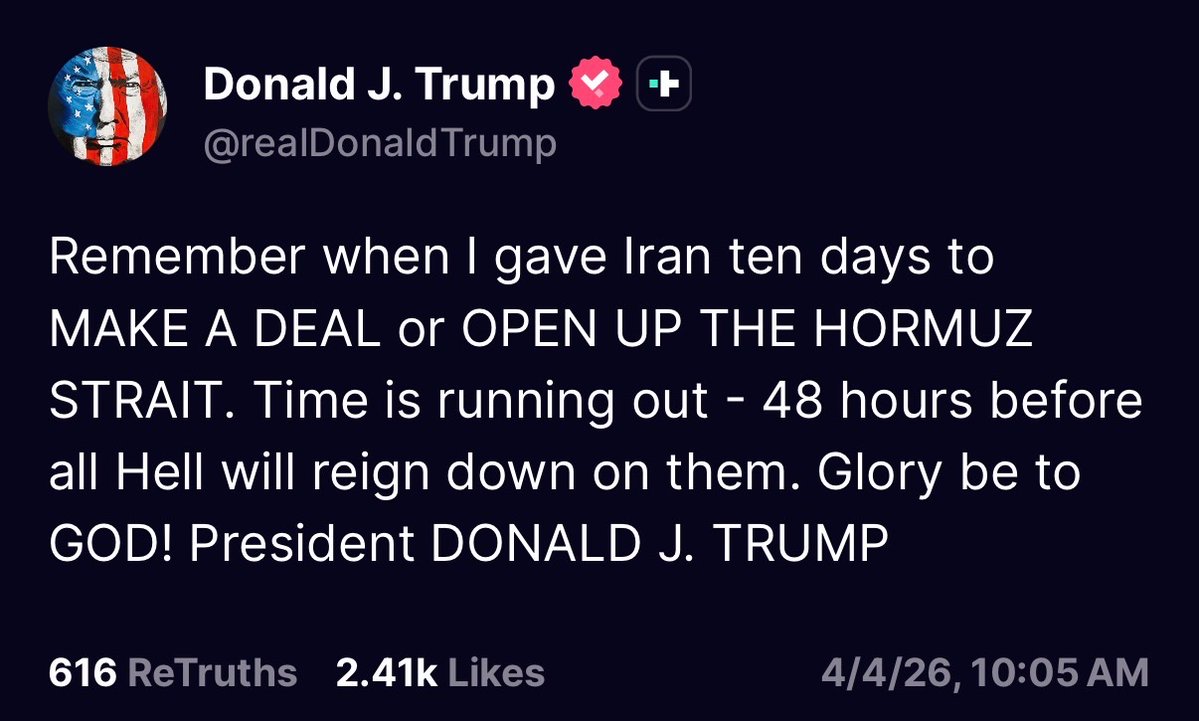
Donald Trump’s 48-Hour Strait of Hormuz Ultimatum Raises Immediate Risk for Global Shipping and Energy Markets
A sudden ultimatum tied to one of the world’s most strategic waterways has sent shockwaves through regional capitals, global shipping circles, and energy markets. President Donald Trump has warned Iran that it has 48 hours to open the Strait of Hormuz or face “severe consequences,” compressing a normally slow diplomatic timeline into a brief window that traders, insurers, and ports now must treat as high-risk territory.
The Strait of Hormuz—where the Persian Gulf narrows and the flow of cargo becomes difficult to reroute—sits at the center of global energy logistics. Roughly one-fifth of the world’s seaborne oil passes through the chokepoint, and natural gas and refined petroleum products also depend on the lanes that thread near Iran’s coastline. When tensions rise, the impact is rarely confined to the region. It spreads into freight rates, insurance premiums, industrial procurement schedules, and the broader psychology of commodity markets.
The Strait of Hormuz: Why a Warning There Matters
The Strait of Hormuz connects the Persian Gulf to the wider Indian Ocean. Its narrowness and proximity to coastal infrastructure mean that any disruption—whether deliberate or accidental—can ripple quickly. Shipping is not simply an economic activity; it is also a time-sensitive system built around predictable routes, predictable clearance procedures, and reliable security conditions.
Historically, maritime chokepoints have repeatedly shown how quickly risk can translate into cost. During periods of conflict in the 1980s and 1990s, shipping disruptions and attacks on vessels helped demonstrate that the physical act of moving oil and the financial act of pricing risk are deeply linked. Even when supply ultimately continues, the market often re-prices the probability of interruption. That repricing can occur within hours, not days.
In recent years, geopolitical stress has already pushed maritime risk assessments upward. But an ultimatum framed in compressed time—48 hours—changes the tempo. It suggests that authorities may anticipate immediate developments and that contingency planning is no longer theoretical.
A Compressed Diplomatic Timeline and Its Practical Meaning
Ultimatums are a form of high-visibility diplomacy: they signal resolve, create pressure, and attempt to force decisions before positions harden. Yet in maritime security, timing is everything. Ships do not pause for political theater. Crews follow schedules, commercial contracts require delivery windows, and charterers face penalties for delays.
A 48-hour ultimatum also forces multiple operational decisions at once:
- Shipping operators must determine whether to alter routes, slow speeds, or reroute around higher-risk areas.
- Insurers may adjust hull and war-risk coverage, potentially raising premiums quickly.
- Ports and logistics networks may increase screening and security staffing, affecting throughput.
- Fuel purchasers may revise sourcing plans to account for short-term supply uncertainty.
The economic impact of those changes tends to show up first in derivatives and freight indicators, then in physical supply chains. In the short term, even rumors or heightened alert status can affect pricing because market participants hedge against uncertainty.
Regional Context: Past Tensions and Present Sensitivities
The tension between Iran and the international community has long centered on the country’s nuclear program, regional influence, and the security of maritime routes. The Strait of Hormuz has featured prominently in historical episodes because Iran has capabilities—directly and indirectly—that can influence the security environment in the Persian Gulf.
At the same time, the Gulf region’s neighbors depend heavily on stable access to global shipping. Saudi Arabia, the United Arab Emirates, Oman, and Iraq all have energy export sectors intertwined with the same maritime arteries. That interdependence means that escalations do not automatically benefit the party initiating them; they often impose costs across the entire network of trade.
Elsewhere, the broader Middle East has repeatedly demonstrated how quickly localized disruptions can become macroeconomic issues. Energy-exporting countries can offset some supply risks, but importers and industrial supply chains struggle to respond in real time. Even countries with large storage capacities must eventually replenish, and replenishment depends on tanker movements that can be delayed.
Energy Markets and the Chain Reaction
When the Strait of Hormuz faces heightened risk, global oil markets typically react along several channels:
- Risk premium expansion Buyers price in the probability of interruption. Even without actual supply loss, uncertainty can push futures contracts higher.
- Spot-market repricing Physical cargoes become harder to source at predictable terms. Sellers demand more compensation for risk, and buyers compete for immediate deliveries.
- Refining and freight knock-on effects Refiners rely on predictable inputs. Tanker costs rise with insurance and security measures, increasing the delivered cost of crude and refined products.
- Currency and investment responses Commodity price swings often influence emerging-market funding conditions and capital flows, especially where public finances depend on energy revenues.
Crucially, the market may not require a confirmed disruption to respond strongly. It can respond to expectations, particularly when timeframes tighten. Traders and insurers often treat imminent escalations as catalysts that can occur suddenly.
Shipping, Insurance, and the Cost of Uncertainty
The maritime industry has developed procedures specifically for high-risk routes, but those procedures carry costs. War-risk coverage and security add-ons typically rise when threats become more credible or immediate. For shipping companies, the decision to sail through a tense corridor can become a trade-off between schedule commitments and financial exposure.
For freight rates, the effect can be immediate:
- Chartering rates may rise as demand for alternative routing or delayed delivery increases.
- Container and bulk shipping companies may adjust schedules to avoid correlated risks across routes.
- Ports may become more cautious, raising turnaround times.
These changes matter to manufacturers thousands of miles away. Industrial inputs—metals, chemicals, plastics feedstocks—are often linked to energy pricing. When energy costs rise, transportation and production costs can follow, sometimes with a lag but sometimes quickly, depending on contract structures and inventory levels.
Historical Parallels: How Chokepoints Shape Global Outcomes
The Strait of Hormuz has long been studied as a pressure point in international relations. In the 1980s, maritime confrontation in the Persian Gulf demonstrated that even a limited set of attacks could rapidly raise costs and disrupt schedules. In later decades, the global system adapted through better risk management, improved surveillance, and more flexible commercial contracting. Yet those adaptations did not eliminate the fundamental vulnerability: when a chokepoint faces credible threat, the world’s energy system cannot instantly rewire itself.
Other chokepoints show similar patterns. For instance:
- The Suez Canal has historically influenced oil and trade flows when disruptions occur.
- The Bab el-Mandeb region and the Red Sea can affect global shipping patterns when security conditions deteriorate.
- Malacca and other narrow passages similarly concentrate shipping risk.
Each location differs in geography and risk profiles, but the shared lesson is consistent: chokepoints turn geopolitical events into economic events quickly.
Economic Impact Beyond Oil: Jobs, Supply Chains, and Consumer Prices
Oil is only one part of the story. The economic knock-on effects can include:
- Industrial production costs Higher energy prices raise transportation and operating costs for manufacturers.
- Freight and logistics expense Even if crude supply remains steady, shipping risk costs can increase the price of many goods.
- Inventory and purchasing behavior Firms often build safety inventories when uncertainty spikes, tying up capital and affecting demand patterns for weeks or months.
- Consumer price pressure Prices do not move in lockstep with oil futures. But over time, increased energy and transportation costs can contribute to inflation pressures, especially where consumers rely on fuel-intensive supply chains.
In regions far from the Persian Gulf, the immediate effect may show up in fuel surcharges, transportation contracts, and pricing adjustments by retailers. In the most energy-sensitive economies, volatility can become a persistent challenge, complicating budgeting for households and businesses.
Regional Comparisons: Who Feels the Shock First?
The first people to feel heightened risk are typically those operating directly in or near the shipping lanes: tanker owners, port operators, insurers, and maritime security providers. But the next wave is broad and includes traders and firms that depend on timely delivery.
Regional comparisons often look like this:
- Gulf Cooperation Council economies These countries face direct exposure through both energy exports and the security environment. Their advantage often lies in robust infrastructure and security capacity, but their exposure remains high because the same routes support national export earnings.
- European and Asian importers Importers may not control routes near Hormuz, but they experience the effects via crude pricing, freight costs, and timing. Asian importers, in particular, often depend on large volumes delivered through maritime routes, making their supply chain schedules sensitive to disruptions.
- North America While crude flows to North America may be diversified, energy price volatility still influences domestic markets and downstream industries. Gasoline and other refined product pricing can reflect international energy moves even when physical supply routes vary.
Public Reaction and Corporate Contingency Planning
When an ultimatum involving a major chokepoint is announced, public reaction often appears first in market commentary—investors, analysts, and logistics stakeholders tracking risk in real time. Within companies, contingency planning accelerates quickly. Purchasing teams re-check alternative sourcing options. Risk officers review coverage terms. Operations teams prepare for possible reroutes and delays.
This is not just a financial reaction. It can become a workplace reaction: shipping crews may receive updated instructions; logistics staff may handle expedited documentation; port security teams may change staffing levels.
The next 48 hours, by design, compress these processes. Instead of months of gradual escalation, the industry may have to adjust in days, potentially before full clarity emerges.
What “Opening” Might Mean in Practice
A critical question behind any ultimatum is what “opening” implies operationally. Maritime access can be constrained in several ways: formal restrictions, safety zones, increased inspections, or active interference. Even when authorities do not prevent ships from transiting entirely, they may create friction that increases time and risk.
From a market perspective, the difference between full access and partial access matters. A partial easing might reduce the risk premium, but it may not remove it if uncertainty remains about the severity and duration of threats.
Because shipping schedules are tightly managed, even small changes in transit time can have large commercial implications. If vessels face delays or additional security procedures, charterers and insurers reassess cost projections immediately.
The Bottom Line: High Stakes in a Narrow Window
The Strait of Hormuz sits at the intersection of energy production, global shipping, and international security. A 48-hour ultimatum—by compressing timelines—raises the probability of rapid developments and forces immediate planning across the maritime system.
The economic impact is likely to unfold in stages. In the earliest phase, markets may price a higher risk premium and adjust expectations for future supply. In the next phase, insurers, freight rates, and shipping schedules may change. In the following phase, downstream effects could reach consumers through energy and transportation-linked costs.
Whether the ultimatum leads to de-escalation, increased restrictions, or a direct confrontation remains uncertain. But the stakes of that uncertainty are clear: the world’s ability to move energy through a critical chokepoint depends on predictable security conditions, and predictability is suddenly under pressure.