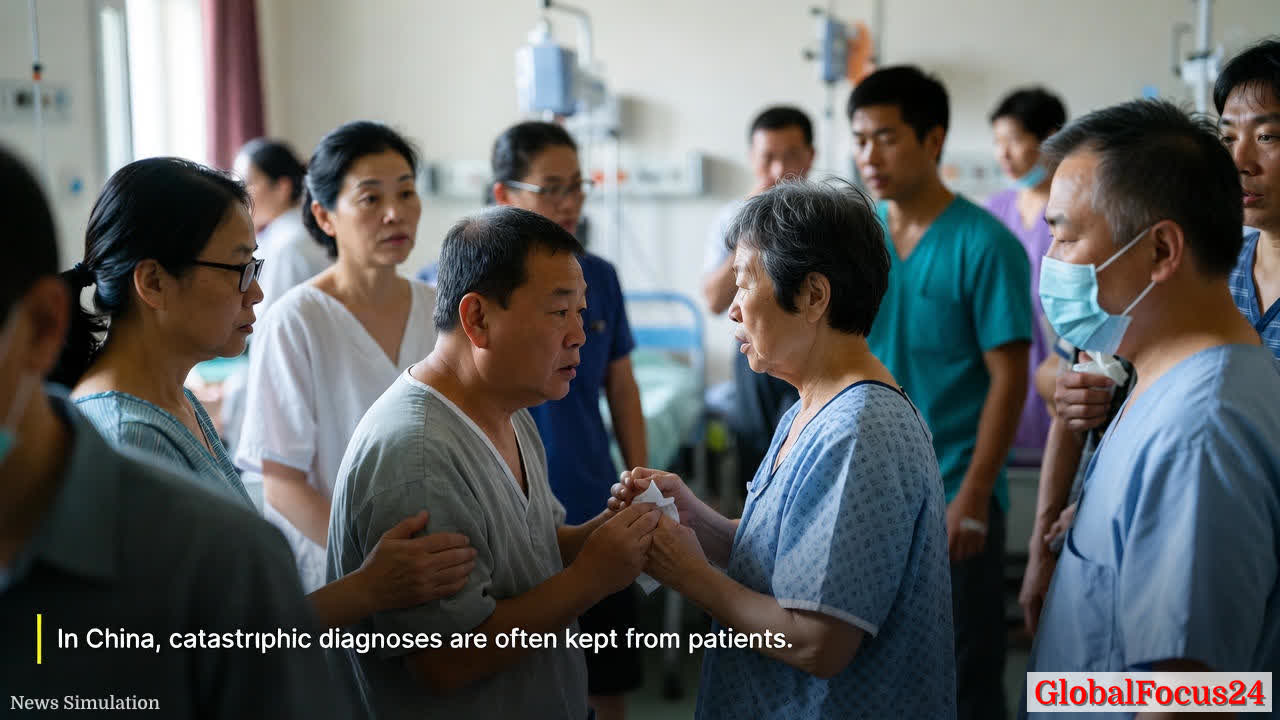
In China, Families Often Shield Patients from Harsh Diagnoses: A Cultural Practice Under Scrutiny
A Longstanding Tradition Rooted in Compassion
In hospitals across China, it is not uncommon for doctors to deliver devastating medical news not to the patient, but to their family members. The family then decides whether and how much of that information to pass on. This deeply rooted cultural practice—designed to protect patients from emotional distress—stands in sharp contrast to the principles of direct disclosure and patient autonomy that dominate Western medical ethics.
Historically, this pattern stems from the Confucian emphasis on filial piety—the duty of children to care for and safeguard their parents. Under this framework, truths that could cause despair or loss of hope are often softened or concealed. The family’s priority is preserving harmony and emotional stability, even if that means withholding a grim reality.
For decades, Chinese families have viewed this as an act of love. When doctors confirm a terminal illness such as advanced-stage cancer, relatives often plead with medical staff: “Please don’t tell my father.” In such situations, the patient might be told they are suffering from a chronic but treatable condition, allowing them to continue daily life with optimism rather than fear.
Ethical Tensions and the Modern Medical Framework
Modern medicine places increasing emphasis on informed consent—the principle that patients should understand their diagnosis, treatment options, and prognosis in order to make their own decisions. In China, however, the application of this principle can be complex. Families often assume legal and moral authority to make medical decisions on behalf of a relative, particularly when that relative is elderly or seriously ill.
Chinese law does require that patients be informed of their medical condition, but enforcement is inconsistent, and cultural expectations often outweigh written policies. Doctors, caught between professional ethics and family demands, navigate an ethical grey zone. Many choose to comply with family requests to maintain trust and avoid potential conflict.
This dynamic has led to cases of delayed treatment, miscommunication, and legal disputes. In one widely discussed instance, a patient who discovered she had terminal cancer months after diagnosis sued the hospital for withholding the truth. The case attracted broad public attention, sparking renewed conversation about the need for transparency and patient rights.
The Role of Families in Healthcare Decisions
In Chinese culture, family remains the central pillar of identity and support. Decisions related to health, marriage, and even finance are often made collectively. This communal approach contrasts with the strong individualism seen in much of Western society. Within this framework, illness is considered a family affair rather than a purely personal matter.
Relatives frequently accompany patients to medical appointments, handle hospital paperwork, and approve surgeries. In life-threatening cases, they play an especially pivotal role. When doctors reveal a terminal illness, they typically do so in private consultations with the family first. These conversations determine not only what will be told to the patient, but also how the treatment plan will proceed.
Many families believe that concealing the truth can improve recovery chances or at least ensure emotional comfort. “If she knows, she’ll give up,” is a common sentiment expressed by relatives faced with heartbreaking decisions. Doctors often sympathize with this reasoning, even if it conflicts with medical disclosure ethics.
Changing Attitudes in an Evolving Society
As China modernizes and medical ethics evolve, attitudes toward disclosure are slowly shifting. Younger generations—many of whom have studied or worked abroad—are more likely to advocate for patient autonomy. Internet discussions and social media debates increasingly reflect public awareness of the issue. Terms like “the right to know” and “medical transparency” are gaining traction among middle-class citizens and health professionals alike.
Urban hospitals, especially in major cities such as Beijing, Shanghai, and Guangzhou, are beginning to adopt more transparent communication policies. In contrast, rural regions, where traditions remain deeply embedded, continue to uphold the family-first model.
A growing number of Chinese doctors now favor a balanced approach. They prioritize gentle truth-telling, gradually revealing a serious diagnosis through carefully chosen language while providing emotional support. This method acknowledges both cultural sensitivity and ethical responsibility, aiming to protect patients without denying them agency.
Historical Roots and Philosophical Underpinnings
Traditional Chinese medical ethics have long viewed the emotional state as a crucial component of health. Ancient medical texts emphasize harmony between the mind and body, warning against distress as a cause of physical decline. In this context, revealing a fatal diagnosis could be seen as harmful, not healing.
Confucian thought reinforces this logic through its focus on duty and social harmony. The family, rather than the individual, is viewed as the fundamental moral unit. Protecting a loved one from despair aligns with the Confucian ideal of benevolence (ren)—an obligation to shield others from unnecessary suffering.
Throughout the 20th century, as Western medicine expanded in China, this traditional worldview persisted. Even as hospitals introduced new technologies and evidence-based care, the relational ethics of filial piety continued to shape communication practices. The result is a hybrid model, where modern science coexists with cultural restraint.
Psychological and Emotional Consequences
The practice of withholding diagnoses has complex emotional outcomes. Some patients live their final months unaware of their terminal condition, maintaining hope and peace. Others sense the truth intuitively, leading to confusion and mistrust. Studies in Chinese medical journals show that many patients who are unaware of their diagnosis still display anxiety, suspecting that their families are hiding something.
For relatives, the emotional burden is heavy. Balancing hope, secrecy, and guilt often takes a toll on mental health. Caregivers describe sleepless nights and moral conflict: protecting their loved one’s peace of mind may come at the cost of truth.
Healthcare psychologists in China have called for more training and counseling programs to help families navigate end-of-life communication. Their aim is to bridge cultural compassion with modern psychological care—ensuring that protection does not lead to isolation or misunderstanding.
Comparing Global Practices
Cultural variations in medical disclosure are not unique to China. Across East Asia—particularly in Japan and South Korea—similar practices have existed for decades. In Japan, doctors rarely disclosed cancer diagnoses to patients until the late 20th century, when public outcry and legal reforms prompted change. South Korea followed a comparable path, with gradual adoption of patient-centered rights in the 1990s.
By contrast, Western countries have long emphasized direct communication between doctors and patients. Since the 1960s, medical ethics in the United States and Europe have centered around informed consent, autonomy, and truth-telling. Yet even in these regions, challenges arise. Cultural diversity and individual preferences mean that some families still request discretion in revealing serious illnesses.
These global variations highlight that medical ethics are not universal abstractions but socially grounded frameworks shaped by values, beliefs, and historical experience.
Economic and Institutional Context
China’s healthcare landscape also influences disclosure practices. Overcrowded hospitals, limited doctor-patient time, and heavy administrative demands leave little room for nuanced communication. Many physicians face pressure to shorten consultations and rely on family intermediaries to manage logistics and emotions.
Economic disparities exacerbate the issue. In wealthier urban areas, patients have greater access to private care, counseling, and second opinions. This tends to encourage more open dialogue between patients and healthcare providers. In lower-income regions, where public hospitals dominate and resources are constrained, family mediation remains the norm.
Medical expenses further complicate transparency. Fear of financial ruin can motivate families to withhold information to avoid despair or refusal of costly treatment. With medical debt still a pressing concern for many Chinese households, emotional shielding and financial protection often intertwine.
The Path Toward Greater Transparency
Experts emphasize that reform should balance cultural tradition with evolving ethical standards. Many advocate for “persuasive communication”—truth-telling conducted with empathy, cultural awareness, and psychological support. Training programs now encourage doctors to assess each patient’s emotional readiness before disclosure and to involve families as partners in communication, not gatekeepers.
Pilot initiatives in major hospitals have begun testing integrated counseling services, where families and patients receive emotional preparation together. The goal is to create a cooperative framework that honors cultural values while respecting the patient’s right to know.
Gradual policy evolution, combined with public discussion, is driving incremental change. As awareness grows, many Chinese citizens express a desire for both compassion and honesty—a synthesis of East and West that could redefine medical ethics in the world’s most populous nation.
A Tradition in Transition
The question of whether to tell the truth remains one of the most sensitive in Chinese healthcare. Behind every case lies a mixture of love, fear, duty, and cultural continuity. Families conceal diagnoses not to deceive, but to protect. Yet as China continues to modernize, more voices call for openness as an equally profound expression of care.
The future likely lies in balance—a model of communication that preserves dignity while empowering patients with knowledge. The tension between shielding loved ones and respecting their autonomy captures not only a medical dilemma but also the deeper evolution of China’s social and moral landscape in the 21st century.