Global Oil Supply Shock Disrupts Markets as Strait of Hormuz Traffic Collapses
Unprecedented Energy Supply Disruption
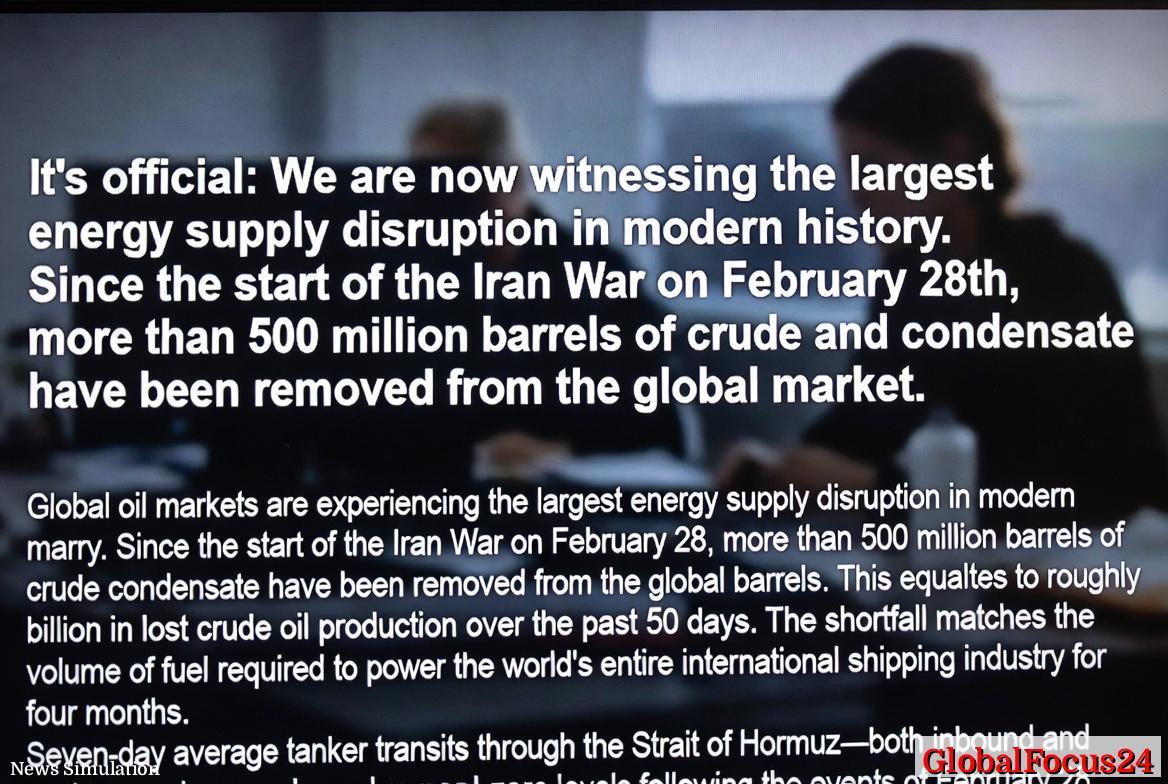
Global oil markets are facing what analysts describe as the most severe supply disruption in modern history, following the outbreak of conflict involving Iran on February 28. In just 50 days, more than 500 million barrels of crude oil and condensate have been removed from the global supply, creating a shockwave across energy systems, financial markets, and industrial supply chains.
The scale of the disruption is difficult to overstate. The lost volume is equivalent to roughly four months of fuel required to power the world’s entire international shipping fleet, underscoring the systemic importance of the affected supply routes. With an estimated $50 billion in crude production wiped out in less than two months, the economic consequences are already reverberating globally.
At the center of the crisis is the Strait of Hormuz, a narrow but critical maritime chokepoint through which a significant portion of the world’s oil exports normally flows. Since late February, tanker traffic through the strait has collapsed to near-zero levels, effectively severing a key artery of global energy trade.
The Strategic Importance of the Strait of Hormuz
The Strait of Hormuz has long been one of the most strategically vital passages in the global energy network. Located between Iran and Oman, it connects the Persian Gulf to international waters and serves as the primary export route for major oil-producing nations, including Saudi Arabia, Iraq, Kuwait, and the United Arab Emirates.
Under normal conditions, millions of barrels of oil pass through the strait each day, supplying markets in Asia, Europe, and beyond. Even minor disruptions in the region have historically triggered price volatility. The current near-total halt in tanker movement marks an escalation far beyond previous incidents.
Historically, tensions in the strait have surfaced during periods of geopolitical instability, such as the Iran-Iraq War in the 1980s and periodic standoffs in the early 21st century. However, those disruptions were limited in duration and scale. The present collapse in traffic represents a far more sustained and widespread interruption.
Immediate Impact on Global Oil Prices
Oil prices have reacted sharply to the supply shock, with benchmark crude prices surging as markets scramble to adjust to the sudden shortfall. Traders are grappling with a dramatically altered supply-demand balance, as inventories tighten and alternative supply routes struggle to compensate.
Refineries in major importing regions, particularly in Asia, are facing immediate challenges. Countries such as China, India, Japan, and South Korea rely heavily on Middle Eastern crude delivered via the Strait of Hormuz. With shipments curtailed, these nations are drawing down strategic reserves and seeking alternative suppliers, often at significantly higher costs.
In Europe, the impact is compounded by ongoing efforts to diversify energy sources. While some European countries have reduced reliance on Middle Eastern oil in recent years, the global nature of oil pricing means that disruptions in one region quickly translate into higher costs worldwide.
Economic Ripple Effects Across Industries
The energy supply disruption is extending far beyond the oil sector, affecting industries that depend on stable fuel supplies and predictable pricing. Transportation, manufacturing, and agriculture are among the sectors experiencing immediate strain.
Shipping costs have risen sharply as fuel prices climb and logistical bottlenecks intensify. Airlines are facing higher operating expenses, prompting concerns about increased ticket prices and reduced flight capacity. Meanwhile, manufacturers reliant on petrochemical inputs are encountering rising production costs, which could eventually translate into higher consumer prices.
Key economic impacts include:
- Increased inflationary pressure as energy costs feed into broader price levels.
- Supply chain disruptions due to higher transportation costs and fuel shortages.
- Strain on emerging markets that rely heavily on imported energy.
- Volatility in financial markets as investors react to uncertainty in energy supply.
The cumulative effect is a heightened risk of global economic slowdown, particularly if the disruption persists over an extended period.
Regional Comparisons and Energy Resilience
The severity of the current crisis varies by region, depending on energy mix, import dependence, and access to alternative supply routes.
North America, particularly the United States, is relatively insulated due to its domestic oil production capabilities and strategic petroleum reserves. However, U.S. consumers are not immune to global price increases, which influence domestic fuel costs.
In contrast, Asia remains highly vulnerable. Many Asian economies depend on imports for the majority of their energy needs, and the Strait of Hormuz serves as a primary supply route. The sudden loss of access has forced governments to implement emergency measures, including tapping strategic reserves and negotiating expedited supply agreements with alternative producers.
Europe occupies a middle ground. While diversification efforts have improved resilience, the interconnected nature of global energy markets means that supply shocks still have significant indirect effects. European nations are also competing with Asian buyers for limited alternative supplies, further driving up prices.
Efforts to Stabilize Supply Chains
In response to the disruption, oil-producing nations outside the affected region are attempting to increase output. Countries such as the United States, Brazil, and Norway are ramping up production where possible, though logistical and capacity constraints limit how quickly additional supply can reach global markets.
Strategic petroleum reserves are playing a critical role in mitigating immediate shortages. Governments are releasing stored oil to stabilize markets and ensure continuity of supply for essential services. However, these reserves are finite and intended as short-term buffers rather than long-term solutions.
Shipping routes are also being reassessed. Some exporters are exploring alternative pathways, including pipelines and longer maritime routes that bypass the Strait of Hormuz. These options, however, often involve higher costs and longer transit times, reducing their effectiveness in addressing immediate shortages.
Historical Context of Energy Crises
The current disruption invites comparisons to past energy crises, such as the oil shocks of the 1970s. During that period, supply restrictions led to sharp price increases, economic stagnation, and significant shifts in energy policy.
While the global energy landscape has evolved since then, with greater diversification and technological advances, the fundamental vulnerability to supply disruptions remains. The concentration of oil production in specific regions and the reliance on key transit routes continue to pose systemic risks.
Unlike previous crises, the current situation is characterized by the near-total shutdown of a critical chokepoint, rather than coordinated production cuts. This distinction highlights the unique challenges facing policymakers and industry leaders as they navigate the unfolding situation.
Public Reaction and Market Sentiment
Public concern is growing as fuel prices rise and economic uncertainty increases. In many countries, consumers are already feeling the impact at the pump, while businesses are adjusting to higher operating costs.
Financial markets are reflecting heightened volatility, with energy stocks experiencing significant fluctuations. Investors are closely monitoring developments in the region, as well as potential policy responses from major economies.
Market sentiment remains fragile, with analysts warning that prolonged disruption could lead to more severe economic consequences. The speed and scale of the supply loss have left little room for gradual adjustment, amplifying the sense of urgency.
Outlook for Global Energy Markets
The trajectory of global oil markets will depend largely on the duration of the disruption and the effectiveness of mitigation efforts. If tanker traffic through the Strait of Hormuz remains constrained, the pressure on supply chains and prices is likely to intensify.
Longer-term implications may include accelerated investment in alternative energy sources, increased emphasis on energy security, and shifts in global trade patterns. Countries may seek to reduce dependence on vulnerable supply routes, reshaping the structure of energy markets in the years ahead.
For now, the immediate focus remains on stabilizing supply and managing the economic fallout. The unprecedented scale of the disruption underscores the critical importance of resilient energy systems in an increasingly interconnected world.