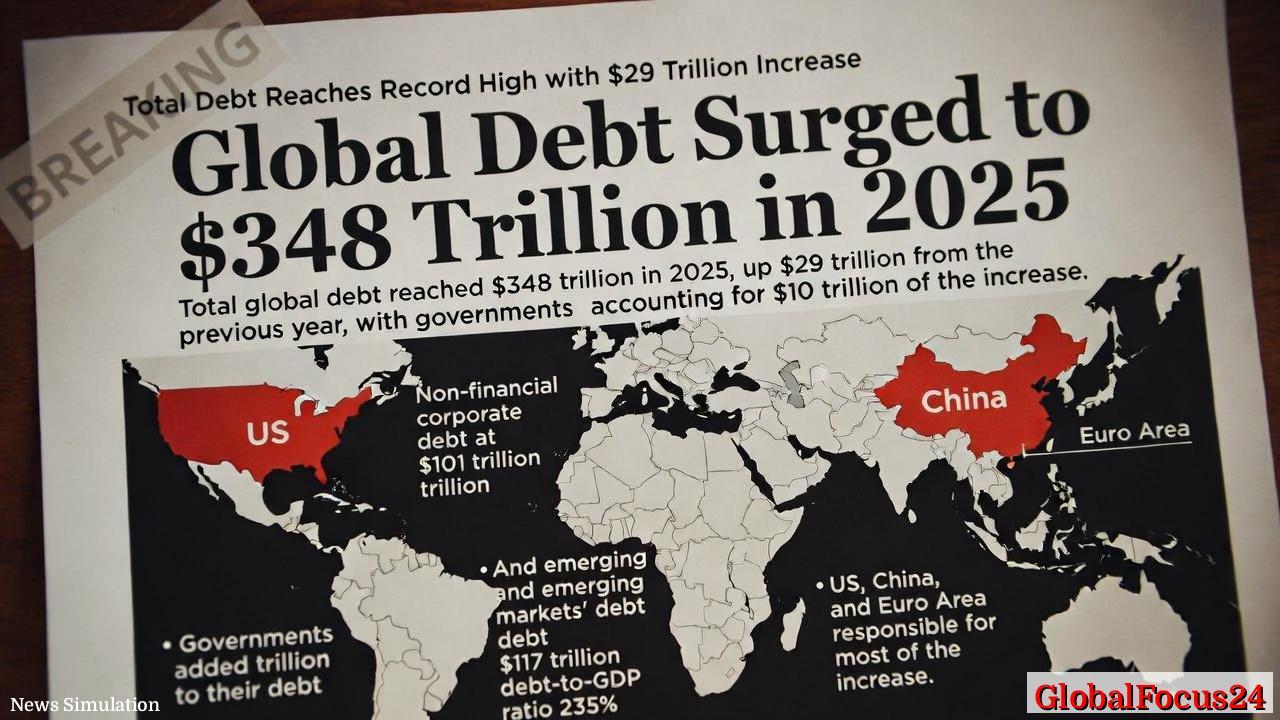
Global Debt Surges to $348 Trillion in 2025 as Governments, Corporations, and Emerging Markets Rally
A global debt milestone was reached in 2025, with total outstanding debt estimated at $348 trillion, marking a $29 trillion year-over-year increase and the largest annual rise since the height of the COVID-19 shock. The surge reflects a broad-based financing cycle across governments, non-financial corporations, and emerging markets, underscoring shifts in fiscal policy, corporate investment strategies, and macroeconomic risk appetite. As policymakers, investors, and households digest the implications, the episode highlights long-run questions about growth, inflation, and financial stability in a world of elevated leverage.
Historical context: debt as a mirror of policy and growth To understand the 2025 data, it helps to place it in a longer arc of debt accumulation that followed the global financial crisis and the pandemic. Governments expanded balance sheets aggressively in response to recession risks, supply-chain disruptions, and public health needs. The result was an all-time high in government borrowing, with central banks maintaining accommodative monetary stances to support economic activity and financial markets. By 2025, government debt stood at approximately $107 trillion, reflecting sustained deficits and large maturities across advanced economies and major emerging markets.
Non-financial corporate debt reached a new apex, driven in part by capacity expansion, productivity investments, and technology-driven capital expenditure. The corporate sector’s borrowing totaled about $101 trillion, with AI-enabled initiatives, automation, and digital infrastructure cited as primary drivers of sustained investment activity. This period has seen a broader rationale for leverage in the private sector: appetite for resilience, supply-chain diversification, and competitive differentiation in a digitized economy.
Emerging markets carried a sizable portion of the debt load, with debt outstanding around $117 trillion. The debt-to-GDP ratio in developing economies reached a record high, underscoring the region’s growth ambitions as well as exposure to global financial conditions. The combination of rising interest costs, currency dynamics, and investment needs created a complex financing landscape for governments and private borrowers alike.
Economic impact: growth, inflation, and risk transmission The 2025 debt expansion came at a time when many economies face a balancing act between supporting growth and containing inflation. Large-scale borrowing can support infrastructure and innovation, potentially lifting long-run trend growth and productivity. However, the cost of servicing higher debt loads—especially in a rising-rate environment—can constrain future fiscal space, crowd out other spending, and heighten sovereign risk if growth falters or financing conditions tighten.
From a macroeconomic perspective, the expansion in government debt can be viewed as demand support in a fragile recovery phase. In economies where private credit remained constrained, public financing often financed critical investments, including transportation networks, energy transition projects, and digital infrastructure. These investments may contribute to productivity gains that bolster potential output over time. Yet markets monitor debt sustainability indicators closely, particularly in regions with high debt-to-GDP ratios and aging demographics that can weigh on revenue growth and fiscal resilience.
The corporate debt increase reflects capital expenditure cycles in an increasingly technology-driven economy. Firms leveraged up to fund capacity expansion, research and development, and competitive modernization. The result is a mixed picture: some sectors report enhanced efficiency and output gains, while others contend with higher financing costs and the need to optimize debt maturity profiles amid cyclical volatility. Investors pay attention to corporate balance sheets, credit quality, and the structure of debt—fixed versus floating rates, covenants, and liquidity reserves.
Emerging markets’ elevated debt burden signals both opportunities and vulnerabilities. On one hand, access to international capital markets and favorable financing conditions for a period supported growth and infrastructure investments. On the other hand, shifts in global monetary policy can have outsized effects on currencies, interest rates, and rollover risk for less-developed economies. Policymakers in these markets face the challenge of sustaining growth while maintaining debt sustainability, managing inflation pressures, and strengthening domestic institutions to attract long-term investment.
Regional comparisons: who borrowed where and why
- United States: As the world’s largest economy, U.S. government borrowing continued to be a dominant component of the global total. The fiscal trajectory reflected ongoing federal priorities, including infrastructure, defense, social programs, and resilience planning. The United States also faced a combination of robust private investment and consumer demand that influenced the broader macro backdrop, with debt service costs sensitive to movements in long-term interest rates.
- Euro Area: The eurozone experienced a multi-year borrowing cycle tied to structural reforms, energy security considerations, and investment in digital and green transition projects. With a shared currency and a diverse set of member economies, debt dynamics in the euro area emphasized collective risk-sharing alongside national fiscal responsibilities. Financing conditions in the region remained closely tied to the European Central Bank’s policy stance and inflation trajectory.
- China: Financing activity in the world’s second-largest economy encompassed government stimulus, local government financing vehicles, and corporate capital expenditure. The mix of debt sources—sovereign, municipal, and private—illustrated the complexity of coordinating growth objectives with financial stability concerns in a large, transitioning economy.
- Emerging Markets: Across regions such as Latin America, Africa, and parts of Asia, debt accumulation reflected a push to expand infrastructure, power generation, and industrial capacity. While improved access to international capital markets supported growth in many cases, currency depreciation, inflation pressures, and capital-flow volatility remained persistent risks that policymakers sought to manage through macroprudential tools and targeted reforms.
Investment and policy implications: navigating a high-debt landscape
- Financial stability: Elevated debt levels heighten sensitivity to interest rate shifts and exchange-rate movements. A sudden tightening of financial conditions or a standardized stress scenario could test debt servicing capacities, especially for weaker issuers and highly levered sectors.
- Growth potential: If debt-financed investments translate into productivity gains, potential growth could improve over the medium term. The key is the quality and sequencing of spending—prioritizing projects with high social and economic returns, ensuring proper project appraisal, and maintaining fiscal discipline in phases of cyclical weakness.
- Inflation dynamics: Debt servicing costs interact with inflation through policy rates and currency effects. Central banks balancing inflation targets with growth considerations must calibrate monetary policy carefully to avoid fanning financial stress or dampening essential investment.
- Public finance management: Governments may reassess debt maturity profiles, diversify funding sources, and strengthen debt-management frameworks. Transparent, accountable budgeting and improved data quality help markets price risk more accurately and support prudent borrowing decisions.
Public reaction and the societal dimension Public sentiment around debt accumulation often hinges on perceived benefits versus costs. In many regions, high-profile infrastructure ambitions and social programs associated with stimulus measures contributed to a sense of progress for some communities. Others worried about long-term fiscal sustainability, potential tax implications, and the distributional effects of debt-funded initiatives. The narrative around debt is frequently tied to questions of intergenerational responsibility, especially in societies with aging populations and competing demands on public budgets.
Industry and market responses
- Financial markets: Investors scrutinized sovereign and corporate debt instruments for signs of risk, liquidity, and credit quality. Bond markets reflected shifting expectations about inflation and monetary policy, while equity markets weighed the implications of debt-funded investment on corporate earnings and growth prospects.
- Banking sector: Banks may experience changes in loan demand, credit margins, and risk-weighted assets as borrowers reassess capacity to service debt under varying macro conditions. Capital adequacy, liquidity coverage, and stress-testing frameworks remain central to maintaining financial stability.
- Infrastructure and technology sectors: The surge in debt paralleled a sustained push toward digital transformation, green energy, and modernized infrastructure. These sectors are often perceived as engines of productivity growth, but they require careful governance to ensure value creation and avoid cost overruns.
Sustainability considerations: debt in the transition era As economies pursue cleaner energy, resilient supply chains, and climate adaptation, debt-financed investments can support environmental objectives if directed toward well-structured projects. However, governance, transparency, and measurement of return on investment are crucial to avoid misallocation of resources. The interplay between fiscal policy, monetary conditions, and climate-related financing will continue to shape debt trajectories in the years ahead.
Conclusion: a moment of reflection and prudence The 2025 debt surge underscores a world still navigating the aftershocks of unprecedented shocks and the ongoing need for strategic investment. While higher leverage can enable necessary reforms and capacity expansion, it also places emphasis on risk management, fiscal discipline, and responsible governance. As policymakers, financial institutions, and the public contemplate the path forward, the central questions remain: how will debt be used to support sustainable growth, and what safeguards will ensure that the benefits endure beyond today’s cycle? The global economy faces a delicate balance between fiscal flexibility and long-term stability, with lessons from 2025 likely to inform policy decisions for years to come.