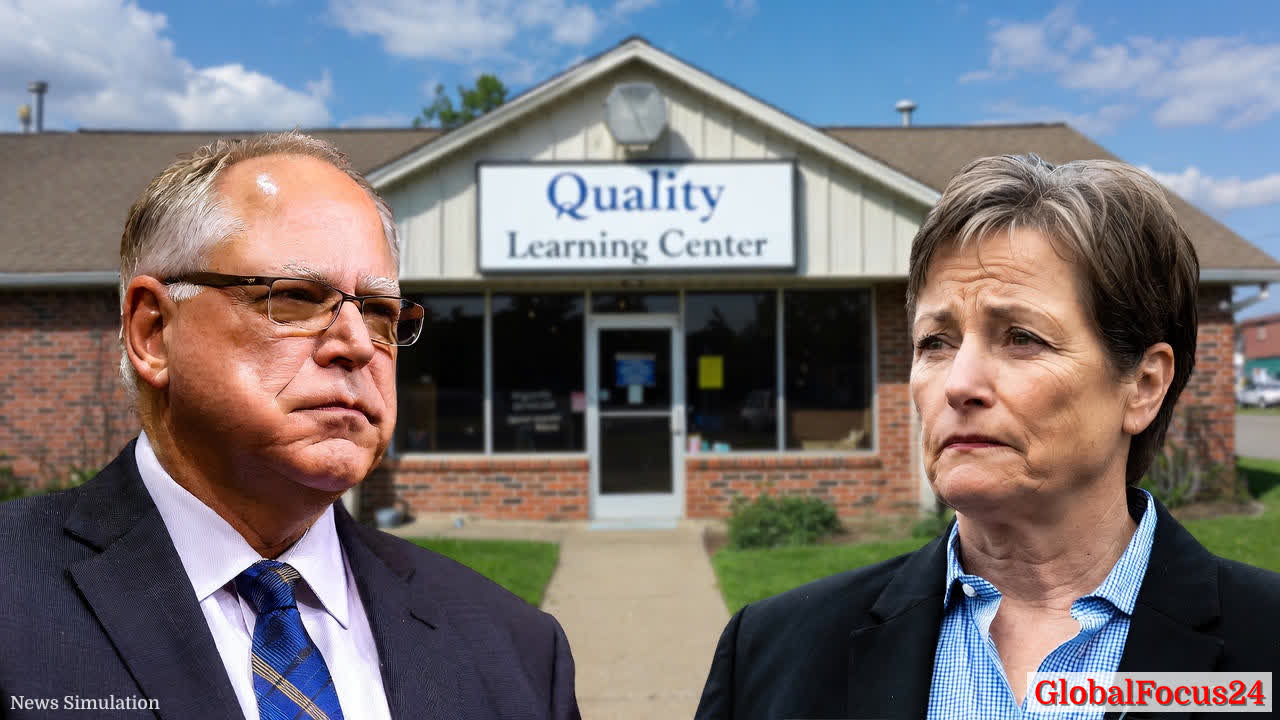
Governor Walz Under Scrutiny Over Day Care Fraud Allegations: A Detailed Look
The controversy surrounding Minnesota Governor Tim Walz centers on alleged warnings about fraud within taxpayer-funded day care programs and whether those warnings were adequately acted upon. Republican lawmakers, led by State Representative Kristin Robbins, are raising questions about oversight, timely responses, and accountability as investigations into day care funding unfold. The ensuing discourse highlights the tension between fraud prevention, public trust, and the political dynamics of a state preparing for a mid-decade political cycle.
Historical context: a landscape shaped by program funding and oversight Over the past decade, Minnesota has increased public investment in early childhood education and child care as part of broader efforts to expand access and quality. As with many states, this influx of public dollars has attracted attention from watchdog groups and lawmakers concerned about waste, fraud, and abuse. The history of day care funding in Minnesota reflects a pattern seen in various public assistance programs nationwide: a combination of well-intentioned support for families, complex eligibility rules, and the ever-present risk of misallocation or misuse of funds.
In this context, whistleblower reports and hearings are not unusual. They serve as potential catalysts for reforms, enhanced monitoring, and stricter controls. Critics argue that robust early warning systems—whether from internal auditors, external watchdogs, or whistleblowers—are essential for preventing fraud before it metastasizes into larger financial and reputational damage. Proponents of stronger oversight contend that transparency and accountability must accompany program expansion to maintain public confidence and ensure resources reach the intended families and providers.
What the allegations allege and the mechanism of concern According to the accusations, warnings were raised about possible fraud among day care providers receiving substantial state funding. The core claim is that despite a February 2024 hearing on day care fraud and the submission of a list of providers with indications of violations and high funding receipts, action was not taken promptly. One provider highlighted in the discourse, Quality Learning Center, reportedly received millions in state funds while signs suggested it may have faced enrollment issues or other irregularities.
If verified, the concerns touch on several critical dimensions:
- Disbursement integrity: ensuring funds are spent for the intended purposes and reach eligible families.
- Provider compliance: adherence to licensing, safety, and program standards necessary to qualify for public support.
- Timeliness of enforcement: the ability of the oversight apparatus to act quickly when red flags emerge.
- Public trust and ethics: maintaining confidence in state programs that rely on taxpayer support.
Economic impact: direct and indirect effects on families and state finances Public funding for day care is not only about supporting providers; it directly affects families who depend on subsidized or affordable care to participate in the workforce. Inaccurate disbursement or fraud can erode the effectiveness of the program, potentially increasing costs for taxpayers and reducing the availability of resources for eligible families.
Possible financial consequences include:
- Unequal distribution of funds: funds diverted to non-compliant providers reduce the support available to legitimate participants.
- Administrative costs: investigations, audits, and enforcement efforts consume resources that could otherwise fund direct services.
- Market distortions: fraud allegations can create distrust among families and employers, influencing day care enrollment patterns and workforce participation.
- Long-term fiscal implications: repeated incidents may prompt lawmakers to tighten eligibility rules or increase funding controls, shaping the state’s budget trajectory for early childhood initiatives.
Regional comparisons: how Minnesota’s experience stacks up When evaluating fraud concerns in day care funding, comparisons with other states provide context for assessing risk, response, and outcomes. Several states have implemented robust auditing regimes, including routine third-party reviews, data-mmatching across departments, and real-time monitoring of enrollments, payments, and licensing statuses. In regions with similar population sizes and program structures, proactive whistleblower channels and early warning dashboards are often cited as best practices for detecting anomalies before they escalate.
Minnesota’s situation can be contrasted with peers that have:
- Implemented centralized payment systems to reduce overpayments and duplicate subsidies.
- Expanded automated data analytics to flag unusual provider activity, such as large funding with minimal or no enrollments.
- Established transparent public dashboards showing funding disbursement, enrollment levels, and licensing statuses.
By examining these comparative approaches, stakeholders can analyze whether Minnesota’s oversight architecture effectively blends preventive controls with responsive enforcement. The goal across regions is to minimize fraud exposure while preserving timely access to care services for families.
Public reaction and media coverage: shaping the narrative Public reaction to allegations of day care funding fraud often reflects broader concerns about governance, transparency, and the efficiency of social programs. Supporters of stronger oversight may view such reports as timely reminders of the need for accountability, while opponents might frame the discussions as politically charged weaponization during election cycles.
Media coverage typically emphasizes:
- The timeline of warnings, hearings, and subsequent actions or inactions.
- Specific providers implicated in the discourse and the scale of funding involved.
- Statements from lawmakers, administrators, and, when possible, affected families or providers.
- The broader implications for program integrity and public confidence.
Policy implications: potential reforms and next steps If the allegations hold merit, several policy avenues could be explored to strengthen program integrity without compromising access to essential services:
- Enhanced due-diligence protocols: implementing stricter licensing verification, enrollment checks, and cross-agency data sharing to detect red flags earlier.
- Real-time monitoring and analytics: deploying data analytics to monitor funding patterns, enrollment fluctuations, and provider performance in near real time.
- Clear escalation procedures: establishing defined timelines for investigations and action once red flags are identified.
- Independent audits: commissioning periodic audits by third-party oversight bodies to provide objective assessments of program integrity.
- Transparent reporting: publishing regular, easily understood reports on funding disbursements, enforcement actions, and outcomes for families.
Governance and leadership considerations The intersection of fraud allegations with gubernatorial leadership inevitably invites questions about governance, accountability, and administrative culture. While it is essential to pursue fraud cases vigorously, maintaining public trust requires balanced communication, evidence-based investigations, and due process for providers. The political dimension—particularly during an election cycle—can influence how aggressively issues are pursued and how reforms are framed.
Historical and contemporary perspectives on governance culture emphasize the importance of a no-tolerance stance toward fraud paired with a constructive, reform-minded approach. A system that publicly documents investigations, outcomes, and policy changes tends to reassure the public that progress is not merely reactive but built on a foundation of continuous improvement.
Conclusion: ongoing vigilance as a public interest imperative Public programs that support families and children operate at the nexus of policy design, budgetary discipline, and public accountability. The Minnesota discourse on day care funding fraud underscores the enduring need for vigilant oversight, prompt response mechanisms, and transparent governance. Whether or not the concerns lead to substantive reforms, the core objective remains clear: ensure that public resources are used effectively to support enrolled families while safeguarding the integrity of programs designed to lift communities through early childhood education and care.
As investigations and discussions continue, stakeholders—from lawmakers and administrators to providers and families—will be watching closely how Minnesota balances safeguarding public funds with maintaining access to essential services. The outcome will likely influence how similar programs across the region approach fraud prevention, enforcement, and continuous improvement in the years ahead.