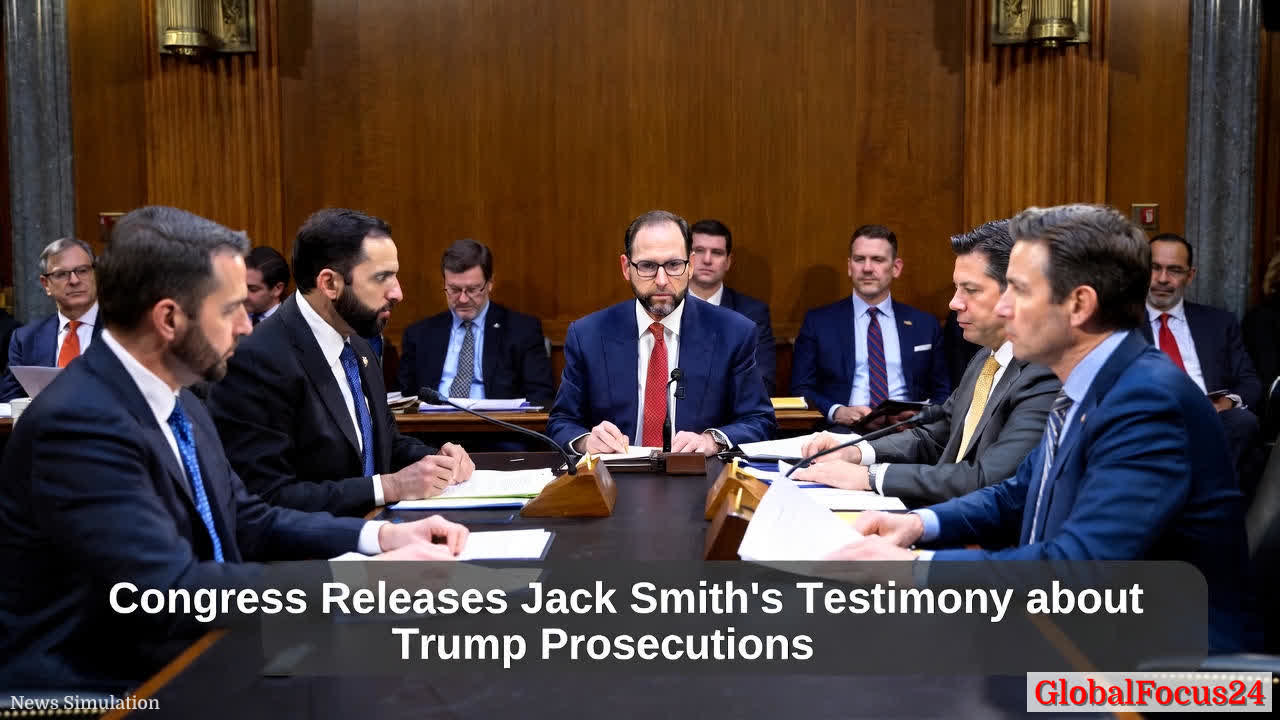
Transcript Spotlight: Former Special Counsel’s Testimony on Classified Documents and 2020 Election Investigations
A newly released 255-page transcript from a congressional committee offers an in-depth look at the former special counsel’s testimony regarding federal probes into the handling of classified materials by the former president and the efforts related to overturning the 2020 election. The document, and accompanying deposition video, illuminate the reasoning behind charging decisions, the evidentiary standards cited, and the legal and procedural context that shaped one of the most scrutinized chapters in recent American political history. While the material refrains from political endorsement, it provides a detailed, fact-focused account of actions, timelines, and the procedural contours of high-profile investigations.
Historical context: a turning point in presidential accountability
The investigations at the heart of the transcript sit within a longer arc of executive accountability in the United States. Since the founding era, American governance has wrestled with how to reconcile executive power with oversight mechanisms designed to ensure lawful conduct. In modern times, special counsel investigations have emerged as a means to pursue complex, high-stakes inquiries when potential conflicts of interest or the need for independent judgment necessitate a separate prosecutorial path. The transcript situates the current case within this framework, noting the transition from inquiry to charging decisions made under the auspices of a dedicated investigation team in 2022, and the subsequent procedural shifts that followed changes in political leadership.
Economic impact: ripples through markets, institutions, and public institutions
While investigations themselves are legal proceedings, their momentum and outcomes influence a range of economic and institutional dynamics. The public’s confidence in governance and the reliability of information can shape market sentiment, borrowing costs, and investment decisions in short order. Institutions tasked with risk management and compliance must monitor evolving disclosures and judicial developments, which can affect decisions around fiduciary responsibilities, procurement, and governance reforms. The transcript’s revelation of the evidentiary basis for charges, and the characterization of actions described as willful retention and attempts to obstruct justice, contributes to ongoing conversation about compliance cultures within government-related operations and associated nonprofit and corporate partners that interface with federal agencies.
Key components of the testimony: charges, evidence, and decision-making
- Charging decisions and responsibility: The former special counsel stated that the decision to bring charges rested with him, while acknowledging that the basis for those charges lay in the president’s actions. This framing underscores a procedural distinction often present in high-profile prosecutions: the prosecutorial decision to charge is separate from the factual and legal underpinnings that justify those charges. The transcript presents this as a consolidation of responsibility for the charge decision while citing the evidentiary basis as rooted in the subject’s conduct.
- Election-related investigations: Testimony asserts that evidence supported the conclusion that a scheme existed to overturn the 2020 results and to hinder the lawful transfer of power. The characterization of a “criminal scheme” aims to convey the gravity and organized nature of alleged actions, underscoring the prosecutor’s emphasis on intent, coordination, and impact tied to the election process.
- Classified documents case: The testimony describes willful retention of highly sensitive materials after leaving office, including storage in non-security locations such as a ballroom and a bathroom at a social club. The narrative of repeated attempts to obstruct justice to conceal such retention is presented as a central element of the case, illustrating how intent and concealment were weighed in evaluating potential charges.
- Dismissal and procedural outcomes: The documents case was dismissed by a Florida judge, and the election-related probes concluded without further proceedings after the election outcome. The transcript provides context for these outcomes, including procedural decisions, evidentiary standards, and the interplay between investigations and subsequent administrative or judicial developments.
- Deposition and communications: The nearly eight-hour deposition, including call records involving associates and lawmakers around January 6, 2021, is highlighted as a source of insights into strategic communications within the investigation and how information was analyzed to build a factual record.
Legal and procedural backdrop: standards, secrecy, and transparency
The transcript touches on several legal principles that typically guide high-stakes investigations. These include the standard of proof required for charging decisions, the obligation to demonstrate evidence beyond a reasonable doubt in criminal proceedings, and the balance between safeguarding sensitive information and providing transparency to the public and lawmakers. The discussion around “willful retention” and “obstruction” signals reliance on established statutes and the nuanced interpretations that prosecutors apply when evaluating intent and actions over time.
Regional comparisons: how similar investigations have played out elsewhere
To contextualize the transcript within a broader national landscape, it’s helpful to compare how comparable investigations have unfolded in other regions and jurisdictions. In systems with strong separation of powers and independent prosecutors, transparency in charging decisions and the release of deposition materials are common elements when public accountability is a priority. However, the specifics—such as the scope of charges, the sequencing of investigations, and the timelines for dismissal or continuation—vary based on jurisdictional rules, prosecutorial discretion, and political considerations. Observers may compare these proceedings to other high-profile inquiries into government officials in large democracies, noting both common legal challenges and distinctive procedural choices.
Public reaction and the urgency of accountability
The release of a comprehensive transcript and deposition video often triggers a spectrum of public responses. Supporters may frame these materials as essential documentation of government oversight and the rule of law, while critics might view them through the lens of political bias or strategic timing. Regardless of vantage point, the materials introduce a sense of urgency around accountability—an enduring feature of contemporary political discourse. The public reaction is further shaped by media framing, congressional oversight priorities, and ongoing debates about the appropriate balance between transparency and national security or executive privilege concerns.
Implications for governance and future investigations
- Precedent for independent inquiries: The transcript reinforces the role of independent or semi-autonomous probes in holding public officials accountable, particularly in cases involving sensitive information and national elections. Future investigations may reference this framework when delineating charging standards, evidentiary requirements, and the release of documentary materials.
- Compliance culture and information handling: The described retention of sensitive materials in unsecured locations underscores ongoing concerns about information governance within public institutions and any partners that handle government data. The case highlights the need for clear policies, rigorous training, and robust physical and digital security measures to mitigate risk.
- Judicial and political dynamics: The outcomes—dismissals in one matter and termination of proceedings in another—reflect the complex interactions between legal sufficiency, prosecutorial strategy, and the seating of the courts within a charged political environment. These dynamics influence how institutions weigh the value of continuing an investigation against resource allocation and public interest considerations.
- Regional and international perspectives: Comparisons with other jurisdictions reveal both universal legal principles and local procedural variations. Democracies frequently grapple with how to prosecute high-level officials while protecting due process, ensuring transparency, and preserving public trust. The transcript contributes to a global dialogue about best practices in handling sensitive investigations without compromising essential governance functions.
What the deposition adds to the historical record
The release of video from the deposition provides a granular dimension to the written record. Observers gain access to spoken emphases, tone, and the cadence of testimony, which can offer insight into how the witness framed questions, navigated lines of inquiry, and responded to probing prompts. While transcripts capture the words, the video captures nuance—nonverbal cues, pacing, and emphasis—that together enrich the historical account of the investigations.
Context for stakeholders: lawmakers, legal professionals, and the public
Lawmakers evaluating the transcript can use the material to assess the sufficiency of evidentiary standards applied during the investigations, the clarity of the charging rationale, and the integrity of the process. Legal professionals may study the deposition for strategic approaches to complex cases involving classified materials and electoral processes, including the interplay between criminal statutes and executive actions. For the general public, the released transcript frames a narrative about accountability, the rule of law, and the mechanisms by which the government scrutinizes the conduct of high-ranking officials.
Limitations and considerations for interpretation
- Partial record: The transcript represents a portion of the broader investigative record. Additional documents, exhibits, and testimony might provide further context that could modify interpretations or highlight competing narratives.
- Legal complexity: The material involves nuanced legal concepts, including interpretations of intent, willfulness, and obstruction. Readers may benefit from supplementary explanations of these legal terms to fully grasp their implications within the charges and their outcomes.
- Evolving legal status: Since texts of this nature are tied to ongoing or retrospective legal processes, readers should consider that conclusions drawn from the transcript may be revisited in future legal reviews, appellate proceedings, or policy discussions.
Conclusion: reflecting on accountability, process, and public trust
The transcript and deposition video released by the committee offer a rigorous, documentary window into the mechanics of two intertwined investigations. They lay bare the prosecutorial logic claimed by the former special counsel, the evidentiary threads underpinning the charges, and the procedural realities that led to dismissals in one track and the cessation of proceedings in another. For observers seeking to understand how modern federal investigations into high-level officials unfold, the materials provide a detailed case study in the complexities of evidence, intent, and institutional accountability.
Public interest in governance, transparency, and the rule of law remains high. As the nation continues to assess the implications of these investigations, the transcript stands as a historical document—an artifact that captures a pivotal moment when the question of accountability for actions taken by a president and their administration took center stage in the public sphere. The broader takeaway for citizens, policymakers, and institutions is the enduring importance of rigorous legal processes, independent oversight, and the ongoing commitment to upholding the integrity of the democratic system.