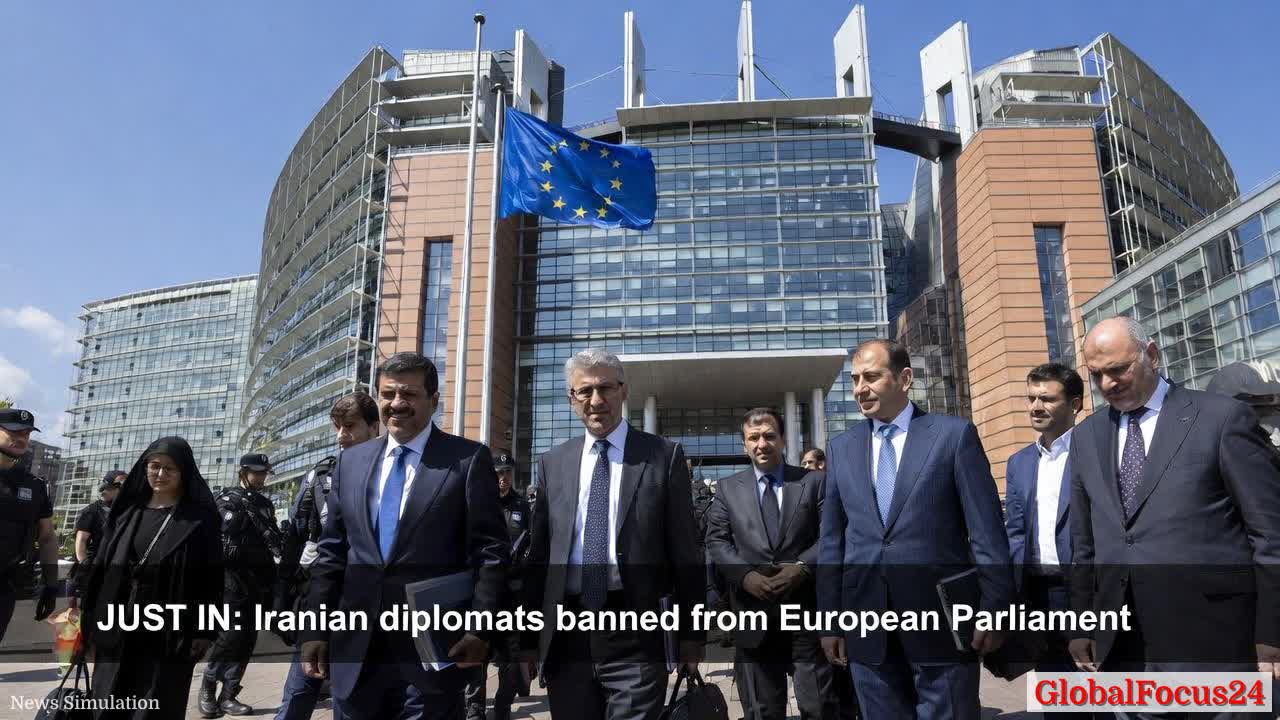
European Parliament Bans Iranian Diplomats: A Major European-National Security Signal
The European Parliament has issued a sweeping ban on Iranian diplomats from entering any of its premises, a decisive move ordered by Parliament President Roberta Metsola. The measure, designed to restrict access for all diplomatic staff and representatives of the Islamic Republic of Iran, marks a significant escalation in Europe’s approach to Tehran amid mounting concerns over regional security, human rights, and nuclear negotiations. While the decision focuses on access to Parliament facilities, its ripple effects are likely to extend through regional diplomacy, transatlantic ties, and global markets as governments reassess risk profiles and partner alignments in a shifting geopolitical landscape.
Historical context: a evolving European stance toward Iran The ban does not emerge in a vacuum. Over the past two decades, Europe has pursued a calibrated balance between engaging Iran on security and economic concerns and maintaining firm stances on human rights, regional behavior, and compliance with international agreements. The European Union’s approach has often combined targeted sanctions with diplomatic outreach, seeking to sustain a channel for dialogue while signaling red lines on issues deemed critical to European security. The latest move by the European Parliament builds on a history of periodic escalations in diplomatic protocol, reflecting a broader trend of tightening channels with Tehran in response to perceived threats to regional stability, ballistic missile programs, and Iranian support for various regional actors.
Parliament’s decision: scope, rationale, and process The edict prohibits all Iranian diplomatic personnel and associated representatives from accessing European Parliament facilities. The decision, confirmed by Parliament President Metsola, underscores a continuous policy shift toward reinforcing institutional security and maintaining control over premises that host intergovernmental dialogue, public events, and international coordination efforts. Officials described the measure as a protective step aligned with assessments of risk, while emphasizing that access controls remain a standard practice in sensitive environments where sensitive information and high-level diplomacy converge. The decision’s mechanics—driven by security analyses, risk assessments, and procedural protocols within Parliament—signal a firm stance intended to deter potential kompromising activities and to preserve the integrity of legislative operations.
Economic impact: implications for trade, sanctions, and markets While the ban targets diplomatic access rather than trade channels directly, the broader economic reverberations are unlikely to be negligible. First, the move compounds existing economic frictions between Iran and many European economies, which have been shaped by sanctions regimes, export controls, and financial restrictions. In such a climate, diplomatic setbacks can influence investor sentiment, risk pricing, and corporate decision-making in sectors sensitive to geopolitical risk, such as energy, manufacturing, and advanced technology. Firms with cross-border operations often reassess supply chains and risk exposure when diplomatic relationships become more volatile, potentially delaying investment plans or prompting a shift toward alternative markets.
Second, a more restrictive diplomatic posture can complicate efforts to coordinate sanctions enforcement and collective security measures. European institutions, along with their allies, frequently rely on coordinated pressure to influence behavior in Tehran. A tighter environment around diplomatic engagement may complicate communications channels that previously helped deconflict policy approaches, particularly in times of diplomatic standoffs. The result could be a more cautious European economic stance where risk premiums rise for firms with exposure to Iran-related trade or sanction-sensitive activities.
Regional comparisons: how Europe’s stance stacks up against peers In parallel, other global powers have navigated similar tensions with Tehran, but with differing enforcement philosophies and diplomatic styles. The United States has historically combined sanctions with more direct, unilateral leverage and a robust security partnership framework with European allies. The United Kingdom, a European partner with its own post-Brexit regulatory landscape, has pursued a consistent security-first approach to Iranian diplomacy. In the Middle East, regional players—such as Saudi Arabia and the United Arab Emirates—have varied in their diplomatic engagement with Tehran, balancing economic interests with strategic competition and security concerns. Europe’s current stance, anchored in its institutional architecture and collective security mechanisms, may set a benchmark for how regional powers calibrate engagement with Iran in the fallout of this decision.
Impact on diplomacy and multilateral dialogue The ban has clear implications for multilateral exchanges that occur within or alongside Parliament events. Workshops, briefings, and public discussions hosted in European Parliament facilities often involve Iranian officials, researchers, or affiliated specialists. Excluding Iranian officials from these spaces could reconfigure schedules, reduce the diversity of viewpoints at public-facing debates, and constrain the breadth of policy conversations. However, supporters of the move argue that secure environments must be prioritized when sensitive information is at stake and when there are concerns about attempts to influence domestic policy through institutional channels. The challenge for European policymakers will be to maintain open lines of communication with Tehran outside Parliament premises where necessary, ensuring that diplomatic and security objectives are not conflated with broader political hostility.
Public reaction and civil society perspectives Public sentiment around such diplomatic measures is typically mixed. Proponents emphasize the need to safeguard democratic institutions and to signal resolve in response to actions perceived as threats to regional stability or human rights. Critics, meanwhile, warn that punitive measures can harden positions, complicate dialogue at a time when negotiations could otherwise progress, and risk alienating populations within Iran who may be seeking constructive engagement with Europe. Civil society groups often call for a balanced approach that preserves humanitarian considerations, supports human rights advocacy, and guards against unintended consequences that could harm ordinary citizens rather than policymakers.
Legal and procedural considerations From a legal standpoint, prohibitions on entry to parliamentary premises generally fall within the purview of internal security and institutional governance. These measures are typically designed to prevent access by individuals or groups deemed a risk to the safety of staff, visitors, or the integrity of sensitive proceedings. While such decisions are operational, they also interact with international law and diplomatic norms that govern the behavior of states toward each other. The European Parliament’s action could be seen as a proportionate step aligned with safeguarding the regular functioning of the legislative process while upholding international commitments to security and stability.
Historical precedent and potential long-term effects Historically, European institutions have employed various degrees of engagement with Tehran, ranging from formal diplomatic channels to sanctions regimes and public admonitions. A ban of this scope mirrors prior episodes where institutions of democratic governance have asserted boundaries to protect their internal processes and to reinforce the seriousness of international expectations. Looking ahead, the long-term effects could include a recalibration of how Iran engages with European bodies, potentially prompting Tehran to seek alternate channels for dialogue or to respond with its own policy shifts. Over time, such interplays can influence regional alignments, energy markets, and geopolitical risk assessments that investors and corporations monitor closely.
Operational implications for Parliament and event organizers In practical terms, event organizers and staff within the European Parliament will need to adjust access control protocols, visitor registries, and scheduling to reflect the new restrictions. Security teams will likely implement enhanced screening measures, verify identities, and ensure that participants comply with the updated access rules. For conferences and public sessions that formerly welcomed Iranian representatives, organizers may pivot to invite alternative speakers or to redesign formats to maintain inclusivity while preserving security. The institution’s ability to sustain robust, inclusive dialogue with a wide range of international partners will hinge on balancing these protections with the goals of transparent and productive policy discussions.
Public safety and security infrastructure The decision also highlights the broader importance of security infrastructure in modern legislative environments. Parliaments and similar institutions increasingly rely on layered security measures, including physical access controls, cyber resilience, and rapid-response protocols, to safeguard critical functions. The intersection of public safety with open, accessible governance creates a dynamic tension that institutions continually navigate. By reinforcing access rules, Parliament signals a commitment to maintaining a secure space where legislative deliberation can proceed without external pressures that could compromise process integrity.
Environmental and societal dimensions While security remains the core driver, the decision intersects with social considerations in unexpected ways. Public institutions that project strength in the face of international tensions can also influence how citizens perceive governance, national security, and the role of international cooperation in addressing shared challenges. In regions where energy security intersects with climate policy and market transitions, diplomatic posture can affect how nations collaborate on energy diversification, technological development, and regulatory reforms that shape the broader economy.
Conclusion: a defining moment for European institutional policy The European Parliament’s ban on Iranian diplomats from entering its premises represents a consequential step in Europe’s ongoing negotiation of security, diplomacy, and regional stability. As institutions seek to uphold the sanctity of the legislative process while navigating an intricate web of international relations, the move underscores how regional governance bodies adapt to evolving threats and strategic priorities. The policy may influence the balance between dialogue and deterrence, prompting Tehran to reassess its engagement strategies with European institutions. In the broader arc of international relations, the decision reflects Europe’s readiness to deploy measured, institutionally grounded actions as part of an overarching framework aimed at safeguarding democratic processes and promoting regional security without veering into policy that is overtly political or biased.
Public interest and future monitoring Observers will be watching how this restriction shapes subsequent diplomatic channels, sanctions enforcement coordination, and multilateral dialogue. Analysts anticipate continued scrutiny of how Europe and its partners respond to Tehran’s actions, how trade and investment dynamics adapt to a more cautious posture, and how regional actors recalibrate their own strategies in response to a changing European stance. The evolving scenario will likely inform future debates on the balance between security imperatives and the benefits of open, inclusive international dialogue.