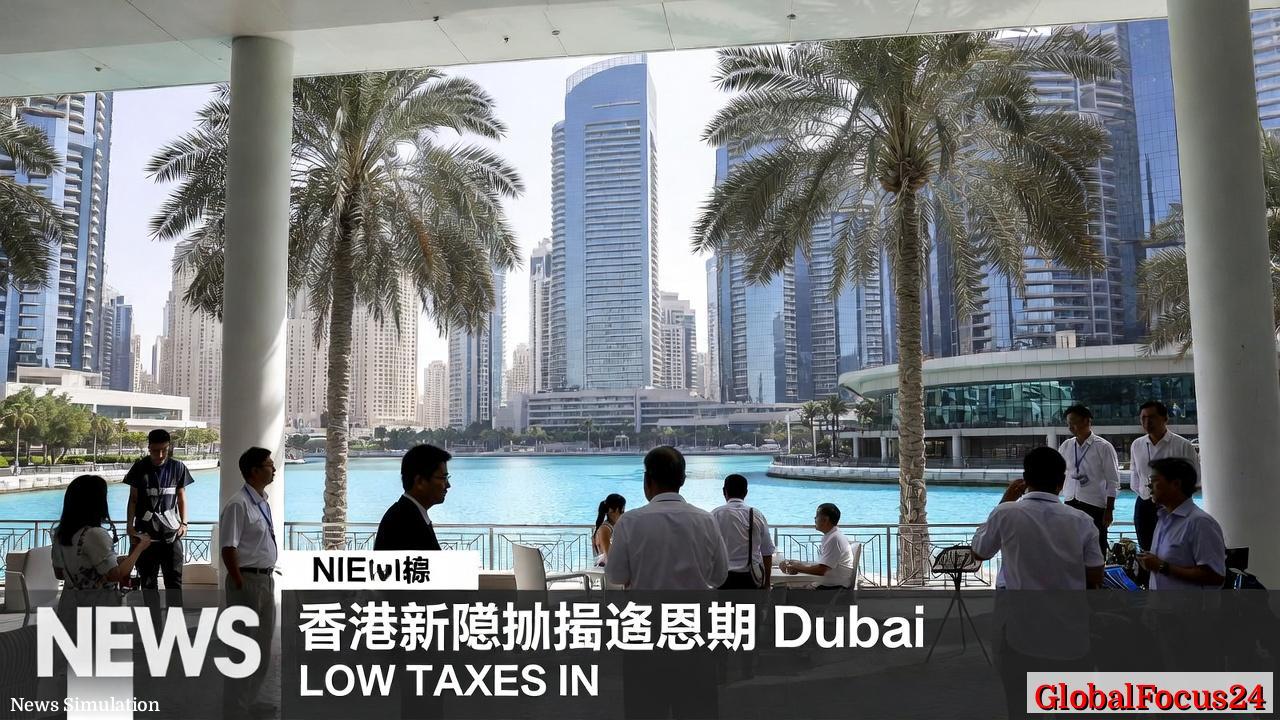
Dubai Emerges as a Magnet for China’s Wealthy: A Shifting Landscape in Global Private Capital
Dubai has quietly established itself as a formidable hub for wealth diversification among China’s high-net-worth individuals and family offices. As policymakers in Asia recalibrate capital flows and search for safe, tax-efficient environments, the emirate’s combination of strategic geography, business-friendly regulations, and curated lifestyle offerings has positioned it as a prominent alternative to traditional gateways such as Singapore. The trend reflects broader shifts in global finance where cities compete not only on taxes, but on stability, infrastructure, and ecosystem depth.
Historical context: from a trading outpost to a global finance center The story of Dubai’s rise from a desert trading hub to a diversified economy with global financial reach spans several decades. In the late 20th century, the United Arab Emirates recognized the strategic value of linking East and West through a city that could serve as a logistics and finance conduit. The subsequent decades saw heavy investment in port facilities, aviation, real estate, and regulatory reforms designed to attract foreign capital and talent. Dubai’s openness — including free zones, transparent company registration processes, and modern infrastructure — created an environment where multinational families and private investors could establish regional headquarters, wealth-management structures, and entrepreneurial ventures with relative ease.
For Chinese investors, this historical backdrop matters. China’s outbound capital flows grew substantially in the 2010s as domestic wealth expanded and investors sought diversification beyond their home markets. Singapore emerged as a leading destination due to its robust rule of law, deep liquidity pools, and established family-office culture. Yet the past few years have seen a recalibration: concerns about macroeconomic cycles, geopolitical risk, and shifting tax or regulatory regimes have encouraged a search for viable alternates with similar or enhanced appeal. Dubai’s trajectory offers a compelling counterpoint to Singapore’s model, combining a familiar business ecosystem with new incentives and a different regionally oriented footprint.
Economic impact: how Dubai integrates with Chinese capital The influx of Chinese private wealth into Dubai contributes to several interlocking economic dynamics:
- Investment channels and asset diversification: Chinese investors increasingly deploy capital into a mix of real estate, private equity, venture capital, and venture-backed startups based in the United Arab Emirates. Real estate remains a visible anchor, as developers offer luxury residences, mixed-use developments, and family offices seeking stable, long-term appreciation. Beyond property, capital flows into technology and logistics ventures that leverage Dubai’s global logistics footprint and proximity to key markets in Asia, Africa, and Europe.
- Financial services expansion: Dubai’s financial services sector has expanded to accommodate cross-border wealth management, asset servicing, and structured finance. The presence of multiple international banks, specialized wealth-management boutiques, and sophisticated custodial capabilities supports complex portfolios, currency diversification, and risk management tailored for high-net-worth clients. This environment reduces friction for Chinese families seeking local counsel, diversified liquidity, and access to regional financing.
- Tax and regulatory considerations: While Dubai is part of the United Arab Emirates with its own fiscal regime, the city’s tax environment is often cited as favorable for individuals and corporate entities compared with many peers. The absence of a personal income tax at the federal level (with certain exceptions) and a comparatively straightforward corporate framework can be attractive for wealth planning. Investors typically structure vehicles in a way that aligns with both UAE incentives and international compliance standards, ensuring that cross-border activity remains compliant and transparent.
- Economic spillovers: Private capital inflows support job creation, luxury and hospitality markets, and the growth of ancillary services such as education, health care, and cultural amenities. As families establish long-term residence or semi-permanent stays, demand rises for high-quality schooling, healthcare facilities, and secure wealth-management services, which in turn strengthens Dubai’s competitive positioning as a comprehensive livable city for global elites.
Regional comparisons: Dubai versus Singapore and beyond
- Dubai vs. Singapore: Both cities offer robust regulatory ecosystems and high living standards. Singapore has long been esteemed for its political stability, rule of law, and transparent financial markets. Dubai competes by emphasizing liquidity, tax efficiency, a diversified economy, and a rapid pace of development. The closer geographic proximity of Dubai to major Asian markets provides a logistical advantage for some Chinese families seeking closer regional proximity to their operations.
- Dubai as a regional hub: Beyond Singapore, Dubai situates itself as a bridge between Asia, Europe, and Africa. Its time zone aligns well with manufacturing and supply chains across Asia while offering access to emerging markets in the Middle East and Africa. The growth of free zones, international conferences, and global exhibitions reinforces the city’s status as a nexus for cross-border wealth and enterprise.
- Sector-specific contrasts: Real estate in Dubai continues to attract international buyers with luxury offerings and favorable residency pathways tied to investment. In Singapore, property markets behave more like mature, highly regulated markets with different cooling measures. For family offices seeking a broader geography of risk and opportunity, Dubai’s expanding tech, logistics, and manufacturing ecosystems provide diversification benefits that complement more traditional financial centers.
Policy and infrastructure: building a sustainable framework Dubai’s attractiveness to Chinese wealth is underpinned by a continuous investment cycle in infrastructure and governance. Recent initiatives emphasize:
- Infrastructure readiness: World-class airports, seaports, and a resilient power grid support seamless cross-border activity. Public transport, housing, and urban development projects are designed to accommodate a growing resident and business population, including families seeking stable long-term residency and access to services.
- Regulatory clarity: The UAE’s evolving regulatory environment aims to balance openness with robust compliance standards. For investors, this translates into predictable licensing, clear residency pathways, and a framework for wealth-management solutions that align with international standards. As with any cross-border financial hub, investors benefit from professional advisory networks that help structure holdings to minimize friction and maximize efficiency.
- Residency and citizenship pathways: While not a charitable benefit, residency-linked programs have become a practical consideration for international families seeking mobility, education options, and business continuity. Dubai’s residency pathways tied to investment and business activity can be a meaningful factor in wealth preservation and intergenerational planning.
Public sentiment and risk awareness Public reaction to the shift toward Dubai from traditional hubs like Singapore is mixed and nuanced. For some investors, the perceived political stability, favorable tax environment, and lifestyle appeal create compelling reasons to diversify holdings. Others monitor global macro risks, currency exposure, and regional geopolitical developments with caution, balancing the allure of immediate liquidity gains against long-term risk management considerations. Real estate demand, luxury consumption, and private-wealth services have reflected this mix of optimism and prudence, with market participants highlighting the importance of due diligence, professional governance, and transparent reporting.
Case studies: pathways through Dubai’s wealth ecosystem
- Family-office establishment: A multi-generational family established a Dubai-based holding company to centralize management of international investments. By leveraging free-zone licenses and appointing experienced local counsel, the family streamlined governance, aligned with local regulatory expectations, and created a framework for intergenerational wealth transfer.
- Real estate as a wealth anchor: A Chinese buyer network, drawn by Dubai’s luxury apartment market, pursued properties tied to visa programs and rental yields. Investors combined property ownership with professional asset management to create a diversified portfolio that included residential properties, commercial units, and short-term rental platforms, with an emphasis on long-term appreciation and income stability.
- Tech and logistics ventures: An entrepreneurial group used Dubai as a regional launchpad for a logistics tech startup targeting e-commerce growth in the Middle East and North Africa. The company benefited from Dubai’s established trade corridors, access to capital from regional and international investors, and a supportive ecosystem that nurtures innovation.
Strategic implications for regional markets
- For Dubai: The city’s ongoing success in attracting Chinese wealth reinforces the importance of maintaining a competitive interface between regulation, lifestyle, and business opportunity. Ensuring consistent governance, transparent reporting, and reliable financial services will be essential as demand grows.
- For Singapore and regional peers: The competition for cross-border wealth will likely intensify as alternative hubs expand their offerings. Singapore must continue to evolve its regulatory framework, price performance, and innovation ecosystem to preserve its appeal for family offices and private investors. Other regional centers may pivot to emphasize niche strengths such as fintech, green finance, or sector-specific incentives to attract diverse capital pools.
- For Chinese investors: The Dubai pathway illustrates the value of diversified geographies in risk management and wealth preservation. Investors commonly weigh liquidity access, regulatory predictability, residency options, cultural familiarity, and the quality of professional networks when selecting a hub for cross-border wealth services.
Operational considerations for prospective investors
- Due diligence: Engage experienced local counsel and wealth-management professionals who understand UAE regulations, international compliance standards, and cross-border tax implications. A well-structured plan minimizes regulatory friction and strengthens governance.
- Wealth planning strategy: Consider a blended approach that incorporates real estate, private equity, and diversified liquid assets. Align holdings with family governance goals, education planning, and philanthropic activities where appropriate.
- Risk management: Monitor currency exposure, liquidity constraints, and geopolitical developments that could affect cross-border capital flows. Maintain contingency plans for migration, education, and business continuity to ensure resilience.
- Professional network: Cultivate relationships with bank representatives, legal advisers, and asset managers who can provide integrated services across borders. A robust network is essential to optimizing returns and maintaining transparency.
Conclusion: a dynamic frontier for global wealth Dubai’s emergence as a preferred destination for China’s wealthy reflects a broader evolution in global finance where diversification, regulatory clarity, and lifestyle considerations shape cross-border capital decisions. The emirate’s ability to offer a sophisticated financial services environment, favorable tax characteristics, and a compelling living experience has attracted a steady stream of private investors and family offices. While Singapore remains a critical anchor in the global wealth landscape, Dubai’s unique blend of geographic advantage, infrastructure readiness, and market depth has carved out a distinctive role for itself in the strategy of wealth diversification. For planners and investors alike, the evolving relationship between Chinese capital and Dubai’s wealth ecosystem signals a period of intensified competition among regional hubs, with implications for market liquidity, asset prices, and the resilience of cross-border investment flows in a changing global economy.