U.S. Dollar Index Falls to Lowest Level Since 2022
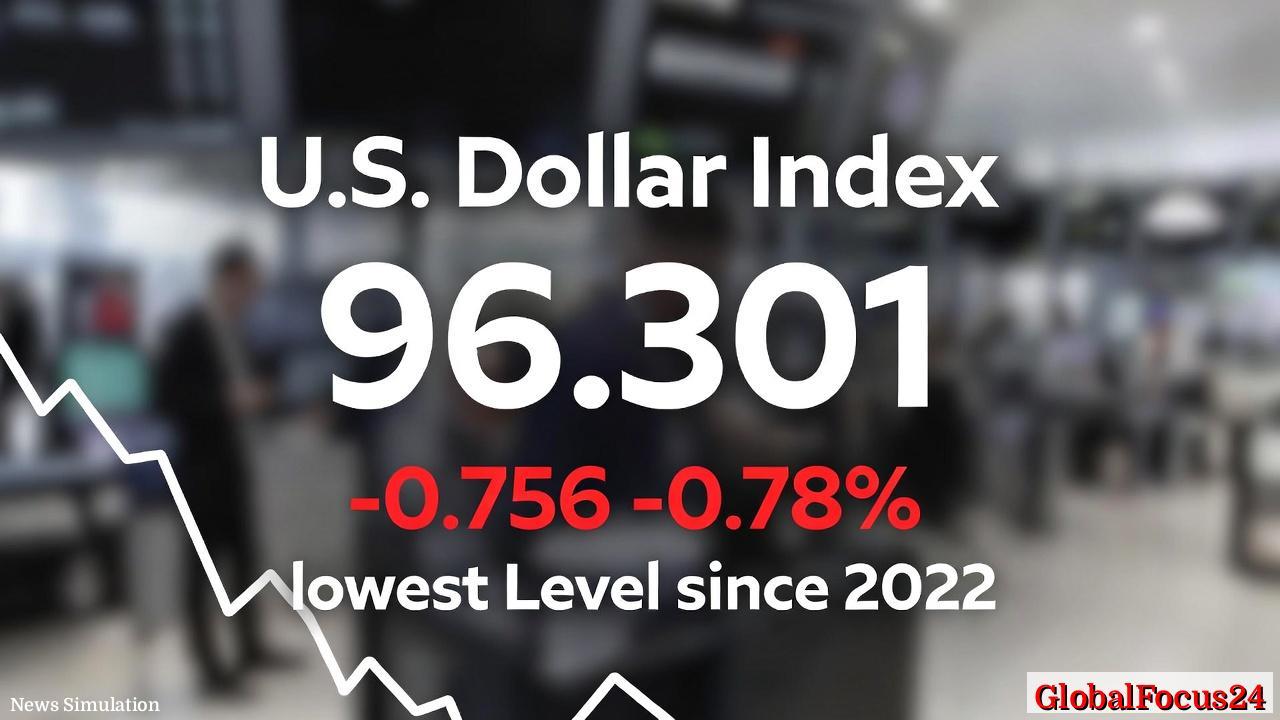
A broad retreat in the U.S. dollar gathered momentum in late January, as the U.S. Dollar Index slipped to 96.301, marking its lowest level since 2022. The decline of 0.756 points, or about 0.78%, signals a notable shift in currency markets and has wide-ranging implications for trade, inflation, and global financial sentiment. Traders and policymakers alike are parsing the move for clues about the trajectory of interest rates, domestic growth, and shifting monetary policy expectations as markets recalibrate to evolving economic data.
Historical context of the dollar’s oscillations
The U.S. Dollar Index, a weighted measure of the greenback against six major currencies, has long served as a barometer for the relative strength of the U.S. economy in a globally interconnected financial system. Its levels often reflect investor confidence, cross-border trade dynamics, and expectations for Federal Reserve policy. A drop to the 96.3 area echoes a period of relative dollar softness observed after the surge in pandemic-era liquidity began to unwind, followed by episodes of renewed strength tied to domestic inflation data and rate expectations. The latest move sits within a broader history of cyclical swings: periods of monetary tightening and subsequent cooling, shifts in growth momentum abroad, and the evolving competitive landscape in international finance.
Economic implications of a weaker dollar
- Trade competitiveness and export volumes: A softer dollar tends to make American goods more affordable for foreign buyers, potentially supporting export-oriented sectors. For manufacturers and agribusinesses that rely on global demand, a lower greenback can help stabilize margins when import costs rise, though the net effect depends on currency movements among trading partners and the price elasticity of demand for specific products.
- Inflation transmission and import costs: The dollar’s strength or weakness often influences import prices. A weaker dollar can push up the cost of foreign goods and commodities priced in dollars, contributing to inflationary pressures if pass-through effects dominate. Conversely, for consumers and businesses with foreign-denominated revenues, a softer dollar can improve competitiveness while complex hedging strategies may mitigate direct price impacts.
- Federal Reserve policy signals: Currency markets frequently react to expectations about monetary policy. A sustained decline in the dollar can reflect or influence bets about the pace of rate cuts, inflation trajectories, and the overall stance of the Fed. Market participants watch for clues about how labor markets, consumer spending, and financial conditions will shape future decisions on interest rates and balance sheet normalization.
Regional comparisons and global dynamics
In Western markets, the dollar’s recent decline stands in contrast to periods when the currency strengthened amid geopolitical tensions, supply chain disruptions, or surprises in economic data. Across major trade corridors, regional currencies have shown resilience or vulnerability to shifts in risk sentiment and policy expectations. For example, economies with current-account vulnerabilities or heavy reliance on commodity imports can experience amplified currency effects during dollar fluctuations, influencing inflation dynamics, debt service costs, and capital flows.
Emerging markets, in particular, monitor the dollar closely because many borrowers denominate debt in U.S. dollars. A softer dollar can ease debt service burdens for some countries, but it can also complicate policy coordination and capital market access if exchange-rate volatility emerges. In Asia, Europe, and Latin America, the transmission of dollar moves into local currencies interacts with a mosaic of monetary regimes, fiscal strategies, and structural reforms that collectively shape growth prospects.
Market participants’ interpretation of the latest move
Investors are weighing several factors as the dollar stabilizes at a lower level. One key consideration is the pace and durability of inflation cooling in the United States. If inflation continues to ease without reigniting wage pressures, the Fed may adopt a more accommodative stance or slow the pace of rate hikes, reinforcing the weaker-dollar environment. Another critical element is the resilience of global growth, particularly in major economies like the Eurozone, China, and Japan, which influences the relative attractiveness of dollar-denominated assets.
Additionally, energy prices and commodity markets interact with currency movements. A softer dollar can support commodity prices in terms of dollar-denominated payments, potentially affecting production costs and inflation expectations across energy-intensive industries. Traders also monitor geopolitical developments, trade negotiations, and supply-chain realignments, all of which can prompt abrupt shifts in risk appetite and currency valuations.
Public reaction and sectoral impact
Businesses engaged in import-heavy operations face near-term costs if hedging strategies do not fully offset exchange-rate movements. Conversely, exporters may see improved margins as their products become cheaper to foreign buyers. Financial institutions, meanwhile, adjust portfolios to align with revised expectations for interest rates and currency risk. Retailers and consumers could experience indirect effects through prices for imported goods, travel costs, and purchasing power as the dollar’s value evolves.
In regions with strong ties to the U.S. economy, the ripple effects of a weaker dollar can influence incentives for investment, manufacturing, and regional policy priorities. Governments may reassess trade agreements, competitiveness initiatives, and diversification strategies to mitigate exposure to currency fluctuations. The broader public often experiences the consequences through price signals, job market conditions, and the availability of affordable goods and services.
Structural factors behind the movement
Several structural elements underlie the recent dollar decline. Monetary policy divergence remains a core driver: if the Federal Reserve maintains a cautious stance while other central banks ease or pause, the relative appeal of the dollar can wane. Global risk sentiment, including a shift toward diversification in reserve holdings and a reassessment of safe-haven assets, also contributes to currency re-pricing. Finally, evolving macroeconomic data—from inflation readings to output growth and labor market metrics—continues to shape traders’ expectations and the dollar’s trajectory.
Policy and macroeconomic considerations for the months ahead
- Inflation trajectory and consumer spending: The persistence or abatement of inflation will influence monetary policy expectations. If price growth slows more decisively, markets may anticipate a path toward stabilization and potential rate relief, reinforcing a lower dollar environment.
- Growth signals and labor market health: Data on employment, wage growth, and productivity will inform views on domestic demand and the necessity for ongoing monetary tightening. A robust labor market paired with easing inflation could encourage a more gradual normalization of policy and currency stability.
- Global risk appetite and diversification: As investors seek to diversify away from single-currency exposure, demand for non-dollar assets can rise. This shift may color the dollar’s direction as capital flows seek alternative stores of value, impacting liquidity and borrowings worldwide.
- Trade policy and geopolitical developments: Trade tensions, sanctions, and diplomatic alignments shape economic expectations and currency valuations. Economies that diversify supply chains and reduce dependency on dollar-denominated transactions could alter the currency landscape over time.
Contextual comparisons with prior cycles
The current movement bears similarities to prior episodes when the dollar softened amid easing expectations and better-than-expected domestic growth. Yet each cycle carries unique drivers—whether it is shifts in commodity pricing, energy market dynamics, or the pace of central-bank balance-sheet normalization. Analysts emphasize that no single indicator provides a complete forecast; rather, a constellation of data points—inflation, growth, labor markets, and financial conditions—collectively informs the likely path for the dollar.
Implications for investments and hedging
For investors, the dollar’s direction influences portfolio construction and risk management. A weaker dollar can bolster non-dollar assets and international equities when translated back into domestic currency terms, potentially enhancing diversification benefits. Conversely, exporters and firms with substantial foreign revenue streams may benefit from hedging strategies that reduce exposure to sudden currency swings. Financial professionals advise monitoring inflation surprises, rate expectations, and global capital flows to adjust positions proactively.
Regional performance snapshots
- United States: Domestic growth momentum, inflation readings, and labor market resilience will continue to shape the dollar’s path. Investors will watch for signs of a sustained softer inflation trajectory that could support a gradual shift toward monetary easing.
- Europe: The Euro area’s economic performance and monetary policy outlook influence relative currency strength. A stable or improving growth picture could support a more balanced currency pair dynamic with the dollar.
- Asia-Pacific: The region remains sensitive to commodity cycles, export demand, and monetary policy divergence. Currency resilience or softness will hinge on external demand, trade relations, and central-bank actions.
- Latin America: Currency movements in this region often reflect global risk sentiment and commodity price volatility, along with domestic policy credibility and inflation control measures.
Conclusion: watching the broader picture
The U.S. Dollar Index’s fall to 96.301 marks a notable moment in the ongoing recalibration of currency markets. While the move provides potential benefits for exporters and importers navigating a rapidly changing economic landscape, it also introduces new considerations for inflation management, debt servicing, and international capital flows. As investors, policymakers, and businesses absorb the implications, the currency narrative will continue to unfold through upcoming data releases, central-bank communications, and evolving trade dynamics. The broader message is clear: currency markets remain a dynamic interface between domestic economic health and global financial sentiment, with the dollar’s trajectory serving as a barometer of how those forces interact in real time.