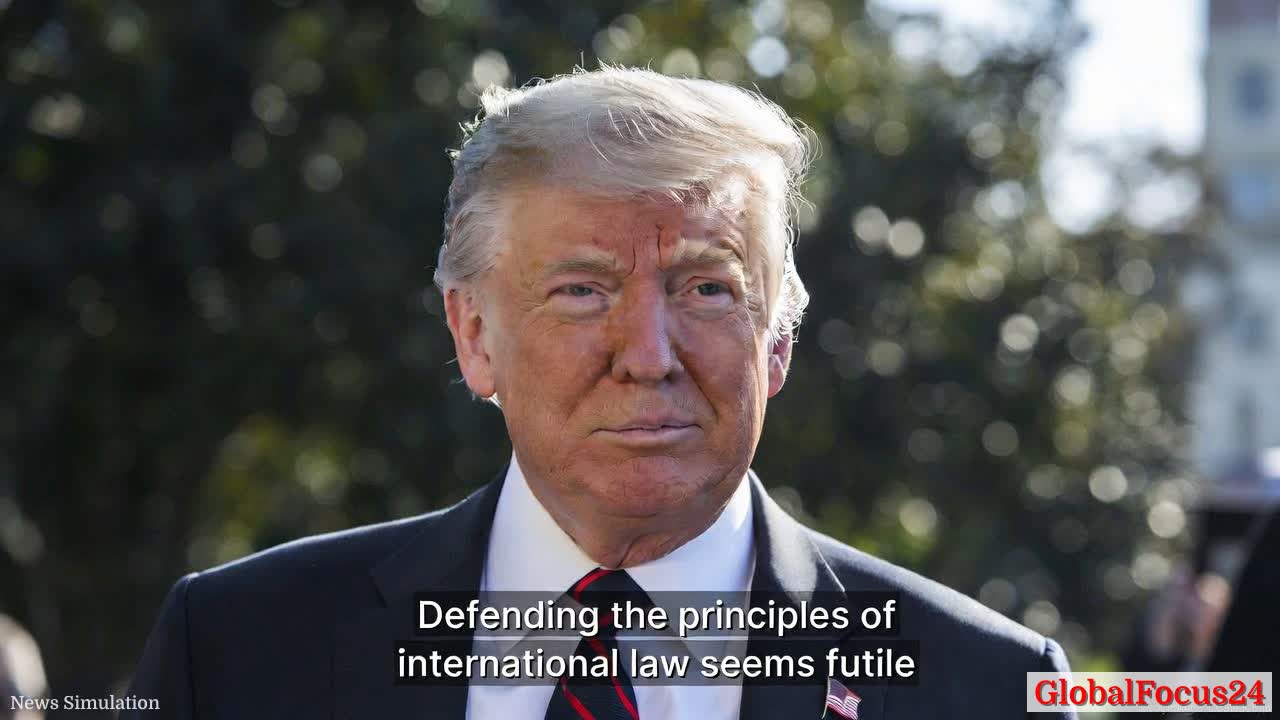
Rising Global Tences: The Shifting Landscape of International Law and Power
A new era of geopolitical maneuvering is reshaping how nations interact on the world stage. While international law has long served as a framework for coexistence, recent developments highlight a growing divergence between legal norms and strategic power. As states navigate these tensions, the global economy, regional dynamics, and public sentiment are all being recalibrated in ways that will echo for years to come.
Historical context: from treaties to power plays The modern international system rests on a web of treaties, institutions, and norms designed to regulate behavior, reduce conflict, and facilitate cooperation. After the devastating world wars of the 20th century, leaders founded a dense architecture of agreements—from arms control pacts to trade rules—that aimed to bind nations to peaceful competition and predictable outcomes. Over decades, this framework supported rapid globalization, enabling supply chains that span continents and investment flows that fuel development in emerging economies.
Yet the arc of history shows that legal frameworks rarely operate in isolation. They coexist with national interests, strategic calculations, and domestic politics. When a country perceives that lawful obligations constrain its strategic goals, it may seek to reinterpret or bypass those obligations. Conversely, actors with significant economic or military clout can leverage leverage to shape outcomes in ways that the letter of law alone might not predict. This dynamic has intensified as new technologies, hybrid warfare concepts, and information-age tools broaden the toolkit available to power centers around the world.
Economic impact: policy risk, investment, and market confidence Legal norms matter for business confidence. Multinational corporations weigh treaty commitments, sanctions regimes, and dispute-resolution mechanisms when planning capital expenditure, supply chains, and entry into new markets. When international law appears fragile or selectively enforced, risk premiums rise, and capital flows become more volatile. Investors seek predictable environments with credible enforcement of contracts, clear dispute-resolution avenues, and stable regulatory regimes. In this context, the erosion or reinterpretation of long-standing norms can slow investment, raise financing costs, and alter the relative attractiveness of different regions.
Regional economic spillovers are particularly salient. In regions where security concerns intensify and rule-of-law perceptions shift, investment may reallocate toward markets that are seen as more stable or more responsive to global economic integration. Conversely, periods of perceived legal fragility can spur regional blocs to accelerate alternative trade arrangements, currency diversification, or intra-region investment programs aimed at reducing exposure to external policy shocks. The net effect is a rebalancing of where capital flows and job creation occur, with ripple effects on exchange rates, inflation expectations, and long-run productivity.
Case-driven regional comparisons offer insight into these dynamics. In one region with a long history of regulatory alignment, businesses have benefited from a steady stream of foreign direct investment, well-developed financial markets, and a shared set of commercial norms. Over time, that region’s pricing power in global supply chains, as well as its access to financing, has been reinforced by the perception of consistent application of rules and stable governance. In another region, more fragmented regulatory environments, occasional disputes over territorial claims, and a perception of selective enforcement have led to more cautious corporate risk assessments. Companies operating there often pursue hedging strategies, diversify suppliers, and seek alternative routes to market to mitigate potential disruptions.
Public reaction and social dimensions Public sentiment plays a critical role in shaping how international norms are perceived and upheld. Societies that suffer the consequences of abrupt policy shifts—whether through economic sanctions, supply chain interruptions, or the loss of access to critical goods—tend to demand accountability and greater transparency from both domestic leaders and international institutions. In many communities, this translates into demands for more resilient infrastructure, diversified energy sources, and stronger social safety nets to weather external shocks. Public discourse often frames these issues in terms of fairness, security, and long-term prosperity, fueling debates about the balance between national sovereignty and international cooperation.
Another dimension is the information environment. With the proliferation of digital media and rapid news cycles, public opinion can turn more quickly in response to perceived shifts in global norms. Voices from business, academia, and civil society contribute to a broader conversation about whether traditional frameworks still serve the interests of ordinary people or have become tools of power projection for a subset of actors. Navigating this landscape requires transparent communication, evidence-based policy design, and clear articulation of the trade-offs involved in maintaining international order.
Economic resilience and strategic adaptation As the tension between law and power persists, economies are increasingly adopting strategies to bolster resilience. Diversification of supply chains reduces exposure to any single jurisdiction or policy regime. Strategic stockpiles for essential goods, critical minerals, and energy ensure continuity during periods of disruption. Financial markets respond to policy ambiguity with hedges—currency diversification, heightened risk premia, and precautionary liquidity buffers—that collectively contribute to greater volatility but can also shorten the duration of shocks if managed well.
Regional blocs are translating these lessons into concrete economic strategies. Some economies are expanding regional trade agreements, aligning standards, and coordinating regulatory approaches to streamline cross-border commerce. Others are investing in domestic capabilities—research and development, advanced manufacturing, and digital infrastructure—to reduce reliance on external suppliers for critical inputs. The overarching aim is to maintain productive growth in the face of shifting geopolitical realities while preserving access to global markets.
Implications for policy and governance Looking ahead, policymakers face a set of persistent questions. How can states preserve the rule of law while recognizing legitimate national interests? What mechanisms can strengthen enforcement of international norms without stifling economic innovation or political flexibility? And how can international institutions evolve to remain credible in a world where power asymmetries shape outcomes as much as treaties do?
One path is to enhance practical mechanisms for cooperation that are resilient to political fluctuations. This can include more robust dispute-resolution processes, clearer enforcement provisions, and flexible yet principled approaches to sanctions and sanctions relief. Additionally, expanding regional collaboration on energy security, climate resilience, and supply-chain diversification can help shelter economies from systemic shocks while reinforcing the benefits of cooperative arrangements.
Historical patterns suggest that the most enduring arrangements blend legal norms with pragmatic power-sharing commitments. When nations perceive a credible pathway to mutual benefit, international law gains legitimacy and staying power. When power dynamics dominate without transparent accountability, the credibility of legal frameworks can erode, and the associated costs ripple through trade, investment, and everyday life.
Looking beyond immediates, the global economy continues to rely on a delicate balance: the predictability of rules paired with the enforcement capacity to ensure those rules are meaningful. While power remains a persistent driver of outcomes, a robust, well-communicated, and fairly applied set of international norms can still serve as a stabilizing force. The challenge lies in strengthening both the mechanisms that enforce these norms and the incentives for states to adhere to them, even when doing so requires difficult compromises or short-term costs.
Regional comparisons underscore the diversity of outcomes in a world where legal commitments intersect with strategic interests. In some economies, integration under a shared framework has produced lower transaction costs, faster dispute resolution, and greater confidence for investors. In others, fragmentation has raised barriers to entry, complicating the path to growth and innovation. Each scenario offers lessons about how to design institutions and policies that maximize inclusive, sustainable development while acknowledging the realities of geopolitics.
Public-facing narratives matter as well. Clear, transparent communication about how international law interacts with national security and economic objectives helps societies understand trade-offs and maintain trust in institutions. This is not about choosing sides but about recognizing how collective action—under a framework of norms and rules—contributes to long-term stability and opportunity. When people see tangible benefits from cooperation—improved infrastructure, steadier prices, jobs and growth—the legitimacy of international norms strengthens, even amid shifting power dynamics.
Conclusion: navigating a changing landscape with clarity and purpose The interplay between international law and power will continue to shape the trajectory of global economics and regional development. Historical experience shows that effective governance requires more than textual commitments; it demands credible enforcement, adaptable institutions, and a shared sense of responsibility among nations. By prioritizing resilient supply chains, transparent governance, and inclusive economic strategies, countries can mitigate risk while advancing prosperity within a framework that still holds real value.
This evolving environment calls for careful analysis, informed debate, and steady leadership that can translate complex legal concepts into practical policies. As markets adapt to new realities and communities respond to changing conditions, the drive toward predictable, fair, and enforceable norms remains a cornerstone of sustainable growth. The challenge is to ensure that those norms keep pace with power, delivering benefits that extend beyond the boardroom to everyday life.