Chipotle Faces Traffic Downturn as U.S. Restaurant Visits Slow, Weighing on Shares and Market Perception
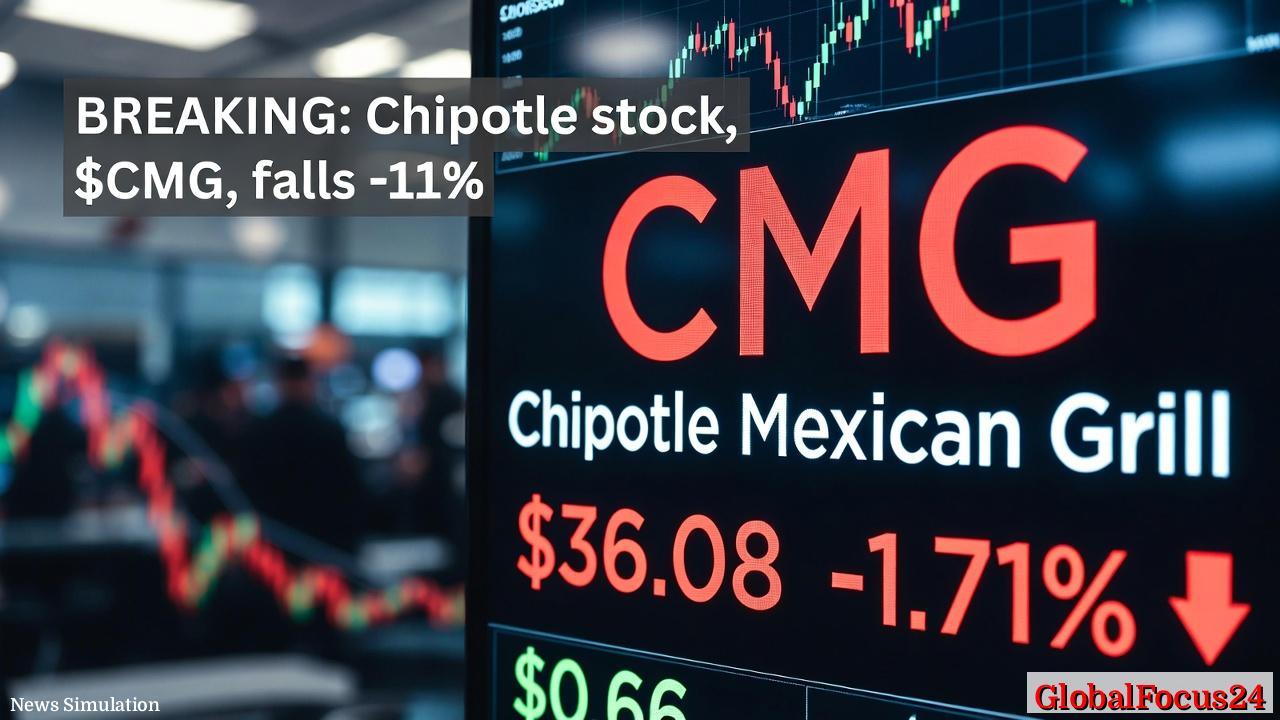
In a setback underscoring broader shifts in the fast-casual sector, Chipotle Mexican Grill reported a significant decline in foot traffic across its domestic restaurant network, triggering an 11% drop in its shares before market reactions moderated by intraday price movements. The company’s commentary tied the traffic decline to a combination of macro-level consumer caution, rising menu prices, and evolving in-store experiences, prompting a nationwide reassessment of competitive dynamics within the sector.
Historical context: growth cycles and the evolution of fast-casual dining Chipotle’s ascent over the past two decades has been tied to a compelling blend of streamlined operations, fresh ingredients, and a carefully calibrated menu. The brand popularized a fast-casual model that emphasized customization, quality perception, and speed, enabling rapid unit-level profitability even as it navigated periodic supply and labor challenges. In the broader arc of dining-out trends, fast-casual restaurants carved out a sizable share of the mid-priced, quick-service segment by offering performance benefits that resonated with busy households and urban professionals.
However, the industry’s trajectory has changed as inflation cooled and consumer budgets rebalanced. Across many markets, diners began prioritizing value, portion perceptions, and efficient ordering paths—an environment that tested even well-established players with strong brand equity. Chipotle’s recent traffic data fits within a longer pattern of seasonality and macroeconomic sensitivity that has impacted a subset of quick-service brands more acutely than traditional fast-food leaders.
Economic implications: customer behavior, pricing, and unit economics A decline in restaurant traffic has multi-dimensional implications for Chipotle’s near-term operating metrics. Fewer visits can pressurize same-store sales growth, a key performance gauge for the industry, while fixed costs—labor, occupancy, and supply chain commitments—remain largely constant. The company has historically managed through commodity and labor cost fluctuations by dialing mix, promotions, and store-level efficiency. When traffic weakens, even small shifts in average ticket size or upsell rates can materially affect profitability.
Rises in menu prices, often deployed to offset input cost pressures, can create a feedback loop: higher perceived prices may deter discretionary visits, particularly if competing options emphasize value-driven promotions or perceived better value. In such environments, robust marketing, digital engagement, and loyalty programs become critical levers to sustain customer frequency and basket size. For Chipotle, this crisis of confidence around traffic may accelerate investments in digital ordering, rewards integration, and streamlined in-store experiences to restore throughput and customer flow.
Regional comparisons: how Chipotle’s experience stacks up against peers The current traffic softness echoes trends seen in other major fast-casual players that have navigated similar macro headwinds. In markets with high urban density and a mix of daytime and evening traffic, consumer substitution toward lower-cost options can be more pronounced, particularly during periods of economic uncertainty. Conversely, brands that have successfully integrated omnichannel capabilities—with seamless mobile ordering, curbside pickup, and contactless payments—often mitigate declines in dine-in traffic by increasing overall throughput and improving guest convenience.
Comparative observations across regions reveal a mosaic of outcomes. Some metropolitan centers report sustained foot traffic tied to office re-openings and downtown activity, while suburban corridors exhibit a steadier but slower recovery as households recalibrate discretionary spending. For investors and analysts, regional performance signals—such as traffic-to-sales conversion, digital channel penetration, and loyalty program engagement—offer nuanced insight into how far recovery remains from pre-downturn baselines.
Operational responses: how Chipotle can navigate near-term headwinds To address reduced traffic, Chipotle is likely to pursue a combination of tactical and strategic measures. Short-term actions may include calibrated promotions aimed at re-engaging lapsed customers while preserving margins, along with enhancements to the in-store dining experience that reduce friction from ordering to pickup. Strengthening digital channels—mobile ordering, loyalty rewards, and personalized offers—can help sustain frequency even if walk-in traffic remains pressured.
On the longer horizon, Chipotle may emphasize store productivity initiatives, such as optimizing labor scheduling, inventory management, and kitchen workflow to improve throughput without compromising food quality. Product innovation and limited-time offerings can stimulate trial and attract new customers, provided price points remain aligned with perceived value. Additionally, investments in store design and customer-journey improvements—ranging from queue management to order accuracy and speed—can contribute to higher guest satisfaction and repeat visits.
Market reaction and investor sentiment The immediate market reaction to traffic-related concerns is often a combination of reactionary price movement and reassessment of growth trajectories. When a well-known brand signals softer-than-expected customer visitation, investors scrutinize unit economics, margin guidance, and the potential for a faster-than-anticipated normalization of traffic patterns once macro conditions improve. In the case of Chipotle, the 11% drop in shares reflects a sharp punitive response to the traffic data, even as the company continues to highlight its resilient footprint, brand equity, and ongoing efforts to optimize customer experience.
Beyond the stock price, analysts weigh ancillary indicators such as average ticket growth, menu pricing leverage, and the trajectory of new-store openings. A disciplined focus on cash flow generation, capital expenditure efficiency, and long-term profitability remains central to the investment thesis, even when near-term traffic signals are weaker than anticipated. For regional operators and local franchise owners, traffic volatility can influence near-term sales planning, labor needs, and promotional calendars, underscoring the importance of agility in responding to shifting customer demand.
Public reception and consumer perspective Public reaction to traffic declines often centers on perceived value, portion sizes, and the overall dining experience. Consumers may cite larger menu prices, smaller portion perceptions, or changes in in-store service quality as reasons for limiting visits. Restaurateurs that successfully address these concerns tend to emphasize value without eroding quality, maintain consistency in portioning, and invest in experiences that differentiate their brand from competitors. In the current landscape, transparent communication about value—paired with consistent food quality and reliable service—can help restore confidence and drive repeat visits.
Sustainability and supply chain context In addition to traffic dynamics, broader supply chain realities can influence restaurant performance. Inflationary pressures in food and packaging materials, labor market tightness, and volatility in commodity markets shape menu pricing and operational flexibility. Brands that actively monitor supply chain resilience, diversify supplier networks, and maintain flexible sourcing strategies are better positioned to weather fluctuations in input costs while preserving guest value. For Chipotle, ongoing sustainability initiatives—ranging from responsible sourcing to waste reduction—serve to reinforce brand trust and support a differentiated value proposition in an increasingly competitive landscape.
Conclusion: navigating uncertainty with a measured, strategic approach Chipotle’s traffic decline highlights a transitional period for fast-casual dining, as consumer priorities continuously evolve in response to economic signals and competitive pressures. While the short-term trajectory may show volatility in visits and share price, the company’s emphasis on digital integration, store-level efficiency, and menu innovation positions it to adapt to a shifting demand environment. The broader lesson for the sector is clear: success hinges on balancing price, value, and experience, while leveraging data-driven insights to guide store operations and marketing strategies.
As markets digest the latest performance indicators, market participants will be watching not only traffic figures but also the speed at which Chipotle can translate improved guest flow into sustainable revenue growth and higher cash flow generation. The coming quarters are likely to feature a careful recalibration of expectations, with emphasis on execution at the store level, disciplined capital allocation, and a continued focus on delivering a consistent, high-quality dining experience that resonates with a broad customer base.