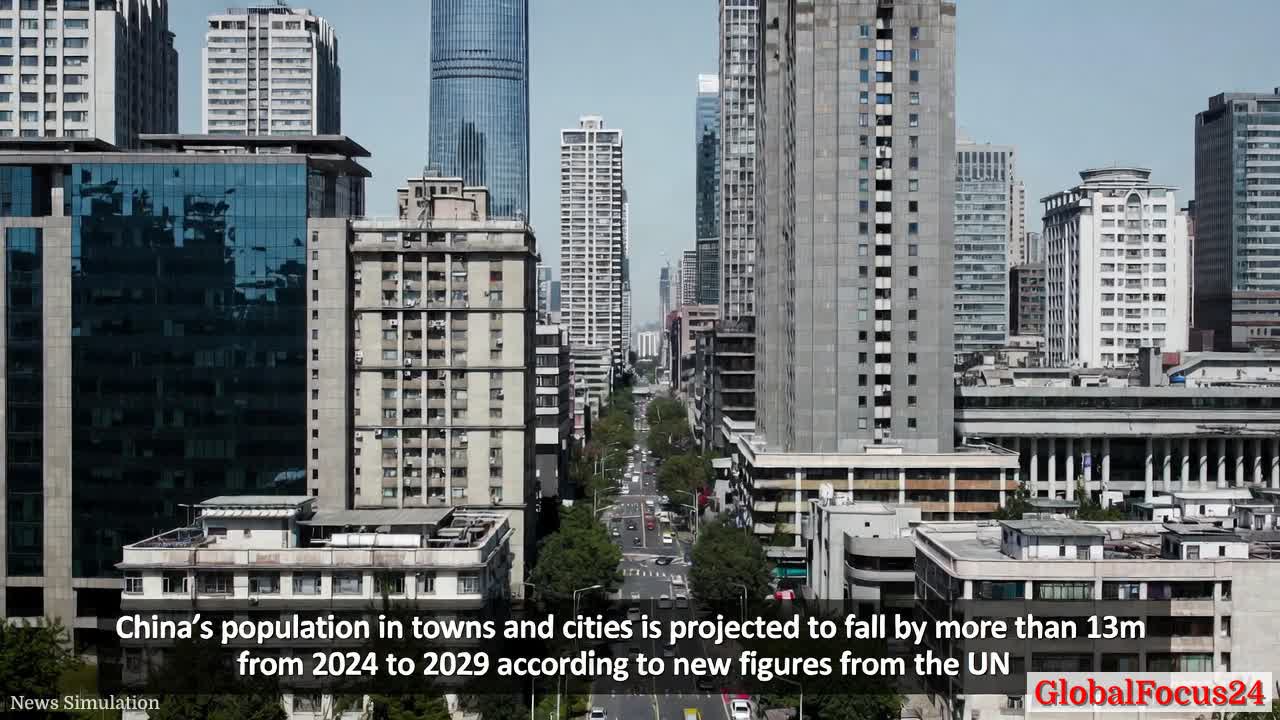
China’s urban future: gloss, grime, and a shifting population landscape
China’s population in towns and cities is projected to fall by more than 13 million from 2024 to 2029, a signal that the country’s urban expansion is poised to enter a period of recalibration. The new UN projections illuminate a trajectory in which rapid metropolitan growth slows, restructures, and, in some places, contracts. As cities adapt to changing demographics and spending patterns, the urban system faces a complex set of economic, social, and infrastructural implications that will reverberate across regional economies and the broader national landscape.
Historical context: from urban boom to demographic turning point
- The late 20th and early 21st centuries marked an era of explosive urban growth in China. Industrial policy, rural-to-urban migration, and the expansion of manufacturing hubs concentrated population and activity in coastal and inland cities alike. This period generated unprecedented urban footprints and elevated living standards for millions. The shift reshaped regional development, created new urban hierarchies, and linked city success to export-oriented growth patterns. The trend also accelerated demand for housing, transportation, and public services as urban populations swelled.
- In recent years, demographic headwinds have grown more evident. China’s aging population, shrinking birth rates, and evolving household preferences have tempered the pace of new urban entrants. Policy shifts, including measures to balance housing affordability with urban mobility, have attempted to manage demand and social equity while maintaining momentum in urban areas. This historical context helps explain why a projected urban population decline over five years represents a meaningful inflection rather than a temporary blip.
- The urban transformation has not been uniform. Some megacities and regional capitals have continued to attract talent, investment, and global connectivity, while smaller cities and traditional manufacturing centers face structural pressures. Understanding this mosaic is crucial for assessing the broader economic implications of a projected urban population decline. Regional disparities remain a central feature of China’s urban narrative, with prosperous hubs coexisting alongside cities confronting slower growth or stagnation.
Economic impact: navigating growth, stagnation, and resilience
- Consumption and investment are closely tied to urban dynamics. A decline in urban population can reshape demand for real estate, retail, and services, potentially cooling overheating segments in overheated urban markets. At the same time, cities that successfully attract high-skilled workers, entrepreneurs, and foreign investment may offset headwinds by boosting productivity and innovation. The net effect depends on how local governments align zoning, housing supply, transportation, and business-friendly policies to maintain economic vitality.
- Urban productivity remains a central lever for national growth. Even with population shifts, cities can drive economic gains through digitization, services-led expansion, and the integration of advanced manufacturing with regional ecosystems. The capacity to convert brainpower and capital into high-value outputs will determine which urban centers thrive despite slower population growth, and which face more pronounced downturns in activity.
- Infrastructure and public services investments take on renewed importance. When population growth softens, cities may recalibrate investment in housing, transit, healthcare, and education to match actual demand. This can improve efficiency and living standards but requires careful planning to avoid under-provision or misallocation of resources. The outcome hinges on a balance between long-term strategic priorities and short-term fiscal realities.
Regional comparisons: divergent paths within a vast urban landscape
- Coastal hubs versus inland centers. Coastal metropolitan areas historically benefited from proximity to global markets and export-oriented industries. A slower urban population trend could intensify competition among coastal cities to maintain momentum, while inland cities may accelerate modernization to attract investment and talent despite slower domestic migration. The dynamics will vary depending on industry mix, connectivity, and local governance.
- Tiered city systems. China’s urban system includes mega-cities, large prefecture-level cities, and smaller urban clusters. A population decline in towns and cities may widen gaps between high-performing urban economies and those struggling with out-migration. Cities that can retool industries toward services, green technologies, and high-tech manufacturing stand a better chance of sustaining growth and employment.
- Sectoral shifts. As urban populations evolve, employment patterns may shift toward information services, healthcare, education, and green infrastructure. Regions with competitive education pipelines and supportive innovation ecosystems could sustain higher living standards even with slower population growth. This reallocation of labor and investment will shape regional income distribution and economic resilience.
Societal implications: housing, mobility, and quality of life
- Housing markets could experience a reevaluation of supply and demand. If urban populations stabilize or decline in some areas, price dynamics may soften, enabling more affordable housing or prompting policymakers to reassess development pipelines. However, cities with strong economic fundamentals could maintain demand for housing through continued in-migration of workers and students, keeping prices buoyant in select neighborhoods.
- Transportation and urban mobility may undergo targeted optimization. Reduced population pressure in certain areas could ease congestion and shorten commutes, improving quality of life. Conversely, cities that maintain high mobility and job density might face sustained demand for expanded transit networks, last-mile services, and multi-modal transport solutions to sustain economic efficiency.
- Public services and social safety nets. An aging urban population elevates demand for healthcare, eldercare, and social support systems. Cities that integrate universal design principles, accessible healthcare, and affordable services will be better positioned to maintain livable urban environments as demographics shift. The interplay between aging populations and urban infrastructure will shape policy priorities in the coming years.
Environmental and sustainability considerations: urban ecosystems under pressure
- Resource management remains critical. Cities face pressure to balance growth with sustainable water, energy, and waste management. A changing population footprint can influence city-level environmental strategies, including energy efficiency programs, urban green spaces, and resilience planning against climate-related risks.
- Climate adaptation and resilience. Urban planners increasingly prioritize climate-ready infrastructure, flood protection, and heat mitigation. Population shifts can either complicate or facilitate these efforts, depending on funding, governance, and community engagement. The ability to blend sustainability with economic activity will be a defining feature of urban policy in the near term.
Public reaction and policy responses: indicators of a changing mood
- Local governance and bold reforms. In several regions, officials are pursuing targeted development plans that emphasize advanced manufacturing, digital services, and regional supply chains. These efforts aim to sustain economic vitality while addressing housing affordability, transportation, and environmental concerns. Public support for pragmatic reforms often hinges on visible improvements in living standards and job opportunities.
- Community voices and urban identity. Residents are expressing nuanced attitudes toward urban change—valuing job access and cultural amenities while seeking affordable housing and safer neighborhoods. Local media and civil society groups frequently highlight examples of successful urban revitalization, alongside concerns about displacement and inequality. The public discourse reflects a city-by-city mix of optimism, skepticism, and urgency.
Looking ahead: implications for the broader economy and global context
- Global trade and supply chains. China’s urban centers will continue to play pivotal roles in manufacturing, logistics, and technology markets. The ability to adapt urban ecosystems to evolving trade patterns and domestic demand will influence broader regional competitiveness. A resilient urban framework could support diversification and more sophisticated value chains.
- Innovation and urban competitiveness. Cities that invest in education, talent retention, and research and development stand to preserve competitive advantages. Strong collaboration between universities, industry, and local government can accelerate the commercialization of new technologies, even in the face of slower population growth. These dynamics underscore the importance of knowledge-intensive sectors in sustaining urban dynamism.
- International comparisons. Urban population trends in China mirror a broader global narrative where some large economies are balancing growth with aging workforces and shifting migration patterns. Analyzing how other regions manage urban resilience, housing affordability, and mobility can provide valuable lessons for Chinese policymakers and city leaders seeking to optimize outcomes for residents and businesses alike.
Conclusion: navigating an urban future with resilience and clarity
- The projected decline in urban population from 2024 to 2029 marks a significant moment in China’s urban history. It signals a need for recalibrated planning that emphasizes productivity, housing affordability, and sustainable growth, rather than relying on population expansion as the sole engine of urban prosperity.
- For policymakers, the challenge lies in aligning infrastructure investments with evolving demographics, while maintaining economic vitality across diverse regions. Cities that anticipate shifts in demand, prioritize inclusive growth, and nurture innovation ecosystems are more likely to sustain high living standards and robust employment.
- For businesses and residents, the evolving urban landscape offers opportunities to participate in smarter city initiatives, from transit optimization to energy efficiency and digital services. A measured approach that emphasizes resilience, adaptability, and long-term value creation can help urban areas weather demographic transitions while preserving the benefits and vibrancy that define China’s cities.
Note: The figures cited reflect United Nations projections and are subject to revision as new data becomes available.