China’s Treasury Holdings Decline Highlights Diversification of Foreign Exchange Reserves
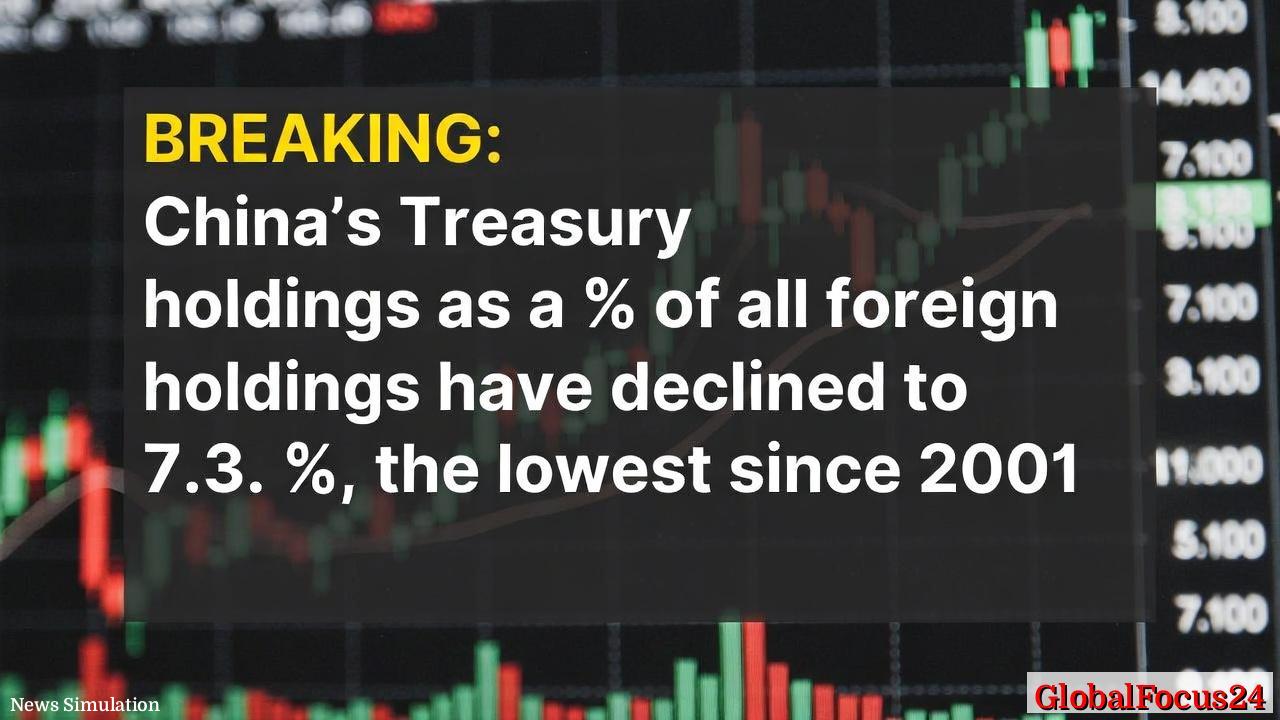
A shift in China’s foreign exchange strategy is drawing renewed attention as official data show a continued retreat from U.S. Treasury securities and a concurrent accumulation of gold reserves. The latest figures reveal that China’s share of foreign-held U.S. Treasuries has fallen to 7.3 percent—the lowest since 2001—accompanied by a sizable absolute decrease in dollar-denominated holdings. At the same time, Beijing’s central bank has reaffirmed its gold accumulation, adding one tonne of bullion in January and extending a streak of consecutive monthly purchases that has now reached 15 months. Taken together, these developments illuminate Beijing’s broader approach to reserve management amid evolving global financial dynamics.
Historical backdrop: a long arc of reserve accumulation and diversification
China’s ascent as a major holder of U.S. Treasuries began in earnest in the early 2000s, synchronized with its rapid export-led growth and a policy framework designed to keep the yuan’s exchange rate competitively priced. For much of the next decade, foreign exchange reserves expanded at a blistering pace, with U.S. Treasuries serving as the principal liquid asset to park vast inflows. By 2011, China held a substantial share of global sovereign debt in U.S. dollars, a position that reflected both the scale of its reserve build-up and the relative safety and liquidity of U.S. government securities.
Since then, the fiscal and monetary cycles of the United States—the expansionary years, later fiscal adjustments, and the associated level of public debt—have interacted with shifts in China’s economic strategy. As China’s economy matured and its financial markets deepened, the calculus around reserve diversification evolved. The decline in China’s share of foreign-held Treasuries from a peak of 28.8 percent in June 2011 to 7.3 percent today signals not merely a retrenchment from U.S. debt, but a deliberate pivot toward a broader, more balanced reserve composition.
Absolute holdings have also contracted. The decline in China’s Treasury holdings by about $627 billion since the peak reflects a persistent drawdown over more than a decade, with cautionary adjustments during periods of global market volatility and trade tension. The downward trend underscores a strategic objective: reduce exposure to a single currency regime and diversify into other assets that may offer different risk and return characteristics.
Gold as a strategic hedge and diversifier
Concurrently, China’s gold reserves have been on a steady ascent. In January, the People’s Bank of China expanded official bullion holdings by one tonne, reinforcing a multiyear campaign to replenish and increase gold stockpiles. With this addition, China’s total gold reserves now stand at approximately 2,308 tonnes, a record level that places the country among the world’s largest holders of central bank gold.
Gold’s role in reserve management is multifaceted. It provides a potential hedge against currency depreciation, serves as a non-dollar asset class that can diversify risk, and preserves a form of financial sovereignty in uncertain macroeconomic environments. For many central banks, gold remains a trusted store of value with liquidity characteristics that can complement dollar-denominated assets during episodes of market stress or currency volatility. China’s ongoing accumulation aligns with a growing trend among reserve managers to balance liquidity needs with long-term store-of-value objectives.
Regional comparisons: how other major holders are adjusting
China’s reserve diversification patterns are not occurring in a vacuum. Several other large reserve holders have undertaken shifts in their asset allocations, driven by concerns about global interest rate trajectories, inflation, and the evolving geopolitical landscape.
- United States: As the issuer of the global reserve currency, U.S. Treasuries remain a core component of many central banks’ portfolios. Yet, alongside the United States’ own debt dynamics, reserve managers are increasingly sensitive to interest rate risk, inflation paths, and the potential for policy shifts that could affect the relative attractiveness of dollar-denominated assets.
- Japan and other Asian economies: In nearby markets, central banks have pursued a mix of domestic asset purchases, foreign securities adjustments, and gold acquisitions as part of broader financial stability strategies. While the scale and pace differ, gold purchases by several central banks reflect a shared interest in diverse reserve portfolios.
- Europe and emerging markets: European reserve managers also emphasize diversification, balancing government bonds with equities, commodities, and gold where feasible. The overarching theme across regions is a pragmatic approach to risk management in a world of shifting capital flows and policy uncertainty.
Economic impacts: what the shift means for markets and policy
The rebalancing of China’s reserve holdings has several potential implications for global markets and economic policy:
- Bond markets and yields: A gradual departure from large-scale Treasury purchases can influence demand dynamics in long-term debt markets. If a major holder trims its position, it can exert upward pressure on yields or alter the slope of the yield curve, depending on concurrent demand from other buyers and the pace of reinvestment.
- Currency and exchange-rate considerations: As reserve diversification evolves, central banks can affect foreign exchange markets through their asset mix and foreign reserve operations. While the direct impact of a single country’s reserve reallocation may be modest in the short run, cumulative shifts among multiple buyers contribute to broader currency market dynamics.
- Gold price and sentiment: Persistent gold accumulation by central banks often supports bullion demand and can influence gold prices, particularly when it signals broader concerns about inflation, policy credibility, or the stability of fiat currencies. A longer-running trend of reserve diversification into gold may also affect market expectations around inflation protection and monetary independence.
- Global financial resilience: Diversified reserves enhance the resilience of a nation’s financial system to shocks. For China, increasing gold holdings can provide a non-dollar safe haven, potentially reducing vulnerability to shifts in U.S. monetary policy or dollar liquidity conditions.
Public reaction and policy implications
Market participants and analysts have weighed the significance of China’s reserve shifts in light of broader economic indicators and geopolitical developments. The move is often interpreted as a measured adjustment rather than a sudden strategic reversal. While a smaller share of Treasuries reduces exposure to U.S. rate moves, it does not imply a withdrawal from global financial integration. Rather, it reflects a managed approach to reserve composition that seeks to balance liquidity, safety, and diversification.
From a policy perspective, the resilience of the dollar remains a central consideration for many economies. A diversified reserve profile can help central banks mitigate systemic risk and hedge against idiosyncratic shocks tied to a single currency regime. At the same time, countries that accumulate gold may view bullion as an anchor of monetary credibility, particularly amid heightened financial market volatility or policy uncertainty.
Longer-term outlook: steering toward a balanced reserve framework
Looking ahead, a prudent reserve framework for any large economy involves assessing risk, liquidity needs, and strategic objectives. For China, the path appears to favor a blended approach: maintaining sufficient dollar liquidity for trade and financial intermediation while expanding holdings in non-dollar assets and gold to diversify risk exposure. In this context, gold acts as a complement to traditional reserve assets, offering an additional layer of protection against potential regime shifts in global finance.
Historical context remains a valuable reference as markets adapt to new reserve configurations. Past episodes where central banks adjusted holdings—whether in response to inflation, debt sustainability, or currency strength—have demonstrated that reserves are not static assets but dynamic tools for macroeconomic stabilization. The current trajectory underscores a broader trend toward more resilient, diversified reserve portfolios among major economies.
Regional implications for trading partners and local markets
For trading partners within Asia and beyond, shifts in China’s reserve strategy can influence regional liquidity and investment flows. Countries that rely on Chinese demand for commodities or that participate in cross-border financial activities may observe nuanced effects on pricing, hedging strategies, and capital allocation. As China broadens its asset base, regional markets may experience periods of repricing in response to evolving risk perceptions and the recalibration of hedging strategies by financial institutions.
Conclusion: a measured rebalancing with global ramifications
China’s retention of a lower share of U.S. Treasuries, paired with sustained gold purchases, points to a deliberate, long-term recalibration of reserve holdings. This approach aims to preserve liquidity and safety while building greater diversification for resilience against global financial shocks. In an era of shifting supply chains, increasing financial fragmentation, and evolving currency dynamics, the path toward a balanced reserve framework reflects a practical response to an uncertain, interconnected world.
As markets continue to monitor central-bank decisions and the evolving architecture of international finance, China’s reserve strategy serves as a reminder that no single asset class need dominate a nation’s safety net. The careful blend of Treasuries, other dollar-denominated assets, currencies, and precious metals will likely shape reserve management discussions for years to come, influencing policy debates, investment decisions, and the broader trajectory of global financial stability.