China’s Holdings of U.S. Assets Stabilize at Readily Notable Levels
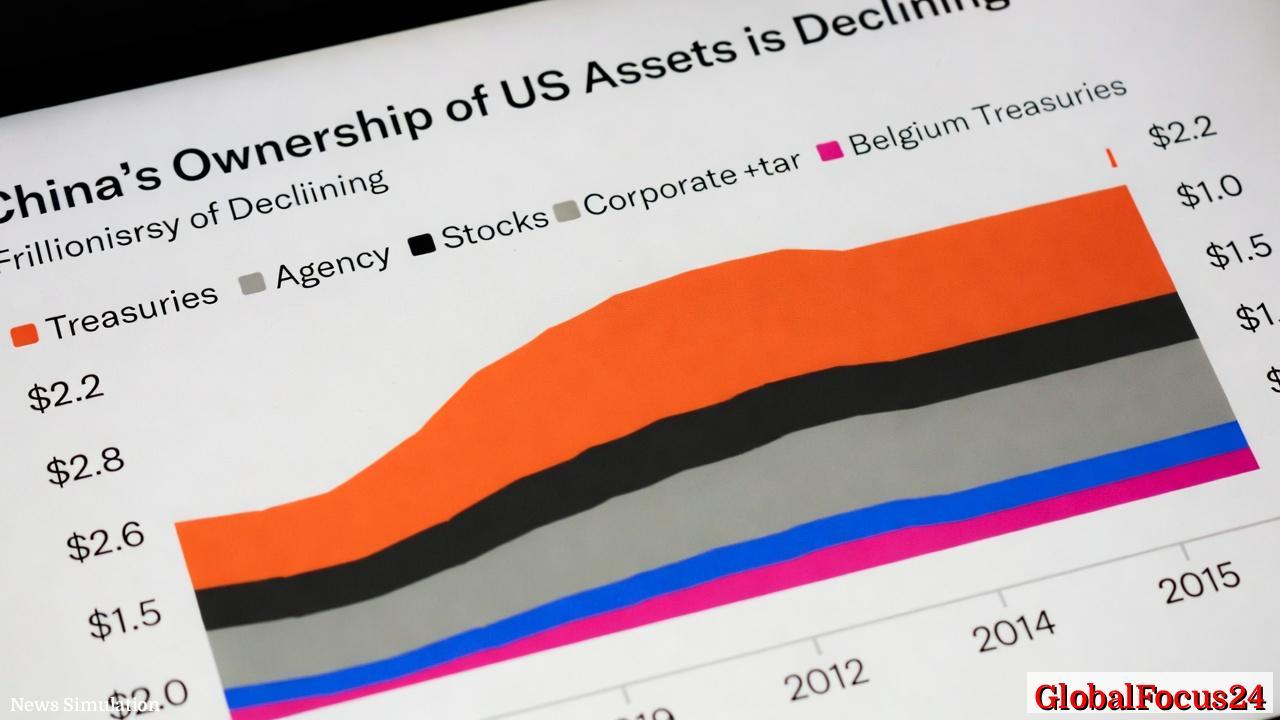
In the evolving landscape of international finance, China’s holdings of U.S. assets have maintained a steady footing after a period of fluctuation, underscoring enduring financial ties between the world’s two largest economies. The latest available data indicate a stable range in total U.S. asset holdings, with Treasuries remaining the dominant category, while agency bonds, stocks, and corporate and other bonds collectively contribute to a diversified, albeit cautious, balance sheet. The broader context of this stability reveals how global capital flows, currency management considerations, and strategic financial decisions intersect in a climate defined by both mutual dependence and strategic recalibration.
Historical context: a long arc of diversified holdings To understand the current stability, it helps to start with a brief look back. In the early 2010s, China’s reserves and associated U.S. asset holdings surged as Beijing pursued a policy mix aimed at stabilizing its currency, supporting export competitiveness, and maintaining financial buffers against macroeconomic shocks. By the mid-2010s, U.S. Treasuries formed the backbone of the portfolio, reflecting deep liquidity and perceived safety. The composition gradually diversified: agency securities, equities, and other debt instruments gained share, while custodial arrangements and cross-border investment structures—such as those involving Belgian custodians for Treasuries—added layers of complexity to the custodial ecosystem.
This backdrop matters because it frames why the current profile is characterized by stability rather than rapid expansion or dramatic withdrawal. The United States remains a cornerstone of global debt markets, and China’s allocations—especially to Treasuries—are often guided by a combination of reserve management, geopolitical considerations, and the desire to maintain orderly exchange-rate dynamics. Even as other asset classes have grown in relative importance for portfolio diversification, Treasuries continue to be the most liquid and widely used instrument for central banks and sovereign investors seeking safe, scalable exposure.
Current composition and what it signals
- Treasuries (the dominant slice): The largest share of China’s holdings continues to be U.S. Treasuries. This reflects the enduring need for a high-quality, liquid asset that can be deployed quickly to address monetary policy needs, exchange-rate considerations, and crisis liquidity—especially during periods of global financial stress. The prominence of Treasuries in the mix remains a neutral signal about risk appetite: it prioritizes safety and liquidity over high yield.
- Agency bonds: A substantial but smaller portion of the portfolio is allocated to U.S. agency securities. These instruments offer a blend of safety and yield opportunities tied to government-sponsored enterprises. They contribute to a diversified risk profile while maintaining a relatively favorable liquidity profile.
- Stocks and corporate/other bonds: Equities and corporate debt constitute the more volatile, higher-risk segments within the broader asset base. Their presence indicates a readiness to pursue incremental returns beyond the safety envelope of government securities, alongside a recognition that some degree of risk is acceptable within a managed framework.
- Custodial arrangements: The use of custodial channels for Treasuries, notably involving Belgian custodians in some periods, highlights the practical realities of cross-border holdings. Custodial structures can affect settlement times, operational risk management, and the transferability of reserve assets, even while not altering the fundamental ownership stake.
Regional comparisons and implications for investors The United States remains the largest economy and a cornerstone of the global debt market. China’s holdings, while substantial, exist alongside a broader international framework in which many central banks pursue diversified reserve configurations. In regional terms, several Asia-Pacific economies maintain robust engagement with U.S. assets, balancing security, liquidity, and the strategic objective of maintaining stable bilateral relationships. Compared with peers who may have larger or smaller allocations, China’s approach is characterized by a long-run preference for high-quality, liquid assets, tempered by the need to manage exchange-rate stability and macro-financial risks.
From an economic perspective, the stability in China’s U.S. asset holdings has a number of downstream effects:
- Liquidity and market functioning: Large, visible holdings help anchor U.S. Treasury market liquidity. The ongoing capacity of these holdings to absorb shocks supports price discovery and risk pricing in a market that is globally interconnected.
- Policy signaling: A steady allocation pattern can be interpreted as a preference for predictability in reserve management and policy execution. While not a direct endorsement of fiscal policy in the United States, it signals a mutual reliance on sound macroeconomic fundamentals and credible monetary governance.
- Exchange-rate considerations: For a country with a managed float, the scale and persistence of U.S. asset holdings influence demand for foreign exchange and can indirectly affect currency stability. The net effect tends to be a balancing act between safeguarding reserves and limiting intervention-driven distortions.
Public reaction and market sentiment Investors, policymakers, and market watchers typically parse changes in sovereign holdings as a barometer of confidence and stability. When holdings stabilize at a certain level, market participants often view it as a sign of predictable policy trajectories and durable financial ties. Public reaction tends to center on two themes: reassurance about the resilience of international financial architecture, and attention to any shifts that could alter relative risk premia across asset classes. In periods of global uncertainty—whether due to geopolitical tensions, commodity price volatility, or macroeconomic shocks—these holdings can take on added symbolic weight as a proxy for credibility and systemic stability.
Technicals and data nuances The reported figures reflect a combination of official data releases and the parsing of custodial holdings and intergovernmental arrangements. Treasuries typically form the largest component due to their deep liquidity and broad market participation. The presence of custodial holdings, particularly those attributed to a specific country but held under another jurisdiction, underscores the importance of understanding the practical aspects of reserve asset management. Analysts emphasize looking beyondtotals to understand the underlying composition, maturities, and duration profiles—factors that influence interest-rate risk, yield curves, and potential exposure to shifting monetary conditions.
Global context and future considerations As the global economy transitions through cycles of growth, inflation, and policy normalization, the role of U.S. asset holdings in sovereign reserve portfolios remains a central thread in international finance. Several factors will likely shape the trajectory over the coming years:
- U.S. monetary policy and fiscal dynamics: The pace and credibility of the Federal Reserve’s policy framework, along with fiscal developments, will influence demand for U.S. assets and their relative attractiveness.
- Growth differentials and risk premia: Divergences in economic performance across major regions will affect cross-border capital flows. A stable or gradually shifting allocation toward safer assets could reflect risk management priorities in times of uncertainty.
- Geopolitical considerations: The balance between cooperation and competition shaping U.S.-China financial interactions will continue to matter, even as markets remain deeply integrated.
- Market infrastructure and custody: Ongoing enhancements to settlement systems and cross-border custodial arrangements can subtly affect liquidity and operational risk, influencing how investors view the ease of managing large reserve positions.
Regional snapshots for readers
- United States: As the world’s deep and liquid bond market, Treasuries remain the cornerstone of many central banks’ reserve portfolios. The U.S. market’s depth supports a stable investment environment for sovereigns seeking to preserve capital while maintaining liquidity for policy flexibility.
- Europe: European custodial and comparative asset allocations illustrate how financial centers interact with U.S. markets to provide diverse channels for reserve management. With cross-border investment, European custodians have long served as critical infrastructure for global asset flows.
- Asia-Pacific: The region’s central banks often prioritize a mix of safety and growth, balancing exposure to U.S. assets with domestic investment opportunities. The region’s growing financial sophistication supports a broader set of instruments and strategies for reserve diversification.
What this means for investors and policymakers For global investors, the stability of China’s U.S. asset holdings reinforces the importance of liquid, high-quality assets in a diversified reserve framework. It highlights how major economies navigate the tension between safeguarding reserves and engaging in a highly interconnected financial system. For policymakers, the takeaway centers on the enduring relevance of transparent data, robust market infrastructure, and credible monetary governance in shaping cross-border capital flows. The health of the U.S. debt market, in turn, remains a barometer of global financial stability, with Chinese holdings serving as a meaningful, though not unilateral, signal of a broader financial equilibrium.
In sum, China’s holdings of U.S. assets continue to reflect a carefully balanced strategy that prioritizes liquidity, safety, and diversification within a framework of long-standing economic ties. While the composition evolves in response to policy changes, market conditions, and custodial practices, the overarching picture is one of stability. This stability helps sustain the interconnected networks that underpin global commerce, investment, and economic resilience in an era defined by rapid flux and persistent interdependence.