China Plans Ambitious Chang’e 7 Mission to Lunar South Pole in 2026
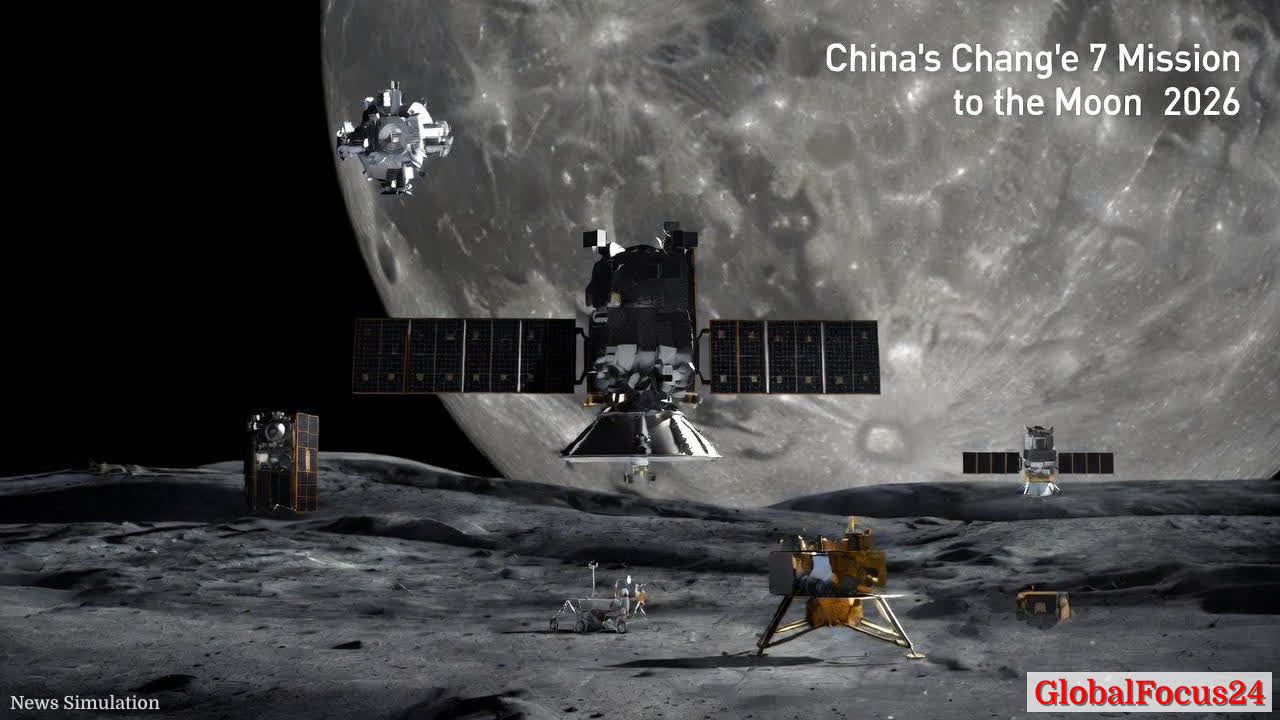
A bold new phase of lunar exploration is taking shape as China gears up for the Chang’e 7 mission, slated for a late-2026 launch. Built around a four-craft architecture—a main orbiter, lander, rover, and a smaller scout spacecraft designed to hop across the surface—the mission targets the Moon’s south pole, a region long regarded as scientifically rich and increasingly strategic for future space activity. With a focus on volatile compounds and especially water ice, Chang’e 7 aims to deepen humanity’s understanding of the Moon while laying the groundwork for sustained presence and resource utilization beyond Earth.
Strategic objectives and mission design
The centerpiece of Chang’e 7 is a coordinated lander-rover pair supported by an orbiter that also serves as a critical communications relay. The additional scouting spacecraft, effectively a mobile precursor, will traverse selected surface terrain to survey promising sites before larger lander operations proceed. This multi-vehicle approach enables a layered examination of the south-polar region, which hosts permanently shadowed craters believed to harbor water ice and other volatiles essential for future life support, fuel production, and other in-situ resource utilization (ISRU) applications.
Key scientific instruments configured for this mission include a seismometer designed to monitor moonquakes and probe internal structure, as well as spectrometers and imaging systems tailored to identify water ice, hydroxyl-bearing minerals, and other volatile compounds. The lander’s suite will operate within the harsh illumination and temperature cycles characteristic of the south pole, where long lunar nights and rising thermal stresses pose engineering challenges. The rover will extend the mission’s reach, traversing rugged terrain to map geological contexts, characterize regolith properties, and sample diverse surface materials for laboratory analysis.
Engineering and propulsion framework
Chang’e 7 is planned to launch aboard a Long March 5 family rocket, enabling a heavy-lift ascent into a trans-lunar trajectory. The mission profile emphasizes precision landing capabilities and robust hover and descent systems to tackle the polar environment’s realities, including polar lighting conditions and terrain variability. Communications architecture relies on the orbiter’s relay capacity to maintain persistent contact with Earth-based mission control during surface operations, minimizing data latency and ensuring real-time decision-making.
Historical context and predecessors
Chang’e 7 follows a series of increasingly capable Chinese lunar missions that began with orbital reconnaissance and progressed to soft landings and in-situ exploration. Earlier missions established a trajectory of expanding capabilities—from orbital mapping to sample return and robotic surface operations—contributing to China’s growing prominence in international space science. The south-polar focus reflects a broader trend in lunar exploration planning worldwide, driven by compelling scientific questions about volatiles, the Moon’s formation, and the feasibility of a sustainable presence on the Moon.
Economic and industrial implications
The Chang’e 7 mission carries both direct and indirect economic implications for China and the global space industry. Directly, the project supports domestic aerospace vendors, propulsion specialists, ground systems, and instrument developers, reinforcing China’s position in the competitive landscape of space technology. Indirectly, the mission reinforces the commercial case for lunar ISRU, potentially stimulating downstream markets related to water ice extraction, oxygen production, and propellant generation for future lunar and cis-lunar activities. The international collaboration elements associated with Chang’e 7 also have the potential to spur partnerships in science payloads, data sharing, and joint research programs, contributing to a broader ecosystem of lunar science and technology development.
Regional comparisons and international context
Across regional programs, several spacefaring nations are pursuing moon-focused missions, with polar exploration gaining particular attention due to the potential to access volatiles. The United States continues to advance its Artemis program, emphasizing sustained surface operations and human presence, while Europe and other partners pursue complementary robotic missions and data-sharing initiatives. China’s emphasis on a systematic, multi-vehicle architecture contrasts with some programs that favor incremental robotic landers followed by sample-return missions. In the broader context, the Chang’e 7 mission contributes to a rapidly evolving international tapestry of lunar exploration, where capability, cost, and collaboration often shape project timelines and scientific prioritization.
Science priorities and expected findings
The core scientific questions Chang’e 7 seeks to address include: What are the abundance and distribution of water ice and other volatiles in shadowed polar craters? How do these materials interact with the surrounding regolith under extreme temperature conditions? What can seismic data reveal about the Moon’s interior structure, including the crust-mantle boundary and deeper layers? By combining remote sensing, in-situ measurements, and surface exploration, the mission aims to refine models of volatile migration, retention, and processing on the Moon, which are essential inputs for ISRU concepts and long-term settlement scenarios.
Public engagement and public reaction
Public interest in lunar exploration has grown as nations outline strategies for long-term space presence. The Chang’e 7 mission sits within a broader narrative of scientific discovery, national achievement, and international collaboration. Public reaction often centers on questions about how lunar resources could support future missions, the timeline for human returns, and the potential for new industries to emerge from space exploration. Transparent communication about mission goals, timelines, and scientific results can help maintain public trust and enthusiasm as the project progresses.
Operational timeline and milestones
A detailed development schedule accompanies the mission’s ambitions. Space agency planners typically outline critical milestones, including instrument integration and testing, environmental qualification tests to simulate the lunar surface conditions, and system-level demonstrations of the rover and scout’s mobility in polar-like terrains. Launch readiness reviews, with contingency plans for hardware or software challenges, will be central to ensuring a smooth path to a late-2026 liftoff. After launch, transit phases, arrival, landing, and surface operations will unfold over several months, with data returning progressively to mission teams and independent researchers worldwide.
Impact on future lunar missions
If Chang’e 7 achieves its objectives, it could influence subsequent mission architectures and collaboration models. Demonstrating successful entry into the south-polar environment, followed by sustained surface operations and resource assessment, would validate polar science as a high-priority domain. The mission’s data could inform the design of future lunar bases, ISRU systems, and even logistics planning for crewed expeditions, enriching the strategic options available to nations pursuing sustainable lunar activity. The knowledge gained about moonquakes and interior structure may also contribute to broader planetary science, offering comparative insights for terrestrial seismology and lunar geology alike.
Geopolitical and policy considerations
Lunar exploration operates at the intersection of science, technology, and policy. While this article maintains a neutral, informational stance, it is important to acknowledge that governmental space programs are influenced by national priorities, funding environments, and international norms governing space activity. Multinational cooperation and data-sharing agreements often shape how missions like Chang’e 7 integrate into the global scientific community. The mission’s success could motivate renewed interest in harmonizing standards for lunar exploration, including safety protocols, spectrum management for deep-space communications, and responsible stewardship of near-Earth and deep-space environments.
Environmental and sustainability aspects
As with all outer-space ventures, Chang’e 7 carries considerations related to environmental impact and responsible exploration. While the Moon presents a relatively pristine environment compared to Earth, best practices emphasize minimizing contamination of scientific sites, preserving pristine regolith for in-situ analysis, and ensuring that artifacts and hardware deployed on the surface are managed responsibly. Sustainable exploration frameworks advocate for long-term data preservation and the careful planning of mission phases to balance scientific return with environmental stewardship.
Conclusion
Chang’e 7 represents a significant milestone in lunar exploration, anchoring China’s ongoing commitment to advancing lunar science, technology, and international collaboration. By targeting the Moon’s south pole with a robust four-vehicle mission architecture, the project seeks to unlock critical insights into water ice distribution, volatile chemistry, and the Moon’s inner structure, while laying a practical groundwork for future ISRU, habitat planning, and sustainable presence on the lunar surface. As stakeholders monitor the mission’s development toward a late-2026 launch window, the potential implications for science, industry, and international partnerships underscore the enduring human drive to explore and understand our celestial neighbor.