China Strengthens Energy Independence Amid Global Oil Shock from Iran Conflict
Beijing’s Long-Standing Energy Ambitions Face Global Test
The global oil markets have been roiled by conflict in Iran, sending crude prices to their highest levels in nearly a decade. Yet while much of the world scrambles to secure steady energy supplies, China’s response reveals the depth of its long-standing ambition: to control its own energy fate.
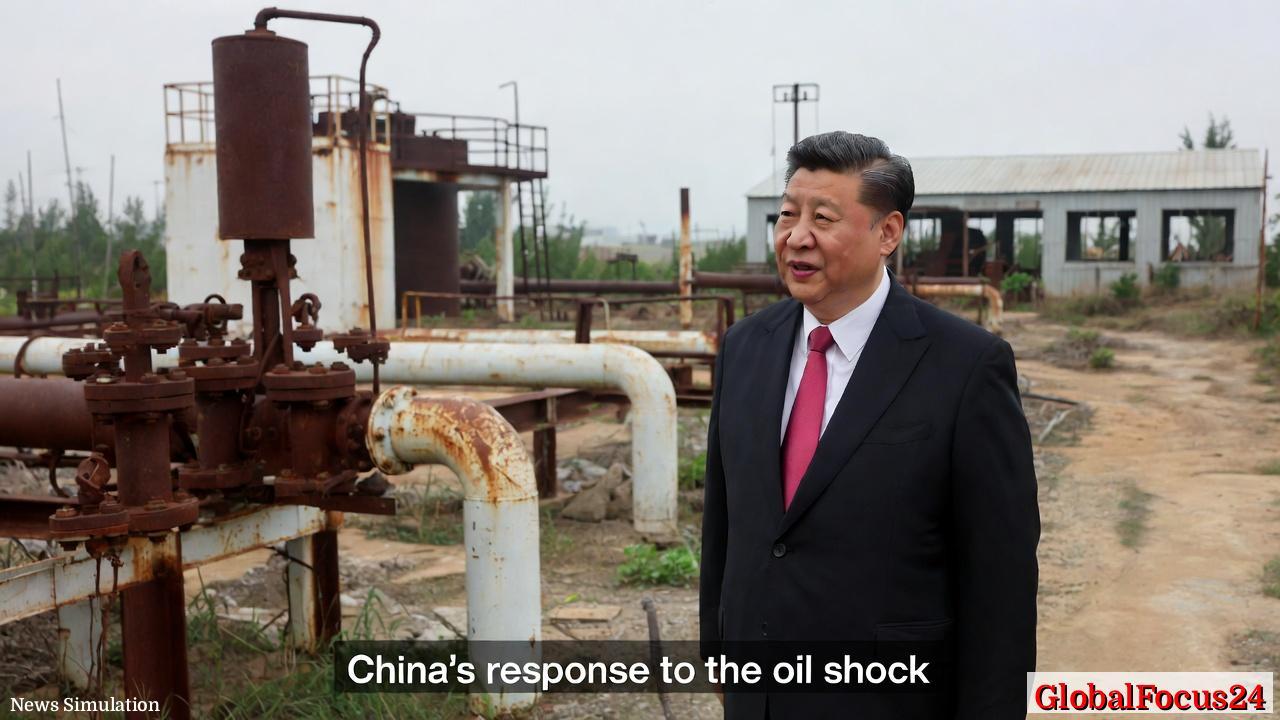
This moment has been decades in the making. China’s leadership, under President Xi Jinping, has consistently framed energy security as an essential foundation of national strength. When Xi visited the aged Shengli oilfield on the eastern coast in 2021, he delivered a succinct message that echoed beyond the rigs and derricks: China must “hold the energy rice bowl firmly in our hands.” It was more than metaphor—it was a signal that Beijing intended to redefine its relationship with the global oil system.
Today, as the Middle East again becomes a flashpoint, China’s strategy faces its most significant test. The country has moved aggressively to expand domestic production, diversify imports, and accelerate investments in renewable energy—all measures designed to buffer itself from the sort of global oil shocks that have repeatedly shaken its past.
Historical Dependence and Lessons from Past Crises
China’s modern striving for energy independence can be traced back to the 1970s. At that time, it was a modest oil exporter, sending modest quantities of crude to Japan and other Asian neighbors. But by the early 1990s, decades of industrial growth transformed China into the world’s fastest-growing energy consumer—and one increasingly reliant on imported oil.
The oil shocks of 2008 and 2014 exposed the vulnerability of that dependence. When global prices surged, inflation spiked, transportation costs soared, and state-owned refiners bled cash as they absorbed losses to keep retail fuel prices stable. Each episode spurred Beijing to redouble its efforts to control more of the energy supply chain.
Since the 2000s, the government has deployed a mix of industrial policy, subsidies, and overseas acquisitions to ensure steady oil flows. The “going out” strategy encouraged state giants like CNPC, Sinopec, and CNOOC to buy stakes in oilfields across Africa, Latin America, and Central Asia. Yet by 2020, even with these global holdings, more than 70% of China’s crude still came from imports—mostly from the Middle East.
War in Iran and the New Energy Shock
The current conflict in Iran has dramatically disrupted global oil supply routes. Production outages and security risks in the Strait of Hormuz—the narrow channel through which nearly a fifth of the world’s crude flows—have pushed prices above $120 per barrel. For China, which imports about a tenth of its oil from Iran, the shock has forced emergency coordination between trading companies, refiners, and port authorities.
Unlike in previous crises, however, Beijing has been relatively calm. The government has tapped into its massive strategic petroleum reserves, built over the past fifteen years to cushion against precisely this kind of geopolitical turbulence. Satellite data from ports in Zhoushan and Dalian suggest that state refiners began active drawdowns in late February, helping to stabilize domestic supplies without forcing retail price hikes.
The National Development and Reform Commission (NDRC) has also urged refiners to maintain production schedules while expanding spot purchases from suppliers in Russia, Angola, and Brazil. Those moves highlight China’s increasingly flexible procurement network—one designed to lessen exposure to any single region.
Renewables and Domestic Production: The Two Pillars of Energy Stability
While oil remains critical to China’s economy, the country has quietly built a more diversified foundation for its energy security. Over the past decade, it has become the world’s largest producer of solar and wind power, supplying nearly a third of its electricity from non-fossil sources by 2025. Investments in battery storage, hydrogen, and ultra-high-voltage grid systems are allowing renewables to play a more reliable role, even when oil markets are volatile.
At the same time, China has revived efforts to expand domestic fossil fuel output. Old oilfields like Daqing and Shengli, once symbols of Mao-era self-reliance, are being upgraded with digital drilling technologies and enhanced recovery systems. State data show that domestic crude production, which had been declining for years, began rising again in 2023, reaching over 200 million tons for the first time since 2016.
The government has also launched extensive shale gas exploration, particularly in Sichuan and the Ordos Basin, hoping to replicate—on its own terms—the success of the American fracking boom. Though geological complexity makes progress slower, the drive reflects Beijing’s national priority: substitute imports wherever possible.
Comparing Global Responses to the Energy Turmoil
Globally, China’s relatively steady footing contrasts sharply with the challenges faced by major economies that rely heavily on open-market energy purchases. In Europe, the oil shock has reignited concerns about dependence on external suppliers, even as many nations still recover from past disruptions in natural gas supply.
Japan and South Korea, both major importers like China, have scrambled to secure additional cargoes of liquefied natural gas and diversify crude supply lines. India, meanwhile, finds itself squeezed by the same Middle Eastern turmoil, importing nearly 85% of its crude requirements with limited reserves to fall back on.
By comparison, China’s combination of strategic reserves, long-term contracts, and flexible energy transition policies has allowed it to absorb the shock with less visible strain. This advantage—though costly and decades in the making—illustrates how Beijing’s strategic patience has transformed an Achilles’ heel into relative strength.
Economic and Industrial Ripple Effects
Still, China is not immune to the broader economic fallout. The spike in international oil prices has exerted pressure on global manufacturing margins and shipping costs. Freight rates from Southeast Asia to the West Coast have climbed sharply, driven by higher bunker fuel prices, while petrochemical producers face thinner profit margins.
Domestic fuel demand, which had rebounded after the pandemic-era restrictions, now faces headwinds as industries brace for higher operating costs. Inflation, long contained within modest bounds, edged higher in February, driven by energy-linked price rises.
Yet Chinese policymakers appear intent on avoiding drastic interventions. Rather than subsidizing refiners directly, as they once did, the government is relying on market adjustments supplemented by selective price stabilization mechanisms. That careful balance aims to protect consumers without distorting the broader effort to green the economy and reduce fossil-fuel dependence.
The Role of Strategic Partnerships and the “Energy Silk Road”
Another critical dimension of China’s energy resilience lies in its international partnerships. Through the Belt and Road Initiative, Beijing has steadily expanded infrastructure projects that enhance connectivity between Chinese importers and energy-rich regions. Pipelines from Russia and Central Asia, port facilities in Pakistan and Myanmar, and refinery investments in Africa all contribute to a more diversified network of energy supply routes.
Russia now accounts for nearly 20% of China’s total crude imports, a share likely to expand as new pipeline capacity comes online through Siberia. Similarly, overland routes from Kazakhstan and Turkmenistan reduce exposure to maritime chokepoints—a persistent vulnerability identified in China’s national strategy documents.
This network, sometimes dubbed the “Energy Silk Road,” underscores the geopolitical calculation behind China’s long-term diversification: being able to pivot between suppliers quickly if one route is disrupted.
Technological Innovation as a Strategic Lever
Beyond physical infrastructure, technological innovation has become an increasingly important pillar of China’s energy policy. The government has poured funding into clean-energy research, electric vehicle adoption, and alternative fuels. Chinese firms now dominate global solar panel exports and command a majority share in the world’s lithium-ion battery market.
As oil prices rise, these advantages feed back into the domestic economy. Electric vehicle sales continue to accelerate, surpassing 40% of new registrations in early 2026. Urban air quality improvements and lower fuel import costs offer the dual benefit of environmental and economic security.
The interplay between innovation and policy has effectively redefined China’s concept of “energy self-sufficiency.” It no longer means autarky but rather strategic flexibility—the ability to withstand global shocks through diversity, storage, and technology.
Public Sentiment and the Road Ahead
Chinese citizens, long accustomed to viewing fuel shortages as relics of the past, have so far seen little direct disruption from the crisis. Gasoline stations remain well supplied, and price adjustments have been gradual. Online discussions on Chinese social platforms reveal a mix of concern and pride—concern about global instability, but pride in the country’s ability to weather it.
Still, analysts caution that sustained high oil prices could slow economic growth if they persist through the summer. Export-dependent manufacturers face higher logistics costs, and the yuan, while steady for now, may come under renewed pressure if global energy markets remain volatile.
For policymakers, the objective remains clear: deepen domestic energy capacity while accelerating the pivot toward renewables. In the long run, the success of China’s green transition could determine whether this moment represents a fleeting crisis—or the definitive turning point toward true energy independence.
A Bid for Enduring Stability
The oil shock triggered by the Iran conflict has disrupted markets, rattled shipping routes, and reminded many economies of their reliance on distant producers. Yet for China, it has underscored the payoff of decades of preparation.
From underground storage caverns to soaring solar fields, Beijing’s response has revealed a system designed not just for survival but for adaptation. It is a system rooted in a lesson learned long ago: national strength in an uncertain world depends not only on economic might but on the ability to shape one’s own sources of power.