China’s Semiconductor Crossroads: How 2026 Could Redefine Global Chipmaking Power
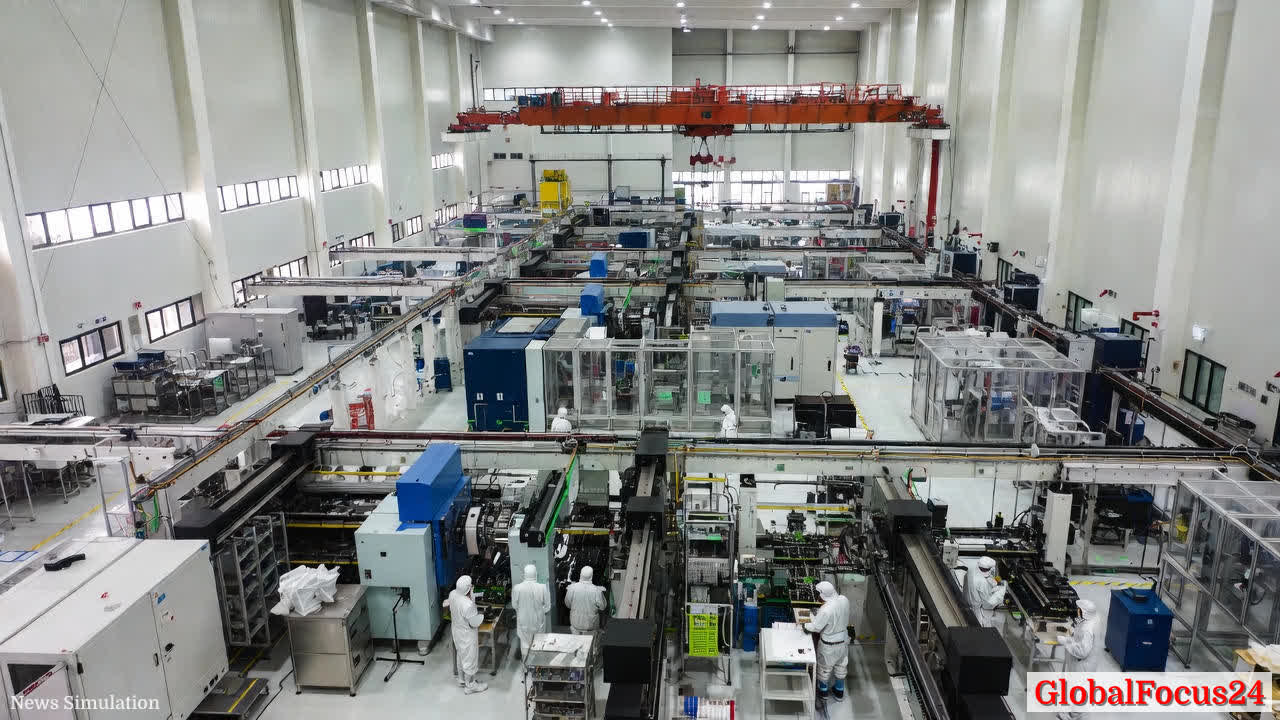
China is entering 2026 with renewed confidence and determination in its quest to strengthen domestic semiconductor production — an ambition that has faced years of pressure from international export curbs and technology restrictions. The coming year stands as a critical test of whether the nation can prove that efforts to constrain its chipmaking capacity have failed, or whether the global technological divide will deepen further.
A Defining Year for China’s Semiconductor Ambitions
For more than a decade, China has sought to close the technological gap with leading chip producers in the United States, Taiwan, South Korea, and the Netherlands. Yet the semiconductor industry remains one of the most complex and resource-intensive manufacturing ecosystems in the modern world. Despite heavy government investment through initiatives like “Made in China 2025,” Beijing’s goal of achieving self-sufficiency in advanced chips continues to confront structural, technical, and geopolitical obstacles.
2026 could be the year that sets a clearer direction. With its domestic champions—SMIC, Hua Hong Semiconductor, and YMTC—pushing forward despite restricted access to advanced lithography tools, China is expected to make strategic progress in developing semiconductor capabilities that could sustain its rapidly advancing tech sectors, from artificial intelligence to electric vehicles.
The Legacy of Restrictive Measures
Beginning in 2019 and intensifying through the early 2020s, export restrictions imposed by major chipmaking nations sought to limit China’s access to cutting-edge fabrication equipment. Tools for extreme ultraviolet (EUV) lithography—essential for manufacturing chips at 5-nanometer nodes and below—remain out of reach for Chinese foundries. The rationale behind these measures centered on national security and the protection of key intellectual property.
However, the attempted slowdown in China’s technological ascent has also produced side effects in global supply chains. Asian economies, including South Korea and Taiwan, have faced pressure to realign production priorities, while Western chipmakers have experienced profit volatility amid lost sales to China, one of the world’s largest semiconductor consumers. For Beijing, the response has been a mix of frustration and renewed resolve—channeling resources toward homegrown alternatives and seeking new partnerships beyond traditional Western suppliers.
Strategic Shifts in Domestic Innovation
China’s biggest chip producers have adapted by focusing on refining mature manufacturing nodes, such as 14nm and 28nm chips—ubiquitous in automotive systems, industrial sensors, and consumer electronics. These lower-end chips may lack the performance of state-of-the-art processors but remain vital to global manufacturing. The domestic emphasis on so-called “legacy nodes” effectively positions China to dominate a crucial segment of the market that, though less glamorous, offers high strategic value.
Recent government incentives, such as enhanced funding from the National Integrated Circuit Industry Investment Fund—known as the “Big Fund”—are designed to nurture technological independence across the semiconductor supply chain. This includes materials, software design tools, and critical chemicals, sectors where China still depends heavily on imports from Japan and the European Union.
Industry analysts predict that 2026 will mark a turning point as hundreds of new fabrication projects, initiated in the past five years, begin operations. Many of these fabs are located in technological corridors such as the Yangtze River Delta and the Greater Bay Area, creating regional clusters that mirror the semiconductor hubs of Taiwan’s Hsinchu Science Park or South Korea’s Gyeonggi Province.
Global Market Rebalancing
The global semiconductor landscape is, however, not static. The United States, Japan, and the European Union have launched major subsidy programs to boost domestic chip production, partly as a safeguard against potential disruptions from geopolitical tensions or natural disasters. As a result, global competition is intensifying—turning the race for chip sovereignty into a defining industrial challenge of the decade.
China’s progress will influence global supply chains more than ever. Its expanding share in legacy chips, packaging, and assembly positions it as a cornerstone of global electronics manufacturing. Even as technology controls curtail its access to high-end equipment, China’s growing base of experienced engineers, large domestic demand, and aggressive investment cycles enable it to remain a dominant force in value-chain segments that depend on scale rather than technological exclusivity.
Economic Implications for 2026 and Beyond
The semiconductor sector is not just a symbol of technological ambition—it’s also an economic lifeline. Analysts estimate that chips account for almost 20% of China’s annual imports, underscoring their strategic importance. Reducing dependence on foreign suppliers could save billions of dollars annually while protecting key industries from supply shocks similar to those seen during the global chip shortage of 2020–2022.
At the same time, China’s emphasis on boosting chip literacy and domestic design talent is reshaping its educational and research ecosystem. Universities are expanding microelectronics programs, while startups across Shenzhen, Beijing, and Chengdu focus on chip design for artificial intelligence, communication systems, and electric mobility. In 2026, observers expect an acceleration of collaboration between research institutions and production facilities—a model that could mirror the integrated innovation corridors seen in the United States’ Silicon Valley or Japan’s Tsukuba Science City.
Yet, the economic story carries broader regional implications. Countries across Asia are repositioning themselves within the semiconductor value chain. Vietnam, Malaysia, and India are emerging as alternative destinations for assembly and testing activities—functions traditionally dominated by Chinese suppliers. How Beijing responds to this gradual diversification may determine whether it consolidates its semiconductor presence or sees further fragmentation across the Asian manufacturing map.
Lessons from History: Self-Reliance and Adaptation
China has faced industrial isolation before. In the 1960s and 1970s, limited access to Western machinery forced it to cultivate domestic engineering solutions in energy and heavy industry. The pattern echoes today’s semiconductor challenge—adversity catalyzing innovation through necessity. Historical precedent suggests that the country’s vast internal market and policy-driven industrial ecosystems can sustain technological progress, even when cut off from global suppliers.
However, semiconductors operate at a level of precision and coordination that surpasses any industrial challenge China has faced before. Each chip requires an intricate web of suppliers, from raw wafers and photomasks to specialized gases and metrology tools. Replicating this complexity domestically remains a massive task. The test of 2026, therefore, lies in whether strategic policy, talent accumulation, and partial openness to global partnerships can jointly sustain momentum.
A Race Between Innovation and Restriction
The semiconductor industry evolves in rapid cycles, measured not only by technological nodes but also by strategic partnerships and market entry points. As Chinese manufacturers refine production at intermediate nodes—such as 7nm using modified deep ultraviolet (DUV) techniques—Western analyses increasingly acknowledge that the gap between China and top global producers might narrow faster than expected.
Some industry reports suggest that long-term export bans could instead encourage more agile breakthroughs in design and materials science. Domestic research into alternative lithography methods, including nanoimprint technology and laser-assisted patterning, is drawing new interest. Should these experiments succeed, China could reduce its dependence on EUV technology, challenging the prevailing hierarchy of global chipmaking innovation.
Regional Comparisons and Competitive Landscape
China is not alone in striving for semiconductor independence. In South Korea, government-backed projects aim to strengthen domestic capabilities amid U.S.-China tensions, while Taiwan’s TSMC continues to expand its lead through advanced nodes but faces geopolitical risks tied to cross-strait relations. Japan, revived by strategic alliances with the U.S., is reestablishing its semiconductor base through joint ventures like Rapidus, focused on 2-nanometer production.
Compared with its regional peers, China’s approach is distinguished by scale and vertical integration. While it trails in top-tier performance, it leads in manufacturing volume and cross-sector application. The nation’s rising demand for chips in electric vehicles, renewable energy, and telecommunications ensures that its semiconductor strategy is grounded in market necessity rather than ambition alone.
Outlook for 2026: Promise Amid Pressure
As the new year unfolds, observers worldwide will monitor China’s semiconductor trajectory closely. The stakes are immense: a successful demonstration of domestic resilience could reshape not only the global supply network but also the balance of technological influence. Conversely, any stagnation could reinforce the prevailing architecture of global chip dependency, leaving China’s tech ecosystem tethered to foreign innovation cycles.
Economic headwinds, rising production costs, and heightened competition will all test China’s semiconductor future in 2026. Yet the mood within its industrial corridors remains one of cautious optimism. The message emanating from policymakers and industrial leaders alike is clear—China intends to prove that the path to technological autonomy may be long but not impossible.
Whether 2026 becomes the year of breakthrough or consolidation, one outcome is certain: the global semiconductor map will continue to shift under the twin forces of innovation and geopolitical realignment, and China—by scale, persistence, and necessity—will remain at its center.