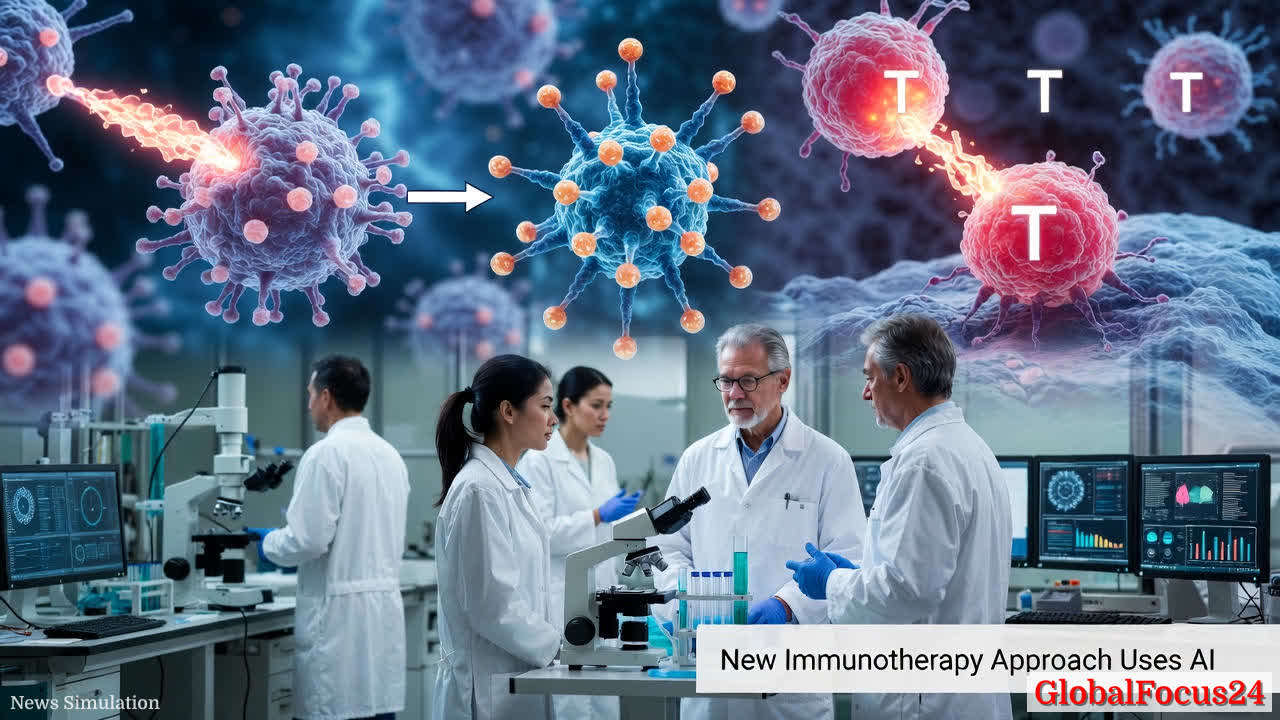
AI-Driven Immunotherapy: AI-Designed Proteins Target Cancer with Precision
A new frontier in oncology has emerged as researchers harness generative artificial intelligence to design proteins that precisely target cancer cell markers. This novel immunotherapy technique leverages AI to engineer proteins capable of guiding T cells directly to tumor cells, enhancing the immune system’s ability to recognize and destroy malignant tissue. In early laboratory studies, AI-designed proteins demonstrated rapid binding to cancer-specific markers and enabled T cells to mount a focused attack, offering a promising path toward more effective and personalized cancer treatments.
Historical context: from broad immunotherapies to targeted protein engineering The pursuit of cancer immunotherapies has evolved dramatically over the past few decades. Early approaches centered on general strategies to boost the immune system, such as cytokine therapies and checkpoint inhibitors, which remove brakes on immune cells. While these methods produced meaningful clinical benefits for some patients, they also revealed the limitations of one-size-fits-all strategies in dealing with the genetic and molecular diversity of cancers.
Protein engineering has long held theoretical potential to create highly specific agents that recognize tumor-associated antigens. Yet traditional discovery methods often relied on iterative, time-consuming, and expensive cycles of protein design, testing, and optimization. The integration of artificial intelligence into this domain marks a turning point: AI can explore vast design spaces, predict binding affinities, and iterate designs at speeds impossible for human laboratories alone. The current work represents a convergence of precision medicine, oncology, and AI, drawing on decades of incremental advances in computational biology and protein science.
How the AI-designed approach works In essence, the technique uses generative AI models to create protein sequences and structures that fit selected markers found on cancer cells. The process begins with a careful identification of tumor-associated antigens that can serve as reliable beacons for targeted therapy. The AI system then proposes protein designs predicted to bind these markers with high specificity and stability. These designs are synthesized in the lab and tested in cellular and animal models to confirm binding and functional activity.
A central advantage of this approach is the potential to tailor therapies to the molecular profile of a patient’s tumor. By selecting markers that are uniquely or predominantly expressed on an individual’s cancer cells, clinicians could customize the engineered proteins to guide T cells with fewer off-target effects. The AI-guided engineering workflow shifts protein design from a mostly empirical enterprise to a rational, data-driven process, potentially shortening development timelines and enabling more rapid iteration.
Economic impact: potential efficiencies and market implications The incorporation of AI into protein design carries substantial economic implications for the biotechnology and pharmaceutical sectors. First, AI-driven design can shorten discovery times, reduce costs associated with high-throughput screening, and decrease the risk of late-stage failures. If scalable, these efficiencies could translate into lower development costs per therapeutic candidate and faster time-to-market for effective treatments.
Second, the ability to personalize immunotherapies based on a patient’s tumor profile could create new value models in oncology. Payer perspectives, access considerations, and pricing strategies will need to adapt to therapies that are more precisely targeted and potentially more effective for specific subgroups of patients. While personalized approaches can command premium pricing, they also raise questions about equitable access and reimbursement, underscoring the need for policies that balance innovation with affordability.
Third, the technology may influence competitive dynamics among biotech startups, large pharmaceutical companies, and academic spin-offs. Firms investing in AI-enabled protein engineering platforms could build partnerships with hospitals and research institutions to create robust pipelines of targeted therapies. This collaboration ecosystem could accelerate clinical validation while generating robust intellectual property portfolios around AI-generated protein designs.
Regional comparisons: where the science is advancing most rapidly In North America, several research centers and biotech firms are actively pursuing AI-driven protein engineering for oncology. The region benefits from a dense network of academic collaborations, venture capital activity, and regulatory frameworks that support agile innovation. In Europe, public-private partnerships and cross-border consortia emphasize translational research, with a focus on safety, reproducibility, and harmonization of regulatory standards across jurisdictions. Asia-Pacific regions, including parts of China, Japan, and Singapore, are strengthening capabilities in computational biology, synthetic biology, and biopharmaceutical manufacturing, contributing to a global race to translate AI-designed proteins into clinic-ready therapies.
Across these regions, the common thread is a commitment to rigorous validation and transparent reporting of preclinical results. While early-stage findings can spark excitement, regulators and clinicians emphasize the importance of demonstrating durable efficacy, meaningful clinical benefit, and manageable safety profiles before broad adoption. The global landscape thus reflects a balance between pioneering innovation and prudent, evidence-based progression toward patient access.
Clinical implications and potential pathways to approval The transition from laboratory demonstrations to patient care hinges on several pivotal steps. First, comprehensive preclinical studies must establish not only binding specificity but also functional effectiveness in directing T cells to destroy cancer cells without harming healthy tissue. Second, early-phase clinical trials will assess safety, dosing, pharmacokinetics, and preliminary efficacy. These trials must address potential off-target effects, immunogenicity, and long-term safety concerns associated with engineered proteins and cellular therapies.
Third, scalable manufacturing processes will be essential for bringing AI-designed proteins to the clinic. The reproducibility of AI-generated designs, quality control, and the ability to produce consistent, GMP-grade materials are critical considerations for regulatory approval and commercial deployment. Regulatory agencies will likely require robust characterization of the proteins, detailed risk assessments, and transparent reporting of performance across diverse patient populations.
Public reaction and ethical considerations Public perception of AI-enabled therapeutics is shaped by a mix of optimism and caution. Many patients and caregivers are hopeful that AI-driven precision medicines can offer more effective treatment with fewer adverse effects. At the same time, concerns about data privacy, algorithm transparency, and the possibility of unequal access to advanced therapies resonate across patient advocacy groups and policymakers.
Ethical considerations also extend to the governance of AI tools used in drug development. Ensuring that AI models are trained on diverse, high-quality datasets and that designs are interpretable enough for clinicians to understand mechanism of action are important considerations. Ongoing dialogue among researchers, clinicians, regulators, and patient communities will help build trust while safeguarding safety and equity.
Scientific milestones and forward-looking outlook The field has already marked a series of notable milestones. Early demonstrations of AI-assisted protein design have shown that computationally guided engineering can yield functional proteins with therapeutic potential. The observed rapid targeting of cancer cells in preclinical models highlights the speed at which AI tooling can operate, compressing development timelines that traditionally stretched over many years.
Looking ahead, researchers anticipate further refinements in AI models, including improvements in predictive accuracy for protein stability and binding kinetics. Advances in single-cell technologies, tumor microenvironment studies, and systems biology will complement AI design processes, enabling more robust targeting strategies. The ultimate goal remains clear: to deliver personalized, highly effective cancer treatments that reduce relapse rates and improve long-term survival while minimizing toxicity.
Economic considerations for healthcare systems As these therapies approach clinical reality, healthcare systems will need to balance cost with transformative value. While AI-designed immunotherapies may offer substantial patient benefits, payers will assess cost-effectiveness through metrics such as quality-adjusted life years (QALYs), incremental cost-effectiveness ratios (ICERs), and budget impact analyses. Payers and providers will look for clear evidence of superior outcomes compared with existing treatments, stratified by tumor type, stage, and patient characteristics.
Reimbursement frameworks may evolve to accommodate precision oncology, potentially including outcome-based payment models and risk-sharing arrangements. Policymakers and healthcare administrators will play a critical role in ensuring that access to breakthrough therapies is aligned with clinical need and overall population health priorities.
Regional case studies: illustrative contexts
- United States and Canada: Major academic centers are advancing AI-driven protein engineering in collaboration with biotechnology companies. Early-phase trials emphasize safety profiles and target validation, with a keen focus on regulatory pathways that can accommodate innovative modalities in oncology.
- European Union: Collaborative networks are accelerating translational research while navigating divergent national healthcare systems. Harmonization efforts aim to streamline trial design and regulatory submissions, facilitating cross-border patient enrollment and data sharing.
- Asia-Pacific: Government and industry partnerships are fostering rapid development and investment in computational biology and biomanufacturing. These efforts support a pipeline of AI-designed therapeutics intended for diverse patient populations across the region.
Public health considerations and access challenges Even as the science advances, ensuring broad access to next-generation immunotherapies remains essential. Strategies to address disparities include investment in manufacturing capabilities, scalable production technologies, and equitable pricing models. Education and outreach to clinicians are also vital to ensure appropriate patient selection and integration into standard of care. As with any breakthrough, the promise of AI-designed therapies must be matched by diligent safety monitoring, post-marketing surveillance, and ongoing pharmacovigilance.
Conclusion: a promising, measured step forward The use of generative AI to engineer proteins that guide T cells to cancer cells represents a promising evolution in precision oncology. By integrating historical lessons from immunotherapy with cutting-edge computational design, researchers aim to produce targeted, personalized treatments that improve outcomes for patients facing cancer. While challenges remain—from clinical validation to manufacturing scale and equitable access—the trajectory is one of accelerated discovery, driven by the symbiosis of AI and biology. As clinical data accumulate, the medical community will better assess the real-world impact of AI-designed proteins in oncology, refining approaches and expanding the viable options available to patients.
Note: This article presents an objective overview of AI-designed immunotherapy approaches and their potential implications across clinical, economic, and regional contexts.