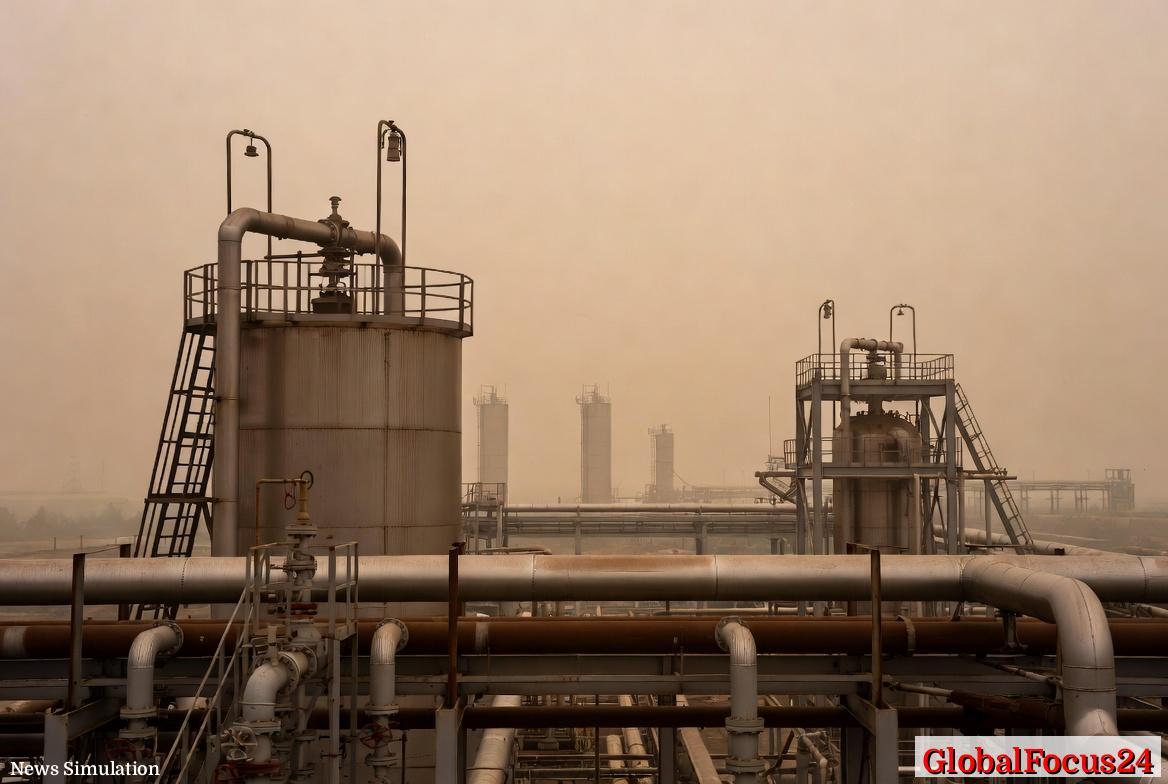
China Crude Oil Output Hits Record High as Domestic Energy Push Accelerates
Record Production Signals Strategic Shift
China’s crude oil production has reached a historic high of 4.6 million barrels per day, underscoring a sustained effort to strengthen domestic energy security amid shifting global supply dynamics. The milestone comes as the world’s largest energy importer continues to reduce its exposure to external shocks, particularly as disruptions in Gulf supply routes reshape international energy flows.
In the first quarter of 2026, total oil production in China rose by 1.3% year-on-year to 4.4 million barrels per day. This growth reflects a longer-term trend that has been building steadily over the past decade. Since 2018, China has increased its oil output by approximately 1 million barrels per day, reversing years of declining domestic production and signaling renewed investment in upstream exploration and extraction technologies.
The rise in output is complemented by gains across other energy sectors. Refinery throughput climbed 1.1% year-on-year during the same period, reaching 184.3 million metric tons, or roughly 14.9 million barrels per day. Meanwhile, natural gas production increased by 3% to 68.1 billion cubic meters, reinforcing the country’s broader strategy to diversify its energy mix.
Historical Context: From Decline to Recovery
China’s current production surge marks a significant turnaround from earlier trends. Between the mid-2010s and 2018, domestic oil output declined as mature fields aged and production costs rose. During that period, China became increasingly reliant on imports, with foreign crude accounting for more than 70% of total consumption.
The shift began around 2019, when authorities and state-owned energy firms intensified efforts to revive domestic production. Investments were directed toward enhanced oil recovery techniques, including hydraulic fracturing and advanced drilling technologies, particularly in challenging geological formations such as shale and tight oil reservoirs.
Major state-owned enterprises, including China National Petroleum Corporation (CNPC) and Sinopec, played a central role in this resurgence. They expanded exploration in regions such as the Tarim Basin in Xinjiang and offshore fields in the Bohai Bay, unlocking reserves that had previously been considered economically unviable.
Refining Capacity Expands Alongside Output
The increase in crude oil production has been matched by rising refining capacity, allowing China to process more crude domestically and reduce reliance on imported refined products. The first-quarter refinery throughput of 14.9 million barrels per day highlights the scale of the country’s downstream sector, which is among the largest in the world.
New mega-refineries and petrochemical complexes have come online in recent years, particularly along China’s eastern seaboard. These facilities are designed to maximize efficiency and integrate refining with chemical production, enabling higher-value outputs such as plastics and specialty chemicals.
This expansion has also positioned China as a key exporter of refined petroleum products, including diesel and gasoline, particularly to markets in Southeast Asia and Africa. The ability to process both domestic and imported crude gives Chinese refiners flexibility in responding to global price fluctuations.
Natural Gas Gains Momentum
Alongside oil, natural gas has become an increasingly important component of China’s energy portfolio. The 3% year-on-year increase in gas production to 68.1 billion cubic meters reflects ongoing efforts to develop cleaner-burning fuels and reduce reliance on coal.
China has invested heavily in unconventional gas resources, including shale gas, particularly in the Sichuan Basin. Advances in drilling technology and infrastructure development have improved extraction efficiency, although geological complexity continues to pose challenges.
The expansion of domestic gas production is also supported by the development of pipeline networks and liquefied natural gas (LNG) terminals, enabling more efficient distribution across the country. This infrastructure is critical for meeting rising demand in urban and industrial centers.
Global Energy Market Implications
China’s push to increase domestic energy production comes at a time of heightened uncertainty in global energy markets. Disruptions in Gulf supply routes—caused by geopolitical tensions and logistical bottlenecks—have prompted major importers to reassess their supply chains.
As a result, China’s increased output has implications beyond its borders. By reducing its dependence on imported crude, the country may ease pressure on global demand, potentially stabilizing prices in the medium term. At the same time, its growing refining capacity could intensify competition in international fuel markets.
Regional comparisons highlight the significance of China’s production gains. While countries such as the United States and Saudi Arabia remain the world’s top oil producers, China’s steady growth sets it apart among major importers. Unlike many European nations, which have limited domestic resources, China is leveraging its reserves to enhance resilience.
Economic Impact and Industrial Growth
The rise in domestic energy production has broad economic implications. Increased output supports industrial activity by ապահովing a stable supply of fuel and feedstock, reducing vulnerability to external price shocks. This stability is particularly important for sectors such as manufacturing, transportation, and construction.
Energy production also contributes to regional development, particularly in resource-rich areas such as Xinjiang and Inner Mongolia. Investments in exploration and infrastructure create jobs and stimulate local economies, while improvements in technology drive efficiency gains across the sector.
At the national level, reduced reliance on imports can improve the trade balance by lowering expenditure on foreign energy. However, China remains a net importer of oil, and global market conditions continue to influence domestic prices and supply strategies.
Environmental Considerations and Energy Transition
While the increase in oil and gas production supports energy security, it also raises questions about environmental impact and long-term sustainability. China has committed to reducing carbon emissions and achieving carbon neutrality targets in the coming decades, which requires a gradual shift away from fossil fuels.
Natural gas is often viewed as a transitional fuel, offering lower emissions compared to coal and oil. The growth in gas production aligns with efforts to reduce air pollution and improve energy efficiency. At the same time, investments in renewable energy—such as solar, wind, and hydroelectric power—continue to expand.
Balancing these priorities presents a complex challenge. On one hand, domestic fossil fuel production enhances energy independence; on the other, it must be managed in a way that aligns with environmental goals.
Regional Comparisons and Strategic Positioning
Compared with other major economies, China’s approach to energy security is characterized by a dual strategy: expanding domestic production while maintaining diversified import sources. This contrasts with countries like Japan and South Korea, which rely almost entirely on imported energy, and the United States, which has achieved near energy independence through shale production.
In the Asia-Pacific region, China’s production growth positions it as a more self-reliant energy player, potentially influencing regional supply chains and pricing dynamics. Its investments in refining and petrochemicals also strengthen its role as a hub for energy processing and export.
Outlook for China’s Energy Sector
Looking ahead, China’s energy sector is expected to continue evolving in response to both domestic needs and global trends. Further gains in oil and gas production will depend on technological advancements, investment levels, and the development of new reserves.
At the same time, the country’s commitment to energy transition will shape the trajectory of its fossil fuel industries. Increased efficiency, emissions reduction technologies, and integration with renewable energy systems are likely to play a key role.
The record output of 4.6 million barrels per day represents more than just a numerical milestone—it reflects a broader transformation in how China approaches energy security, economic development, and its position within the global energy landscape.