China’s Housing Market Faces Deepening Decline as New Home Prices Drop at Fastest Pace in Eight Months
Nationwide Price Slump Reflects Ongoing Real Estate Struggles
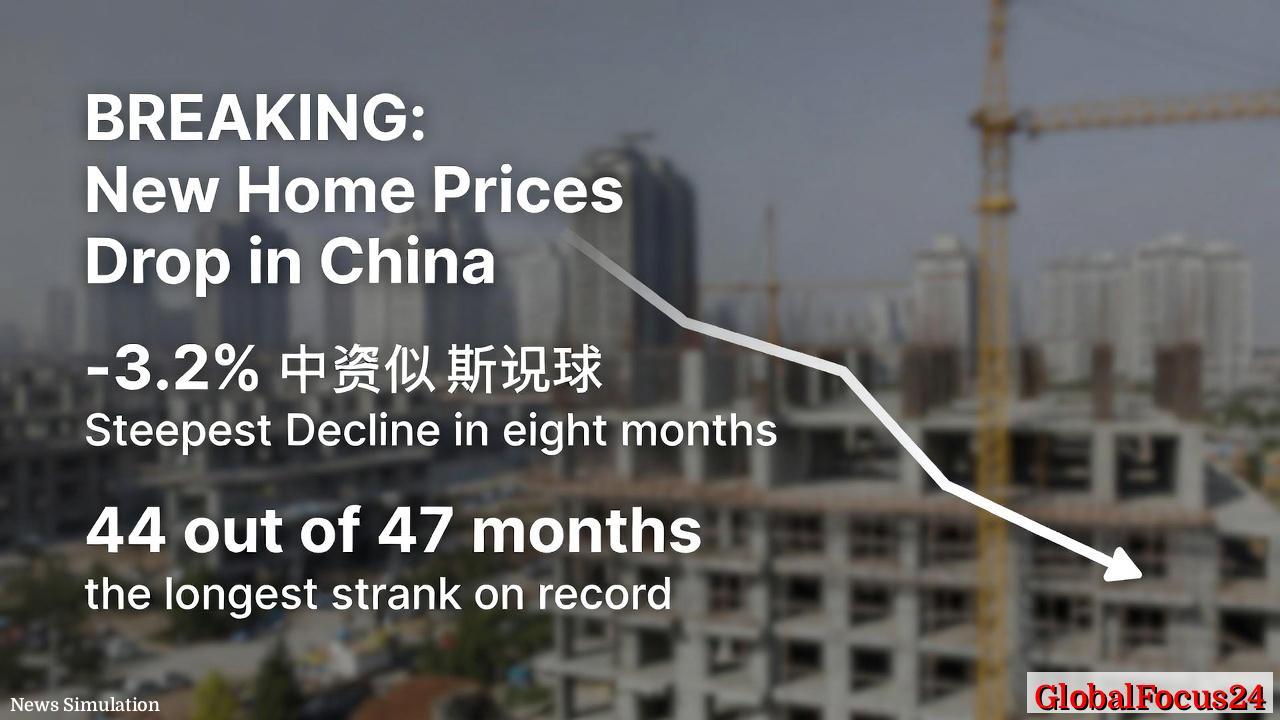
China’s property market continued to struggle in February 2026, with new home prices in 70 major cities falling 3.2 percent year-over-year — the steepest annual drop in eight months. The downturn underscores persistent weakness in demand and confidence across one of the country’s most crucial economic sectors.
Official data show home prices have fallen in 44 of the last 47 months, marking the longest sustained decline on record. The extended slump reflects deep structural imbalances in China’s real estate market, which once powered economic expansion but is now weighed down by oversupply, tight credit conditions, and fragile consumer confidence.
Widespread Declines Across Every Tier of the Market
The February figures reveal a broad-based decline, cutting across every segment of China’s housing hierarchy. Prices for newly built homes decreased not only in smaller, less affluent cities but also in China’s largest urban centers — including Beijing, Shanghai, Guangzhou, and Shenzhen.
Resale home values have similarly weakened. Price declines were reported across tier-one, tier-two, and tier-three cities both on a monthly and annual basis. Analysts attribute this trend to a combination of cautious buyers, limited bank financing, and a continued rise in unsold housing inventory.
While Chinese authorities have rolled out a series of stimulus measures intended to stabilize the housing market — such as easing mortgage rules and lowering down payment requirements — these efforts have yet to reverse the deflationary trend.
Investment and Sales See Double-Digit Drops
Beyond prices, investment and sales figures highlight the deepening severity of the downturn. Property investment plummeted 11.1 percent year-over-year during the first two months of 2026, indicating that developers remain hesitant to start new projects.
Meanwhile, property sales by floor area dropped 13.5 percent over the same period. That contraction suggests ongoing weakness in both speculative and end-user demand. The lack of new buyer interest has forced many developers to cut prices aggressively, even in urban centers where land values and construction costs remain high.
Developers’ cash flow pressures have intensified as well. Many remain burdened by legacy debts accumulated during the building boom of the past decade. Defaults and delays in project delivery continue to erode public trust, further discouraging potential homebuyers.
Historical Context of China’s Real Estate Slowdown
For decades, real estate served as a cornerstone of China’s economic model, accounting for roughly one-quarter of the country’s GDP and providing a critical source of revenue for local governments through land sales.
The current downturn can be traced back to mid-2021, when regulatory tightening aimed at controlling financial risks exposed severe overleveraging among major developers. The ensuing liquidity crisis led to a wave of bankruptcies and unfinished projects, triggering a sharp loss of consumer confidence.
Homebuyers, once confident that property values would continually rise, have increasingly shifted toward saving rather than spending or investing. This behavioral shift has amplified the slowdown in China’s broader economy, dampening consumer sentiment and real estate-linked sectors such as construction, materials, and household furnishings.
Regional Differences Highlight Uneven Impact
The housing decline has not been uniform across China’s diverse regions. Major metropolitan areas such as Shanghai and Shenzhen have seen relatively modest declines, supported by stronger local economies and limited land supply.
In contrast, many smaller cities — particularly in the central and northeastern provinces — face more severe challenges. Rapid urbanization during the last decade led to overbuilding in many of these areas, leaving a glut of unsold apartments and so-called "ghost neighborhoods."
For instance, cities like Shijiazhuang and Zhengzhou have reported sharper year-over-year declines in both new and resale home values. Policymakers have warned that such imbalances could deepen regional inequality, as wealthier areas attract limited capital and population growth while smaller cities struggle to absorb excess housing stock.
Government Response and Policy Adjustments
Beijing continues to implement targeted measures to manage the sector’s correction while avoiding broader financial instability. Recent policies have included reduced down payment ratios, lower benchmark mortgage rates, and the relaxation of restrictions on second-home purchases in certain regions.
In addition, local governments have experimented with innovative approaches such as subsidized home purchases, property trade-ins, and public housing conversions to help reduce unsold inventory. However, despite these initiatives, many economists caution that policy easing alone may not be sufficient to reignite demand.
The challenge lies in restoring confidence — both among consumers and within the developer community. As long as concerns over job stability, income growth, and unfinished housing projects persist, market recovery is likely to remain slow and uneven.
Broader Economic Implications
The continued contraction of China’s property market holds significant implications for the broader economy. Real estate has historically served as a key wealth generator for Chinese households, with property ownership accounting for the majority of household assets. A prolonged decline in housing prices could restrain consumer spending by reducing perceived wealth and household borrowing capacity.
Local governments, heavily reliant on land sales for revenue, also face growing fiscal pressure. Falling land transaction volumes have constrained public finances, challenging the ability of municipalities to fund infrastructure and social programs.
At the same time, the slowdown in construction activity has ripple effects on upstream industries such as steel, cement, and glass manufacturing, which have seen reduced output and employment. This industrial contraction adds further strain to China’s post-pandemic economic recovery.
Comparison with Other Asian Markets
China’s property woes stand in contrast to several regional peers, where housing markets have remained relatively stable or even appreciated. In countries like Japan and South Korea, real estate prices have leveled off after periods of strong growth, thanks to more modest supply pipelines and resilient domestic demand.
Meanwhile, emerging economies such as Vietnam and Indonesia continue to attract investment in affordable housing and infrastructure development, benefiting from demographic expansion and rising incomes.
However, China’s situation is unique in scale and complexity. No other nation combines such a vast housing stock with the same level of developer indebtedness and reliance on property as a driver of economic growth.
Path Forward: Gradual Adjustment or Prolonged Stagnation?
Economists remain divided over the likely trajectory of China’s housing market through the remainder of 2026. Some anticipate a gradual stabilization as policy easing and lower borrowing costs begin to take effect, particularly in high-demand urban centers.
Others warn of a “prolonged stagnation” scenario, where both prices and sales remain flat for years, echoing Japan’s real estate malaise in the 1990s. In this view, population aging, slower income growth, and uncertain economic prospects could limit any meaningful rebound.
Restoring balance may require a deeper structural recalibration — shifting the economy away from real estate dependency and toward productivity-driven sectors such as manufacturing innovation and high technology.
Outlook for the Remainder of 2026
As of early 2026, most indicators point to continued pressure on China’s housing sector. While government support may avert an outright collapse, there is little evidence of a sharp rebound in prices or transactions in the near term.
Developers are likely to prioritize completing existing projects and managing debt repayments rather than expanding new investments. Buyers, on the other hand, may remain cautious until greater signs of stability emerge in both the economy and employment markets.
The property market’s trajectory will be a defining factor for China’s broader growth outlook in 2026. A sustained slump could constrain domestic demand and slow investment momentum, posing challenges for policymakers seeking to strike a balance between stabilization and long-term reform.
Whether the current downturn marks the end of an era or the start of a gradual rebalancing, China’s real estate market is entering a new phase — one characterized by slower growth, more realistic valuations, and heightened scrutiny from both investors and households.