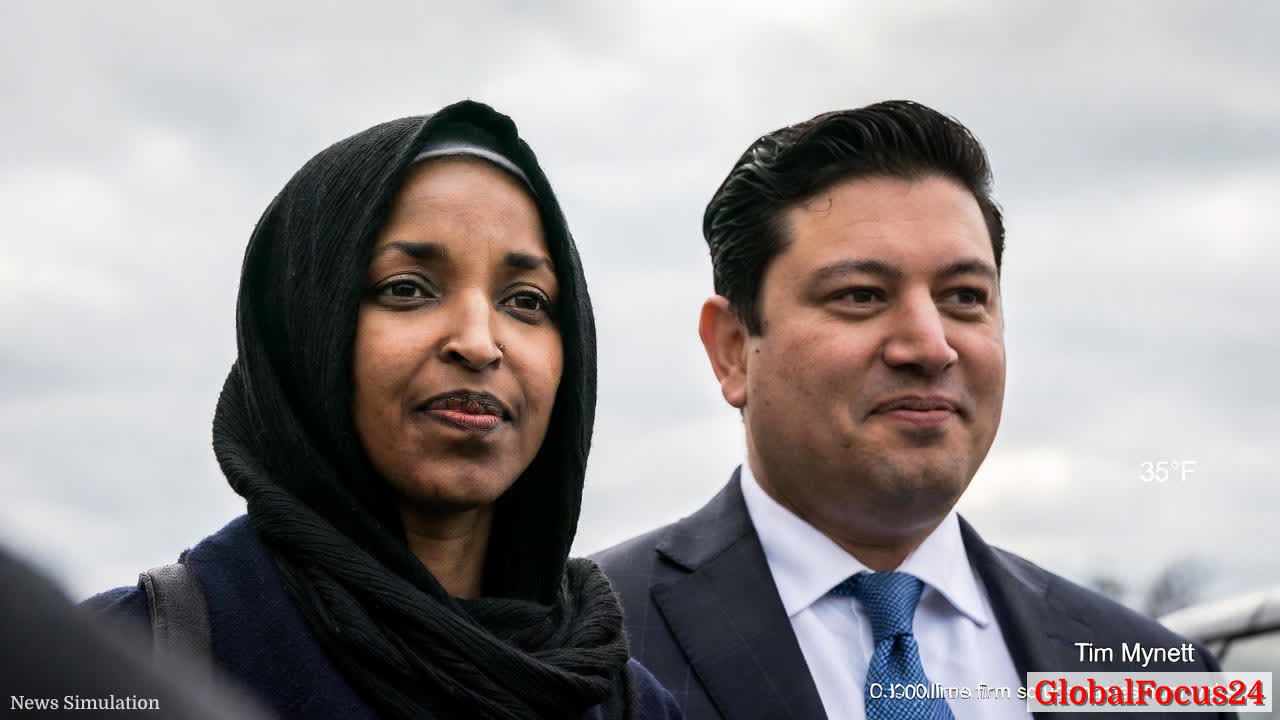
CAPITOL GAINS: Rep. Omar’s Rise, Wealth Scrutiny, and a Minnesota Welfare Affair
In a political landscape defined by rapid shifts and heightened scrutiny of power, Representative Ilhan Omar's career trajectory has drawn renewed attention as questions swirl around personal wealth, professional affiliations, and the potential implications of a rapidly expanding fortune linked to a high-profile regional controversy. While Omar has long positioned herself as a champion of economic inclusion and systemic reform, recent developments surrounding wealth accumulation, coupled with investigative inquiries into welfare program administration in her district, have prompted a closer examination of how personal finances intersect with public office in a democratic system.
Historical context: a career shaped by advocacy, policy clashes, and evolving constituencies Omar’s rise to national prominence began in the Minnesota political arena, where she emerged as a leading voice on immigration, social equity, and fiscal responsibility. Her ascent, marked by a commitment to addressing structural inequities, has been shaped by a district with deep-rooted labor histories, diverse demographics, and evolving economic profiles. Over the years, Omar has navigated the complexities of national party alignment, local governance pressures, and the media spotlight that accompanies a high-profile role in Congress.
The broader political environment in which questions about personal wealth surface is one where accountability mechanisms for public officials operate at multiple levels. Legislative ethics rules, disclosure requirements, and independent watchdogs all play a part in preserving public trust. When a member’s spouse or immediate family members acquire notable assets or enter professional arrangements that intersect with public policy—whether through lobbying, consulting, or other services—the scrutiny can intensify. In this context, the current discourse around Omar’s finances, as it touches on her district’s welfare program operations, underscores the importance of transparent, verifiable reporting and the ongoing need for robust congressional ethics oversight.
Economic impact: interpreting wealth dynamics amid a welfare program controversy The economic landscape surrounding a welfare program controversy of this magnitude is multifaceted. On one hand, inquiries into misallocated funds or fraudulent activities can have immediate effects on public confidence, program funding, and local fiscal planning. On the other hand, the broader economy—ranging from consumer confidence to business investment in Mn—is influenced by perceptions of governance integrity. When district-level scandals intersect with national attention, there is potential for ripple effects, including shifts in philanthropic support, private-sector partnerships, and the willingness of state and federal agencies to authorize or adjust program budgets.
The Minnesotan economy itself features a mosaic of robust sectors, including manufacturing, healthcare, and technology, alongside a significant agricultural footprint. Welfare program integrity matters not only for beneficiaries but for the overall efficiency and sustainability of public services. The immediate concern is ensuring that funds reach intended recipients and that administrative processes are resilient against fraud or abuse. In the longer term, restoring confidence hinges on transparent investigations, corrective reforms, and clear communication about how resources are allocated and monitored.
Regional comparisons: lessons from similar episodes across the United States There is a recurring pattern in how welfare program controversies unfold across different states. In several comparable cases, states have implemented stronger procurement controls, enhanced oversight of contract relationships, and increased independent auditing to deter fraud and waste. The regional dynamics in the Upper Midwest—characterized by a mix of pro-business policy debates, labor unions, and a strong community safety net—tend to reward concrete accountability reforms. When public officials or their spouses participate in professional activities connected to policy areas under scrutiny, the public expects rigorous disclosure and verifiable compliance with ethics standards.
For Minnesota, the current episode offers an opportunity to reassess governance mechanisms at both state and federal levels. Strengthening conflict-of-interest disclosures, tightening related-party transaction rules, and expanding public reporting may contribute to more robust oversight. In neighboring states, where similar welfare programs operate under tight fiscal constraints, modern governance practices—such as real-time data monitoring, independent program evaluation, and citizen-focused transparency portals—have yielded improvements in both program outcomes and public trust. While each jurisdiction faces unique political dynamics, the underlying principle remains constant: accountability bolsters the legitimacy of welfare systems and the effectiveness of public investments.
Public reaction and the information environment Public response to evolving revelations has been shaped by a broader media ecosystem and the polarized political climate that often accompanies ethics questions. Citizens across the district and beyond express a spectrum of views, ranging from concern about whether vulnerable residents are receiving timely support to questions about whether personal finances influence public policy decisions. In an age of rapid information flow, the role of reputable, corroborated reporting is crucial to providing accurate context and dispelling rumors. Community forums, town halls, and official communications from congressional offices contribute to a more informed public conversation, helping residents understand what is being investigated, what reforms are proposed, and how tax dollars are safeguarded.
Policy implications: concrete steps to reinforce integrity and effectiveness Several policy pathways emerge as central to reinforcing accountability and effectiveness in welfare administration and public service more broadly:
- Strengthen disclosure requirements for members of Congress and close relatives who may have professional or financial interests related to policy areas under review. This includes broader definitions of related-party transactions and more frequent reporting cycles.
- Enhance contract governance for welfare programs, emphasizing competitive procurement, clear performance metrics, and independent audits of major vendors or consultants associated with policy initiatives.
- Expand transparent reporting mechanisms that allow the public to track how funds are allocated, spent, and outcomes achieved. User-friendly dashboards and open data portals can improve comprehension and trust without compromising sensitive information.
- Implement targeted reforms to reduce fraud risk, such as improved data cross-checks between welfare administrators, social services agencies, and law enforcement, coupled with rigorous internal controls and whistleblower protections.
- Promote community-based oversight by incorporating stakeholder input from beneficiary groups, non-profit partners, and local businesses to align program objectives with real-world needs and to improve service delivery.
The road ahead: maintaining balance between accountability and governance continuity As investigations proceed, the core objective remains ensuring that welfare programs operate efficiently, transparently, and with accountability to the people they serve. For lawmakers, this means upholding fiduciary responsibilities while continuing to advocate for policies that expand opportunity, strengthen social safety nets, and support economic mobility. For administrative agencies, the emphasis is on rigorous internal controls, comprehensive audits, and timely corrective actions when weaknesses are identified.
Public confidence hinges on consistency: how authorities respond when concerns arise, how quickly they publish findings, and how effectively they implement reforms. Even as political dynamics evolve, the pursuit of sound governance practices is a shared interest across communities. A framework that foregrounds transparency, measurable performance, and stakeholder engagement can help publics navigate cases where personal finances intersect with public responsibilities, ensuring that programs remain focused on helping those in need.
Societal context: linking individual narratives to collective outcomes Personal narratives—from rags-to-riches arcs to appearances of sudden wealth in front-line political figures—resonate with many citizens because they touch on aspirations, fears, and the faith that democratic institutions can deliver fair outcomes. When such stories intersect with public programs that affect everyday life, the public expects clarity about how resources are managed and how decisions are made. The balance between recognizing individual achievement and ensuring principled governance is delicate, requiring both empathy for personal histories and rigorous adherence to ethics standards.
Conclusion: toward a future of transparent governance and sustained public trust In the coming months, observers will watch how Minnesota policymakers, federal authorities, and the public engage with the evolving narrative around welfare program integrity and the associated question of wealth accumulation within political families. The stakes are high: the vitality of social safety nets, the credibility of elected representatives, and the steady functioning of government programs relied upon by residents and communities across the state. By prioritizing transparent disclosures, robust oversight, and thoughtful reforms, stakeholders can reinforce the foundations that support effective governance and equitable opportunity for all residents.
Key context for readers:
- Background on welfare program administration and oversight mechanisms
- The importance of transparent financial disclosures for public officials
- The role of independent watchdogs and auditors in safeguarding program integrity
- Regional economic indicators and their relation to public policy decisions
- Public forums and avenues for citizen participation in governance
As the narrative continues to unfold, the focus remains on ensuring that welfare programs operate with integrity, efficiency, and accountability, while recognizing the broader social and economic imperatives that drive policy reform and community resilience. The ultimate measure of success will be outcomes: that funds reach those in need, administrative processes are resilient against abuse, and public confidence in government remains strong through transparent, accountable leadership.