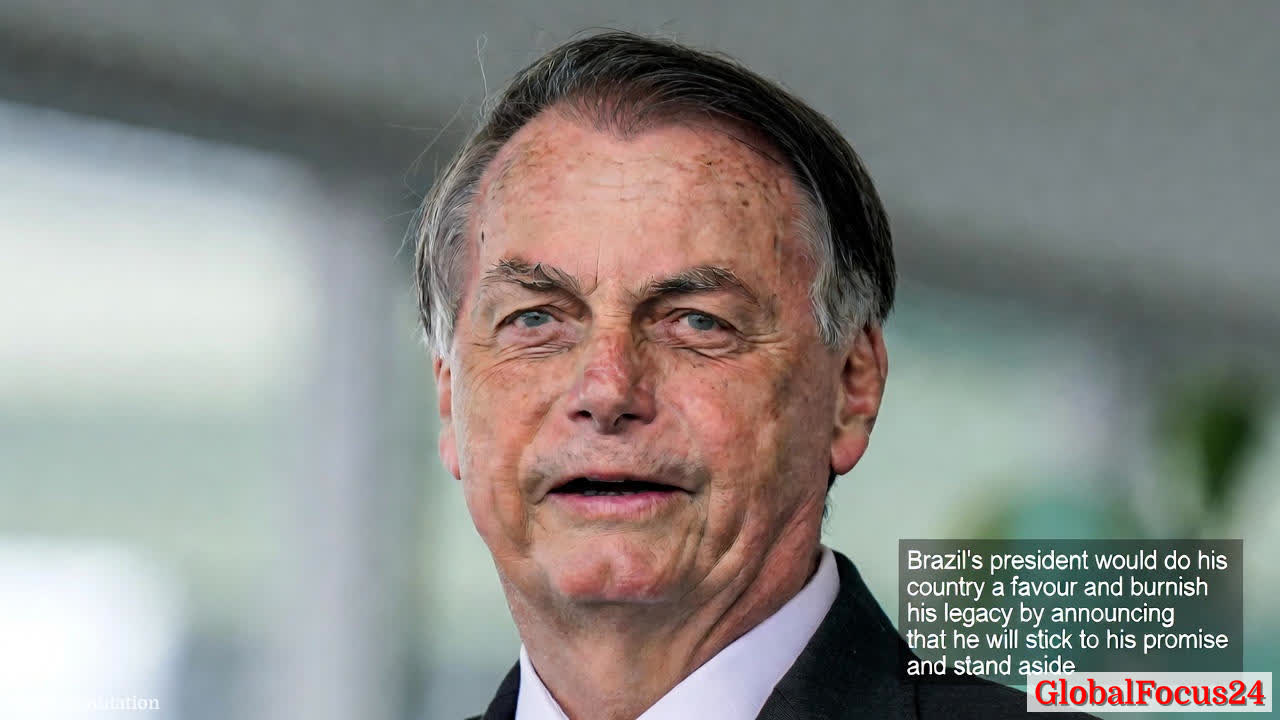
Brazilians Call on President to Honor Pledge to Step Down as Markets Watch for Clarity
Amid a charged political climate and a year marked by economic headwinds, calls for Brazil’s president to honor a public pledge to resign have intensified. Supporters argue that a definitive transition would provide long-sought clarity for the nation’s governance, while critics warn of destabilization during a sensitive juncture in Brazil’s economic trajectory. The unfolding situation arrives at a moment when Brazil’s economy is navigating a complex intersection of commodity-driven growth, inflation dynamics, and fiscal consolidation pressures, all against a backdrop of regional regional competitiveness and evolving political currents.
Historical context provides a lens through which to view the current moment. Brazil’s modern political landscape has long wrestled with leadership transitions, from periods of prolonged incumbency to rapid succession during times of crisis. The pledge to step down, whether conditional or unconditional, sits at the intersection of constitutional propriety and public trust. In past episodes, Brazil has experienced transitional arrangements that sought to preserve continuity in governance while addressing constitutional or electoral requirements. The significance of such pledges is magnified when public opinion, media scrutiny, and market expectations converge, creating a pulse of urgency for decisive leadership decisions.
Economic impact is a central thread in the ongoing discourse. Brazil’s economy, the largest in Latin America, has historically demonstrated resilience in the face of commodity cycles, exchange-rate volatility, and global demand shifts. The near-term outlook hinges on several factors: inflation trends, monetary policy signals, fiscal discipline, and the health of domestic consumption. A move toward stable leadership could reduce policy uncertainty, potentially supporting investment, credit markets, and confidence among exporters that rely on a stable regulatory environment. Conversely, a protracted or contested transition may introduce short-term volatility as markets reassess risk premia, currency stability, and budget planning horizons.
From a sectoral perspective, agriculture, mining, and manufacturing—key pillars of Brazil’s export economy—would be particularly sensitive to any perception of policy drift. Inflation control remains a central objective for the central bank, which has historically balanced price stability with growth imperatives. A credible commitment to continuity in macroeconomic policy, backed by a clear roadmap for institutional reforms and spending discipline, could help anchor expectations. While the pledge to step down is primarily a political act, its implications ripple through interest rates, investment decisions, and the cost of capital. Investors typically seek transparency about timelines, succession plans, and the strength of institutional governance to calibrate risk.
Regional comparisons illuminate the potential implications for Brazil’s standing among its neighbors. In neighboring economies, governance signals often translate into market confidence and capital flows. For example, countries that demonstrate timely, orderly transitions tend to attract longer-term investment by reducing political risk premia. In contrast, extended periods of transition or ambiguous leadership signals can provoke caution among international lenders and multinational firms contemplating capital expenditure. Brazil, with its diverse regional economy, could experience differentiated effects across states, aligning with local industrial strengths and exposure to global demand.
Public reaction has been varied and highly localized. In urban centers, demonstrations, press briefings, and social media discourse reflect a mix of urgency, skepticism, and cautious optimism. On the ground, everyday Brazilians weigh the potential for improved governance against the disruption that a rapid transition might bring to services, public programs, and ongoing development projects. In rural and industrial areas, where infrastructure and logistics play critical roles in productivity, the perceived stability of leadership can influence decisions about employment, supply chains, and investment in capital projects.
From the vantage point of policy design, a transition plan—should it occur—ought to emphasize continuity in core macroeconomic goals. These include maintaining fiscal discipline, a transparent framework for public investment, and a pragmatic approach to social programs that balance short-term relief with long-term sustainability. A credible transition would ideally include a clearly articulated timeline, an outline of interim governance arrangements, and a mechanism for sustained engagement with stakeholders across sectors. Transparent communication, coupled with a demonstrable commitment to rule-of-law and democratic norms, could help mitigate uncertainty and preserve public confidence.
Furthermore, global economic conditions shape the context in which Brazil must navigate leadership questions. Commodity prices, especially for soy, iron ore, and oil, influence fiscal revenues and trade balances. Exchange-rate stability remains a critical channel through which policy credibility is transmitted to the broader economy. External investors often monitor Brazil’s political signals alongside economic indicators such as inflation trajectories, budget deficits, and reform momentum. A leadership transition, if well-structured, could align with ongoing reform agendas in areas like tax modernization, public-sector efficiency, and governance reforms without derailing momentum.
The role of institutions in times of political flux should not be underestimated. Brazil’s parliamentary and judicial systems, by design, provide checks and balances that safeguard governance even amidst uncertainty. Courts, electoral bodies, and administrative agencies are essential to maintaining a sense of continuity and legitimacy. A transition that respects constitutional processes while addressing public expectations can reinforce the perception of accountability, which in turn supports long-run investment and social stability.
Historical episodes in other large emerging economies offer comparative insights. Countries that have demonstrated orderly transitions, accompanied by credible policy commitments, often weather political shocks with less collateral damage to growth prospects. In contrast, abrupt or contested changes can trigger capital flight, currency depreciation, and slower economic expansion in the short term. While each national context is unique, the central principle remains: clear communication, institutional integrity, and a transparent roadmap matter greatly to both domestic stakeholders and international partners.
Beyond macroeconomic considerations, the social contract between the state and its citizens features prominently in the discussion. The public expects that leadership choices will prioritize essential services—education, healthcare, public safety, and infrastructure. Any transition plan that foregrounds investment in human capital and critical infrastructure, while maintaining fiscal responsibility, is more likely to garner broad support. Communities that feel left behind are often the most sensitive to shifts in governance, underscoring the importance of inclusive dialogue and actionable policy proposals that address regional disparities.
Environmental and energy concerns also intersect with leadership debates. Brazil’s natural resources, biodiversity protections, and energy strategies shape regional development and global climate commitments. A stable governance framework can facilitate policy coherence in environmental stewardship, renewable energy investments, and sustainable land-use planning. Policymakers may leverage a transition to accelerate the implementation of climate-related programs while ensuring that energy affordability and security are not compromised.
Taken together, the current discourse around a pledge to step down reflects deeper questions about national identity, economic resilience, and the country’s place in the global economy. The path forward will likely depend on a combination of factors: the credibility of the pledge itself, the specifics of any transition plan, the state of the economy at the time of change, and the willingness of political actors to engage in constructive collaboration for the public good. In city centers and rural towns alike, Brazilians will assess the potential for clearer leadership to translate into tangible improvements in everyday life, from smoother bureaucratic processes to more predictable investment environments.
Looking ahead, observers will be watching several indicators that could signal the trajectory of leadership and policy. These include the tempo and transparency of communications from government officials, preliminary outlines of an interim governance framework, and ongoing collaboration with independent institutions tasked with maintaining democratic norms. Market watchers will monitor currency movements, bond yields, and equity indices as proxies for risk perception and confidence in Brazil’s policy path. Employers and labor groups may also assess labor market data, wage trends, and employment indicators to gauge the broader impact on growth and living standards.
In sum, the call for the president to honor a pledge to step down encapsulates a pivotal moment for Brazil. It highlights the tension between political accountability and the need for orderly governance at a time of economic sensitivity. Whether the pledge becomes a catalyst for a smooth transition or a source of renewed contention will depend on the specifics of how leadership succession is managed, the clarity of the timeline, and the consistency of policymaking that follows. For now, stakeholders across sectors—business, civil society, and local governments—are seeking a path forward that preserves stability, sustains growth, and maintains the country’s global economic competitiveness.
Public sentiment, regional dynamics, and global market conditions will continue to shape the unfolding narrative. As Brazil stands at a crossroads, the ultimate test will be the ability of institutions to translate political decisions into tangible gains for citizens: stronger public services, reliable infrastructure, and a climate for investment that reflects the nation’s enduring potential. In this moment, the emphasis remains on governance that is transparent, accountable, and oriented toward long-term prosperity.