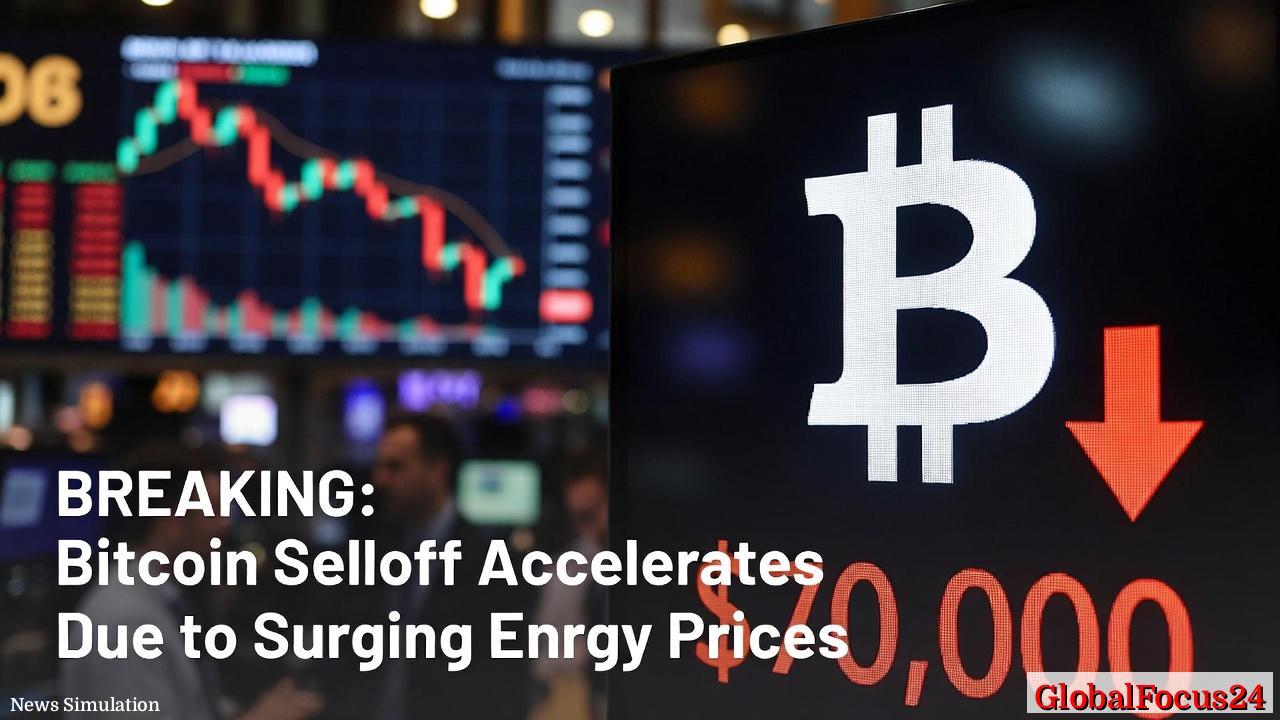
Bitcoin Slides Below $70,000 as Energy Price Shock Triggers Rapid Crypto Selloff
Bitcoin fell more than $5,000 in the past 24 hours, sliding below the closely watched $70,000 threshold as a sharp rise in global energy prices rattled financial markets and accelerated a broader cryptocurrency selloff. The abrupt downturn has raised fresh questions about the resilience of digital assets in an environment of growing cost pressures and renewed inflation concerns.
A Sudden Break Below a Key Psychological Level
Until this week, bitcoin had been trading comfortably above $70,000, supported by continued inflows from institutional investors, strong derivatives activity, and optimism around the long‑term adoption of digital assets. The latest downdraft, however, has pushed the world’s largest cryptocurrency decisively below that mark, triggering a wave of forced liquidations among highly leveraged traders and intensifying intraday volatility.
Market participants say the move is being driven less by crypto‑specific news and more by macroeconomic forces, particularly the surge in energy prices that is rippling through global markets. Rising oil and natural gas costs are feeding expectations of stickier inflation and potentially tighter monetary policy, a combination that tends to weigh on risk assets such as cryptocurrencies, growth stocks, and high‑yield credit.
In the space of a day, spot prices in major crypto trading hubs shifted from orderly trading to a scramble for liquidity, with order books thinning and spreads widening as market‑makers adjusted to the new volatility regime. While the percentage move in bitcoin remains modest compared with some past crashes, the speed and timing of the drop have caught many traders off‑guard.
Energy Prices, Inflation Fears, and Risk Assets
Energy markets have become the central driver of investor sentiment in recent sessions. A mix of factors—including supply disruptions, geopolitical tensions, and robust demand in key economies—has pushed benchmark oil and gas prices sharply higher. For policymakers already grappling with the challenge of bringing inflation back toward target, the latest energy spike raises the risk of renewed price pressures across transportation, manufacturing, and consumer goods.
For markets, this shift has two important implications. First, higher energy costs directly squeeze household and corporate balance sheets, leaving less room for speculative investment in volatile assets like bitcoin. Second, if central banks view the energy shock as a threat to inflation progress, they may signal a willingness to keep interest rates higher for longer or slow the pace of any easing. Higher real yields and tighter financial conditions tend to dampen appetite for assets that rely heavily on future growth expectations and liquidity—categories that include both cryptocurrencies and high‑valuation equities.
In recent years, bitcoin has often traded in tandem with other risk‑sensitive assets, at times displaying a correlation with major stock indices, especially during periods of macro stress. When investors de‑risk their portfolios, they frequently sell the most volatile and liquid holdings first, which can make cryptocurrencies particularly vulnerable during sharp shifts in sentiment.
Historical Context: Bitcoin’s Long Record of Volatility
While the latest $5,000 decline in 24 hours feels dramatic, it fits into a longer history of pronounced swings in bitcoin’s price. Since its inception, the asset has cycled through multiple boom‑and‑bust episodes, with each new high followed by corrections that have sometimes erased more than half of its value.
Several key periods underline this pattern:
- In 2017–2018, bitcoin surged to nearly $20,000 before collapsing below $4,000 the following year as regulatory scrutiny grew and speculative fervor faded.
- During the 2020–2021 period, aggressive monetary easing, stimulus payments, and rising institutional interest fueled a powerful rally that took bitcoin above $60,000, only to see it fall sharply during the subsequent tightening cycle.
- In 2022, the combination of tightening financial conditions, high‑profile crypto failures, and recession fears pushed prices down again before a gradual recovery set in.
Viewed against those episodes, a move from above $70,000 to below that line in a single day is noteworthy but not unprecedented. Bitcoin’s history suggests that sharp repricing often occurs when macroeconomic narratives shift abruptly—whether due to interest rate expectations, regulatory announcements, or, as in the current case, commodity price shocks.
This historical backdrop helps explain why some seasoned market participants describe the latest move as part of the asset’s normal volatility profile rather than a structural break. At the same time, the sheer dollar magnitude of today’s swings, as bitcoin trades at far higher absolute levels than in past cycles, means that short‑term losses and gains now translate into significantly larger changes in portfolio values.
Broader Crypto Market Under Pressure
The selloff has not been confined to bitcoin. Major alternative cryptocurrencies have also come under heavy pressure as traders move to reduce overall exposure. Liquidity has thinned across spot and derivatives markets, and funding rates on perpetual futures have shifted as leveraged long positions are unwound.
Stablecoins, which function as a key source of trading liquidity and a bridge between traditional finance and digital assets, have so far maintained their pegs, but on‑chain data indicates elevated activity as investors rebalance, redeem, or move funds between platforms. Some decentralized finance protocols have reported increased collateral liquidations as falling token prices push leveraged positions below required thresholds.
The market stress has prompted leading exchanges and trading venues to highlight their risk controls and capital buffers, aiming to reassure participants that trading infrastructure remains robust. Nonetheless, the episode underscores the degree to which crypto markets remain highly interconnected: a shock originating from a broad macro factor like energy prices can quickly cascade through multiple asset classes and platforms.
Economic Impact: From Households to Institutions
The immediate macroeconomic effect of bitcoin’s drop is limited compared with shocks in traditional asset classes such as equities, bonds, or housing. However, the growing footprint of digital assets means that sharp moves can still have meaningful localized impacts.
For retail investors, especially those who entered the market near recent highs, the latest price slide may translate into substantial paper losses. This could weigh on discretionary spending for some households, particularly in regions where crypto ownership rates are elevated and where digital assets are seen as a complement to, or substitute for, traditional savings products.
Institutional investors face a different set of considerations. Asset managers, hedge funds, and corporate treasuries that allocate to bitcoin must now reassess position sizes, risk limits, and hedging strategies in light of the increased volatility and changing macro backdrop. Risk managers may push for tighter exposure caps or higher collateral requirements, while investment committees revisit the role of bitcoin within diversified portfolios.
On the corporate side, firms that have integrated bitcoin into their balance sheets or business models—such as miners, payment providers, and certain fintech platforms—are particularly sensitive to rapid price changes. For miners, the combination of rising energy costs and falling bitcoin prices compresses margins from both sides, potentially forcing less efficient operators to curtail activity, relocate, or seek additional capital.
Regional Comparisons: Diverging Responses to the Energy Shock
The impact of the current selloff and energy price spike varies across regions, reflecting differences in regulation, investor base, and energy market exposure.
- In North America, where institutional adoption of bitcoin is relatively advanced and several listed investment vehicles provide exposure, the price drop is feeding into listed markets as well as over‑the‑counter trading. Investors who access bitcoin through exchange‑traded products are seeing increased volatility in those instruments, while miners in energy‑intensive regions confront higher operating costs at a time of declining revenue per coin.
- In Europe, where energy prices often respond acutely to supply disruptions and geopolitical developments, concerns about long‑term energy security add another layer of uncertainty. Market participants there are weighing the combined effect of higher utility bills, strained industrial output, and continued regulatory scrutiny on crypto businesses.
- In parts of Asia, where retail participation in crypto remains strong and trading volumes are high on regional exchanges, the selloff is testing risk management practices and margin policies. Some platforms may tighten leverage limits or adjust collateral haircuts to account for the increased volatility and energy‑driven macro risk.
These regional differences underline how bitcoin and broader crypto assets are now deeply entwined with local economic conditions and policy frameworks. The current episode shows that a global energy price shock can transmit through multiple channels: affecting household budgets, corporate profitability, and asset prices across continents simultaneously.
Investor Sentiment and Market Psychology
Market psychology plays an outsized role during periods of rapid price movement. The breach of a widely watched round number such as $70,000 can shift sentiment more than the percentage move alone would suggest, as traders interpret the level as a symbolic threshold of confidence.
Social media channels, online forums, and messaging groups have filled with commentary from traders seeking to interpret the selloff. Some view the move as a healthy correction within a longer‑term uptrend, arguing that macro‑driven pullbacks can present buying opportunities for investors with multi‑year time horizons. Others point to the energy shock and inflation risks as reasons to reduce exposure, at least until there is greater clarity on the policy response from central banks.
In derivatives markets, implied volatility has risen, indicating that traders expect continued large price swings in the near term. Options pricing reflects demand for downside protection as market participants hedge spot holdings or speculate on further declines. At the same time, elevated volatility can create opportunities for market‑neutral strategies that seek to profit from price dislocations without taking directional bets.
Lessons From Past Macro‑Driven Selloffs
The current environment invites comparisons with previous episodes when macro shocks triggered abrupt repricing in crypto markets. In early 2020, for example, as the global economy reacted to the onset of the pandemic, bitcoin and other risk assets fell sharply in tandem before staging a powerful recovery as policymakers deployed unprecedented stimulus. Later, during cycles of interest rate hikes, digital assets again came under pressure as liquidity conditions tightened.
One recurring pattern is that bitcoin tends to behave more like a high‑beta risk asset during acute stress, moving in step with equities and other growth‑sensitive instruments. Only in quieter periods do narratives about digital gold, store of value characteristics, or idiosyncratic drivers come to the fore. The current selloff, rooted in rising energy costs and inflation fears, appears to be another instance in which macroeconomic forces temporarily overshadow the longer‑term structural themes of blockchain adoption and technological innovation.
Past episodes also suggest that the speed of the initial selloff is not always a reliable guide to long‑term outcomes. Markets have, at times, overreacted to macro shocks, only to recover as new information arrives and as policy responses become clearer. Nonetheless, periods of intense volatility often reshape the landscape by weeding out weaker firms, prompting regulatory changes, or altering investor perceptions of risk.
Outlook: Volatility Likely to Persist
Looking ahead, analysts expect bitcoin to remain volatile as markets digest the implications of elevated energy prices and the potential for a more complicated path on inflation and interest rates. The direction of travel for oil and gas benchmarks, central bank communication, and incoming data on growth and prices will all play a role in shaping the next phase of trading.
Several key questions will guide market participants:
- Will energy prices stabilize or continue to rise, putting further pressure on inflation and economic activity?
- How will central banks respond if higher energy costs slow growth while keeping inflation above target?
- To what extent will institutional investors treat the latest bitcoin drop as a tactical buying opportunity versus a signal to pare back strategic allocations?
For now, the breach of $70,000 underlines that, despite its growing mainstream presence, bitcoin remains highly sensitive to shifts in the global macro environment. The intersection of digital assets with traditional drivers of economic cycles—energy costs, inflation expectations, and monetary policy—has rarely been as visible as in the latest market turbulence.
As traders, investors, and policymakers assess the fallout from the energy price shock, bitcoin’s rapid descent serves as a reminder of both the opportunities and the risks inherent in one of the world’s most volatile and closely watched financial instruments.