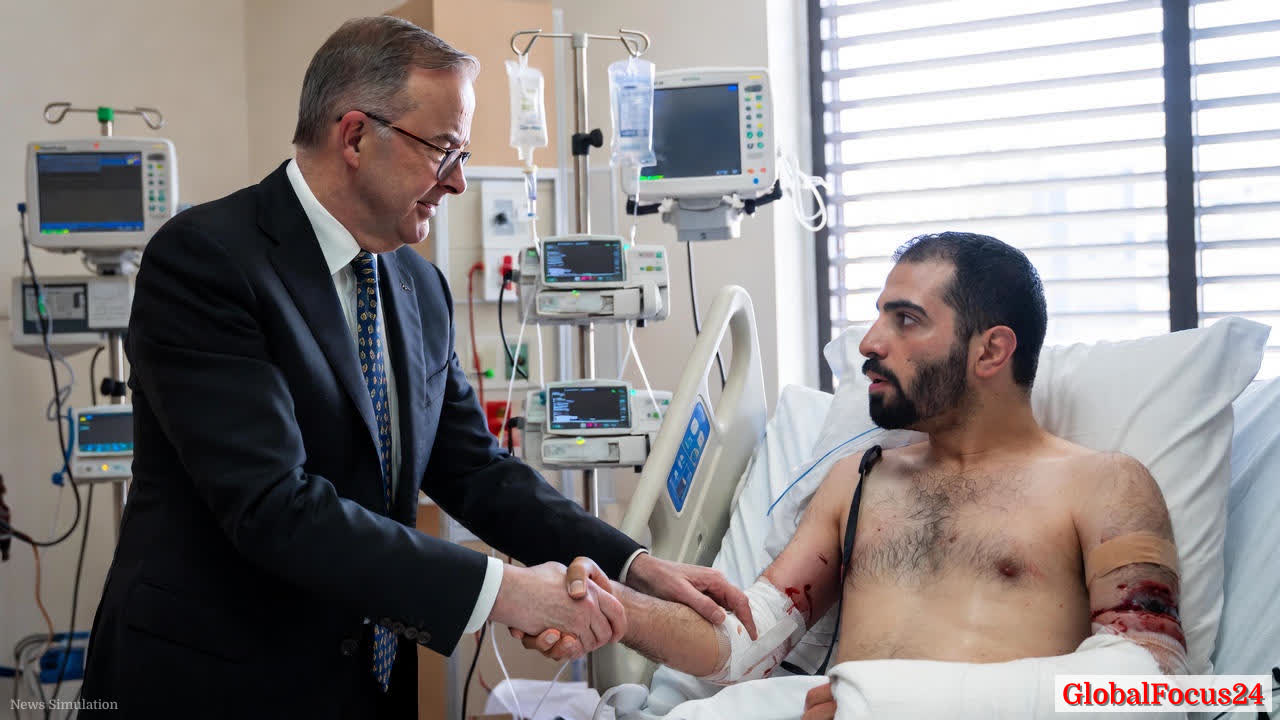
Australian PM Meets Hero of Bondi Beach Attack; nation recalls courage in face of tragedy
Sydney, Australia — In a moment that underscored the country’s resilience in the wake of a deadly attack on Bondi Beach, Prime Minister Anthony Albanese visited Ahmed el Ahmed in a Sydney hospital Tuesday, paying tribute to the bystander who intervened as gunmen unleashed violence during a Hanukkah celebration attended by more than 1,000 people. The visit, and the broader national response, highlighted a recent stretch of security challenges, communal solidarity, and a continuing debate about how best to protect public gatherings without turning everyday life into a security theater.
The hospital meeting capped a day of rapid developments on the ground, as authorities confirmed the attackers acted with antisemitic motives tied to Islamic State ideologies. The attack, which left 15 dead and dozens wounded, marked one of the deadliest acts of violence on Australian soil in recent memory and prompted an immediate primetime national conversation about security, tolerance, and the duty of ordinary citizens in crisis moments.
Ahmed el Ahmed’s account of the incident has since become a symbol of public courage. Eyewitnesses describe how el Ahmed, a bystander without formal security training, intercepted one assailant from behind, placing him in a headlock and wresting away the weapon before police arrived. The action, which interrupted the assault and likely saved lives, drew widespread attention across the country and abroad, reinforcing national narratives about bravery and communal responsibility in the face of extremist violence.
Historical context provides a lens through which to view the present moment. Australia has grappled with terrorism threats for decades, including high-profile plots and sporadic attacks that tested public security measures and community cohesion. The Bondi Beach incident arrives within a broader global pattern in which isolated violent acts are publicly staged to maximize fear and grab global attention. In Australia, governments have responded with a combination of enhanced policing, targeted counterterrorism operations, and community outreach programs designed to deter radicalization and foster resilience among diverse populations.
From an economic perspective, the immediate aftermath of the attack has focused attention on the costs associated with heightened security at public events, not only for law enforcement agencies but for event organizers, venues, and the tourism sector that relies on major outdoor gatherings. While the direct financial toll is still being assessed, analysts note that reallocations of security budgets could influence funding for infrastructure upgrades, crowd management technologies, and emergency response training. In the longer term, the incident could spur insurers and local governments to revisit risk models for large-scale gatherings, potentially affecting premiums and coverage requirements for event operators.
Regional comparisons help illuminate how Bondi’s experience fits into broader patterns of urban security in Australia and neighboring countries. Sydney, as one of the nation’s largest urban hubs, has long been a focal point for tourism, immigrant communities, and multicultural exchange, all of which contribute to the city’s vitality but also necessitate robust protective measures. By contrast, other coastal cities across the continent have faced their own security challenges, with authorities emphasizing community collaboration, rapid response capabilities, and transparent communication with the public during crises. The Bondi incident thus serves as a test case for how Australian cities balance openness with vigilance, and how national leadership translates public safety into a shared sense of belonging rather than fear.
Public reaction across the country has been swift and multifaceted. Social media posts from ordinary Australians have celebrated el Ahmed’s bravery while also calling for calm and unity. Religious and community leaders have issued statements condemning antisemitism and other forms of hate, urging dialogue and mutual respect as foundational elements of national identity. Politicians from diverse backgrounds have echoed the Prime Minister’s message about resilience, stressing that the nation’s strength lies in its ability to come together rather than fracture along sectarian lines.
In a press briefing following his hospital visit, Albanese reiterated that the incident would be thoroughly investigated, with investigators focused on uncovering any operational links or broader networks behind the attack. He described el Ahmed as a symbol of courage and a reminder that acts of bravery in ordinary life can save lives in extraordinary moments. The Prime Minister also emphasized the importance of safeguarding public events while preserving the freedoms that allow Australians to gather, celebrate, and participate in communal life without fear.
Security officials have outlined several immediate steps intended to bolster protection for large public gatherings. These measures include increased surveillance near event venues, reinforced presence of police and security personnel at concerts and street festivals, and enhanced coordination between federal and state authorities to share intelligence related to potential threats. Additionally, authorities are reviewing crowd-management protocols to ensure rapid egress and medical access in case of emergencies, an effort that could translate into new standards for event planning, safety training for volunteers, and improved communication systems for real-time updates to attendees.
From a societal standpoint, the Bondi attack has spurred renewed attention to the social fabric that holds communities together. Experts note that terrorism aims to exploit divisions, but resilient societies counter by strengthening inclusive institutions and public trust. Community organizations have organized vigils, dialogue circles, and interfaith initiatives designed to foster mutual understanding and prevent the corrosive effects of extremism. In the days ahead, researchers and policymakers will be analyzing the incident to extract lessons about community resilience, emergency preparedness, and the importance of reporting suspicious activity without generating undue fear or stigma.
Education and youth outreach queries have taken on greater prominence in the discourse surrounding counterterrorism. Schools and universities are considering how to incorporate critical thinking about media narratives, propaganda, and radicalization into civics and social studies curricula. In parallel, local media have been exploring responsible reporting practices that avoid sensationalism while still conveying the gravity of violent incidents. Public health and mental health professionals are also weighing in, addressing the communal impact of trauma and the best practices for supporting survivors, witnesses, and families impacted by such events.
The international dimension remains relevant as well. Allies and observers have expressed condolences and solidarity, with foreign leaders noting Australia’s long-standing commitment to democratic values, religious freedom, and the peaceful resolution of conflicts. The incident has sparked discussions about how Australia can continue to serve as a model for multicultural coexistence on a global stage, showing how a diverse population can respond to violence with unity, compassion, and a shared sense of responsibility.
Looking ahead, the national discourse may pivot toward policy modernization that strengthens prevention, response, and recovery. Legislators could consider bills to modernize counterterrorism frameworks, streamline interagency coordination, and expand community engagement programs designed to detect radicalization early and steer individuals toward constructive paths. At the same time, maintaining civil liberties and protecting civil rights will be central to any policy refinement, ensuring that security measures do not erode the freedoms that underpin democratic life.
In Bondi, a seaside neighborhood famous for its sun-soaked beaches and vibrant multicultural scene, residents are balancing grief with a renewed dedication to public life. Local business owners describe a community that rallied quickly in the hours after the attack, offering support to victims’ families, coordinating with emergency responders, and reinforcing the sense that Bondi remains open to visitors and locals alike. The incident has not dampened tourism; if anything, it has intensified the conversation around safety and inclusivity, prompting organizers of upcoming beachside events to implement enhanced security protocols while maintaining the welcoming atmosphere Bondi is known for.
Ahmed el Ahmed, the man at the center of this narrative, embodies a narrative arc that is both personal and universal. A bystander who acted in a moment of crisis, his actions illustrate how individual courage can alter the trajectory of a metropolitan crisis. In hospital, el Ahmed and other survivors are receiving medical care, psychological support, and the attention of a nation eager to honor their bravery without turning their cities into fortresses. As authorities continue to investigate and communities rebuild confidence, the enduring image of a brave citizen standing up to violence serves as a potent reminder of shared human dignity in the face of terror.
The Bondi Beach incident also raises questions about the future of public celebration in a world where terrorism remains a possibility. Balancing the imperative of security with the need to preserve public life is a challenge that will require ongoing collaboration among policymakers, law enforcement, civil society, and the private sector. Preparations for future Hanukkah events and other large-scale gatherings will incorporate lessons learned from this attack, with a focus on improved risk assessment, crowd control, and rapid response coordination. The goal remains straightforward: to ensure that Australians can gather to celebrate, grieve, and commemorate without fear, while never compromising the values that define a free and open society.
Community leaders are hopeful that the resolve demonstrated in these days will translate into lasting initiatives. Memorials and educational programs may help ensure that the victims are remembered and that the broader public remains informed about the dangers of antisemitism and extremism. At the same time, stakeholders recognize the importance of not allowing fear to overshadow the country’s everyday life. The Bondi community’s response—characterized by solidarity, mutual aid, and a commitment to inclusivity—offers a blueprint for other communities facing similar threats.
As the nation processes the scale of the tragedy, the focus remains on healing, accountability, and prevention. The story of Ahmed el Ahmed and the broader Bondi event will likely influence public discourse about how societies confront violence and preserve democratic norms. For now, Australians watch closely as the investigation unfolds, as security measures adapt to evolving threats, and as communities across the country reaffirm their commitment to welcoming, diverse, and resilient public life.
Public health officials are preparing for the long-term psychosocial impact on survivors and witnesses. Counseling services, trauma-informed care, and community support networks will be essential components of the recovery process. Researchers will study patterns of coping and resilience, aiming to identify effective interventions that can be scaled for future crises. The response to this event will thus be judged not only by the immediate security outcomes but also by how well communities can recover, rebuild trust, and reintegrate into a society that remains open to joy, celebration, and shared human experiences.
In summary, the Bondi Beach attack has catalyzed a multi-dimensional response across Australia. It has tested the country’s security apparatus, highlighted the courage of ordinary citizens, and reaffirmed the importance of unity in the face of hatred. The Prime Minister’s acknowledgement of Ahmed el Ahmed’s bravery serves as a potent symbol of national character, while ongoing investigations and policy deliberations will shape Australia’s approach to counterterrorism, public safety, and community resilience for years to come. As Bondi and Sydney move forward, the collective memory of this event will inform a future in which vigilance and compassion go hand in hand, ensuring that public spaces remain environments where people can come together to celebrate life, despite the shadow of violence.