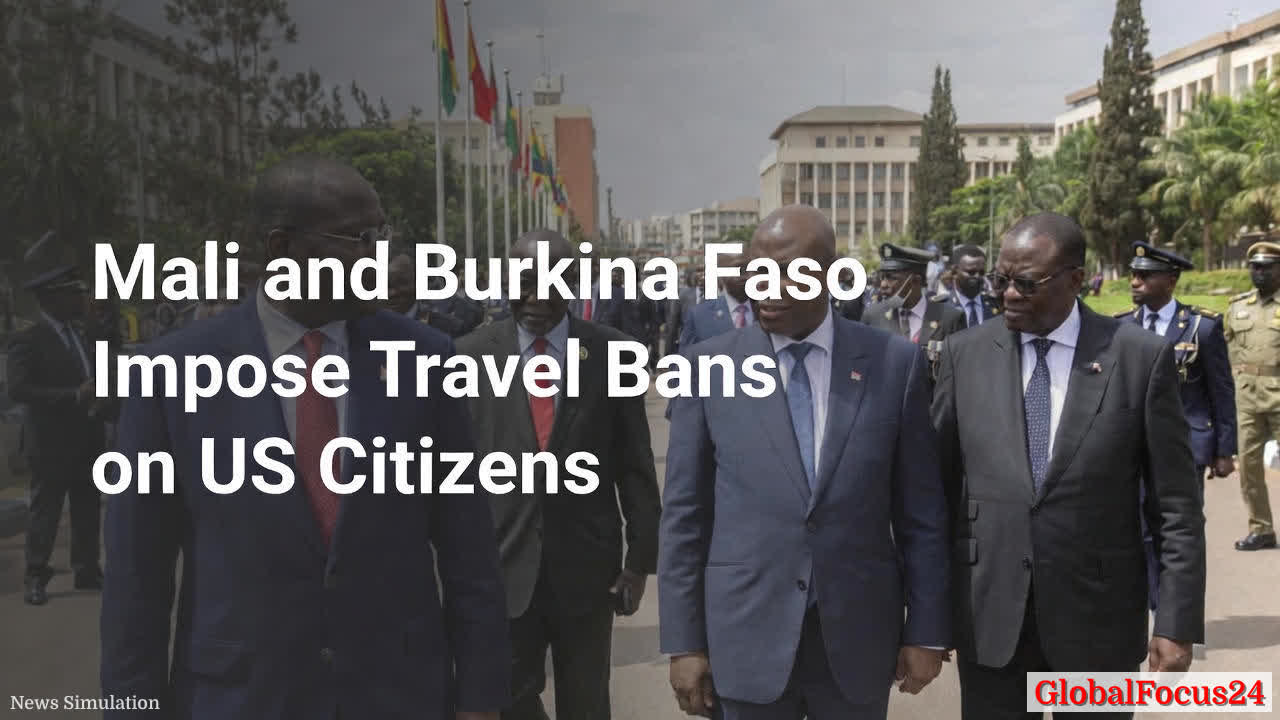
Mali and Burkina Faso Implore Reciprocity as Travel Bans on US Citizens Escalate Regional Tensions
In a rapid, high-stakes shift in diplomatic posture, Mali and Burkina Faso announced travel bans targeting United States citizens, framing the decision as a direct echo of Washington’s recent restrictions on their nationals. The measures, rooted in the broader calculus of reciprocal sovereignty and security concerns, arrive amid a broader realignment of alliances in West Africa and a tightening web of international travel controls that have become a defining feature of the era.
Historical context and regional background
The announcement sits within a broader historical pattern of state-to-state reciprocity in the realm of international travel and visa regimes. Over the past decade, West Africa has experienced a turbulent mix of political upheaval, security challenges, and evolving geopolitical alignments. Mali and Burkina Faso, both of which have endured coups and changes in governance structures in quick succession, have increasingly sought to recalibrate their foreign policy posture in the face of external scrutiny and shifting alliances. The regions’ transitions have been reinforced by security concerns, including counter-terrorism operations in the Sahel, humanitarian crises, and the persistent strain on public institutions to manage cross-border movement safely and transparently.
In this context, the United States expanded its entry restrictions at the start of the year to include full bans on travelers from several countries, a move framed by Washington as a national security measure designed to improve identity verification, information sharing, and international cooperation on immigration. For governments in Bamako and Ouagadougou, the policy signaled a precise moment to assert sovereignty and respond to what they described as unequal treatment by international partners. The travel bans thus become not only a matter of border policy but also a symbolic gesture about mutual respect and the balance of power in international diplomacy.
Economic implications and resilience considerations
The immediate economic effects of travel bans and reciprocal restrictions are likely to be nuanced rather than uniform. On one hand, travel bans can disrupt tourism, business travel, and international collaboration, potentially slowing investment flows and limiting opportunities for professional exchange. In economies where tourism and cross-border commerce represent meaningful, albeit variable, shares of GDP, the ripple effects can be perceptible in short-term revenue fluctuations, hotel occupancy rates, and airline traffic.
On the other hand, many West African economies have diversified exposure, with trade links extending beyond tourism to include commodities, manufacturing inputs, and regional markets within the West Africa Economic and Monetary Union (WAEMU) and the broader African Continental Free Trade Area (AfCFTA). The reciprocal measures may accelerate discussions on regional resilience, encouraging diversified sourcing and stronger domestic capacity in areas such as agriculture, energy, and small- and medium-sized enterprise (SME) development. Policymakers may also view the situation as a catalyst to strengthen security vetting, digital identification systems, and data-sharing mechanisms—investments that could ultimately improve governance and ease procedural friction for legitimate travelers and investors.
Regional comparisons illuminate a broader trend
Across West Africa, states have frequently navigated a balance between Western security frameworks and emergent non-Western partnerships. In recent years, several governments in the Sahel have sought closer alignment with non-traditional partners, including Russia and other regional actors, as a means to diversify security assistance, defense procurement, and strategic dialogue. These realignments have sometimes complicated diplomatic relations with Western states and neighboring countries aligned with different strategic priorities. The initiation of reciprocal travel restrictions reflects this broader dynamic: it is as much about signaling intent and signaling solidarity as it is about the specific travel ban policy.
For regional observers, the event underscores the fragility and complexity of international mobility regimes in an era of heightened security concerns. It also raises questions about the effectiveness of travel bans as a tool of foreign policy. Experts emphasize that while such measures can serve as a diplomatic signal, they can also produce unintended consequences for ordinary citizens, businesses, and international cooperation on critical issues such as anti-terrorism financing, border management, and humanitarian relief logistics.
Domestic political and social dimensions
Within Mali and Burkina Faso, official statements frame the travel bans as a necessary response to perceived injustice in international policy. Government spokespersons stress that reciprocal actions are aimed at preserving national sovereignty and ensuring equitable treatment among nations. Civil society groups, business associations, and ordinary citizens are paying close attention to how these measures affect daily life, including travel for education, medical care, and family reunification.
Public reaction has the potential to be varied. Business leaders may push for clarity on exemptions and procedural steps to limit disruption to commerce and investment. Travelers, researchers, and expatriates may seek assurances about waivers for essential purposes and about the process for obtaining travel authorizations that enable legitimate movement. In many cases, governments that issue reciprocal bans also announce exemptions for diplomats, lawful residents, and individuals with specific waivers, underscoring the intention to maintain critical channels of interaction even amid broader restrictions.
International diplomacy and law
The reciprocal travel bans highlight enduring tensions between national sovereignty and international cooperation. Legal scholars note that while states possess broad authority to regulate entry as a matter of public policy, travel restrictions can be challenged on grounds of proportionality, necessity, and impact on legitimate travel. Observers will watch closely whether the measures include explicit exemptions for certain categories of travelers and whether due process mechanisms—such as appeals or waivers—are transparent and predictable.
Additionally, the events intersect with broader questions about the role of international institutions in mediating disputes over travel and security. Organizations concerned with human rights, trade, and regional stability may call for a measured, predictable approach that safeguards humanitarian exemptions and preserves critical lines of communication among nations, especially in a region confronting ongoing security threats and humanitarian challenges.
Implications for regional stability and development pathways
Looking ahead, the situation could influence regional stability in several ways. If reciprocal travel bans become a recurring feature of West African diplomacy, they might incentivize governments to seek more durable, multilateral solutions through regional bodies such as the Economic Community of West African States (ECOWAS) and regional security coalitions. Strengthened border management collaboration, shared traveler screening standards, and joint intelligence efforts could emerge as practical pathways to mitigate risk while preserving the flow of legitimate travelers.
Furthermore, the episode may accelerate economic diversification strategies, as governments, businesses, and development partners recognize the importance of resilience in a landscape of shifting policy signals. Investments in digital identity infrastructure, secure visa processing, and cross-border logistics could gain momentum, yielding long-term efficiency gains for regional trade and mobility. In the longer term, such measures could contribute to a more predictable and business-friendly environment, even in a context characterized by geopolitical competition.
Public health and humanitarian considerations
Travel restrictions intersect with public health and humanitarian imperatives in meaningful ways. In regions already contending with health system pressures and humanitarian needs, limits on movement can affect access to medical treatment, education, and aid delivery. Conversely, enhanced identity verification and information sharing may support more effective screening and risk assessment, ensuring that legitimate humanitarian workers, medical professionals, and researchers can operate with minimal obstruction. Policymakers on both sides face the delicate task of balancing security with the rights and needs of vulnerable populations.
Conclusion and ongoing developments
The decision by Mali and Burkina Faso to implement travel bans on United States citizens marks a notable moment in West African diplomacy, reflecting a broader trend of strategic recalibration in a global system defined by contested governance and shifting alliances. As regional actors navigate this evolving landscape, the emphasis will likely shift toward pragmatic measures that maintain essential mobility for commerce, humanitarian work, and education while reinforcing sovereignty and regional solidarity. The coming weeks and months are poised to reveal how these reciprocal restrictions influence negotiations, security cooperation, and economic resilience across Mali, Burkina Faso, and neighboring countries.
In a region where history, security, and economic ambition intersect daily, the path forward will depend on deliberate, transparent policymaking, constructive dialogue, and a sustained commitment to balancing national interests with the collective stability of West Africa. The world will watch how Bamako and Ouagadougou translate diplomatic signaling into concrete steps that safeguard their citizens and their economies while contributing to a stable, prosperous regional future.