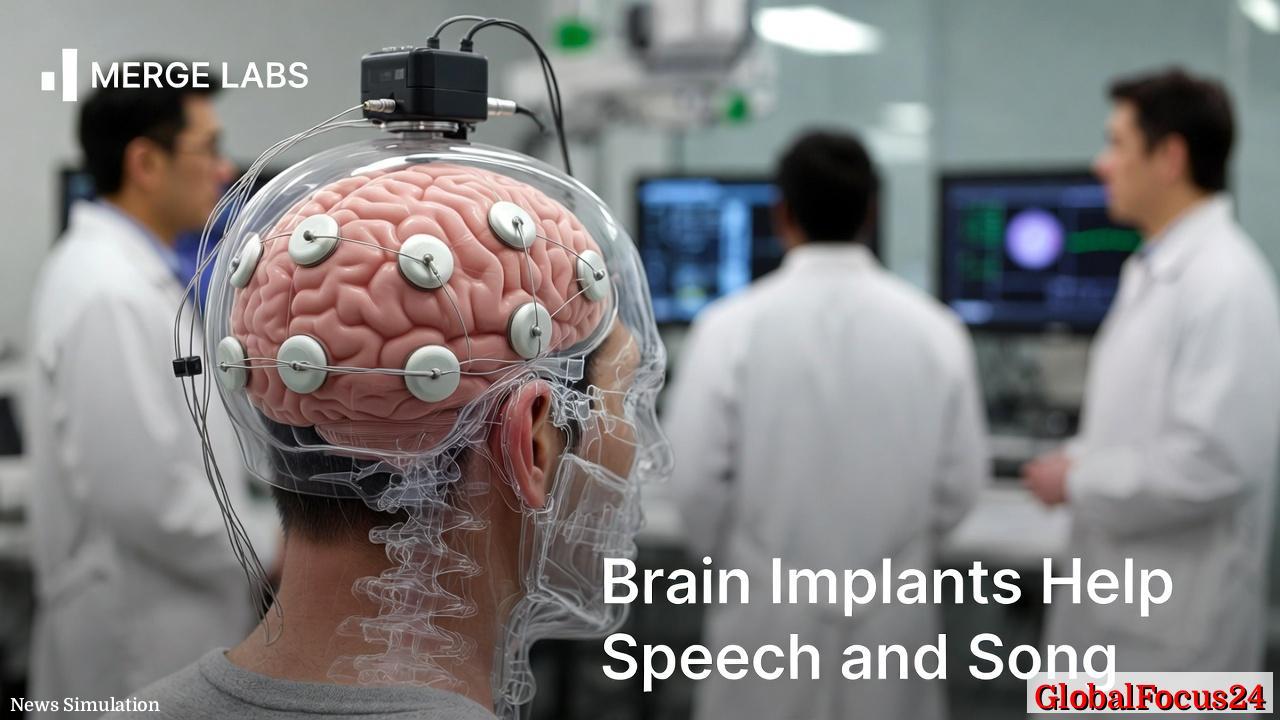
Merge Labs and the Ultrasound Brain Initiative: Reading Minds Without Implants
Merge Labs, an OpenAI-backed spin-out emerging from Forest Neurotech, announced a bold bid to read and modulate human brain activity using ultrasound. The approach aims to map thought-related signals and treat certain mental conditions without the deep-brain implants that have dominated much of the neurotechnology spotlight in recent years. The funding splash—reported at $252 million from a constellation of backers—positions Merge Labs as a notable challenger to chip-based brain interfaces, such as those developed by Neuralink, while underscoring a broader trend toward less invasive neural modulation strategies. This article examines the scientific premise, the historical arc of brain-computer interfaces, the potential economic impact, and how Merge Labs’ ultrasound approach sits within regional and global comparisons.
Historical context: from invasive implants to noninvasive aspirations
The last decade has seen rapid progress in brain-computer interfaces (BCIs), driven by a mix of academic research, startup experimentation, and political will to push the frontiers of neuromodulation. Early efforts centered on invasive devices—tiny electrodes implanted in targeted brain regions—to decode motor intentions or to stimulate neural circuits with high precision. These efforts yielded remarkable demonstrations, including decoded limb movements and improved assistive device control for people with paralysis. Yet the invasive nature of deep-brain implants raised significant concerns about surgical risk, long-term biocompatibility, and maintenance.
In response, researchers and companies explored less invasive or noninvasive modalities. Noninvasive imaging techniques—electroencephalography (EEG), functional near-infrared spectroscopy (fNIRS), and magnetoencephalography (MEG)—offered safer entry points but traded off spatial resolution and signal specificity. Focused ultrasound emerged as a middle ground with several attractive properties: the ability to affect both imaging and stimulation, permeating the skull more effectively than many optical methods, and offering a route to target broader brain networks rather than single, tiny foci.
The ultrasound paradigm builds on decades of ultrasound science extended into the neuroscience arena. Clinically, diagnostic ultrasonography has long been a staple in imaging soft tissues and guiding procedures. In neuroscience, researchers have explored using ultrasound to measure hemodynamic changes in the brain—analogous to how fMRI tracks blood flow—to infer neural activity, a concept sometimes described as functional ultrasound imaging. More recently, researchers have begun to utilize ultrasound not just to observe but to actively modulate neural activity by delivering mechanical energy that influences neuronal excitability. The convergence of imaging and neuromodulation under a single noninvasive or minimally invasive umbrella has amplified interest in ultrasound as a versatile neuromodulation platform capable of influencing large-scale brain networks.
Industrial and economic context: a race to own the next interface
The neurotechnology sector is increasingly defined by funding momentum and strategic partnerships. Startups vie for practical demonstrations that can translate laboratory insight into commercially viable therapies or assistive technologies. The ambition to read minds—interpret neural signals and translate them into actionable outputs—has long attracted speculatives, but it also requires rigorous validation to earn medical-grade credibility and regulatory clearance. Merge Labs’ scale of funding signals several expectations: rapid prototyping, robust preclinical work, and accelerated pathways toward clinical trials for selected indications.
Economically, the ultrasound approach promises several potential advantages. Compared with implanted devices, ultrasound neuromodulation could reduce surgical risk and post-operative maintenance costs, potentially broadening access for patients who might not be suitable surgical candidates. If ultrasound-based reading and stimulation prove effective for certain neuropsychiatric conditions—such as intractable depression, addiction, or eating disorders—the market could grow alongside demand for safer, more flexible treatment options. Moreover, the ability to modulate larger brain networks could offer therapeutic versatility that complements more targeted, device-based approaches.
Regional comparisons: where ultrasound neuromodulation stands today
- United States: The U.S. research ecosystem remains a global hub for neurotechnology, with strong university–industry collaborations and favorable funding environments. California, home to clusters of life sciences and AI talent, is well positioned for ventures like Merge Labs, given its access to clinical networks, venture capital, and regulatory pathways. Public enthusiasm for noninvasive neuromodulation aligns with consumer interest in safer mental health interventions, though regulators emphasize rigorous safety and efficacy standards.
- Europe: European research institutions have made steady progress in functional ultrasound imaging and noninvasive neuromodulation, with a framework that often emphasizes patient safety, ethics, and clinical trial pathways. European markets may prioritize comprehensive evidence of benefit and cost-effectiveness, influencing how quickly new ultrasound-based therapies reach reimbursement streams.
- Asia-Pacific: Activity in Asia-Pacific includes substantial investment in brain-computer interface research, with a mix of academic centers and private funding. Regulatory landscapes vary by country, but the region’s emphasis on scalable medical technologies could support rapid adoption if clinical benefits are demonstrated and pricing aligns with healthcare systems' capabilities.
- Emerging markets: In other regions, noninvasive neuromodulation platforms may fill gaps where surgical implants are less attainable due to cost or healthcare infrastructure constraints. The appeal of ultrasound-based methods lies in potential reductions in hospital stay, surgical risk, and long-term upkeep—factors that resonate with systems seeking cost-effective, scalable solutions.
Scientific viability: what ultrasound can and cannot do
- Imaging and reading brain activity: Ultrasound can detect hemodynamic changes that correlate with neural activity, enabling the creation of activity maps that reflect which brain regions are active during tasks. This modality offers the potential to monitor large-scale networks and may help identify neural correlates of cognitive or motor processes. However, the indirect nature of hemodynamic signals and the slower temporal resolution relative to electrical signals present inherent challenges for real-time decoding, such as immediate speech intent or fine-grained motor commands.
- Modulation and therapy: Ultrasound can modulate neural excitability by delivering focused mechanical energy to targeted regions. In preclinical and early clinical work, researchers have demonstrated that ultrasound can influence neuronal firing patterns and network dynamics, potentially enabling therapeutic effects for epilepsy, depression, addiction, and eating disorders. The appeal lies in the flexibility to adjust stimulation parameters and to target broad networks with a single modality.
- Targeting scope and precision: A notable consideration is the balance between targeting specificity and network-level modulation. While ultrasound can access large brain areas safely with noninvasive delivery, achieving highly specific, electrode-like precision remains a technical hurdle. Genetic or molecular strategies to enhance cell-type specificity, when combined with neuromodulation, are areas of ongoing research but require careful validation.
- Real-time decoding for interactive applications: Real-time brain–computer interfacing—such as decoding speech from neural activity or enabling instantaneous neural control of external devices—depends on high temporal fidelity and low latency. Ultrasound-based reading and modulation currently face challenges in achieving the rapid, fine-grained signal processing needed for fluid speech decoding or instantaneous motor output. These hurdles are central to evaluating how soon ultrasound platforms might support everyday, interactive neurotechnologies.
Public reaction and clinical pathways
Public sentiment toward mind-reading technologies is nuanced. On one hand, noninvasive or minimally invasive approaches evoke optimism for safer treatments with fewer surgical risks. On the other hand, questions persist about privacy, informed consent, and the potential for unintended neural effects. Regulatory agencies will scrutinize safety profiles, efficacy outcomes, and long-term implications before approving any broad clinical adoption. For patients with treatment-resistant conditions, however, the prospect of new modalities that avoid brain implants could represent a meaningful option.
Clinical translation also hinges on robust evidence from well-designed trials. Demonstrating clear therapeutic benefit, superior safety, and cost-effectiveness relative to existing therapies will be essential to secure payer coverage and broader adoption. In this light, Merge Labs’ progress will be closely watched by clinicians and investors who seek both scientific rigor and practical pathways to patient access.
Technical milestones to watch
- Imaging accuracy and spatial mapping: Advancements that improve the spatial resolution of functional ultrasound could sharpen the ability to identify active networks with higher confidence. Enhanced imaging fidelity would support better understanding of how large-scale brain networks coordinate behavior and how they respond to stimulation.
- Safety and tolerability: Long-term safety data, especially regarding repeated exposure to ultrasound energy and potential off-target effects, will be critical. Regulators will require comprehensive toxicology and biocompatibility assessments to ensure patient well-being across chronic use scenarios.
- Real-time processing pipelines: For interactive applications, developers will pursue ultra-low-latency signal processing, robust artifact rejection, and efficient decoding algorithms that can run on clinically compatible hardware. Demonstrating real-time performance in tasks such as speech or motor control will be a pivotal proof of concept.
- Therapeutic efficacy across indications: Early clinical programs might target epilepsy, depression, addiction, and eating disorders, with randomized trials assessing symptom reduction, functional outcomes, and quality of life. Positive results in these areas could catalyze broader investment and the appetite for expansion into additional conditions.
Implications for the broader neurotech landscape
Merge Labs’ ultrasound-centric approach underscores a broader shift toward safer, more scalable neurotechnologies that can be deployed outside specialized surgical settings. If successful, ultrasound-based reading and modulation could complement or compete with implantable devices by offering a different risk-benefit profile. The diversification of modalities also encourages cross-disciplinary collaboration—combining advances in acoustics, neurobiology, AI-driven signal interpretation, and clinical neuroscience—to create hybrid platforms that optimize both safety and functional impact.
Ethical and governance considerations
As with any technology that interfaces with the brain, ethical considerations loom large. Issues around patient consent, data ownership, and the potential for cognitive manipulation require thoughtful governance. Transparent reporting of study results, rigorous peer review, and independent oversight will be essential to build trust among clinicians, patients, and the public. Stakeholders must balance enthusiasm for breakthrough therapies with prudent attention to safety, equity of access, and long-term societal implications.
Looking ahead: what success would look like
- Clinically meaningful outcomes: Demonstrated improvements in measurable clinical endpoints for specific conditions, along with a favorable safety profile, would establish ultrasound-based neuromodulation as a credible therapeutic option.
- Scalable deployment: Noninvasive delivery that supports outpatient use, cost-effective care pathways, and integration into existing clinical workflows would be essential for widespread adoption.
- Complementary roles: A future where ultrasound-based systems serve as either stand-alone therapies or complementary tools alongside other neuromodulation modalities would reflect a mature, adaptable market.
- Regional leadership: Countries and regions that foster interdisciplinary teams, favorable regulatory environments, and patient-centric care models may emerge as leaders in ultrasound neurotechnology, with strong health-economic justifications driving reimbursement decisions.
Conclusion: charting a cautious but ambitious course
Merge Labs’ foray into ultrasound-based reading and modulation of brain activity represents a high-stakes, high-visibility effort to redefine how we understand and influence neural networks. The approach offers potential advantages—reduced invasiveness, flexibility in targeting broad networks, and a compelling economic narrative tied to scalable care for neuropsychiatric conditions. Yet the scientific and clinical hurdles are nontrivial. Real-time, fine-grained decoding, durable safety data, and robust evidence of meaningful therapeutic benefit will determine whether ultrasound neuromodulation becomes a mainstay in neuroscience and medicine or remains one of several promising avenues in a crowded field.
As investors, researchers, clinicians, and policymakers watch, the next phases of development will reveal whether this technology can translate the excitement of an emergent modality into durable patient outcomes and sustainable healthcare impact. In the meantime, the story illustrates how the quest to “read minds” is evolving—from invasive, high-risk interventions to a spectrum of approaches that prioritize safety, accessibility, and network-level brain health. The trajectory will hinge on rigorous science, transparent reporting, and a shared commitment to advancing human health without compromising ethical standards.