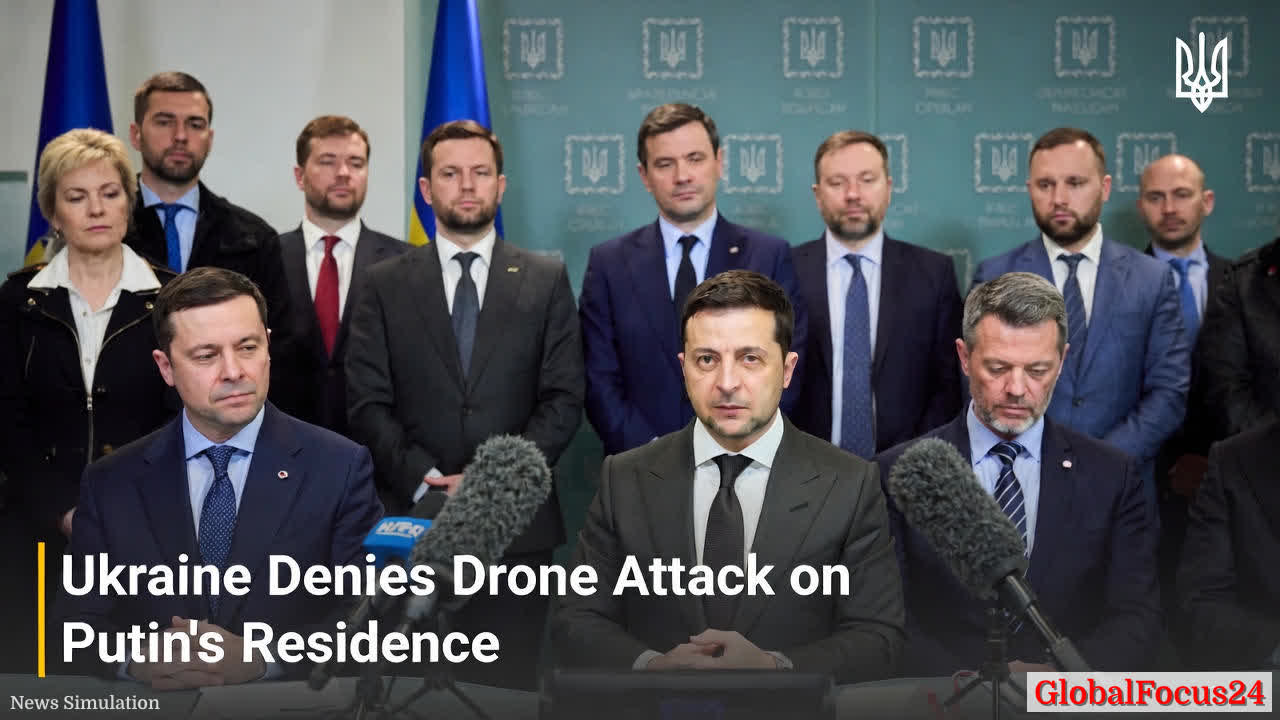
Ukraine Denies Drone Attack on Putin Residence; Kremlin Claim Faces Scrutiny as Peace Talks Hang in Balance
In a developing turn of events that has heated international attention, Ukrainian officials have publicly denied Russia’s allegation that Kyiv conducted a drone strike on a residence believed to belong to President Vladimir Putin. The claim, issued by Russia’s foreign ministry and reinforced by Moscow’s air-defense briefings, arrives amid fragile momentum in stalled peace negotiations and a broader regional environment where battlefield shifts can quickly influence diplomatic posture.
Contextual backdrop and historical lens The ongoing conflict in Ukraine has repeatedly seen both sides leverage dramatic incidents to shape international narratives and domestic politics. Historically, attacks on political leadership or highly symbolic sites have served multiple strategic purposes: to demonstrate resolve, to puncture the opponent’s aura of invulnerability, and to influence mediation dynamics by signaling red lines. In this instance, Russia framed the event as an escalation that could compel a recalibration of peace negotiations with the United States and Kyiv. Kyiv, conversely, has long maintained that it seeks a principled, verifiable path to security guarantees and territorial integrity, while repeatedly denying involvement in provocations that could derail talks.
Russia’s public briefing centered on a claim of 91 long-range drones launched at a state residence in Russia’s northwestern Novgorod region. Russian officials asserted all drones were intercepted and that there were no casualties or material damage. The statement also signaled an intent to revisit Moscow’s negotiating posture, a move that, if accurate, would carry substantial implications for dialogue channels that have remained tenuous since last year’s high-stakes exchanges.
U.S. role and regional dynamics The broader diplomatic arc features renewed discussions among Western allies and Ukraine over security guarantees and the future status of contested territories. In recent parallel developments, high-level conversations in Florida between U.S. and Ukrainian leadership touched on a framework for lasting security arrangements. Reports from those talks indicated optimism about a possible framework nearing a “near-complete” agreement on certain guarantees, though substantial disagreements persisted on residual territorial questions, including Donbas and the status of the Zaporizhzhia nuclear facility.
Presidential rhetoric and public reaction President Volodymyr Zelensky has consistently framed Ukraine’s objectives as preserving sovereignty, ensuring regional stability, and preventing any concessions that would undermine deterrence against renewed aggression. In the wake of Moscow’s claim, Zelensky and official spokespeople urged global audiences not to normalize or normalize away what they described as a pattern of aggression from Russia. The public reaction, both domestically and internationally, has tended to align with concerns about escalation risk and the reliability of information in a conflict characterized by rapid information warfare and competing narratives.
The Donbas and broader territorial question Geographically, the Donbas region remains a focal point of contention. Russia’s current control dynamics place substantial portions of Donetsk and Luhansk under Moscow’s influence or direct control, complicating any potential peace framework. Analysts note that the ultimate resolution will hinge on verifiable security assurances, the status of Ukrainian sovereignty, and concessions that can be sustained without triggering renewed hostilities. In this context, any event that appears to alter the calculus of negotiations—whether confirmed or disputed—can have outsized effects on both sides’ willingness to compromise.
Economic ramifications and regional impact Beyond the immediate political dimensions, the conflict continues to exert a palpable economic toll on Ukraine, Russia, and neighboring markets. Disruptions to energy flows, trade routes, and investment plans have reverberated across regional economies, with energy security and resilience at the forefront of policy discussions. The perception of risk surrounding peace negotiations feeds into market volatility, influencing currency values, commodity prices, and investor sentiment in Europe and beyond. Local economies endure infrastructure strain, while relief and reconstruction efforts remain a central public policy concern.
Regional comparisons and lessons When comparing similar scenarios in recent history, cross-border incidents involving high-profile figures or critical infrastructure can act as catalysts for rapid diplomatic shifts. In some cases, such events produced temporary spikes in tensions followed by formal engagement, while in others they fueled hardening positions that prolonged impasses. The current situation highlights the importance of transparent, verifiable information to prevent misperceptions from derailing negotiations. It also underscores how regional players weigh security guarantees against sovereignty concerns in a landscape where external powers monitor every development for potential leverage.
Security guarantees and future prospects Security guarantees remain a cornerstone of any prospective agreement between Kyiv and Moscow, with the United States and its allies often positioned as guarantors or facilitators of a durable peace framework. The balance between deterrence, diplomacy, and regional stability will likely dictate the pace of negotiations in the coming weeks. Observers emphasize that credible verification mechanisms, transparent incident reporting, and clear responses to escalatory actions will be essential for sustaining momentum. The question remains whether the incident claimed by Russia will be corroborated by independent assessments or if it will be treated as a strategic narrative in a broader informational contest.
What comes next The legitimacy and consequences of the Russian claim will, in large part, hinge on independent verification and subsequent diplomatic signaling. If credible evidence surfaces that supports or refutes the attack, it could prompt shifts in messaging from involved parties and influence the trajectory of peace talks. In the meantime, regional leaders and international organizations are likely to continue urging restraint, emphasizing humanitarian considerations, civilian protection, and a return to principled dialogue.
Public diplomacy and humanitarian considerations Amid the ongoing conflict, humanitarian concerns remain a top priority for civilian populations affected by the fighting. International organizations have called for safe corridors, aid delivery, and protections for civilians in areas of active hostilities. Public diplomacy efforts focus on maintaining channels of communication and discouraging misrepresentation that could derail efforts to establish a sustainable ceasefire or political settlement. The narrative around accountability, civilian harm, and post-conflict reconstruction will continue to frame international responses and donor engagement.
Conclusion As the situation unfolds, the international community watches closely for independent verification and the outcomes of ongoing negotiations. The claim of a drone attack on a presidential residence, whether substantiated or not, illustrates how swiftly the conflict landscape can shift in response to new information and how crucial transparency remains for sustaining any path toward peace. In an era where military actions and diplomatic moves unfold at pace, sustained attention to verifiable facts, responsible leadership, and humane outcomes will be indispensable for guiding both regional stability and global security interests.