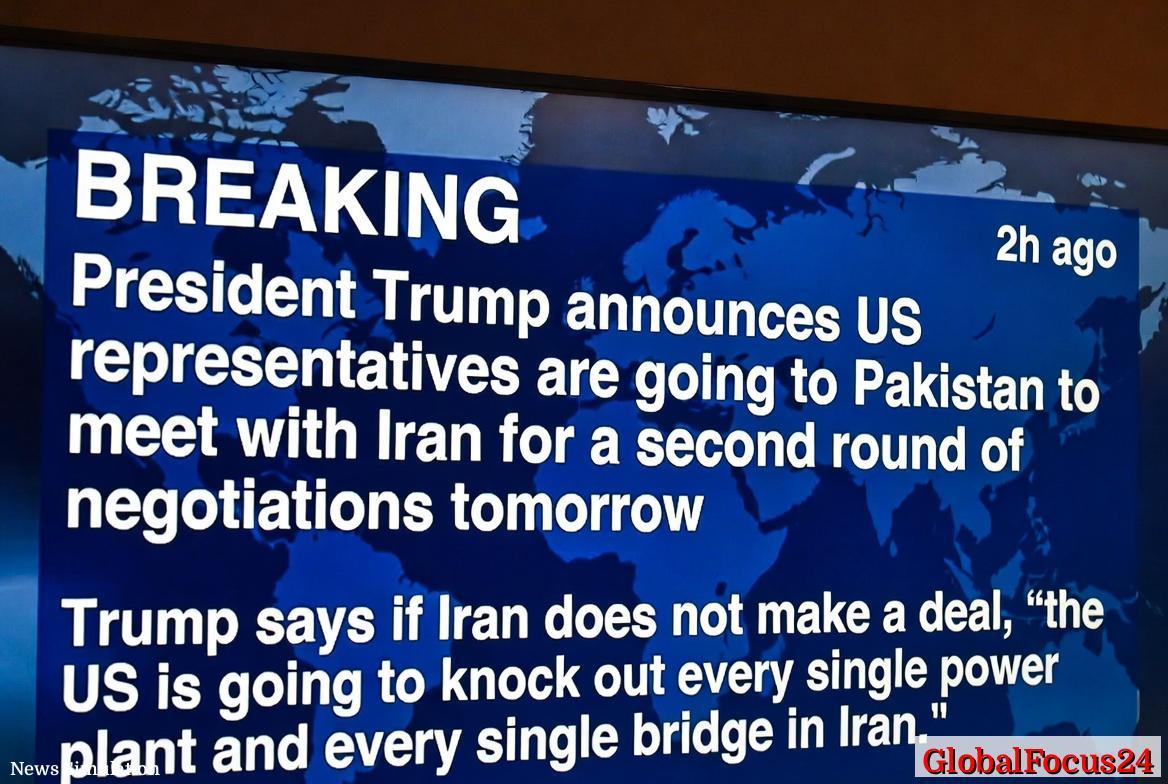
Trump Announces New U.S.-Iran Talks in Pakistan Amid Escalating Warning
Renewed Diplomatic Effort Scheduled in Pakistan
U.S. President Donald Trump has announced that American representatives will travel to Pakistan for a second round of negotiations with Iranian officials, marking a renewed attempt to address long-standing tensions between the two countries. The talks, expected to take place tomorrow, follow an earlier round of discussions that both sides described as “constructive but inconclusive.”
The decision to hold negotiations in Pakistan underscores Islamabad’s emerging role as a regional intermediary, reflecting its strategic ties with both Washington and Tehran. Pakistan has historically maintained diplomatic channels with Iran while also being a longstanding partner of the United States, positioning it as a potential bridge in complex geopolitical disputes.
Officials familiar with the preparations indicate that the upcoming meeting will focus on nuclear compliance, regional security concerns, and economic sanctions. The talks come at a time of heightened uncertainty in the Middle East, where shifting alliances and economic pressures continue to shape diplomatic priorities.
Strong Warning Accompanies Diplomatic Outreach
Alongside the announcement of renewed negotiations, Trump issued a stark warning regarding potential consequences if Iran does not reach an agreement. He stated that the United States would “knock out every single power plant and every single bridge in Iran” in the absence of a deal, signaling a significant escalation in rhetoric.
The statement reflects a dual-track approach combining diplomatic engagement with explicit deterrence. While such language is not unprecedented in U.S.-Iran relations, it introduces a heightened sense of urgency to the upcoming discussions.
Security analysts note that strong rhetoric often accompanies critical negotiation phases, particularly in disputes involving nuclear capabilities and regional influence. However, such statements can also raise concerns among international observers about the risk of miscalculation or unintended escalation.
Historical Context of U.S.-Iran Relations
Relations between the United States and Iran have been strained for decades, shaped by a series of political, economic, and military developments. The 1979 Iranian Revolution marked a turning point, leading to the severing of diplomatic ties and decades of mutual distrust.
In recent years, tensions have largely centered on Iran’s nuclear program. The Joint Comprehensive Plan of Action (JCPOA), signed in 2015, aimed to limit Iran’s nuclear activities in exchange for sanctions relief. However, the agreement faced significant challenges following the U.S. withdrawal in 2018, which led to the reimposition of economic sanctions on Iran.
Since then, efforts to revive or replace the agreement have been intermittent, with negotiations often complicated by regional conflicts, domestic political considerations, and differing strategic priorities. The current talks in Pakistan represent another attempt to find common ground amid these longstanding challenges.
Pakistan’s Role as a Diplomatic Venue
Pakistan’s involvement as host for the negotiations highlights its evolving diplomatic positioning. The country has increasingly sought to leverage its geographic and political connections to facilitate dialogue between rival states.
Islamabad’s relationship with Iran is shaped by shared borders and economic interests, including energy cooperation and trade. At the same time, Pakistan maintains close ties with the United States, particularly in areas related to security and counterterrorism.
By hosting the talks, Pakistan may enhance its standing as a regional mediator, potentially opening avenues for greater diplomatic influence. Observers note that neutral or semi-neutral venues often play a critical role in enabling dialogue between parties with limited direct engagement.
Economic Implications of Potential Outcomes
The outcome of the negotiations could carry significant economic consequences, both regionally and globally. Iran’s economy has been heavily impacted by sanctions, affecting key sectors such as oil exports, banking, and infrastructure development.
A successful agreement could lead to:
- Increased oil production and exports from Iran, potentially influencing global energy markets.
- Greater foreign investment in Iranian industries, particularly in energy and transportation.
- Improved regional trade flows, benefiting neighboring countries including Pakistan and Turkey.
Conversely, a breakdown in talks could intensify economic pressures and contribute to volatility in global markets. Energy prices, in particular, are sensitive to developments involving major oil-producing nations, and uncertainty surrounding Iran’s role in the market could lead to fluctuations.
Regional Comparisons and Strategic Stakes
The situation involving Iran can be compared to other high-stakes diplomatic efforts in recent history, such as negotiations with North Korea over its nuclear program. In both cases, a combination of sanctions, diplomatic engagement, and security concerns has shaped the approach of involved parties.
However, the Middle East presents unique complexities, including overlapping conflicts, diverse political systems, and strategic rivalries. Iran’s influence in countries such as Syria, Iraq, and Lebanon adds additional layers to the negotiations, as regional dynamics intersect with broader international concerns.
Neighboring Gulf states are also closely monitoring developments, given their own security considerations and economic interests. Any shift in U.S.-Iran relations could have ripple effects across the region, influencing alliances and policy decisions.
Public Reaction and International Response
The announcement of renewed talks has drawn mixed reactions from international stakeholders. Some view the negotiations as a necessary step toward reducing tensions and preventing conflict, while others express concern about the accompanying rhetoric and its potential implications.
Market analysts and business leaders are also paying close attention, particularly in sectors tied to energy and international trade. The possibility of either de-escalation or increased confrontation carries significant implications for investment and economic planning.
Public sentiment varies across regions, with some populations expressing cautious optimism about the potential for diplomatic progress, while others remain skeptical given the history of stalled negotiations and unmet expectations.
Strategic Outlook Ahead of Talks
As U.S. representatives prepare to meet with Iranian officials in Pakistan, the focus remains on whether the two sides can bridge their differences and reach a mutually acceptable agreement. The combination of diplomatic engagement and strong warnings underscores the high stakes involved.
Key factors likely to influence the outcome include:
- The scope and verification mechanisms of any proposed nuclear limitations.
- The extent and timing of potential sanctions relief.
- Broader regional security considerations, including Iran’s role in neighboring countries.
The coming days are expected to provide greater clarity on the trajectory of U.S.-Iran relations, with the Pakistan talks serving as a critical juncture. Whether the discussions lead to progress or further tension, their impact is likely to resonate beyond the immediate participants, shaping geopolitical and economic dynamics in the months ahead.