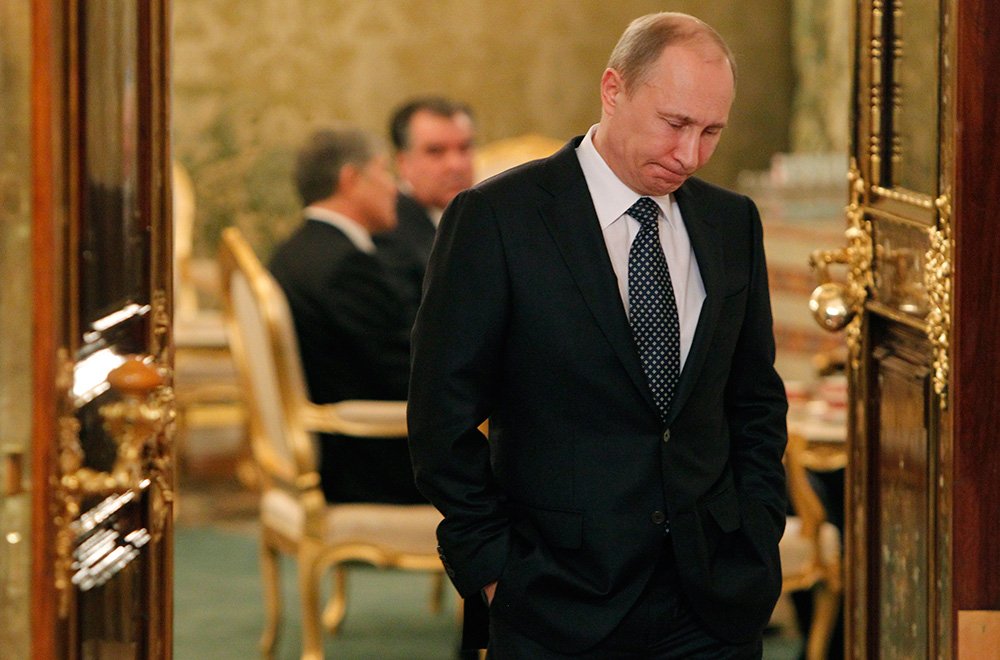
Putin’s China Visit Ends Without Gas Pipeline Breakthrough
Russian President Vladimir Putin’s latest visit to Beijing ended without a deal on the long-discussed Power of Siberia 2 gas pipeline, underscoring how pricing, financing and strategic caution continue to slow one of the world’s most closely watched energy projects. Reporting from the meeting indicates that Chinese officials have suspended further negotiations for now and want more favorable terms before the project can advance.
Beijing Puts Talks On Hold
The latest round of discussions did not deliver the breakthrough Moscow had hoped for, despite the political symbolism of a high-level summit. Reuters reporting on the visit said Putin left Beijing with no sign of progress on the pipeline, while other accounts said the talks again ended without a final agreement. According to the reports, Chinese officials asked the Russian side not to raise the project again until a better commercial package is on offer.
The central obstacle remains price. Beijing is seeking gas at roughly Russia’s domestic rates, around $50 per 1,000 cubic meters, while Moscow considers that level too low to support the economics of a major export pipeline. That gap has repeatedly blocked a deal even as both governments continue to describe their broader relationship as stable and strategic.
Why Power Of Siberia 2 Matters
Power of Siberia 2 is not just another infrastructure project. It is intended to become a major export route that would connect Russia’s gas resources to China through Mongolia, helping Moscow redirect energy sales toward Asia after losing much of its European market. Reports describe the project as a proposed 2,600-kilometer pipeline designed to carry as much as 50 billion cubic meters of gas a year.
For Russia, the pipeline would be a long-term answer to one of the biggest consequences of the post-2022 energy shift: the erosion of its once-dominant position in Europe. For China, the project could diversify supply sources and deepen access to overland gas imports, which are often seen as more secure than seaborne shipments. Yet the same project that looks strategically useful on paper becomes far harder to complete when both sides focus on price, demand outlook and control over future supply terms.
A Decade Of Delays
Talks over Power of Siberia 2 have dragged on for years, and the latest setback fits a familiar pattern. Reports from the May summit in Beijing said pricing, financing and delivery schedules remained unresolved even after a legally binding memorandum was signed in September 2025 to support the project’s construction. Other coverage noted that the project has been discussed for more than a decade without a final investment decision.
That long delay reflects the balance of leverage between the two countries. Russia needs a large new buyer for its gas, while China has been able to wait, knowing that it already has diversified energy options and a strong hand in negotiations. The result is a familiar dynamic in large infrastructure deals: the side under more pressure to sell is often forced to accept less favorable economics, but not so unfavorable that the project stops making sense entirely.
Economic Stakes For Russia
The economic implications for Moscow are significant. A finalized pipeline deal would have offered a way to partially replace lost revenue from Europe and provide a long-term outlet for Russian gas fields. Without it, Russia remains more dependent on existing routes and on the lower prices that usually come with limited market access.
That matters because pipeline exports are typically valued not only for volume but for stability. Long-term fixed infrastructure can create predictable demand, but only if the pricing supports construction, transport and financing costs. In this case, reports suggest Moscow believes Beijing’s preferred pricing would be economically unviable for a project of this scale. The absence of a deal therefore delays both near-term construction spending and the longer-term revenue stream the Kremlin has been seeking.
China’s Energy Strategy
China’s caution is rooted in its own energy strategy. Beijing has spent years broadening its supply mix, building infrastructure that lets it balance pipeline gas, liquefied natural gas and domestic production. That gives Chinese negotiators room to resist prices they regard as too high, especially if they believe domestic demand growth may be slowing or has already peaked.
In practical terms, China appears to be treating the pipeline as useful but not essential. That position lets Beijing push for terms closer to domestic Russian rates while avoiding a rushed commitment that could lock it into expensive gas for decades. The hesitation also reflects a broader pattern in major Asian energy markets, where buyers often prefer optionality over dependency and negotiate hard when alternative suppliers exist.
Regional Energy Context
The stalled talks come at a time when Eurasian energy flows are already in flux. Europe has sharply reduced its dependence on Russian gas since the war in Ukraine, forcing Moscow to accelerate efforts to pivot toward Asian markets. At the same time, China has become more important to Russia’s energy future, not only as a customer but as a near-inevitable reference point for pricing in any new export arrangement.
Regional comparisons show how much the market has changed. In Europe, pipeline gas once traveled west under long-term contracts that favored volume and continuity. In Asia, buyers like China and India have been more willing to use competition among suppliers to negotiate aggressively on price, whether for pipeline deliveries or liquefied natural gas shipments. That shift has made it harder for Russia to replicate the economics of its older export model in a new direction.
What Happens Next
For now, the outcome is a pause rather than a collapse. Reports suggest the route and broad parameters may still be understood, but the crucial commercial terms are not settled and no firm launch date has been set. That means further talks remain possible, particularly if market conditions change or if either side decides the strategic value of the project outweighs the cost of compromise.
Still, the latest setback is a reminder that even close political relationships do not automatically produce major commercial agreements. Power of Siberia 2 remains one of the clearest tests of how far Russia and China are willing to align their energy interests. Until the pricing gap narrows, the pipeline is likely to remain a strategic idea with enormous potential and no final destination.