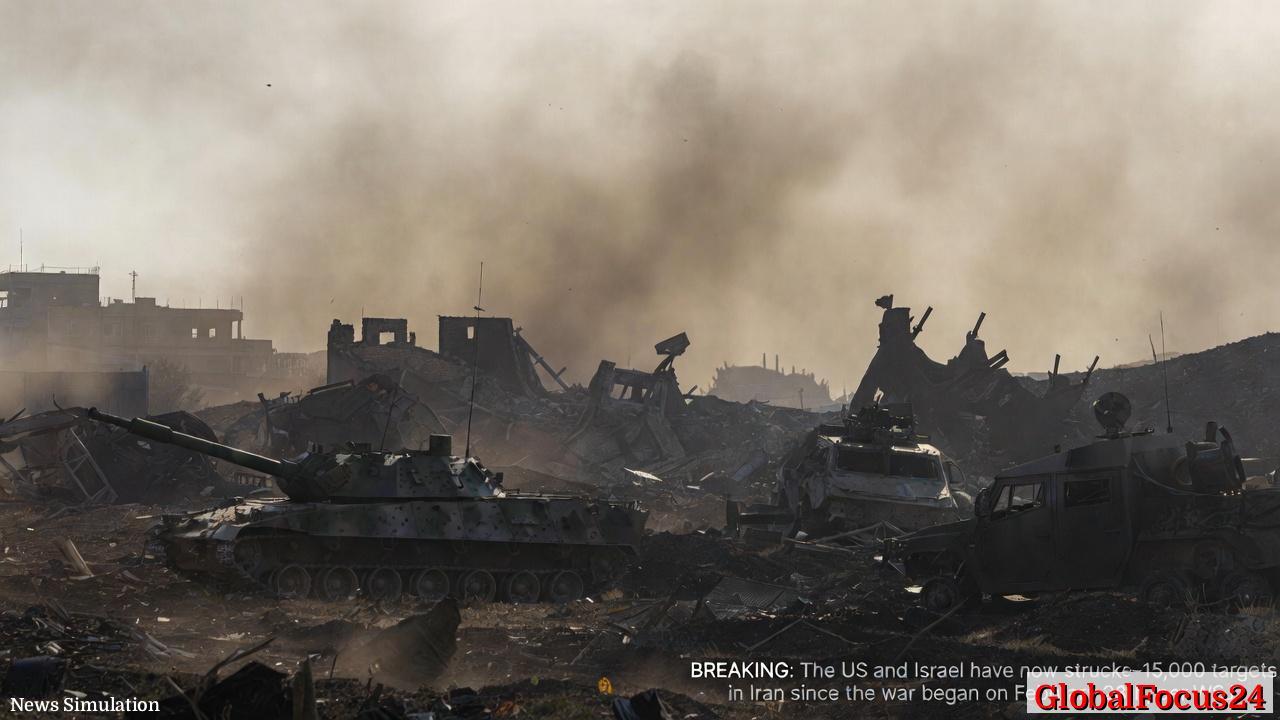
Israel and United States escalate Middle East operations: a turning point in prolonged regional crisis
The ongoing conflict in the Middle East has surged into a critical phase as Washington and Tel Aviv intensify their military operations against Iran. With thousands of personnel deployed, hundreds of aircraft in the air, and an expanding economic footprint, the episode marks a significant moment in modern geopolitical risk and regional stability. The following overview provides historical context, examines economic implications, and offers regional comparisons to illuminate how this phase differs from prior confrontations and what it could mean for the broader international security landscape.
Historical context: a century of shifting power dynamics in the Persian Gulf and beyond
To understand the current course, it helps to trace several decades of strategic maneuvering in the broader region. The Persian Gulf has long been a focal point of great-power competition, energy security, and proxy dynamics. In recent years, advances in precision strike capabilities, space-based reconnaissance, and cyber operations have transformed how states project power and how regional actors respond. The current engagement follows a pattern of high-intensity episodes that recur when core interests—nuclear nonproliferation concerns, freedom of navigation, and regional influence— collide with broader security guarantees provided by international coalitions.
Experts note that Iran’s naval and missile programs, coupled with its regional network of allied groups, have repeatedly tested Western red lines. The present stage of conflict appears to be shaping a new equilibrium, one in which both the United States and Israel anchor their strategy in rapid, integrated operations aimed at degrading Iran’s military capabilities while attempting to minimize civilian exposure. The period leading up to this escalation underscored the fragility of regional diplomacy, the limits of deterrence, and the critical role of allied interoperability among Western and regional partners.
Operational profile: scale, tempo, and targeting
- Target quantity and scope: The alliance has reported striking a substantial number of targets linked to Iran’s military apparatus and supporting networks. The cumulative figure suggests a broad campaign designed to degrade long-range strike capability, air defenses, naval assets, and command-and-control nodes. The focus appears to be on high-value units and logistical nodes that function as force-mmultipliers for Iran and its regional proxies.
- Deployment and force posture: Roughly tens of thousands of American service members have been deployed to Middle Eastern theaters to back operations. This reflects a sustained commitment to air superiority, maritime security, and joint-fire support, while advising and coordinating with regional partners. The scale underscores both operational demands and political signaling to allies and adversaries alike.
- Air power and sorties: The coalition has executed thousands of combat missions, including long-range strikes and air-defense suppression, underscoring the emphasis on rapid, decisive action to disrupt Iran’s military activity. The tempo of flights indicates a robust integration of aerial reconnaissance, logistics, and precision munitions, with a clear aim to minimize collateral damage while achieving strategic effects.
- Naval dimension: In addition to air-centric operations, naval forces have pursued a campaign to constrain Iran’s maritime capabilities, including anti-ship and coastal defense systems. Diminishing the ability to project naval power reduces the region’s leverage in sea lanes critical to global trade and energy flows.
Economic impact: immediate costs and longer-term consequences
- Direct expenditures: The total cost of the campaign has moved into a substantial range, capturing expenditures across munitions, fuel, maintenance, personnel, and allied support. The financial footprint reflects not only the direct costs of operations but also the sustained readiness and reinforcement requirements for allied forces in the region.
- Energy prices and market responses: Energy markets react quickly to regional instability. In the current environment, wholesale and retail prices for fuels have shown notable sensitivity, with broader implications for transportation costs and consumer energy bills across economies dependent on Gulf energy flows. The spillover effects can influence inflation dynamics and fiscal planning in both producing and consuming nations.
- Domestic economic considerations: For the United States and allied economies, defense spending in wartime typically triggers a mix of short-term stimulative effects in related industries and longer-term budgetary recalibrations. The situation also tests the resilience of supply chains and the reliability of global logistics networks, which can be stressed during sustained periods of heightened alert.
- Global financial and insurance implications: Credit markets, hedge funds, and insurance pools that underwrite maritime and energy-related risks tend to adjust pricing to reflect geopolitical risk. The evolving security environment can influence borrowing costs for governments and corporations with exposure to the region, as well as affect investment sentiment more broadly.
Regional comparisons: lessons from adjacent theaters
- Gulf cooperation and deterrence measures: In neighboring scenarios, regional powers have balanced deterrence with diplomacy, seeking to prevent miscalculations that could widen conflict. The current phase emphasizes the importance of allied interoperability, rapid decision-making, and layered defense postures across air, land, and maritime domains.
- Asia-Pacific parallels: Across other strategic theaters, major powers emphasize maritime security, freedom of navigation, and the resilience of supply chains. The ongoing crisis underscores the universal challenge of maintaining open sea lanes and safeguarding critical energy corridors while avoiding unintended escalations.
- Europe’s security framework: While geographically distant, European partners monitor the situation closely given the potential implications for NATO deterrence posture, global arms control norms, and international law principles. The coalition’s approach reflects a broader commitment to collective defense, crisis management, and strategic risk reduction.
Public reaction and humanitarian considerations
- Public sentiment: In capitals around the world, reactions range from cautious support for targeted actions to widespread concern about civilian casualties and regional stability. Governments are pressed to communicate clear strategic aims, minimize civilian harm, and maintain transparency about mission parameters and exit strategies.
- Humanitarian impact: Any sustained conflict in the region risks displacement, disruption of essential services, and threats to civilian infrastructure. International humanitarian organizations emphasize the importance of safeguarding civilians, providing medical aid, and ensuring access to essential goods.
Strategic implications and possible trajectories
- Deterrence and escalation dynamics: The current campaign seeks to deter further Iranian destabilization while signaling resolve to regional adversaries. The risk remains that miscalculation could trigger broader confrontations, especially if proxy networks intensify or if misinterpretations occur during rapid-fire operations.
- Diplomatic pathways and negotiation prospects: With open channels of communication between major powers, there may be renewed emphasis on de-escalation and diplomatic engagement alongside ongoing military efforts. Historical precedents suggest that sustained pressure coupled with credible diplomacy can shape long-term outcomes, though timelines remain uncertain.
- Post-conflict reconstruction and regional resilience: Should the campaign shift toward stabilization and reconciliation, rebuilding critical infrastructure and restoring confidence in regional markets will become priorities. This includes securing energy corridors, restoring port operations, and ensuring a stable security environment for commerce.
Conclusion: navigating uncertainty with measured resolve
The current phase of the Middle East operations represents a watershed moment in modern geostrategic competition. By combining robust military actions with multilateral coordination and clear messaging, the United States and its allies aim to disrupt threats while maintaining a pathway toward stability. The coming weeks will reveal how the balance between coercive measures and diplomatic engagement evolves, how regional partners adjust their posture, and how global markets respond to ongoing volatility. In this volatile environment, informed public understanding and cautious policymaking remain essential to avoiding overreach while preserving essential security interests.
Notes on figures and context are derived from ongoing operational disclosures and publicly available analyses of military deployments and strategic objectives.