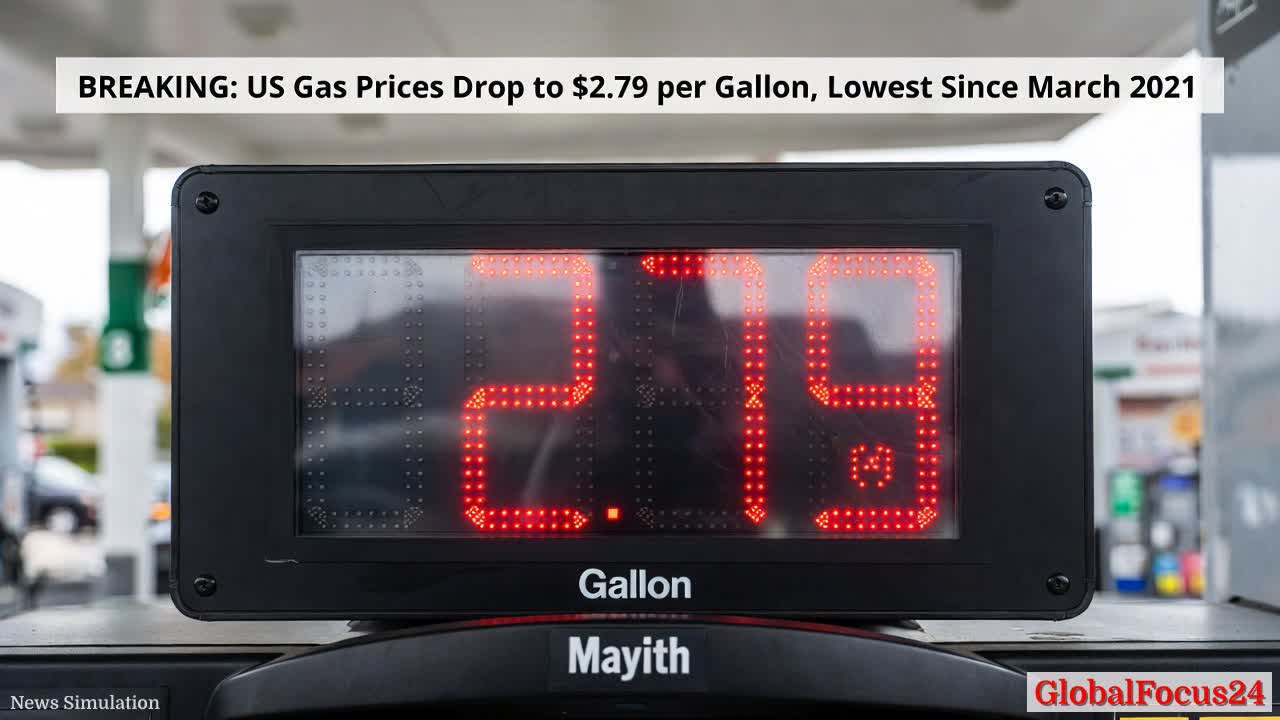
US Gas Prices Fall to $2.79 per Gallon, Lowest Since March 2021
The national average price for regular gasoline has declined to $2.79 per gallon, a level not seen since March 2021. The drop arrives as a mosaic of shifting supply, evolving demand, and broader energy-market dynamics that together shape the price Americans pay at the pump. Analysts say the timing could offer relief to households and businesses ahead of peak travel season, while also influencing transportation costs, consumer spending, and regional refueling patterns.
Historical context: a pattern of volatility and gradual normalization
Gasoline prices in the United States have long traced a path marked by periodic spikes and retreats, reflecting a complex interplay of crude-oil prices, refinery maintenance schedules, seasonal blends, and global energy demand. In early 2020, prices plummeted as the pandemic disrupted travel and commerce. A rebound followed as economies reopened, only to be tempered by supply constraints, geopolitical tensions, and shifts in production. By 2021, a combination of recovering demand and constrained supply contributed to elevated gasoline costs, with retail averages fluctuating in the highs range. The current drop to $2.79 stands out as a notable returning point toward pre-crisis levels, signaling a potential stabilization phase after a years-long cycle of price swings.
Economic impact: households, businesses, and regional resilience
- Household budgets: The lower price at the pump translates into immediate savings for drivers and families, particularly for those commuting long distances or relying on gasoline-intensive transportation. If this trend persists, annual household fuel expenditures could be substantially lower than in recent years, freeing up disposable income for other essentials or investments.
- Transportation and logistics: Freight and delivery costs are sensitive to fuel prices. A sustained reduction can ease operating expenses for trucking fleets, retail supply chains, and service industries that depend on mobile labor. Lower fuel costs may also influence consumer prices indirectly, as savings in logistics can cascade through supply chains. -Regional dynamics: Prices at the local level often diverge from the national average due to factors like refinery proximity, state taxes, and transportation costs. Regions with heavy commuter populations or energy-intensive industries may experience more pronounced benefits, while areas with higher fuel taxes or environmental regulations might see tempered effects. Comparisons across regions reveal how infrastructure and market structure shape price exposure for residents.
- Economic cross-currents: Lower gasoline costs can bolster consumer confidence and discretionary spending, particularly in economies still stabilizing from recent volatility. However, the broader macroeconomic landscape, including wage growth, inflation, and interest rates, will influence how much of the perceived savings translate into tangible purchasing power.
Regional comparisons: where the relief lands most
- Northeast: Areas with dense urban centers and reliance on highway travel may notice noticeable relief, especially during peak driving months. However, winter weather can influence consumption patterns and fuel choices, potentially moderating gains.
- Midwest: A corridor characterized by manufacturing and agricultural supply chains often experiences direct benefits from lower transport costs, supporting both commercial activity and rural households.
- South: Strong domestic fuel demand coexists with robust refining capacity, potentially amplifying price responses in both directions depending on refinery maintenance cycles and regional demand fluctuations.
- West: Prices here can be more susceptible to refinery outages and supply constraints due to geographic and regulatory factors, but the current price level may still provide relief relative to recent peaks.
Supply and demand dynamics behind the shift
The decline to $2.79 per gallon reflects a blend of factors, including:
- Crude-oil price movements: While crude prices have shown volatility, recent trends suggest a more tempered trajectory, which can translate into lower gasoline costs at the dealership level.
- Refinery utilization: High draw on refining capacity coupled with scheduled maintenance can influence gasoline supply. A balance between production and demand tends to stabilize prices over the medium term.
- Seasonal patterns: Gasoline blends and consumer demand correlate with seasons. The transition toward spring and summer driving typically shifts demand, but current pricing suggests a softer pull compared to historical peaks during peak driving seasons.
- Global market signals: Economic conditions in major consuming regions and production decisions by leading exporters can ripple through to domestic gas prices. Market expectations about future supply and demand influence retail pricing behavior.
Consumer sentiment and public reaction
Public response to falling gasoline prices often centers on relief and a sense of renewed financial flexibility. Commuters may recalibrate budgets, and households adjust spending toward groceries, housing, or discretionary activities. Local businesses, particularly those with transportation components, may plan updated staffing or inventory strategies in light of lower fuel costs. However, many observers caution that price movements at the pump do not always translate into sustained economic gains, noting that broader inflationary pressures and wage growth remain critical factors in household purchasing power.
Comparison with historical benchmarks
- 2021 peak levels: The current price point is substantially lower than the highs observed in 2021, illustrating a reversion toward more affordable fuel costs after a period of volatility.
- Pre-2020 baselines: By anchoring discussions to longer-run trends, analysts can assess whether the present price signals reflect a structural shift in energy markets or a temporary lull driven by seasonal or supply-side factors.
- Inflation-adjusted perspective: When viewed through the lens of purchasing power, lower gasoline prices contribute to real income gains for households, but prices for other essentials may offset some of that relief. The net effect depends on the broader inflation environment and wage dynamics.
Policy and market implications
- Energy policy considerations: Policymakers often monitor gasoline prices as indicators of energy-market health and transportation affordability. While price declines provide short-term relief, long-term strategies may focus on diversification of energy sources, refining capacity, and resilience against supply shocks to sustain affordability.
- Market competitiveness: A lower average price can influence consumer choices and market competition among retailers. Stations may adjust promotions, loyalty programs, or pricing strategies to attract customers during a period of favorable cost basis.
- Environmental and regulatory context: The price environment interacts with environmental standards and regional policies around fuel blends and emissions. While not inherently a political statement, these factors can shape the cost structure for refiners and retailers and thus impact retail prices.
What this means for 2026 and beyond
If the price trend persists, American households could experience meaningful, predictable savings on a recurring expense. The cumulative effect of sustained savings could influence discretionary spending, travel planning, and overall economic confidence. Yet observers caution against assuming a permanent shift, highlighting that gasoline prices remain sensitive to global dynamics, refinery maintenance cycles, and potential shocks to crude supply.
Strategic takeaway for consumers and businesses
- For households: Monitor weekly price movements and consider timing purchases or trips to optimize fuel expenditure. Small shifts in price, when aggregated over a year, can yield noticeable savings.
- For businesses with travel or logistics components: Reassess budgeting and route optimization to capitalize on lower fuel costs. Consider hedging strategies or long-term procurement planning if price stability appears likely.
- For travel and tourism sectors: Expect enhanced affordability for road trips, potentially boosting domestic tourism and regional economic activity during shoulder seasons.
Conclusion: a pivotal moment or a passing breeze?
The current national average of $2.79 per gallon marks a meaningful moment in the ongoing story of U.S. energy markets. It signals potential relief to households and a refreshed cost structure for businesses tied to transportation and logistics. While this price level is encouraging, it sits within a larger context of fluctuating crude prices, refining capacity, and macroeconomic conditions that can alter the trajectory in coming months. As markets respond to evolving supply-demand balances, consumers and industries alike will watch closely over the next several weeks to gauge whether this is the start of a longer-term normalization or a temporary dip amid ongoing volatility.