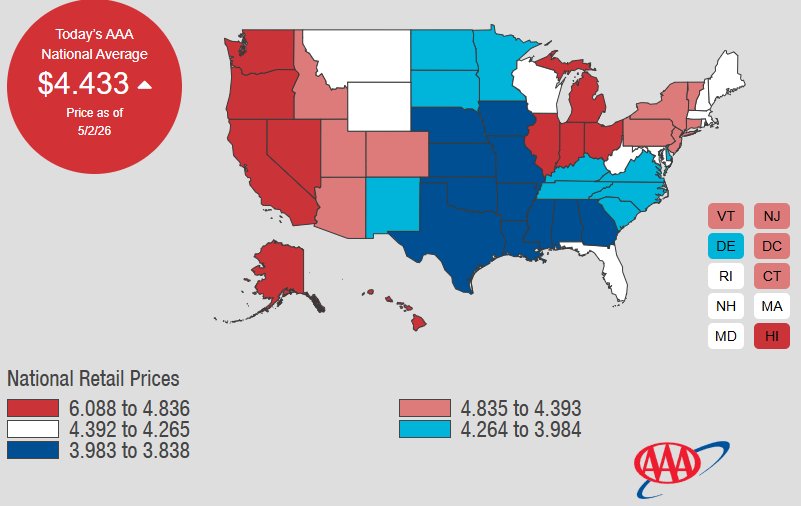
US Gasoline Prices Jump to $4.43 per Gallon, Driving Broad Economic Ripples
The national average price for a gallon of gasoline has surged to $4.43, marking a marked increase from late last year and signaling a transformative moment for American households and industries. This rise, representing a roughly 61% jump since December, is reshaping household budgets, consumer behavior, and regional economic dynamics as motorists recalibrate daily routines and businesses adjust pricing strategies in response to higher fuel costs.
Context and historical perspective
- A volatile energy backdrop: The current surge sits within a broader pattern of energy market fluctuations driven by geopolitical tensions, refinery maintenance cycles, and shifts in global demand. Gasoline prices often reflect a confluence of crude oil prices, refining capacity, seasonal demand, and inventory levels. While episodic spikes have occurred in the past, the magnitude of the latest move underscores the persistent sensitivity of fuel markets to supply constraints and macroeconomic developments.
- Historical benchmark comparisons: In recent decades, fuel price cycles have followed the ebbs and flows of crude oil markets, with periods of stability interrupted by episodes of rapid ascent. The current level places pain points on both urban and rural communities that rely on driving for commuting, delivery services, and essential travel, particularly in regions with longer average commutes and greater vehicle dependence.
Economic impact across households and industries
- Burden on household budgets: The uptick in gas prices translates into increased monthly expenditures for a broad swath of households. With transportation costs constituting a substantial share of discretionary and core spending for many families, higher fuel prices can compress discretionary income, affecting consumer sentiment and saving patterns.
- Transportation and logistics implications: For businesses that rely on road transport, higher fuel costs can compress margins unless companies pass a portion of the expense onto customers or absorb a portion through efficiency gains. Sectors most exposed include freight, construction, and service industries with significant field operations that require frequent vehicle use.
- Indirect effects on inflation and consumer prices: Fuel is a fundamental input across the economy. Elevated prices at the pump often correlate with broader cost pressures, influencing shipping costs, goods pricing, and service delivery. While inflation dynamics are multifaceted, sustained higher fuel costs can contribute to increased prices for a wide range of goods and services, particularly those with time-sensitive delivery requirements.
Regional differences and practical implications
- Urban versus rural dynamics: Gasoline price movements can affect regions differently based on average daily driving distances, vehicle mix, and public transit availability. Urban areas with shorter average commutes may experience a different transmission of price shocks compared to rural regions where long-distance travel is more common and car dependence is higher.
- State-level nuances: Local taxes, environmental regulations, and market conditions shape regional price dispersion. Some states with higher gasoline taxes or lighter refineries may feel the impact more acutely, while others with more resilient supply chains may experience relatively muted effects in the near term.
- Seasonal considerations: Driving demand typically fluctuates with the seasons. Summer travel peaks, associated maintenance cycles, and refinery scheduling can amplify price volatility. The current price level highlights the importance of monitoring supply disruptions and inventory trends as the season progresses.
Implications for energy policy and market dynamics
- Supply resilience and diversification: The price trajectory underscores the importance of diversified energy sources and robust refining capacity to reduce susceptibility to single-point failures. Policy discussions commonly emphasize strategic reserves, domestic production balance, and investment in efficiency that can cushion consumers during periods of market stress.
- Efficiency and alternative mobility options: Rising fuel costs can accelerate consumer interest in fuel-efficient vehicles, hybrid and electric options, and alternative transportation modes. Businesses may also explore route optimization, fleet modernization, and digital tools to manage fuel spend more effectively.
- Market transparency and data: Accurate, timely information on refinery outages, inventory levels, and demand signals helps households and businesses plan more effectively and reduces the risk of abrupt price shocks. Strengthened market surveillance contributes to more predictable consumer experiences.
Public reaction and behavioral shifts
- Consumer behavior changes: When price signals rise, many drivers adjust by consolidating trips, combining errands, or increasing carpooling. Some households may shift to public transit where feasible or adjust work schedules to avoid peak travel times, seeking cost savings wherever possible.
- Business adaptations: Retailers, logistics firms, and service providers frequently respond to elevated fuel costs with a mix of pricing adjustments, efficiency investments, and revised delivery models. Communities may observe higher delivery charges or altered service windows as a consequence.
Key considerations for consumers and businesses
- Budgeting tips for households: Track weekly fuel expenditures, consider optimizing driving routes with navigation tools, and evaluate vehicle maintenance that improves fuel efficiency. If eligible, explore programs or incentives for fuel-efficient vehicles or alternative transportation options.
- For businesses: Reassessing transportation logistics, adopting fuel-saving technologies, and negotiating with suppliers can help mitigate exposure to price volatility. Scenario planning and hedging strategies may be relevant for fleets with high annual mileage.
Global context and regional comparisons
- International price spillovers: Gasoline price movements in the United States can influence and be influenced by global energy markets. Exchange rates, crude price trajectories, and international demand all feed into domestic fuel costs, creating a complex web of interconnections that policymakers monitor closely.
- Comparative regional experience: Regions with extensive public transit networks or higher rates of vehicle electrification often experience different transmission patterns from global price changes. Understanding these comparisons helps explain why some areas shoulder the impact more gradually than others.
What to watch next
- Inventory and refinery activity: The trajectory of fuel prices will continue to hinge on refinery maintenance schedules, unplanned outages, and crude supply. Monitoring these indicators provides insight into whether prices move higher or stabilize in the coming weeks.
- Demand signals: Seasonal travel trends, economic growth, and consumer confidence will influence gasoline demand and pricing momentum. A sustained period of strong demand could extend price pressures, while softer conditions may bring some relief.
- Policy and market responses: Legislative and regulatory developments, along with strategic energy initiatives, could alter the cost dynamics of fuel in the medium term. Stakeholders should stay attuned to potential policy shifts that could influence supply, demand, and prices.
Conclusion As gasoline prices push higher, households and businesses alike face a landscape of tighter budgets and careful planning. The surge to $4.43 per gallon reflects a broader set of market pressures — from global energy tensions to domestic supply constraints — that ripple through daily life and the wider economy. While the immediate impact is felt most acutely at the pump, the longer-term implications touch consumer behavior, transportation strategies, and regional economic performance. Stakeholders across the country are weighing options, from efficiency improvements and mode shifts to pricing adjustments and policy measures, as they navigate a period of heightened fuel cost volatility.