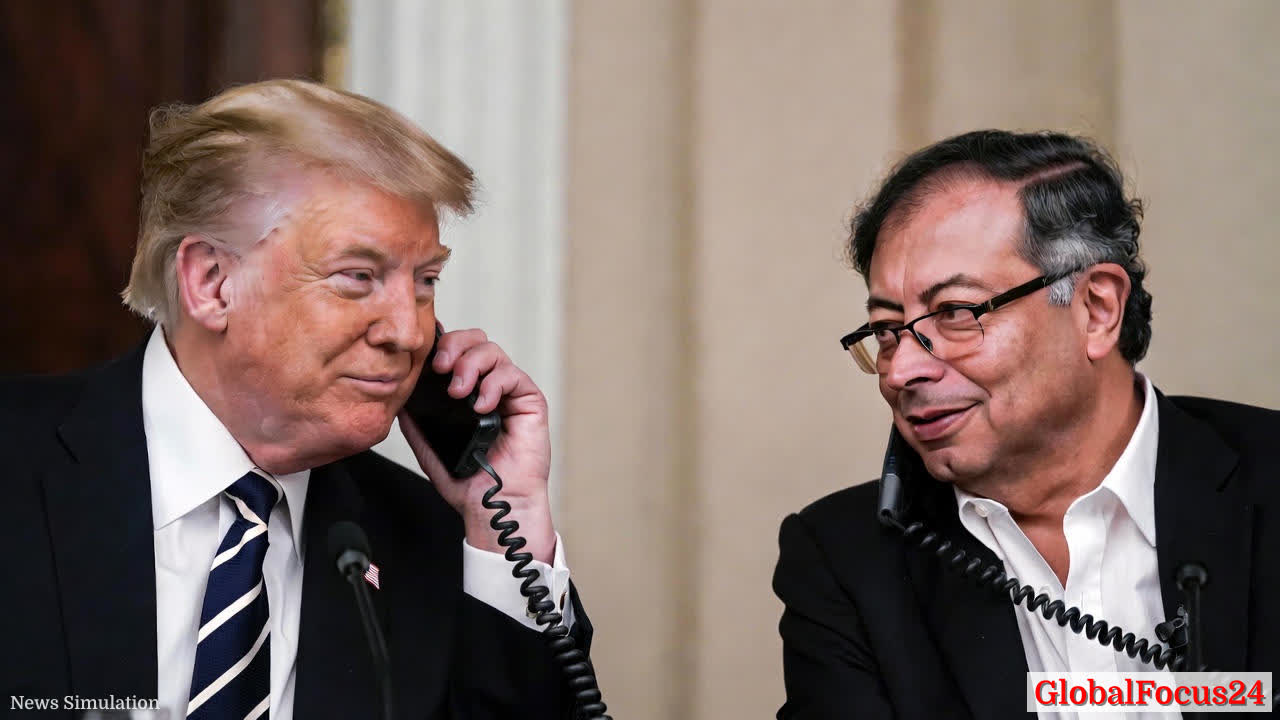
Trump-Petro Call: White House Meeting on the Horizon as U.S.-Colombia Ties Reassess Drug Policy and Regional Roles
A recent telephone conversation between U.S. President Donald Trump and Colombian President Gustavo Petro marked a notable moment in the ongoing recalibration of U.S.-Colombia relations. The call, described by Trump as a "great honor," touched on drug-control strategies and other points of disagreement, with both sides signaling a desire to engage further. Officials from the U.S. State Department and Colombia’s foreign ministry indicated arrangements for a White House meeting are underway, underscoring a shared interest in advancing dialogue at the highest level.
Historical context provides a useful lens for understanding the potential significance of this engagement. Colombia’s long-running battle against illicit drugs has framed a substantial portion of bilateral security and development aid since the late 20th century. The U.S. response has evolved through several phases—from aggressive eradication campaigns and extradition-focused strategies to more nuanced approaches that emphasize public health, demand reduction, and regional stability. President Petro, elected in 2022 on a platform that prioritized social reforms, climate resilience, and a pivot toward inclusive regional governance, has sought to recalibrate Colombia’s international partnerships, balancing its longstanding security cooperation with a broader agenda of social and economic reform. In this context, a direct line of communication with the White House signals a potential broadening of cooperation beyond traditional security metrics.
Economic implications of a revitalized bilateral dialogue are multifaceted. Trade is a core element of the relationship, with the Colombian economy continuing to diversify from its historical reliance on commodity exports toward manufacturing, services, and technology-driven sectors. In recent years, foreign investment has flowed into Colombia’s infrastructure, energy, and digital sectors, mapping to broader regional growth trends in Latin America. Any renewed emphasis on coordinated anti-narcotics initiatives is likely to intersect with economic development programs, labor market reform, and regional supply-chain resilience. For the United States, a stable and prosperous Colombia can contribute to a safer northern corridor and a more predictable partner in hemispheric trade and investment, thereby influencing broader macroeconomic indicators such as commodity prices, regional inflation patterns, and exchange-rate dynamics.
From a regional comparison standpoint, Colombia’s trajectory presents a contrast with some of its neighbors while aligning with others pursuing similar reform agendas. In neighboring countries with evolving drug-control policies and social investment programs, the balance between enforcement, treatment, and community development remains a critical policy fulcrum. For example, Latin American democracies that have pursued more permissive or harm-reduction-focused approaches are observing shifts in crime rates, public health outcomes, and budgetary allocations. By contrast, countries maintaining stringent enforcement regimes often emphasize interdiction and supply-side measures, with varying degrees of success in reducing illicit trafficking and associated violence. The evolving U.S.-Colombia dynamic is likely to be informed by these regional experiences, tailoring bilateral strategies to Colombia’s unique political economy and social landscape.
Key topics expected to frame future talks include drug interdiction, victim-centered drug policy, extradition cooperation, and intelligence-sharing protocols. The discussion may also touch on regional security concerns such as migration pressures, energy transition, and climate resilience, all of which have begun to color the priorities of governments across the Americas. In addition, the White House’s approach to diplomacy with Colombia could influence how the United States engages with other Latin American nations on issues such as corruption, governance, and human rights—areas where public opinion and international expectations increasingly demand accountable, transparent practices.
Public reaction to the potential White House meeting has been mixed but generally attentive. Supporters of stronger bilateral cooperation on security and economic development welcome the renewed channel, hoping for clearer commitments on funding for community-based programs, modernization of infrastructure, and investment in renewable energy projects. Critics, however, caution against returning to heavy-handed drug-war paradigms or using bilateral talks to advance partisan objectives. The prevailing sentiment among many observers is a hope for pragmatic collaboration that prioritizes humanitarian outcomes, regional stability, and sustainable growth over political posturing.
Beyond the immediate implications for policy, the call and the prospective meeting carry symbolic weight for the broader U.S.-Latin America relationship. They reflect a recognition that Latin American leadership—whether through Petro’s reform agenda or other regional actors—plays a pivotal role in shaping the continent’s security architecture and economic development. The potential for a high-level dialogue to translate into concrete programs could influence education and health initiatives, workforce development, and technology adoption—areas where bilateral partnerships have historically yielded measurable benefits for communities on both sides of the hemisphere.
In assessing the strategic value of the conversation, several dimensions emerge. First is the credibility boost that comes with direct presidential engagement. Personal diplomacy can accelerate negotiations that might otherwise stall in bureaucratic channels, enabling quicker alignment on shared objectives like supply-chain resilience and regional anti-corruption efforts. Second is the signal it sends to international markets. A credible, ongoing dialogue demonstrates stability and predictability in policy direction, which can attract investment and support long-term planning in sectors ranging from natural resources to digital infrastructure. Third is the potential for policy integration. If the White House meeting yields actionable commitments, Colombia’s reform initiatives—including social and educational programs—could gain access to funding mechanisms and technical assistance that amplify their impact.
From a security perspective, the conversation may influence regional drug-trafficking dynamics and law enforcement collaboration. The United States has long argued that effective drug control requires a balance of supply reduction, demand reduction, and the pursuit of vulnerable communities that traffickers exploit. Petro’s administration has signaled a willingness to pursue reforms that emphasize health-centered approaches and social protection, which could align with U.S. objectives if accompanied by robust governance and accountability measures. The convergence of these approaches could translate into more efficient collaboration on intelligence sharing, border control, and illicit financial flows, all of which have tangible implications for regional security and public health outcomes.
In terms of policy design, the prospective meeting is likely to prioritize measurable results and transparent reporting. Stakeholders on both sides may advocate for clear benchmarks, such as reductions in overdose deaths, increases in treatment access, improved enforcement against illicit networks with a focus on human rights protections, and transparent use of international aid. By anchoring cooperation in verifiable outcomes, policymakers can address concerns about inefficiency and ensure that resources deliver real benefits to affected communities.
As the dialogue progresses, it will be important to monitor the alignment of domestic political considerations with bilateral objectives. In the United States, public opinion on foreign policy and drug-control strategies is diverse and dynamic, shaped by evolving national security priorities and the humanitarian implications of trafficking networks. In Colombia, domestic political currents—from urban centers to rural regions—will influence how policymakers negotiate, implement, and evaluate bilateral initiatives. The White House meeting, if realized, will likely be framed not only as a tactical response to immediate concerns but as a strategic recalibration aimed at advancing long-term stability and shared prosperity.
Historical memory will play a role in shaping expectations. Decades of U.S.-Colombia cooperation have yielded both successes and difficult lessons. The evolution of drug-policy paradigms—from punitive measures to balanced approaches—reflects broader shifts in international norms, public health knowledge, and the understanding that development and security are inseparable. Modern dialogues benefit from that history, offering an opportunity to design programs that are more attuned to local realities while maintaining a shared commitment to safety, dignity, and opportunity for people across both nations.
Looking ahead, experts anticipate a phased approach to any expanded partnership. Early stages may emphasize less contentious topics—such as humanitarian assistance, disaster resilience, and infrastructural modernization—before moving into more sensitive areas like extradition processes and long-term drug-control strategies. This incremental path can help build trust, align expectations, and create a framework for sustained cooperation that withstands political changes and shifting regional dynamics.
In sum, the reported exchange between Presidents Trump and Petro signals more than a routine diplomatic contact. It represents a potential inflection point in U.S.-Colombia relations—one that could shape policy direction, economic collaboration, and regional stability for years to come. As negotiations unfold and official channels finalize logistics for a White House meeting, observers will be watching closely to see whether the dialogue translates into concrete commitments, measurable results, and a durable partnership that reflects the intertwined destinies of two nations at a crossroads in the Americas.