High-Stakes US–Iran Talks Enter Critical Second Round as Ceasefire Deadline Looms
Renewed Diplomatic Push Amid Rising Tensions
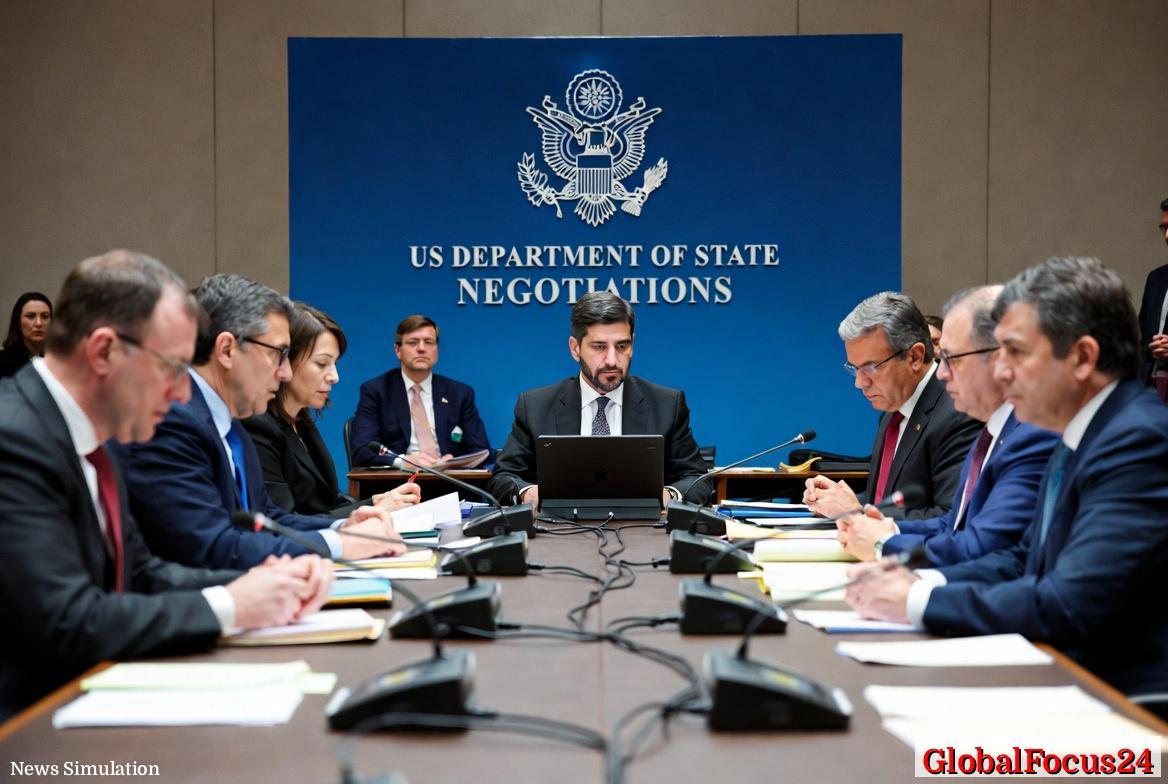
High-stakes negotiations between the United States and Iran are set to resume tomorrow, marking a pivotal second round of talks that could determine the trajectory of stability in the Middle East. With only two days remaining in the current ceasefire, the urgency surrounding the discussions has intensified, underscoring the fragile balance between diplomacy and potential escalation.
President Donald Trump has framed the upcoming negotiations as a decisive moment, describing them as a “last chance” for Iran to reach an agreement. The talks are expected to focus on reopening the strategically vital Strait of Hormuz and securing commitments from Iran to dismantle its nuclear program—two issues that have long been central to regional security concerns.
Representing the United States in this round of negotiations are Vice President JD Vance and senior envoys Steve Witkoff and Jared Kushner, who are traveling to Pakistan, where the discussions will be held. Pakistan’s role as host reflects its geographic and diplomatic positioning as a bridge between regional powers and global stakeholders.
The Strait of Hormuz: A Global Economic Lifeline
At the center of the negotiations lies the Strait of Hormuz, a narrow maritime passage that handles roughly one-fifth of the world’s oil supply. Any disruption in this corridor has immediate and far-reaching consequences for global energy markets, shipping routes, and economic stability.
Historically, tensions in the Strait have triggered sharp fluctuations in oil prices. During previous periods of heightened conflict, including the late 1980s “Tanker War” phase of the Iran-Iraq conflict and more recent standoffs in the 2010s, even minor incidents led to significant market volatility.
Reopening the Strait fully and ensuring safe passage for commercial vessels is a primary objective for the United States and its allies. Energy-dependent economies across Asia and Europe are closely monitoring developments, as prolonged instability could drive up fuel costs and disrupt supply chains already strained by recent global events.
Nuclear Program at the Core of Negotiations
Another central issue is Iran’s nuclear program, which has been a source of international concern for decades. Previous agreements, including the 2015 nuclear deal, sought to limit Iran’s nuclear activities in exchange for sanctions relief. However, shifting political dynamics and disagreements over compliance led to the collapse of that framework.
The current negotiations aim to establish a more comprehensive and enforceable agreement. US officials are seeking verifiable steps toward dismantling key components of Iran’s nuclear infrastructure, while Iran is expected to push for economic concessions and guarantees against future sanctions.
Experts note that achieving consensus on this issue remains highly complex. Verification mechanisms, timelines for dismantlement, and the scope of permitted nuclear activities are all likely to be contentious points during the talks.
Internal Dynamics Within Iran
President Trump has indicated that he believes divisions exist within the Iranian government, suggesting that differing factions may influence the outcome of the negotiations. While Iran’s political system includes multiple centers of power, including elected officials and religious leadership, external observers often find it difficult to assess the extent of internal disagreements.
Historically, internal dynamics in Iran have played a significant role in shaping foreign policy decisions. Periods of reformist leadership have sometimes led to more open engagement with Western nations, while conservative factions have tended to favor a more cautious or confrontational approach.
Understanding these internal factors is critical for negotiators, as any agreement must be acceptable to a broad spectrum of Iranian leadership to ensure long-term viability.
The Role of Pakistan as Host Nation
Pakistan’s selection as the venue for the talks reflects its strategic importance in regional diplomacy. Positioned at the crossroads of South Asia, Central Asia, and the Middle East, Pakistan has historically served as a mediator in various international negotiations.
The country maintains diplomatic relations with both the United States and Iran, allowing it to facilitate dialogue in a neutral setting. Hosting such high-profile discussions also enhances Pakistan’s role on the global stage, signaling its capacity to contribute to conflict resolution efforts.
Regional analysts note that Pakistan’s involvement could help de-escalate tensions by providing a controlled environment for dialogue, away from the immediate pressures of the conflict zone.
Economic Stakes and Global Market Reactions
The economic implications of the negotiations extend far beyond the immediate region. Financial markets have already shown sensitivity to developments, with energy prices experiencing fluctuations in response to statements and actions from both sides.
If an agreement is reached, analysts predict:
- Stabilization of global oil prices.
- Increased investor confidence in energy and shipping sectors.
- Reduced risk premiums for maritime insurance in the Gulf region.
Conversely, failure to reach a deal could lead to:
- Sharp increases in oil prices due to supply disruptions.
- Heightened volatility in global financial markets.
- Potential impacts on inflation rates in major economies.
Countries heavily reliant on imported energy, including India, China, and several European nations, are particularly vulnerable to prolonged instability in the Strait of Hormuz.
Military Threats and Escalation Risks
The negotiations are taking place under the shadow of explicit warnings from the United States. President Trump has stated that failure to reach an agreement could result in military action targeting Iran’s infrastructure, including power plants and bridges.
Such statements have raised concerns among international observers about the potential for rapid escalation. Military strikes on critical infrastructure could have significant humanitarian and economic consequences, affecting not only Iran but also neighboring countries.
Historically, conflicts involving infrastructure targeting have led to prolonged recovery periods and widespread disruption of civilian life. The prospect of such actions underscores the high stakes of the current negotiations.
Regional Comparisons and Broader Implications
The situation bears similarities to other high-stakes diplomatic standoffs in the region, where negotiations have alternated with periods of heightened tension. For example, past efforts to resolve disputes involving Iraq and Libya demonstrated how prolonged negotiations can either lead to breakthroughs or further entrench divisions.
In comparison, the current talks are notable for their compressed timeline and the explicit linkage between diplomatic outcomes and potential military action. This combination increases the pressure on both sides to reach a resolution quickly.
Neighboring countries in the Gulf region are also closely watching the developments. Many have invested heavily in diversifying their economies and reducing reliance on oil revenues, but remain deeply connected to the stability of regional energy flows.
Public Sentiment and International Attention
Public reaction to the negotiations has been mixed, with some expressing hope for a diplomatic breakthrough and others bracing for potential conflict. Social media and news coverage have amplified the sense of urgency, as updates from officials and analysts circulate widely.
International organizations and allied governments have called for restraint and emphasized the importance of dialogue. The outcome of the talks is likely to influence not only regional dynamics but also broader perceptions of diplomatic conflict resolution in an increasingly complex global landscape.
A Narrow Window for Resolution
As the second round of talks approaches, the narrow timeframe adds to the intensity of the negotiations. With the ceasefire set to expire in just two days, both sides face mounting pressure to make significant progress.
The combination of economic stakes, security concerns, and political considerations makes this a defining moment in US–Iran relations. Whether the talks result in a breakthrough or a breakdown could shape the trajectory of the region for years to come.
For now, the world’s attention remains fixed on Pakistan, where diplomats will attempt to navigate one of the most consequential negotiations in recent history under the shadow of a rapidly approaching deadline.