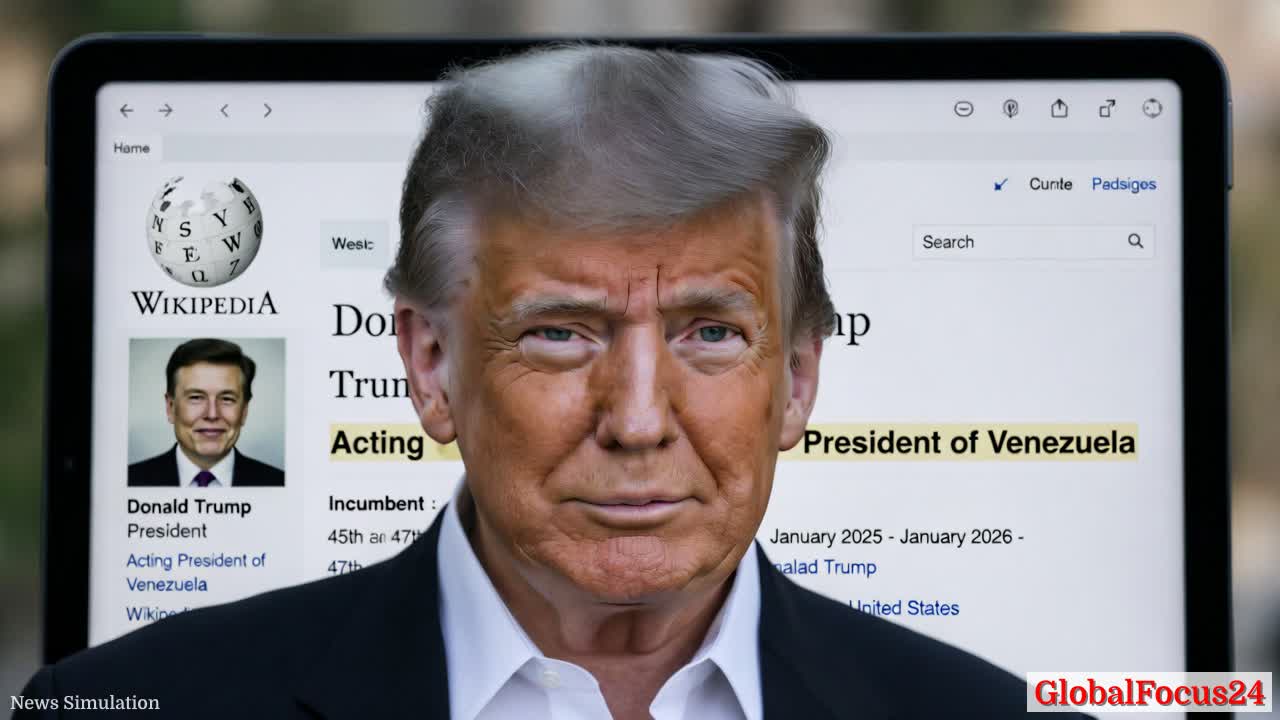
Trump-Timeline Fallout: The U.S. Interim Authority in Venezuela and Global Implications
In a rapidly evolving sequence of events at the start of 2026, a temporary U.S. administration framework in Venezuela has sparked widespread debate among policymakers, economists, and regional observers. The episode centers on reported American operational actions, the capture and transfer of Venezuelan leaders to the United States, and the assertion by a high-profile former U.S. president that the United States will oversee a provisional governance arrangement to steer a controlled transition. The unfolding situation has intensified scrutiny of energy markets, international law, and regional stability across the Caribbean and Latin American corridor.
Historical context: oil, sovereignty, and external interventions
Venezuela’s economy has long been tied to its oil production, a resource whose global significance has attracted external attention for decades. Since the mid-20th century, foreign interest in Venezuela’s hydrocarbon reserves has influenced diplomatic alignments, energy policy, and domestic economics. In the late 1990s and 2000s, fluctuations in oil prices and shifts in production governance contributed to cycles of economic stress, social upheaval, and reform attempts. The early 2020s intensified the national energy narrative as international buyers and competitors assessed capacity, refining infrastructure, and the strategic role of Venezuela in global supply chains.
External interventions in Venezuela’s political landscape have historically been contentious and polarized, often leading to lasting repercussions for investment, security, and humanitarian considerations. The assertion of any interim or provisional authority—whether framed as a transition mechanism, a temporary governance structure, or a stewardship arrangement—tactors the balance between respect for sovereignty and the strategic interests of larger powers. The current moment invites careful examination of precedents, international law, and the legitimacy of interim administrations within a sovereign state.
Economic impact: energy markets, trade flows, and investment sentiment
The anticipated or actual assumption of a provisional governance role in Venezuela is likely to influence multiple economic dimensions. First and foremost, oil market dynamics in early 2026 have reflected elevated volatility as traders weigh possible outcomes for production levels, export routes, and refinery access. If a temporary U.S.-led framework intends to manage oil resources during a transition, market participants will monitor production quotas, licensing regimes, and revenue management with heightened attention. This could affect global crude price trajectories, refinery planning, and the resilience of energy supply chains in the Americas.
Second, investment sentiment in Venezuela and affiliated regional economies may respond to perceived stability or continued uncertainty. Foreign direct investment tends to hinge on confidence in property rights, governance predictability, and the likelihood of policy continuity. A provisional authority could either reassure investors through a clear, time-bound roadmap or deter investment if the arrangement appears opaque or subject to abrupt changes. In neighboring economies, the ripple effects might include adjustments in currency markets, debt refinancing costs, and sector-specific strategies in energy, logistics, and manufacturing.
Third, regional trade and logistics networks will be influenced by any shifts in transportation corridors, port operations, and security conditions. Venezuela’s coastline and inland routes connect major South American markets with Caribbean hubs and international buyers. If the transitional framework prioritizes the stabilization of critical infrastructure—ports, pipelines, and storage facilities—throughout a defined horizon, regional partners may recalibrate procurement, freight costs, and supply chain resilience measures. Conversely, prolonged uncertainty could prompt diversification away from Venezuelan-origin goods and heightened risk premiums for projects tied to oil or related resources.
Regional comparisons: how other economies navigate transitions
Across Latin America and the Caribbean, several economies have confronted governance transitions, external pressure, and strategic resource considerations with varying approaches. For example, countries with significant energy influence or resource-based revenues have often pursued a mix of international mediation, domestic stabilization plans, and structured timelines for reform. In some cases, external actors have facilitated transitional arrangements intended to preserve essential services, protect foreign investments, and ensure orderly handoffs to elected leadership. In others, domestic consensus-building and constitutional processes have taken precedence, resisting external imposition while seeking to restore economic confidence.
Within this broader regional context, the Venezuelan episode merits comparison with past episodes where energy security and governance legitimacy intersected with international attention. The degree to which a provisional authority can promote stability without eroding sovereignty remains a central question for policymakers, business leaders, and the public. The balance between ensuring reliable energy supply to regional partners and maintaining a clear, lawful path to governance is critical to sustaining long-term economic health.
Public reaction and social dimensions
Public sentiment in Venezuela and the wider region has likely varied as details emerged about the transitional arrangement. In moments of political transition, residents, workers, and communities connected to the oil sector may experience hope for improved services and job stability, alongside concern about governance legitimacy, personal safety, and the continuity of social programs. Public reactions in neighboring countries reflect a mix of strategic curiosity, humanitarian concern, and economic pragmatism as stakeholders weigh potential impacts on cross-border trade, migration patterns, and regional security commitments.
Media narratives and information ecology play a vital role in shaping perception during transitional periods. Accurate reporting, transparent official communication, and accessible explanations of the legal basis for any provisional authority help reduce misinterpretation and rumor. Public education about timelines, procedures, and rights aligns community expectations with the realities of governance reform, thereby contributing to a smoother transition process.
Legal and policy considerations: sovereignty, international law, and governance legitimacy
From a legal standpoint, any assertion of interim governance mechanisms in Venezuela intersects with sovereignty, constitutional order, and international legal norms. International responses often emphasize principles of non-interference, respect for territorial integrity, and adherence to due process in transitions of power. If a provisional framework is recognized by international partners or supported by formal agreements, it could gain legitimacy to a degree, provided it operates within a defined mandate, time horizon, and clear benchmarks for return to elected leadership.
Observers will scrutinize the domestic constitution, the role of the judiciary, and the legitimacy of any swearing-in or recognition of interim leadership. The interplay between domestic legal processes and international acknowledgment can influence the scope and duration of transitional governance, as well as its acceptance by civil society, labor organizations, and business communities. Clear governance principles, transparent accounting, and robust oversight mechanisms are essential to maintaining credibility during a period of flux.
Strategic implications for regional stability
The broader regional impact of a provisional approach to governance in Venezuela centers on stability, energy security, and cooperative security arrangements. Caribbean partners and neighboring Latin American states depend on predictable energy flows and stable political environments to plan budgets, infrastructure investments, and social programs. A transition that prioritizes continuity in core services, while conducting a transparent and orderly handover to elected leadership, can support regional resilience. Conversely, instability can prompt protective measures, including diversification of supply sources, revised investment strategies, and intensified regional security cooperation.
Furthermore, the episode may influence regional governance discussions, including how international actors balance the preservation of sovereignty with humanitarian considerations and global energy security interests. The region’s history of cooperation, crisis response, and shared infrastructure projects offers a framework for coordinated actions that minimize disruption and promote economic recovery.
Operational considerations: logistics, security, and day-to-day effects
On the ground, operational realities shape the experience of transitional governance. Logistics planners will assess port throughput, pipeline maintenance, and refinery operations to determine whether energy delivery can continue without interruption. Security forces and private sector partners will evaluate risk factors, including potential civil unrest, crime, and supply chain vulnerabilities. In urban and rural zones alike, service delivery—electricity, water, healthcare, and education—will be closely watched as indicators of governance performance and public confidence.
For multinational corporations and financial institutions, risk assessment during a transition period becomes a central exercise. Entities may revisit capital allocation, insurance strategies, and contingency plans to address possible disruptions. Regulatory compliance, tax implications, and sanctions risk are elements that companies monitor closely to ensure continuous operations and safeguard stakeholder value.
Historical parallels and future scenarios
While every geopolitical moment carries unique dynamics, historians and policy analysts often draw parallels to past transitions in which external actors played a guiding, mediating, or supervisory role. These comparisons can yield insights into cycles of reform, stabilization, and the eventual restoration of elected governance. Looking ahead, several trajectories could unfold:
- Short-term stabilization with a defined timetable: An explicitly stated duration, milestones, and transition criteria could help rebuild confidence among investors, regional partners, and civil society.
- Gradual normalization with international support: Continued diplomatic engagement, technical assistance, and oversight safeguards might facilitate a careful return to electoral governance while preserving essential public services.
- Prolonged uncertainty with regional realignment: If questions about legitimacy persist, regional actors could seek alternative channels for energy procurement, infrastructure investment, and security cooperation, potentially reshaping the regional energy map.
Key takeaways for policymakers and the public
- Clarity of mandate matters. A well-defined, time-bound framework with measurable milestones is essential to maintain legitimacy and public trust during transitional periods.
- Transparency reduces risk. Open reporting, transparent accounting, and independent oversight help reassure stakeholders and minimize opportunities for misinterpretation or manipulation.
- Regional coordination is critical. Given interconnected energy markets and shared infrastructure, regional dialogue and cooperation should accompany any transitional governance approach to minimize disruption.
Conclusion
The early 2026 developments surrounding Venezuela’s governance, the role asserted by external actors, and the international responses underscore the enduring complexity of energy-dependent transitions. As the situation unfolds, observers will watch for the balance between restoring orderly governance, protecting sovereign rights, and ensuring the stability required for regional economic activity to continue. The coming weeks are likely to shape not only Venezuela’s path forward but also the broader discourse on how the international community can facilitate orderly transitions in resource-rich states while maintaining respect for sovereignty and the rule of law.