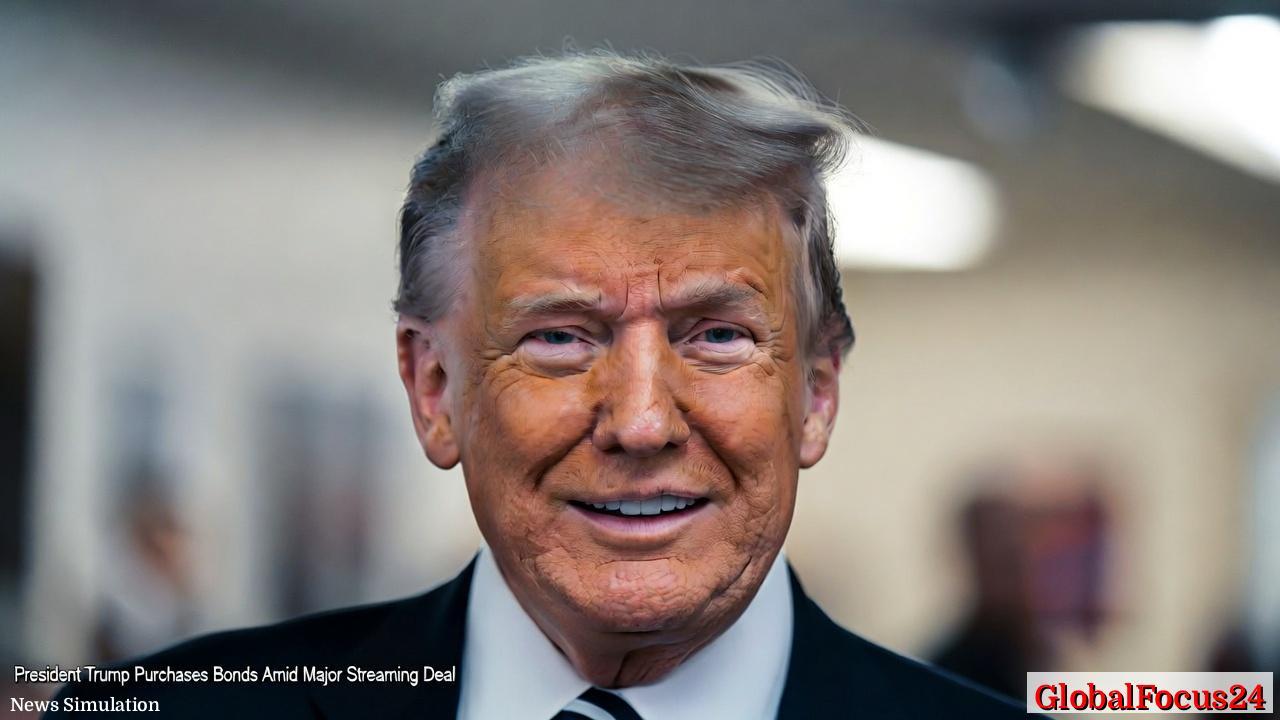
Trump Invests Up to $2 Million in Netflix and Warner Bros. Discovery Bonds Following $72 Billion Streaming Merger
A High-Profile Investment Amid Industry Upheaval
Former President Donald Trump mades in December after purchasing up to $2 million in bonds issued by Netflix and Warner Bros. Discovery (WBD), according to recently filed financial disclosures. The investments came just days after Netflix struck a landmark $72 billion agreement to acquire Warner Bros.’ storied film studios and its HBO Max streaming platform — a move that is poised to reshape the global entertainment landscape.
The timing of Trump’s purchase places him among early private investors reacting to the merger’s immediate ripple effects on the streaming, film, and media sectors. While corporate bonds are typically viewed as lower-risk instruments than stocks, they can serve as windows into investor sentiment about a company’s long-term stability, creditworthiness, and future growth potential. In this case, the bond purchase highlights growing optimism — or strategic positioning — around the newly consolidated streaming giant’s market prospects.
The Mega-Merger That Redefined Streaming Competition
Netflix’s $72 billion acquisition of Warner Bros. Discovery’s entertainment assets marks one of the most significant media consolidations in recent history. The agreement grants Netflix control over Warner Bros.’ century-old film studio, its vast content library, and leading cable and streaming brands such as HBO Max, CNN, and Discovery Channel. The combined platform is expected to compete more directly with Disney, Amazon Prime Video, and Apple TV+ in both original programming and global distribution.
For Netflix, the deal represents a transformational pivot from being a pure streaming disruptor to becoming a fully integrated entertainment conglomerate. By absorbing Warner Bros. Discovery, Netflix gains not only premium intellectual property but also the infrastructure needed to expand into live television, theatrical releases, and specialized production networks. Industry analysts have described the deal as a defining moment for the next decade of media consolidation, setting off new strategic moves among rivals.
Trump’s Financial Disclosure and Investment Strategy
According to mandatory financial filings, Trump purchased between $1 million and $2 million in combined corporate bonds from Netflix and Warner Bros. Discovery through his personal investment accounts. Bonds of major corporations like these typically offer moderate yields and are generally viewed as safer holdings than equities — a characteristic often favored by high-net-worth individuals seeking secure but flexible returns.
While the disclosure offers no detail about maturity dates or specific bond structures, it aligns with the broader market trend: demand for entertainment-sector bonds has grown since streaming companies pivoted toward profitability and reduced production spending. As studios cut costs, consolidate operations, and lean on established franchises, fixed-income investors have shown renewed confidence in their ability to generate steady cash flow.
Trump’s move also underscores a pragmatic investment philosophy that has long defined his business career — targeting established brands during transitional moments. Although his past financial activity has spanned real estate, hospitality, and energy, the inclusion of media bonds suggests recognition of the sector’s stability amid an otherwise volatile market.
The Streaming Shake-Up and Global Market Response
Netflix’s historic purchase has already triggered global market reactions. In the days following the announcement, shares of both companies surged, while corporate bond yields dipped slightly, signaling investor confidence in the merger’s long-term viability. Analysts at several financial institutions noted that the pairing of Netflix’s digital reach with Warner Bros.’ deep content library may create a dominant force in international streaming.
European and Asian media conglomerates are watching closely. In London, ITV and the BBC have reported exploring expanded partnerships to defend audience share. In Seoul and Tokyo, local streaming platforms like TVing and Rakuten Viki are expected to adjust pricing and licensing agreements to remain competitive. The new Netflix-Warner alliance may drive further global consolidation as regional players seek scale to compete against the transatlantic entertainment giant.
In the U.S. market, the immediate focus lies on how Netflix will integrate Warner’s assets without disrupting its existing subscriber base. The company faces the challenge of merging two massive content ecosystems, each with its own technology infrastructure, creative management, and legacy contracts. With over 270 million global subscribers and billions invested annually in production, Netflix’s ability to maintain growth while managing debt will prove critical to investor sentiment — including those holding its bonds.
A Century of Media Mergers: Lessons from the Past
Historically, major Hollywood mergers have signaled turning points for the industry. The 1989 acquisition of Warner Bros. by Time Inc. and the subsequent 2001 AOL-Time Warner merger both sought to align emerging technologies with traditional media. Those efforts — sometimes plagued by cultural clashes and debt burdens — provide a cautionary backdrop for today’s streaming mega-deals.
Yet the current environment differs substantially from past decades. The rise of subscription-based revenue, global content distribution, and data-driven production has made modern entertainment conglomerates far more adaptable. Analysts argue that Netflix’s experience as a technology-focused platform could help avoid the structural pitfalls that undermined prior mergers. The integration of Warner Bros.’ production expertise with Netflix’s streaming algorithms could ultimately accelerate innovation in personalized content and media distribution.
Economic Implications for Investors
Trump’s bond purchase, though small in the context of global finance, serves as an indicator of broader investor sentiment toward the entertainment sector. Corporate bonds from media and technology giants have attracted steady inflows throughout late 2025 as inflation eased and interest rates stabilized. Lower borrowing costs have encouraged companies to refinance existing debt and fund strategic acquisitions — often at more favorable rates.
For ordinary investors, the move reinforces the shifting perception of streaming companies from volatile tech growth stocks to mature corporations capable of generating consistent cash flow. As advertising-supported streaming tiers expand and licensing agreements deepen, bondholders benefit from predictable earnings tied to recurring subscription revenue. This maturation may gradually lead to streaming media being seen less as a speculative high-growth play and more as a reliable, income-generating industry.
From a macroeconomic standpoint, the consolidation trend also reflects broader capital market dynamics. As global interest rates hover around historic norms and equity valuations remain uneven, institutional investors have turned to bonds in sectors with strong brand equity and recurring revenue. The entertainment industry — buoyed by audience loyalty and diversified revenue streams — fits this profile.
Regional Comparisons: Global Shifts in Media Investment
The Netflix–Warner Bros. merger and Trump’s subsequent investment echo similar realignments across global entertainment markets. In Europe, mergers such as France’s Canal+ consolidation of regional broadcasters and the United Kingdom’s joint BBC-ITV streaming ventures demonstrate a trend toward scale and cross-border integration. In Asia, companies like Tencent Video and Sony Pictures Japan continue expanding internationally to protect market share from Western dominance.
In North America, Disney’s 2019 acquisition of 21st Century Fox remains a relevant historical parallel. That $71 billion deal gave Disney control of major film assets and streaming rights, catapulting it ahead of Netflix in global box-office revenues. The Netflix-Warner merger surpasses it in scope, suggesting that the entertainment industry has entered a new phase of strategic consolidation where only the largest, most diversified players can compete globally.
Trump’s bond purchases, therefore, extend beyond an isolated financial transaction — they symbolize the confidence some private investors have in the durability of these megamergers and the evolution of global content markets.
Challenges Ahead for the Merged Giant
Despite optimism, obstacles remain. Regulatory scrutiny from both U.S. and European authorities continues, with antitrust watchdogs examining whether the deal could limit competition or disadvantage smaller studios. Netflix has pledged to maintain open distribution partnerships and content licensing with third-party producers, though specifics remain unclear.
Financially, the merged entity inherits Warner Bros. Discovery’s significant debt load — more than $40 billion before the deal — though refinancing through bond markets may alleviate short-term pressure. Investors will closely monitor earnings reports in 2026 to gauge whether projected cost synergies and expanded subscriber revenue materialize. Failure to deliver on those forecasts could dampen both equity and debt valuations, including the bonds recently purchased by Trump and other investors.
Content-wise, balancing artistic freedom and commercial efficiency will be key. Netflix’s algorithm-driven decision-making and Warner’s creative legacy occasionally diverge, raising questions about how the new management structure will preserve artistic integrity while achieving profitability.
Public and Market Reactions
Reactions to Trump’s investment have been mixed. Supporters have cited it as a shrewd financial move that mirrors confidence in American media’s resilience. Critics, on the other hand, question whether public figures’ financial activities may influence or reflect broader perceptions of major corporate transactions. Still, under current disclosure laws, the purchase remains within standard market regulations, showing no direct conflict or policy influence.
For institutional investors and the entertainment industry alike, the key story remains the same: the Netflix–Warner merger represents a defining moment for global streaming, and Trump’s bond purchases highlight how even traditionally risk-conscious investors are taking note of the sector’s evolution.
Looking Forward: The Future of Streaming Finance
As 2026 begins, the entertainment industry stands at a crossroads. The era of unrestrained content spending appears to be fading, replaced by efficient consolidation, cross-platform integration, and cautious expansion. Bond investments — once peripheral to the glamour of Hollywood finance — are now emerging as central instruments in shaping its fiscal stability.
If successful, Netflix’s acquisition of Warner Bros. Discovery could redefine how audiences around the world access, pay for, and engage with entertainment. For investors like Trump, it may also demonstrate that in a volatile global economy, the most powerful stories worth betting on are those told not only on screens but through carefully timed financial moves behind them.