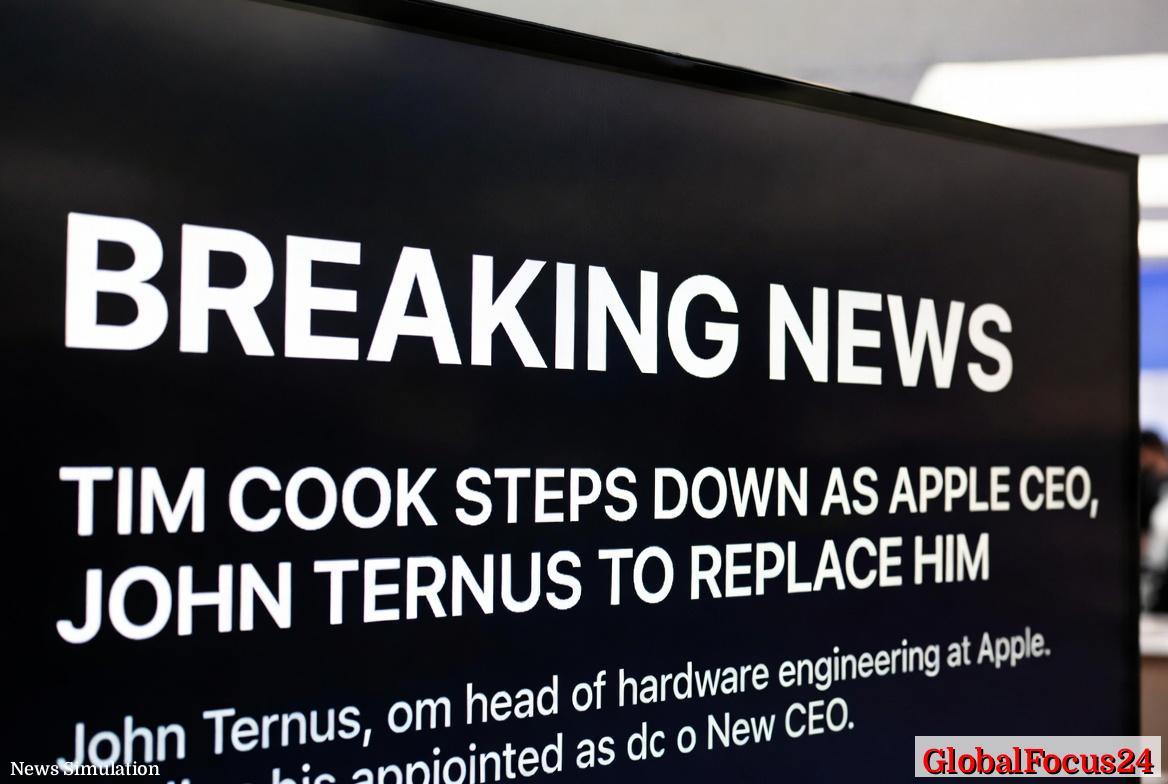
Tim Cook to Step Down as Apple CEO, John Ternus Named Successor
Leadership Transition Marks a New Era for Apple
Apple Inc. is entering a pivotal chapter in its corporate history as Tim Cook prepares to step down as chief executive officer, handing leadership to John Ternus, the company’s senior vice president of hardware engineering. The transition signals a generational shift at one of the world’s most influential technology companies, with implications for product strategy, global markets, and the broader tech ecosystem.
Cook, who has led Apple since 2011 following the passing of co-founder Steve Jobs, oversaw a period of unprecedented growth and operational expansion. His successor, Ternus, is widely regarded within the company as a key architect behind Apple’s hardware evolution, including its transition to in-house silicon and continued refinement of flagship products such as the iPhone, Mac, and iPad.
The leadership change comes at a time when Apple faces intensifying competition, supply chain recalibration, and rising expectations in emerging categories such as artificial intelligence and augmented reality.
Tim Cook’s Tenure: Stability, Scale, and Services Growth
Tim Cook’s leadership era is defined by operational discipline and sustained financial expansion. When he assumed the CEO role, Apple was already a dominant force in consumer electronics, but its revenue streams were heavily reliant on the iPhone. Under Cook, Apple diversified its business model, expanding into services, wearables, and subscription-based offerings.
Key developments during Cook’s tenure include:
- The rapid growth of Apple’s services segment, including Apple Music, iCloud, and Apple TV+, which became a major revenue driver.
- The introduction and scaling of wearable products such as the Apple Watch and AirPods.
- Expansion into global markets, particularly in China and India, strengthening Apple’s international footprint.
- A focus on environmental sustainability, including commitments to carbon neutrality and supply chain transparency.
Financially, Apple experienced remarkable growth. The company’s market capitalization surged from under $400 billion in 2011 to well over $2 trillion during Cook’s leadership, cementing its position among the most valuable companies globally.
Cook also emphasized supply chain resilience, a factor that proved critical during global disruptions such as the COVID-19 pandemic. His background in operations helped Apple maintain product availability while competitors faced shortages.
John Ternus: A Hardware Visionary Steps Forward
John Ternus brings a different leadership profile, rooted deeply in product engineering and design. Having joined Apple in the early 2000s, Ternus rose through the ranks to oversee hardware engineering across the company’s entire product lineup.
He played a central role in several transformative initiatives:
- The development and rollout of Apple Silicon, which replaced Intel processors in Macs and improved performance and energy efficiency.
- Iterative redesigns of the MacBook, iMac, and iPad lines, aligning hardware with Apple’s ecosystem strategy.
- Contributions to next-generation devices, including mixed-reality hardware and advanced chip integration.
Ternus is known internally for his collaborative approach and technical rigor. His appointment suggests Apple may place increased emphasis on hardware innovation as a driver of future growth, particularly as the company explores new product categories.
Strategic Implications for Apple’s Product Roadmap
The transition to Ternus is expected to influence Apple’s long-term product direction. While Cook prioritized ecosystem expansion and services integration, Ternus is likely to focus on deepening hardware differentiation.
Several areas are expected to gain prominence:
- Continued investment in custom silicon, enabling tighter integration between hardware and software.
- Expansion of augmented reality and spatial computing platforms, building on existing research and early product launches.
- Advances in health technology, leveraging Apple Watch and related sensors for medical-grade applications.
- Exploration of new device categories, potentially including smart home systems and automotive technology.
Industry analysts anticipate that Apple will maintain its core strategy of vertical integration, but with a renewed emphasis on breakthrough hardware experiences.
Economic Impact and Market Reactions
The leadership change carries significant economic implications, not only for Apple but for global markets. As a cornerstone of major stock indices, Apple’s performance influences investor sentiment and market stability.
Initial reactions from financial markets are expected to focus on continuity versus change. Cook’s tenure provided predictability and steady returns, while Ternus represents a shift toward innovation-driven growth. Investors may closely monitor early signals from the new CEO regarding capital allocation, product launches, and strategic priorities.
Apple’s supply chain partners, many of which are based in Asia, are also likely to assess how the transition affects production cycles and procurement strategies. Ternus’s hardware background could lead to adjustments in manufacturing processes or component sourcing.
In Silicon Valley, the move underscores a broader trend of leadership transitions as founding-era or long-serving executives step aside for a new generation. Comparable shifts have occurred at other major technology firms, reflecting the evolving demands of the industry.
Historical Context: From Jobs to Cook to Ternus
Apple’s leadership transitions have historically been defining moments. The shift from Steve Jobs to Tim Cook in 2011 marked a move from visionary product disruption to operational excellence and scale. Cook successfully preserved Apple’s culture while adapting it to a more mature, globalized business environment.
The transition to Ternus represents a third phase in Apple’s evolution:
- Jobs era: Innovation-driven disruption, introduction of iconic products like the iPhone and iPad.
- Cook era: Expansion and optimization, growth in services and global reach.
- Ternus era: Potential re-acceleration of hardware-led innovation, with a focus on emerging technologies.
Each phase reflects broader changes in the technology landscape, from the rise of smartphones to the current emphasis on artificial intelligence, connectivity, and immersive experiences.
Regional Comparisons and Global Strategy
Apple’s leadership shift comes amid shifting dynamics across key regions:
- In North America, Apple remains a dominant player with strong brand loyalty and high-margin product sales.
- In China, the company faces increasing competition from domestic manufacturers offering advanced features at competitive prices.
- In India and Southeast Asia, Apple is expanding manufacturing and retail presence to capture growing consumer demand.
- In Europe, regulatory scrutiny around digital markets and data privacy continues to shape Apple’s operations.
Ternus will need to navigate these regional complexities while maintaining Apple’s global brand consistency. His experience in hardware engineering may prove valuable in tailoring products to diverse markets without compromising design standards.
Challenges Ahead for the New CEO
As John Ternus assumes the role of CEO, he inherits a company at both a position of strength and a moment of uncertainty. Key challenges include:
- Sustaining growth in a maturing smartphone market where incremental upgrades may not drive the same level of consumer excitement.
- Competing in the rapidly evolving artificial intelligence space, where rivals are investing heavily in generative technologies.
- Managing geopolitical risks that affect supply chains and international sales.
- Balancing innovation with profitability, ensuring that new product categories deliver returns on investment.
Additionally, Ternus will need to maintain Apple’s corporate culture, which has long emphasized secrecy, design excellence, and ecosystem cohesion.
Public and Industry Response
Public reaction to the announcement has been marked by a mix of appreciation for Cook’s leadership and curiosity about Ternus’s vision. Employees, developers, and consumers alike are watching closely for signals about Apple’s future direction.
Within the technology industry, the transition is viewed as a strategic move rather than a reactive one. By appointing a long-serving executive with deep institutional knowledge, Apple appears to be prioritizing continuity while positioning itself for the next wave of innovation.
Analysts note that leadership changes at companies of Apple’s scale are rare and consequential, often shaping industry trends for years to come.
Looking Ahead: Apple’s Next Chapter
The transition from Tim Cook to John Ternus marks a significant milestone in Apple’s history. As the company navigates an increasingly complex technological and economic landscape, its leadership will play a crucial role in determining its trajectory.
With a foundation built on decades of innovation and a global ecosystem spanning hardware, software, and services, Apple enters this new era with substantial advantages. The challenge for Ternus will be to build on that foundation while identifying the next breakthrough that defines the company’s future.
The coming years are likely to reveal whether this leadership change ushers in a new wave of transformative products or reinforces Apple’s position as a steady, dominant force in the global technology market.