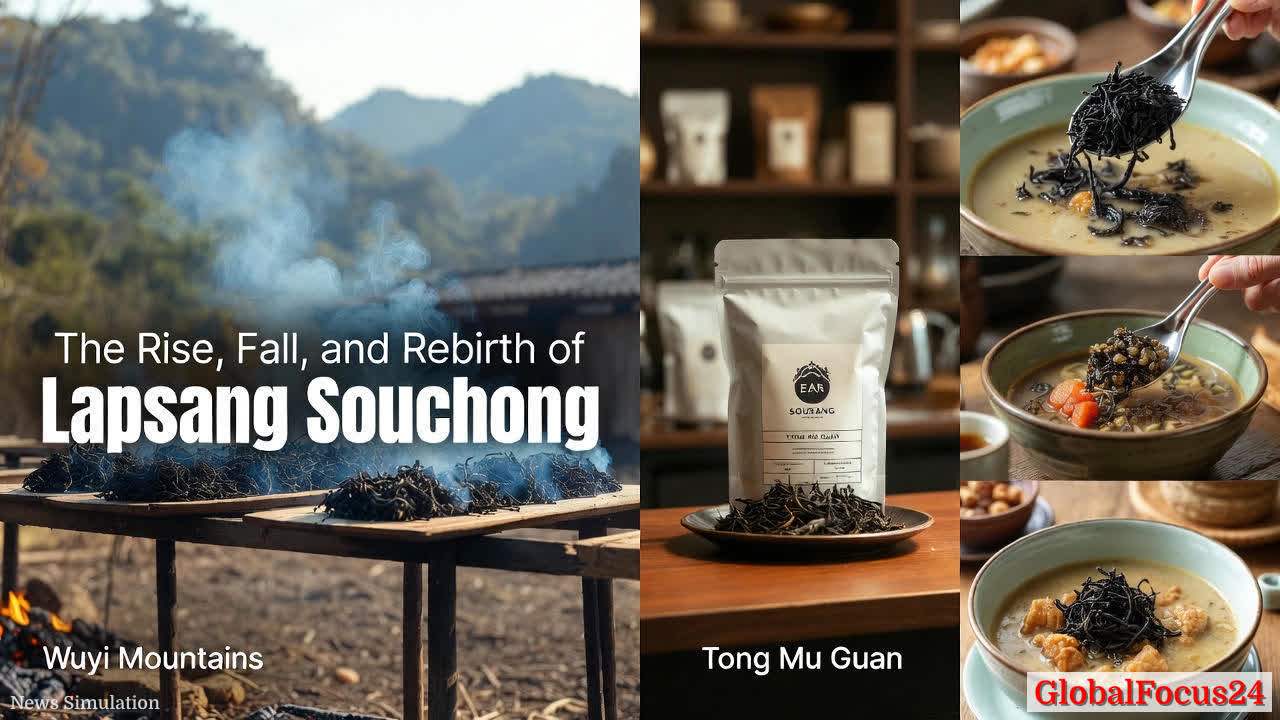
The Rise, Fall, and Rebirth of Lapsang Souchong: A Global Tea Tale of Smoke, Trade, and Resilience
A timeless smoke crescendos through the annals of tea history as Lapsang Souchong, a variety long wrapped in both rumor and reverence, reappears with renewed relevance. From humble improvised curing fires in the Wuyi Mountains to high-end cuppings in global capitals, this tea’s journey reads like a microcosm of trade routes, cultural exchange, and changing tastes. Its arc—from emergence amid turmoil to peak popularity, subsequent cooling of interest in certain markets, and a nuanced revival in both China and abroad—offers a compelling lens on how a single leaf can carry a nation’s memory and a region’s terroir to a worldwide audience. As researchers and enthusiasts alike trace its steps, Lapsang Souchong stands as a case study in how tradition adapts to modern palates without losing its distinctive identity.
Historical roots and the birth of a smoky signature
The earliest chapters of Lapsang Souchong are often linked to the rugged terrain of the Wuyi Mountains, a region celebrated for iron-rich soils, mineral notes, and centuries of tea craftsmanship. Historical narratives converge on a pivotal moment in 1646 when conflict, displacement, and necessity collided with culinary ingenuity. Civilians fleeing turmoil sought to preserve gathered leaves from spoilage, placing them over fire in improvised drying pits. The resulting smoky aroma and bold palate were unintended outcomes of circumstances—yet they would become defining characteristics of Lapsang Souchong. This origin story, whether myth or memory, underscores how sensory experiences can crystallize from adversity and travel quickly through trade networks, carrying with them the aura of a place and its people.
As trade routes expanded, Lapsang Souchong’s distinctive smokiness traveled beyond regional boundaries. Early Western tea markets, craving novelty and knowing little of subtle regional differences, embraced the tea’s daring profile. The smokiness, once a local byproduct of necessity, became a signature style that could anchor a merchant’s catalog and intrigue a curious consumer. In this way, Lapsang Souchong played a dual role: it was both a product of a specific terroir and a beacon of cross-cultural exchange, signaling how a regional technique could resonate across continents.
Economic impact across eras and markets
The tea’s economic arc mirrors broader shifts in global commodity markets. In its ascent, Lapsang Souchong benefited from the era of robust tea trade when Western markets sought novelty and premium products to differentiate their offerings. The tea’s bold profile allowed producers to command higher prices and cultivate a reputation for quality and daring flavor. For merchants, the tea opened opportunities to market luxury experiences—small-batch brews, distinctive cuppings, and story-driven branding that emphasized authenticity and tradition.
Yet, as consumer preferences evolved, the global market’s appetite for smoky tea fluctuated. In some periods, Lapsang Souchong faced competition from other Chinese greens and oolongs, and later from a wave of specialty teas from around the world that catered to evolving palates, including more delicate, less intensely smoky varieties. This shift sometimes translated into slower demand in certain Western markets, prompting producers to rethink aging, fermentation techniques, and regional branding to maintain traction. The economic narrative thus contains both triumphs of export-driven growth and the resilience demanded by changing tastes.
Regional comparisons illuminate divergent trajectories. In Europe and North America, the tea often entered the consumer consciousness through tea houses, high-end retailers, and lifestyle brands that framed smoking as part of a mystique—an aura of smoke and antiquity that could be marketed as sophisticated and adventurous. In contrast, in its country of origin and nearby markets, Lapsang Souchong has persisted in more refined, domestic forms. Here, the focus has shifted toward nuanced versions that preserve the essence while appealing to contemporary palates. The contrast underscores how regional consumer culture can shape the lifecycle of a single product, even when the core ingredient remains the same.
A reimagined classic: the Chinese revival and the unsmoked variant
In the early 21st century, a new chapter emerged in Tong Mu Guan, a region famed for its tea craftsmanship and proximity to the origin stories of many Chinese teas. Here, a refined approach recast Lapsang Souchong with less emphasis on overt smokiness, giving rise to an unsmoked or lightly smoked interpretation that aligns with modern preferences for subtler profiles. This evolution did not erase the legend of the smoky leaf; rather, it added a complementary thread to its narrative. The new iteration demonstrated how tradition can coexist with experimentation, allowing producers to offer a spectrum of experiences—from deep, campfire-like smoke to cleaner, more mineral-inflected finishes. This diversification has broadened market reach within China and created opportunities to engage new consumer segments who previously viewed smoky teas as a novelty limited to a certain cultural imagination.
The unsmoked variant also highlights a broader trend in the global tea industry: the commodification of heritage through product lines that honor historical methods while embracing present-day preferences for balance and versatility. By serving as an adaptable seasoning and culinary complement, Lapsang Souchong’s modern forms illustrate the evolving role of tea beyond a simple beverage—into a multi-sensory ingredient that enhances broths, stews, and savory dishes with a unique smoky undertone. Culinary professionals and home cooks alike have taken note, experimenting with marinades, rubs, and baked goods that incorporate the tea’s aromatic character to achieve depth and complexity.
Cultural resonance, public reception, and the enduring mystique
The cultural resonance of Lapsang Souchong rests on a powerful combination of aroma, memory, and storytelling. The smoke evokes images of ancient kitchens, forested highlands, and the alchemy of craft that transforms raw leaves into a beverage capable of sparking conversation. Public reaction to the tea, whether as a ceremonial centerpiece in a tasting room or as a variable in a modern kitchen, reflects a broader appetite for experiences that feel rooted in place while speaking to contemporary sensibilities. The tea’s mystique has contributed to its lasting appeal, with enthusiasts drawn to the drama of its history and the intensity of its aroma.
At the same time, the global tea audience has grown more diverse and informed about origin stories and production methods. Consumers now seek transparency about sourcing, processing, and authenticity. This has nudged producers to communicate more clearly about terroir, cultivar choices, and the specific processes that yield smoky flavors. The result is a more educated consumer base that appreciates the craft behind Lapsang Souchong and understands why a leaf processed with fire can carry such distinct character.
Sustainability considerations and future outlook
As with many agricultural products, sustainability remains a central concern for Lapsang Souchong’s future. Tea production, particularly in regions with steep landscapes and resource constraints, must balance yield with ecological stewardship. Growers and processors are increasingly adopting sustainable farming practices, soil management, and water conservation to ensure long-term viability. Certification schemes and traceability initiatives help reassure buyers and diners that the tea’s smoky profile is not merely a sensory signature but the result of responsible stewardship from leaf to cup.
The future of Lapsang Souchong may hinge on continued innovation that honors tradition while addressing contemporary consumer expectations. This could involve refining smoke textures, experimenting with controlled fermentation, and developing new flavor profiles that pair well with modern cuisine. As chefs and tea experts collaborate across borders, the tea’s adaptability becomes a strategic asset rather than a limitation. In markets where culinary curiosity thrives, Lapsang Souchong can continue to carve out a prominent niche as both a historical artifact and a living, evolving product.
Global market structure and regional adaptability
From a market perspective, Lapsang Souchong demonstrates how a regionally rooted product can achieve global relevance through branding and storytelling that resonate with diverse audiences. The tea’s narrative—one of resilience, craft, and a willingness to embrace change—aligns with broader consumer trends toward authenticity and sensory exploration. While some markets celebrate its bold smokiness as an everyday staple, others treat it as a special-occasion feature, suitable for tasting flights and culinary experiments. This flexibility allows producers to target multiple channels, including consumer retail, hospitality, and the professional kitchen segment, expanding the tea’s reach beyond traditional tea-drinking contexts.
In comparisons with other regional specialties, Lapsang Souchong stands alongside products whose identities are inextricably linked to place. Like many iconic regional foods and beverages, its value is inseparable from the story of origin. Yet it rises above being merely propulsive nostalgia because its modern iterations demonstrate practical utility and culinary versatility. The tea’s ability to adapt—without losing its core essence—speaks to a broader trend in global food and beverage culture: consumers seek experiences that feel authentic, story-rich, and responsibly produced.
Conclusion: a nuanced legacy that endures
The saga of Lapsang Souchong is more than a tale of a smoky tea. It is a narrative about how a simple technique, born of necessity, can travel across time and geography to become a symbol of craftsmanship and cultural exchange. Its history from the Wuyi Mountains to worldwide acclaim, the ebbs and flows of its popularity, and the thoughtful renewal seen in Tong Mu Guan reflect a broader pattern in which traditional products can remain relevant by embracing change while preserving core characteristics. The unsmoked variant adds another dimension to this legacy, highlighting the tea’s capacity to evolve in dialogue with contemporary tastes. As buyers, chefs, and tea lovers continue to explore the possibilities of Lapsang Souchong, the tea’s story reinforces a universal truth: the past, when carefully sustained, can inform a vibrant present and a dynamic future.