The Greatest Threat to Liberalism Emerges from Within Western Democracies
A new wave of political stress tests is reshaping liberal democracies from within, as scholars, policymakers, and citizens watch the social contract fray under the pressure of economic change, technological disruption, and shifting cultural norms. This article examines how liberal principles—individual rights, rule of law, and open institutions—are being challenged not by external autocrats alone but by domestic forces that chip away at trust, consensus, and legitimacy. By tracing historical currents, assessing economic implications, and comparing regional trajectories, we can better understand the durability of liberal democracies in an era of rising uncertainty.
Historical arc: from foundational ideas to contemporary fragility
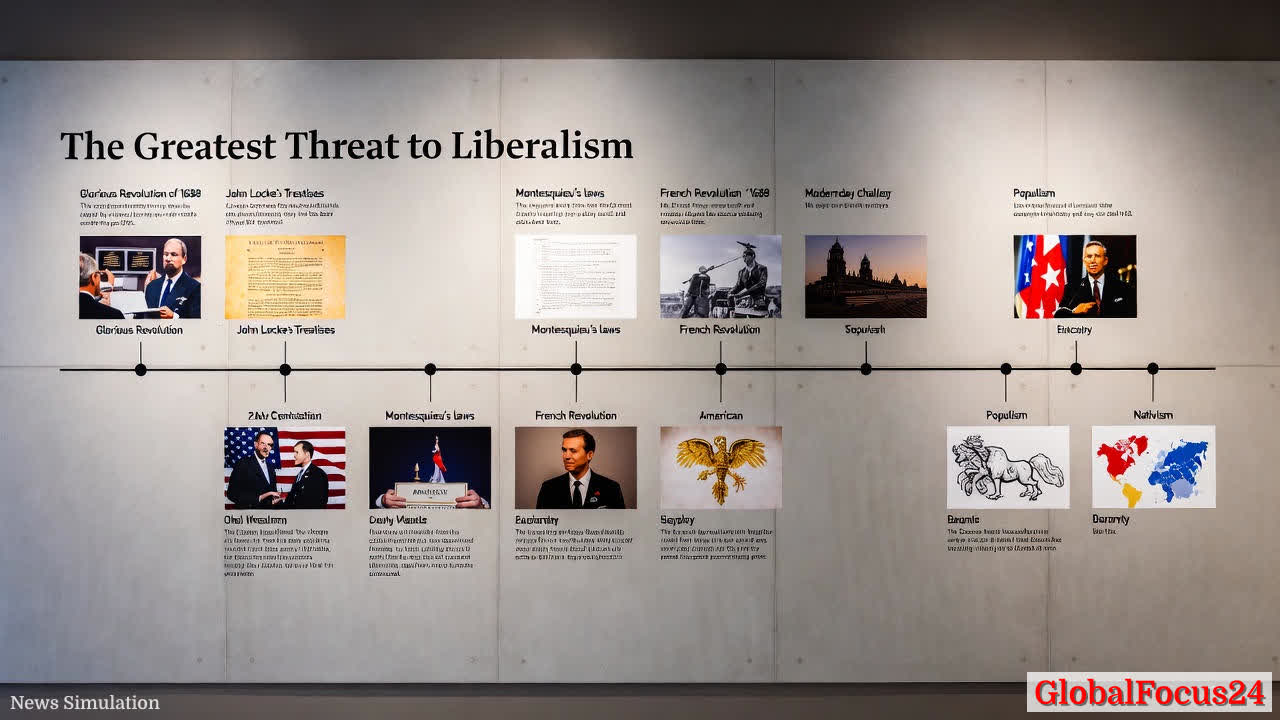
Liberalism emerged from a long arc of philosophical and political thought that sought to curb concentrated power and broaden political participation. The seeds were planted in late 17th and 18th century Europe with documents and treatises that argued for limited government, consent of the governed, and individual rights. Over time, these ideas informed constitutions, rights claims, and the expansion of the franchise, even as societies grappled with inequality and competing visions of social order.
The 19th and 20th centuries added complexity to liberal projects. The spread of democracy encountered debates about the balance between liberty and equality, the role of the state in securing public goods, and the dangers of majoritarian excess. Intellectual contributions—from the early social contract debates to modern public policy theories—shaped how liberal democracies tried to reconcile individual freedom with collective welfare. The post–World War II era, with its emphasis on human rights, the rule of law, and open economies, represented a high-water mark for liberal institutions.
In recent decades, liberal democracies have faced three broad, intertwined pressures: economic dislocation, cultural and demographic change, and the erosion of trust in public institutions. Globalization and technological advances created opportunities, but also winners and losers. The results included rising income inequality, disruptions to traditional employment, and a sense that political elites were out of touch with ordinary citizens. These conditions have incentivized political movements that challenge established norms and, in some cases, institutions designed to safeguard rights and checks on power.
Economic impact: how challenges unfold in markets and livelihoods
Economic shifts are at the core of contemporary challenges to liberalism. When people perceive that markets do not reward hard work or that institutions fail to protect them from rapid change, confidence in liberal arrangements weakens. Several dynamics commonly accompany this erosion:
- Labor market disruption. Automation, offshoring, and the transformation of traditional industries have left many workers outside the center of economic opportunity. The resulting anxiety about job security, wage stagnation, and regional decline can drive appeals to protectionist or nativist policies that promise swift redress, even if such policies undermine long-term liberal principles like equal opportunity and free movement.
- Social mobility and inequality. If social mobility stalls and average citizens feel squeezed while elites capture gains, trust in meritocratic ideals and in the fairness of institutions can decline. This distrust often translates into political volatility, as people seek leaders who promise rapid, tangible redress rather than gradual reforms or nuanced compromises.
- Public finance and welfare state dynamics. The pressure to fund universal programs—education, health care, pensions—tests fiscal sustainability, particularly in aging societies or those facing sluggish growth. Debates about the scope and design of welfare states can become ideological battlegrounds, with opponents portraying liberal policy as excessive or unsustainable, and supporters framing it as essential to social cohesion.
- Technological power and data governance. The digital economy creates vast opportunities but also concentrates power in platforms and data-driven firms. Concerns about privacy, surveillance, and algorithmic bias can fuel skepticism toward both markets and state actors, complicating the balance between openness and regulation that liberal democracies historically sought to maintain.
Regional comparisons: what different democracies reveal about resilience
- North America. In the United States and Canada, liberal traditions remain robust in institutions and legal frameworks, but both countries confront deep political polarization, questions about media trust, and debates over immigration, national security, and equity. The United States, with its federal system and strong civil society, has shown resilience through diverse coalitions, judicial independence, and a tradition of peaceful transfer of power. Yet populist currents and misinformation challenges have tested the efficiency of deliberative democracy and the stability of norms around compromise.
- Western Europe. European democracies have long combined liberal rights with social welfare models. However, some countries confront rising authoritarian tendencies in subtler forms—through executive encroachment on checks and balances, intense national debates about immigration and integration, and concerns about demographically driven political realignments. Regional variations exist, with Northern European welfare states exhibiting stability and strong trust in institutions, while Southern and Eastern European democracies experience more volatile political landscapes and swings between reformist and nationalist rhetoric.
- Global comparisons. In liberal democracies outside the Western sphere, experiences diverge. Some nations maintain high levels of political participation and social trust, while others confront persistent governance challenges, corruption concerns, or constrained civil liberties. The common thread is that the health of liberal institutions in any region hinges on credible governance, inclusive policy design, and robust civil society that can channel grievances into constructive reform.
Institutional integrity and the role of public trust
A core question for liberal democracies is how to preserve institutional legitimacy when legitimacy itself becomes fragile. Institutions—courts, independent agencies, free press, and electoral systems—rely on public trust to function effectively. When trust declines, the risk of policy paralysis rises, along with susceptibility to demagogic narratives that promise quick fixes at the expense of enduring safeguards.
One antidote lies in strengthening the transparency and accountability of institutions. Clear rules for conflict of interest, robust whistleblower protections, accessible government data, and independent verification of elections are practical steps that can rebuild confidence. Simultaneously, civic education and public science communication play a critical role in helping citizens understand the rationale behind policies, reducing the space for misinformation to gain traction.
Democratic norms and civil society
Liberal democracies depend on norms that support peaceful dispute resolution and respect for minority rights. When these norms fray, the risk of social fragmentation increases, posing a danger to the very framework that allows pluralism to flourish. A vibrant civil society—nonprofit organizations, labor unions, professional associations, and faith-based groups—acts as a counterweight to concentrated power, providing channels for dialogue, recourse, and accountability.
Public reaction and social resilience
Public reaction to perceived threats to liberalism often follows a pattern: initial concern about economic or social displacement, followed by political mobilization that can take diverse forms—from reformist pushes within existing institutions to more radical or anti-establishment movements. The spectrum includes calls for greater transparency, constitutional reforms, or changes in education and media practices designed to restore trust. The outcome depends on how effectively institutions respond to grievances while maintaining core liberal commitments.
Cultural and intellectual context: the legacy of liberal thought in crisis
The long arc of liberal thought has always involved balancing individual rights with collective responsibilities. The legacy includes a spectrum of ideas—from restraint on state power and the protection of civil liberties to social welfare provisions and active government intervention in market failures. Contemporary debates often reflect tensions within liberalism itself: how much freedom should be allowed to social or cultural experimentation, and how strong should the state be in protecting vulnerable populations?
In this context, it is useful to acknowledge the historical critiques and defenses of liberalism. Critics have argued that liberalism may neglect structural inequalities or enable market excesses. Defenders contend that liberal frameworks, if properly designed, can adapt and endure by incorporating safeguards, pluralism, and inclusive policy frameworks. The present moment invites a pragmatic synthesis that preserves liberty while ensuring fairness, security, and opportunity for all citizens.
Policy implications: path toward a robust liberal order
- Strengthen social safety nets with sustainable funding. An effective liberal order can emerge from policies that cushion the effects of economic disruption, such as targeted retraining programs, portable benefits, and regional economic development plans. These measures help maintain social cohesion without compromising individual rights or market efficiency.
- Invest in education, science, and public discourse. High-quality education—critical thinking, media literacy, and scientific literacy—supports informed participation in democracy. Independent, fact-based journalism and transparent public communication enhance accountability and resilience against misinformation.
- Reform governance to reduce perceived elitism. Policies that broaden participation, improve accessibility to public services, and diversify leadership can reduce cynicism about political elites. Inclusive processes that solicit citizen input can reinforce the legitimacy of liberal institutions.
- Ensure transparent technology governance. As digital platforms increasingly shape public life, robust governance frameworks—privacy protections, algorithmic accountability, and cross-border data norms—are essential to maintain trust in both markets and government.
- Preserve the rule of law and judicial independence. An independent judiciary that enforces rights and curbs executive overreach is a cornerstone of liberal democracy. Safeguarding this independence helps deter creeping autocracy and reinforces confidence in the system.
Public sentiment and the horizon ahead
Public sentiment remains a decisive factor in the endurance of liberal democracies. While concerns about economic insecurity, cultural change, and geopolitical uncertainty persist, the capacity of societies to address these concerns within liberal frameworks will influence the trajectory of democratic resilience. Historical lessons suggest that liberalism thrives when it adapts without abandoning its core commitments: individual dignity, equal rights, the rule of law, and open, contestable institutions.
Regional trajectories will continue to diverge as countries experiment with policy mixes and institutional reforms. Nevertheless, the central challenge remains consistent: how to reconcile the need for secure, predictable governance with the essential openness and pluralism that define liberal democracies. The path forward requires reaffirming trust through transparent governance, inclusive policy design, and robust civic engagement that keeps liberal ideals relevant in a rapidly changing world.
Conclusion
Liberal democracies face a paradox: the very systems designed to protect liberty and pluralism can become sources of strain when faced with economic upheaval and social change. The greatest threat, increasingly, is not from external autocrats but from the erosion of public trust and the weakening of shared norms within otherwise open societies. By reinforcing institutional integrity, sustaining inclusive economic policies, and renewing civic participation, liberal democracies can preserve their core principles while adapting to new challenges. The resilience of liberalism will ultimately hinge on the ability of societies to balance freedom with responsibility, openness with security, and individual rights with collective well-being.