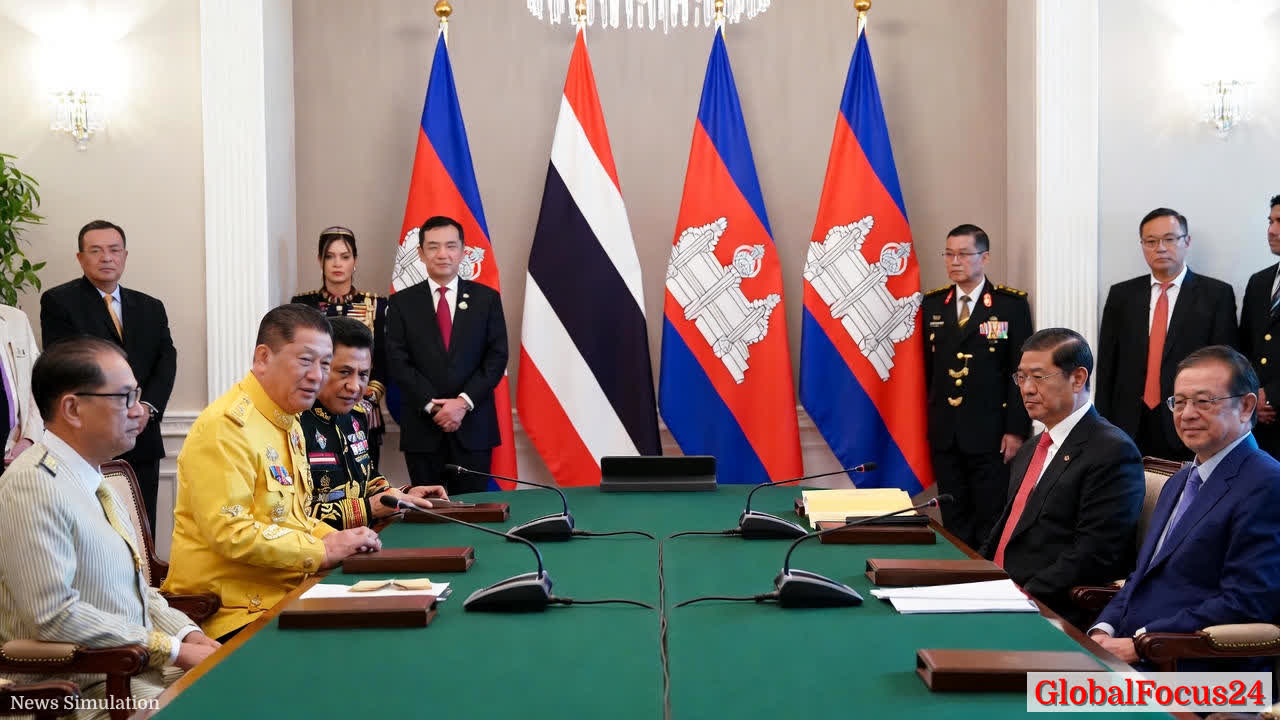
Thailand-Cambodia Conflict Pauses with New Peace Accord
In a development that marks a notable shift in Southeast Asia’s security landscape, Thailand and Cambodia announced a temporary halt to hostilities following a renewed peace agreement aimed at returning the two nations to a stable, pre-conflict state anchored in longstanding treaty obligations. The accord, described by officials as rapid and fair, signals a deliberate move away from recent skirmishes toward a more predictable regional order. While the agreement is a pause rather than a final settlement, its implications resonate across borders, economies, and local communities that have endured disruption and uncertainty in the border region.
Historical context and roots of the dispute
To understand the significance of the current pause, it helps to situate the conflict within a long arc of territorial and resource-based tensions that have periodically flared between Thailand and Cambodia. The borderlands along the Mekong Basin and proximate districts around disputed temples, roadways, and land use rights have long been flashpoints. In the past, both countries relied on bilateral diplomacy and international mediation to manage proximity, identity, and competing claims to resources. The most recent round of hostilities underscored how historical grievances can reemerge when local actors, economic pressures, or strategic calculations intersect with nationalist sentiment and perceptions of sovereignty.
The new peace accord emerged after intensive diplomacy that drew on the framework of historic treaties and confidence-building measures designed to reduce misperceptions and prevent escalations from small incidents into larger confrontations. Observers note that the move toward de-escalation aligns with a broader regional trend toward stabilizing frontiers through insistence on lawful borders and predictable conflict management protocols. The agreement’s emphasis on restoring “a peaceful state based on an original treaty” echoes a preference for returning to tried-and-true diplomatic channels and norms that have historically underpinned cross-border cooperation.
Economic impact on border communities and regional markets
The ceasefire comes at a moment when border economies have faced downstream effects from intermittent fighting and heightened security measures. Local markets, cross-border trade, and agriculture—especially in border districts where livelihoods depend on stable access to markets, labor mobility, and shared supply chains—have experienced volatility. A pause in hostilities can unlock channels for resumed trade, reduce costs related to security contingencies, and reassure investors who seek predictable operating environments. In practical terms, traders, transport companies, and smallholders may anticipate improved logistics, fewer disruptions to road and river transport, and more stable pricing for regional commodities such as rice, cassava, and fish products.
From a macroeconomic perspective, the stabilization of the border region supports continued investment in infrastructure that traditionally accompanies peace, including road upgrades, irrigation projects, and cross-border logistics hubs. Governments and development partners often tie such initiatives to confidence-restoring steps that accompany de-escalation, arguing that stability catalyzes growth by expanding the effective market size for local producers and attracting regional supply chains that rely on predictable, rule-based exchanges.
Regional comparisons and broader implications
The Thailand-Cambodia pause sits within a broader landscape of peace and conflict management in Southeast Asia. Several neighboring countries have pursued similar approaches to de-escalation, focusing on live issues such as territorial claims, resource rights, and the management of cross-border rivers. In comparison to other regional cases, the Thai-Cambodian accord emphasizes the centrality of historical treaties and domestic political consensus as anchors for peace, with international mediation playing a supplementary rather than leading role. This approach reflects a pragmatic understanding that durable peace often requires buy-in from local communities and a trust framework built on verifiable commitments rather than aspirational rhetoric alone.
Analysts note that the role of external actors, including the United States, remains a point of discussion among regional observers. While external support can provide critical leverage and resources for mediation, the region’s stability increasingly depends on bilateral and subregional mechanisms that foster ongoing dialogue and routine confidence-building measures. The evolving dynamic suggests a preference for regional solutions that leverage existing treaty commitments and practical cooperation in security, trade, and biodiversity preservation.
Security considerations and implementation challenges
With the ceasefire in place, the immediate task shifts to implementing mechanisms that prevent a relapse into conflict. Key concerns include verification of adherence to the terms, management of hot spots along the border, and ensuring that local authorities have the capacity to enforce new arrangements without provoking backlash or misunderstandings. Effective communication channels between border patrols, local law enforcement, and civilian authorities will be essential to maintaining momentum.
Another area of focus is the management of military postures and the reduction of tensions that can arise from rapid changes in patrol routines or restrictions on movement. Confidence-building measures—such as joint inspection of disputed locations, shared monitoring of resource sites, and periodic high-level talks—could help mollify spoilers who might profit from instability. The role of civil society, including local businesses, agricultural cooperatives, and community leaders, is often a critical but underutilized element in sustaining peace on the ground because they provide enduring legitimacy to non-governmental actors who advocate for stability.
Public reaction and social dimensions
Public sentiment in border regions often reflects a mix of relief and cautious skepticism. For residents who endured curfews, disrupted farming calendars, and intermittent school closures due to security concerns, the ceasefire brings a palpable sense of relief. Yet many people remain vigilant, aware that peace is not yet synonymous with prosperity. Communities may watch for the resumption of cross-border markets, the reestablishment of reliable transportation links, and the return of international visitors and traders who spur economic activity.
Media coverage and public messaging around the peace process can influence perceived legitimacy and buy-in from diverse constituencies. Transparent communication about the terms of the accord, the mechanisms for enforcement, and the timelines for confidence-building measures helps to build trust. When neighboring populations observe consistent behavior from authorities—such as predictable patrol patterns, timely de-escalation in tense moments, and visible economic benefits—the chances of sustaining peace improve significantly.
Environmental and resource considerations
The border region’s ecology and resource management present another layer of importance to the peace process. Shared river basins, fisheries, and land resources require cooperative governance to prevent overuse, contamination, or unilateral actions that could spark renewed tensions. The pause provides an opportunity to formalize joint environmental protections, cross-border resource sharing agreements, and cooperative disaster response plans. Sustained collaboration in environmental stewardship can contribute to broader stability by aligning economic incentives with long-term ecological health.
Looking ahead: pathways to durable peace
Experts suggest several pathways that could help convert a ceasefire into a durable peace. First, formalizing a long-term framework for border management that includes periodic reviews, transparent data-sharing on incidents, and independent verification mechanisms can reduce ambiguity and build trust. Second, expanding economic integration through cross-border trade facilitation, simplified customs procedures, and joint infrastructure projects can provide positive-sum outcomes that incentivize peaceful coexistence. Third, fostering people-to-people ties—through cultural exchanges, educational partnerships, and community-led development programs—can reinforce shared identities beyond national labels.
A long-term peace requires sustained engagement from both governments and the international community. While the immediate ceasefire is a commendable achievement, the true measure of success will be the ability of Thailand and Cambodia to translate the pause into a resilient framework that withstands shocks—from natural disasters to economic downturns and geopolitical shifts. The current moment presents a test of political will and organizational capacity to sustain a peaceful equilibrium that benefits not only national governments but the millions who live and work along the border.
Conclusion
The temporary halt to Thailand-Cambodia hostilities marks a significant moment in Southeast Asia’s modern security narrative. Grounded in historical treaties and supported by a pragmatic approach to conflict resolution, the new peace accord holds promise for regional stability and economic momentum. As both nations work to implement the terms and expand confidence-building measures, observers will be watching for tangible improvements in cross-border trade, security assurances, and community wellbeing. The next months could define whether this pause evolves into a lasting peace that reshapes economic activity, regional collaboration, and the daily lives of border residents for years to come.