Tesla’s Autonomous Drive Push Accelerates: A U.S. Rollout Forecast Amid Technological and Economic Shifts
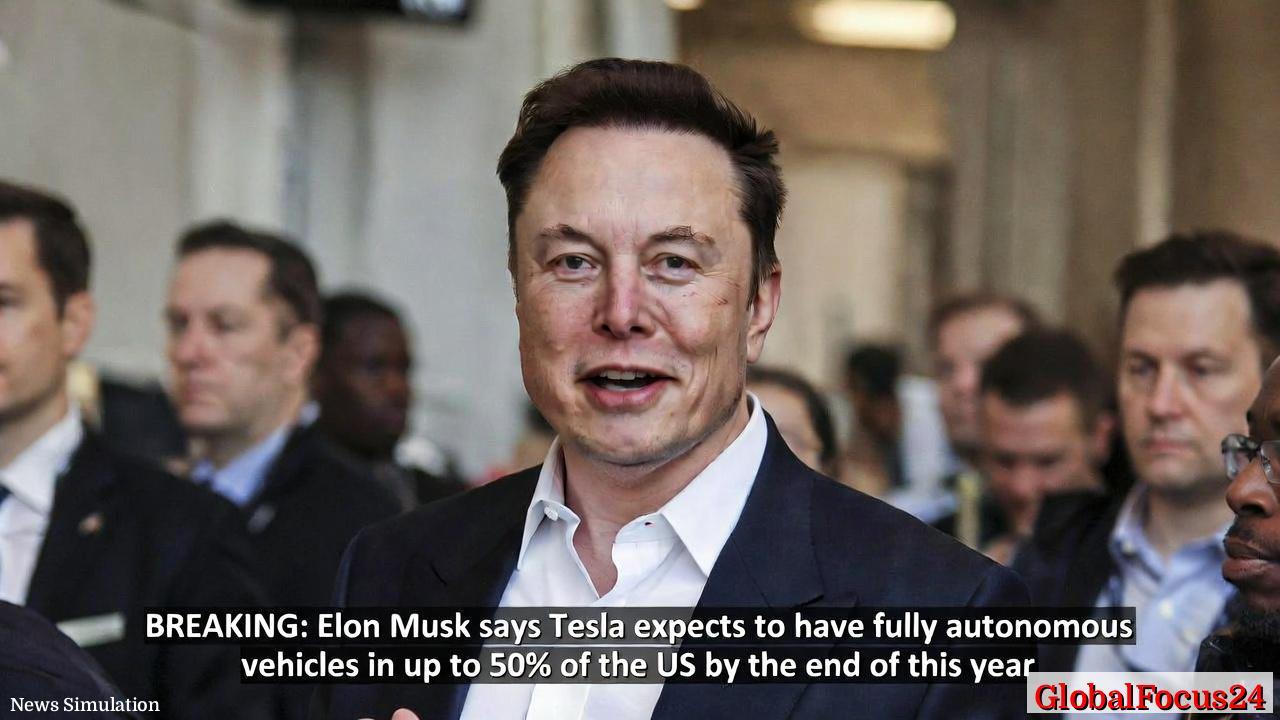
In a bold forecast that has drawn both attention and scrutiny from investors, industry observers, and policy-makers, Tesla executive leadership has projected that fully autonomous vehicles could reach deployment across up to 50% of the United States by the end of 2026. The statement, framed as a milestone in the company’s ongoing push to commercialize autonomous driving, arrives amid a broader wave of investments in electric vehicles, advanced driver-assistance systems, and the evolving regulatory landscape that governs road-tested AI-driven mobility. The ambition signals not only a technological leap but also a potential reordering of transportation economics, urban planning, and labor markets linked to driving and auto services.
Historical context: a long arc toward autonomy and electrification The concept of autonomous vehicles has evolved through several eras. Early attempts in the 2000s yielded modest gains, but the last decade brought a rapid acceleration of machine perception, navigation, and control systems. Tesla’s approach, characterized by a combination of radar, cameras, and neural network processing, has positioned the company at the forefront of consumer-facing autonomous features. The broader industry includes consortiums, partnerships, and regulatory pilots that have tested safety protocols, data-sharing models, and accountability frameworks. Historically, the transition from manual to autonomous mobility has been incremental, often progressing in geofenced areas or on specific highway corridors before expanding nationwide. If realized, the 2026 target would mark one of the most ambitious nationwide rollouts to date, reflecting a design philosophy that emphasizes software-driven capability as a core product differentiator.
Economic impact: reshaping cost structures, markets, and growth vectors Industry analysts anticipate a multi-faceted economic footprint stemming from a broader deployment of autonomous driving. Primary considerations include reductions in labor costs for fleet operations, particularly in ride-hailing, last-mile delivery, and logistics—a category that already accounts for a sizable share of transportation expenditure. A scalable autonomous platform could enable new business models, such as autonomous charging networks, maintenance-on-demand, and data-driven services that optimize route planning and energy efficiency. For consumers, potential impacts range from lower transportation costs and enhanced safety to the emergence of new ownership paradigms, such as access-based mobility rather than vehicle ownership.
From a regional economics perspective, the economic ripple effects would likely be uneven across industries and geographies. Urban centers with dense traffic patterns and higher commuting costs may experience more pronounced benefits from improved efficiency and reduced congestion, while rural areas might see slower adoption due to infrastructure gaps and network latency considerations. The energy sector could also feel a shift as autonomous fleets leverage optimized charging and energy management, potentially stabilizing demand for electricity during off-peak periods and influencing pricing dynamics for charging services.
Regional comparisons: how different parts of the United States could fare
- West Coast: California’s ecosystem, anchored by its established EV market, charging infrastructure investments, and a dense urban landscape, may serve as a testing ground for large-scale autonomous operations. Regulatory clarity and consumer acceptance will be pivotal in shaping early adoption, with metro areas likely to experience the most immediate benefits in ride-sharing and delivery services.
- Southeast and Southwest: Regions with growing metropolitan areas and expanding logistics hubs could witness accelerated fleet electrification and autonomous deployment, supported by state-level incentives and infrastructure projects aimed at reducing transit times and improving freight networks.
- Midwest: Industrial corridors and manufacturing clusters could leverage autonomous driving to streamline supply chains, reduce long-haul travel times, and enhance last-mile delivery efficiency. Adoption may hinge on the availability of high-capacity charging networks and robust maintenance ecosystems.
- Northeast: The dense urban fabric of major cities presents opportunities for autonomous taxis and micro-mupply solutions, alongside challenges related to traffic complexity and regulatory approvals. Public transit integration could shape complementary mobility patterns, potentially reducing vehicle miles traveled in congested corridors.
Technology, safety, and regulatory considerations The push toward nationwide autonomous deployment raises critical questions about safety standards, data governance, and the institutions responsible for oversight. Proponents emphasize the potential to reduce traffic accidents attributed to human error, improve the reliability of delivery timelines, and unlock road-access possibilities for populations with mobility constraints. Skeptics highlight concerns about cybersecurity, system redundancy, and the risk that real-world conditions—such as unpredictable pedestrian behavior, adverse weather, and ambiguous road markings—could challenge current algorithms.
Regulatory frameworks vary widely across states, with some pursuing permissive pilot programs and others imposing tighter restrictions on autonomous operations. The path to widespread deployment depends on a combination of rigorous testing, transparency in risk disclosure, and the ability to demonstrate consistent performance across diverse driving scenarios. Industry watchers also point to the importance of collaboration with public agencies to align on standards for insurance, accountability, and data sharing, which influence both deployment speed and public trust.
Supply chain and workforce implications Beyond direct vehicle sales and services, widespread autonomous mobility could influence the broader supply chain. Battery production, software development, and vehicle electronics stand to benefit from sustained demand, while the expansion of autonomous fleets might spur investments in charging infrastructure, network security, and on-road maintenance capabilities. As fleets scale, job categories could shift—from traditional driving roles to software engineering, data analytics, and fleet operations management. This transition underscores the need for retraining programs and social support mechanisms to help workers adapt to evolving opportunities.
Public reaction and consumer expectations Public response to autonomous vehicle projections is mixed, reflecting both optimism and caution. In many communities, residents welcome the promise of safer streets and more efficient transportation options, particularly in congested urban corridors. Others express concerns about data privacy, the potential for increased urban vehicle traffic, and the impact on local taxi and ridesharing jobs. Media coverage often frames autonomous driving as a watershed moment, but analysts stress that real-world deployment will unfold in staged phases, with pilot regions serving as laboratories for lessons that inform broader rollout decisions.
Historical parallels underscore the careful optimism surrounding 21st-century mobility shifts. Just as electrification reshaped energy consumption patterns and manufacturing dynamics, autonomous driving has the potential to redefine time, cost structures, and accessibility in daily life. The pace of change will depend on how policymakers, industry players, and local communities align around safety, reliability, and fair access to the benefits of innovation.
Specifics of the projection and what it might entail Tesla’s stated objective to deploy fully autonomous vehicles across up to half of the United States by year-end 2026 emphasizes a software-centric model, wherein a core autonomous platform is embedded across a broad vehicle fleet. Achieving such a milestone would likely involve a combination of over-the-air software updates, hardware-enabled autonomy features, and revenue models that monetize autonomous driving capabilities through ride-hailing partnerships, subscription services, or consumer purchases that unlock premium functionality. Realizing nationwide coverage would require robust data-sharing protocols, scalable maintenance networks, and a resilient charging ecosystem capable of supporting high-utilization autonomous fleets.
Economic modeling of a large-scale rollout suggests a potential reconfiguration of consumer spending patterns related to mobility. If autonomous services become more affordable and reliable, households could reallocate discretionary spending previously directed toward vehicle ownership, insurance, and maintenance toward other sectors such as housing, education, and leisure. The broader macroeconomic effect could include shifts in consumer confidence, urban development priorities, and the allocation of capital across transportation and energy infrastructure.
Potential challenges and milestones ahead
- Safety verification and real-world testing: Demonstrating consistent performance across diverse geographies remains essential to build confidence among regulators and the public.
- Infrastructure readiness: Availability of charging stations, service centers, and high-bandwidth data networks will influence deployment speed, particularly in rural regions.
- Insurance and liability frameworks: Clear guidelines on fault, responsibility, and coverage will be critical to scaling autonomous mobility while protecting consumers and providers.
- Public acceptance: Ongoing communication about safety benefits, privacy protections, and user experiences will shape adoption curves and market momentum.
- Competitive dynamics: As more automakers and technology firms advance autonomous capabilities, competition will drive continuous improvement, price parity, and service quality.
What this means for the future of mobility If the projected nationwide deployment comes to pass, the United States could witness a transformative shift in how people move, work, and live. A broader array of mobility options could reduce the need for personal vehicle ownership in dense urban areas, empower seniors and individuals with limited mobility, and reshape the logistics backbone that supports e-commerce and supply chains. The effects on traffic patterns, land use, and public transit integration could be profound, prompting cities to rethink curb space, parking demand, and last-mile delivery strategies.
Statistical outlook and market signals Industry data indicate a multi-year trajectory of growing investment in autonomous systems, with software ecosystems expanding at a rapid pace. Market signals include increased venture funding in mobility AI, partnerships between manufacturers and technology providers, and expansions in charging and service networks designed to support high-usage autonomous fleets. While optimism remains, analysts frequently caution that achieving regulatory clearances and proving reliability in all weather conditions will determine whether ambitious timelines are met. The balance of risk and reward will hinge on the ability to deliver safe, consistent performance that translates into tangible value for fleets, drivers, and consumers alike.
Conclusion: a pivotal moment in modern mobility The 2026 horizon for autonomous driving embodies a convergence of technical capability, economic potential, and regional strategic considerations. As the industry enters a phase of heightened activity, the coming months will reveal how well the vision aligns with road-tested performance, regulatory approval, and public sentiment. Stakeholders across sectors—manufacturing, energy, logistics, urban planning, and consumer services—will be watching closely for evidence of scalable, sustainable adoption that can deliver safer streets, greater efficiency, and new economic opportunities. The road to nationwide autonomous mobility remains complex, but the directional push signals a lasting shift in how the United States moves people and goods in a rapidly evolving transportation ecosystem.