SpaceX and xAI: A Potential Merger Set to Reshape Aerospace, AI, and Markets
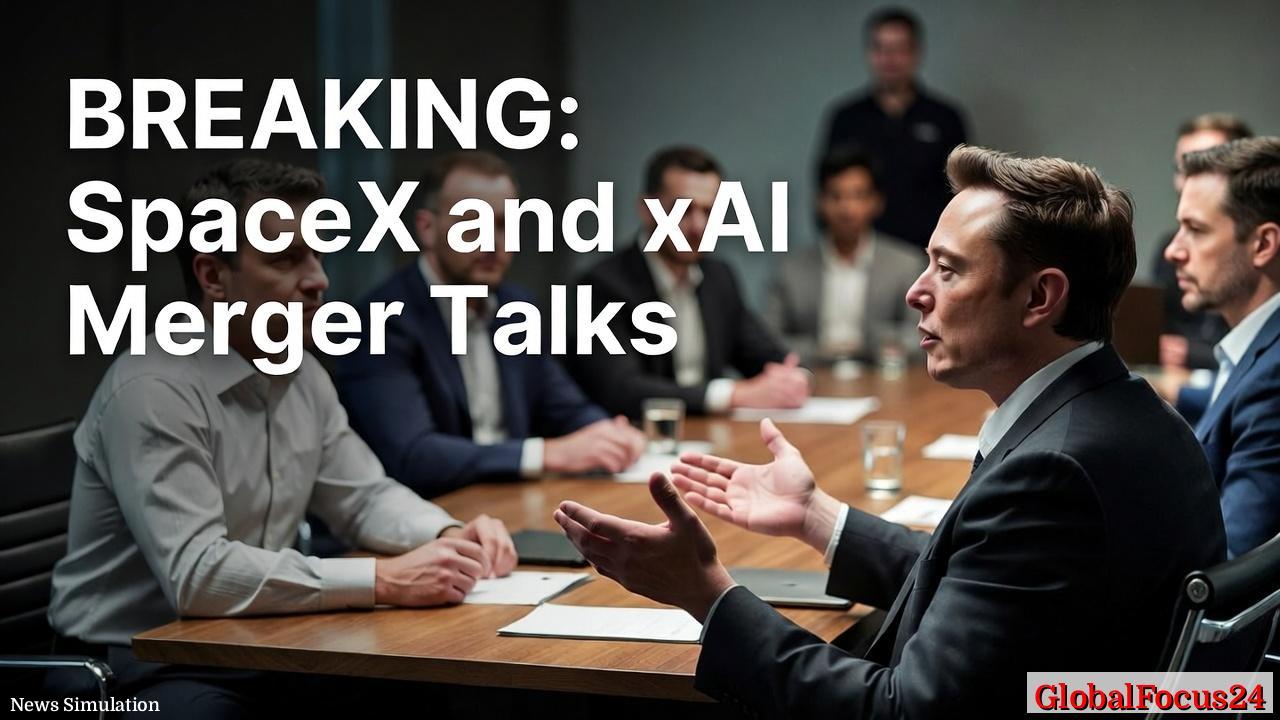
In a development that could redefine the boundary between space exploration and advanced artificial intelligence, SpaceX and xAI are reported to be in talks to merge before an anticipated initial public offering this year. Early discussions center on creating a unified entity that would fuse SpaceX’s rocket development, launch cadence, and global satellite networks with xAI’s AI technology and computational infrastructure. If realized, the combined company could command a valuation exceeding $1.5 trillion, placing it among the most valuable and influential tech-oriented firms in modern business history.
Historical backdrop: the rise of space-enabled AI ecosystems
To understand the potential significance of a SpaceX–xAI merger, it helps to trace the arc of three interlocking threads: private spaceflight’s rapid ascent, the exponential growth of AI capabilities, and the evolving role of integrated, end-to-end technology ecosystems in global markets.
- Private spaceflight’s evolution. Over the past two decades, SpaceX has transitioned from a disruptive startup to a cornerstone of the space economy. Its reusable rocket architecture, ambitious manifest for point-to-point cargo and crewed missions, and a growing constellation strategy through satellite networks have reshaped launch economics and access to space. The company’s progression has driven cost reductions, commercial partnerships, and new incentives for adjacent technologies such as in-orbit servicing, debris mitigation, and on-orbit data processing.
- The AI frontier. Concurrently, AI firms have moved beyond narrow, single-domain applications toward wide-scale, autonomous systems capable of interpreting vast data streams, optimizing complex operations, and enabling real-time decision-making across industries. The rapid maturation of large-language models, computer vision, robotics, and AI accelerators has created demand for robust, scalable compute, secure data fabrics, and governance frameworks that can support enterprise-grade AI deployment.
- The allure of integrated platforms. Investors and executives increasingly prize companies that bundle product lines into end-to-end platforms—think hardware, software, data, services, and infrastructure—allowing for cross-selling, network effects, and sharpened competitive advantage. A combined SpaceX–xAI entity would epitomize this trend by aligning aerospace hardware with AI software, creating a vertical stack that spans launch, satellite connectivity, data analytics, and intelligent systems.
Strategic rationale: why a merger now makes sense
Several interrelated factors could motivate a potential merger between SpaceX and xAI, particularly in the context of a forthcoming IPO and the broader market environment.
- Synergistic assets. SpaceX brings propulsion systems, launch services, Starlink satellite capabilities, and orbital analytics, while xAI contributes AI research pipelines, training infrastructure, data centers, and enterprise-grade AI toolchains. Integrated, these assets could deliver a unique value proposition: a single platform enabling space-based data generation, rapid AI processing, and global communications.
- Capital efficiency and valuation dynamics. A combined balance sheet could present a more compelling narrative to public markets, with diversified revenue streams—launch contracts, satellite connectivity subscriptions, AI software licenses, and high-performance compute services. A unified capital market story may attract investors seeking resilient growth, scale, and strategic resilience across technology and aerospace sectors.
- Global reach and infrastructure moat. The fused enterprise could leverage SpaceX’s global launch cadence and Starlink network for data transport and edge computing, while xAI’s software and AI accelerators could optimize mission planning, satellite operations, and predictive maintenance. The resulting ecosystem would offer a defensible moat: superior data access, integrated hardware-software optimization, and network-driven value.
- Competitive dynamics and timing. If both firms seek to capitalize on a market window in which AI and space-enabled services are embedded into critical infrastructure—telecommunications, logistics, defense, disaster response—the merger could accelerate scale and geographic reach, positioning the entity to outpace standalone peers and potential disruptors.
Implications for the IPO landscape and market behavior
The prospect of a SpaceX–xAI merger ahead of a public offering could generate notable shifts in the IPO landscape and broader market behavior.
- Investor appetite for high-growth, multi-vertical platforms. Public market participants have shown robust demand for platform companies that promise compound growth across sectors. A SpaceX–xAI entity would tick several boxes: deep tech, defensible IP, and the potential for recurring revenue streams tied to missions, data services, and AI-enabled applications.
- Valuation dynamics and risk perception. A potential $1.5 trillion valuation would be a landmark benchmark, inviting scrutiny of how investors account for geopolitical, regulatory, and technology-related risks. Market participants would likely weigh the durability of revenue models, the pace of AI deployment, and the cadence of satellite network expansion against the costs and complexity of running a globally integrated aerospace–AI enterprise.
- Regulatory and governance considerations. A merger of companies straddling aerospace, telecommunications, and artificial intelligence brings regulatory considerations that span export controls, data sovereignty, safety certifications, and antitrust scrutiny. The governance framework would need to address risk management, cyber resilience, and AI safety standards to satisfy public market expectations for transparency and accountability.
Economic impact: regional and global ramifications
A merger of SpaceX and xAI, followed by a high-profile IPO, could ripple through multiple layers of the economy.
- Supply chain effects. The collaboration would spur demand for advanced components: propulsion subsystems, lightweight materials, satellite manufacturing, and AI accelerators. Suppliers across North America, Europe, and Asia could experience investment cycles tied to the expanded scale of production and network services.
- Jobs and talent ecosystems. The combined entity would likely become a magnet for high-skilled labor in engineering, data science, software, and operations, potentially boosting domestic job creation in regions with mature aerospace and tech ecosystems. Talent migration could intensify as firms compete for AI researchers, systems engineers, and satellite operators.
- Tech investment and regional development. Regions hosting industrial bases or space-related research clusters could attract increased capital spending. Public-private partnerships, research grants, and university collaborations might grow as the company expands its R&D footprint, reinforcing regional leadership in space and AI capabilities.
Regional comparisons: how the potential merger stacks up
- United States vs. Europe. The U.S. has deep roots in both private spaceflight and AI innovation, supported by a robust venture capital ecosystem and a favorable IPO environment for high-growth technology platforms. Europe, with its own space infrastructure and regulatory architecture, could see benefits from increased investment, potential technology transfer, and shared standards for AI governance that align with the European Union’s ambitious digital strategy.
- North America vs. Asia-Pacific. North America remains a hub for pioneering AI research and space exploration, backed by mature financial markets. Asia-Pacific is rapidly expanding its capabilities in satellite networks and AI-enabled services, offering complementary growth opportunities and potential manufacturing synergies that could contribute to a diversified global supply chain.
- Urban tech hubs and fringe regions. The company’s footprint could reinforce both established tech corridors (such as coastal innovation clusters) and more specialized regional centers focusing on satellite manufacturing, ground stations, and AI research facilities. This geographic spread would diversify risk and broaden access to talent pools.
Operational considerations: integration, culture, and execution
A transaction of this magnitude would hinge on meticulous integration planning and cultural alignment.
- Integration roadmap. A successful integration would require harmonizing product roadmaps, security protocols, data governance frameworks, and regulatory compliance across aerospace and AI operations. Clear milestones, cross-functional governance, and a phased approach would help manage risk and maintain mission continuity.
- Cultural alignment. Merging organisations with different histories—spaceflight engineering discipline and rapid software-centric AI development—would demand a thoughtful culture strategy. Leadership would need to articulate a shared mission, establish collaboration norms, and create career pathways that preserve engineering rigor while fostering AI-driven innovation.
- Risk management and safety. In aerospace and AI, risk controls, safety certifications, and robust cyber resilience are paramount. The enterprise would need to align with international standards, maintain transparent safety testing procedures, and implement governance mechanisms that reassure customers, partners, and regulators.
What to watch next: indicators of momentum and potential hurdles
- Financing terms and investor sentiment. The terms of the IPO and the composition of lead underwriters will signal how the market views blended aerospace–AI platforms. Strong demand could accelerate the timetable, while caution around regulatory scrutiny or execution risk might temper expectations.
- Competitive responses. Rival firms in both space and AI could respond with strategic partnerships, accelerated product launches, or price competition. Observing these moves will shed light on how durable a merged entity’s competitive advantage might be.
- Regulatory reviews. Given the cross-border nature of aerospace and AI technology, regulators will scrutinize export controls, data handling, competition, and national security considerations. Timelines and conditions attached to any merger or IPO will influence the overall trajectory.
Public reaction and the broader narrative
Public sentiment surrounding a SpaceX–xAI merger reflects a mix of optimism and prudent caution. Supporters highlight the potential for accelerated scientific discovery, improved global communications, and new job opportunities. Critics may raise concerns about market concentration, the pace of AI deployment, and potential impacts on privacy and security. The market narrative will likely emphasize a balanced view: a bold, technology-forward move with clear value for customers and investors, tempered by vigilant governance and transparent communication about risks and safeguards.
Conclusion: a pivotal moment for technology and markets
If SpaceX and xAI consolidate their operations into a single, publicly traded platform, the implications would extend far beyond a single industry. The fusion of aerospace scalability and AI intelligence could catalyze new ways of solving complex global challenges—from climate monitoring and disaster response to autonomous logistics and remote connectivity. The coming months will reveal whether the merger talks translate into a durable strategic alliance and a public offering that signals a new era of integrated, high-growth technology.
As the story unfolds, observers will watch how the combined entity negotiates the delicate balance between innovation velocity and the responsibilities that come with it. The outcome could redefine how investors evaluate multi-domain platforms and prompt a broader rethink of how the most transformative technologies are developed, deployed, and governed in a rapidly changing global landscape.