Federal Judge Blocks Nexstar–Tegna Merger in Landmark Antitrust Ruling
Court Halts $6.2 Billion Broadcast Deal
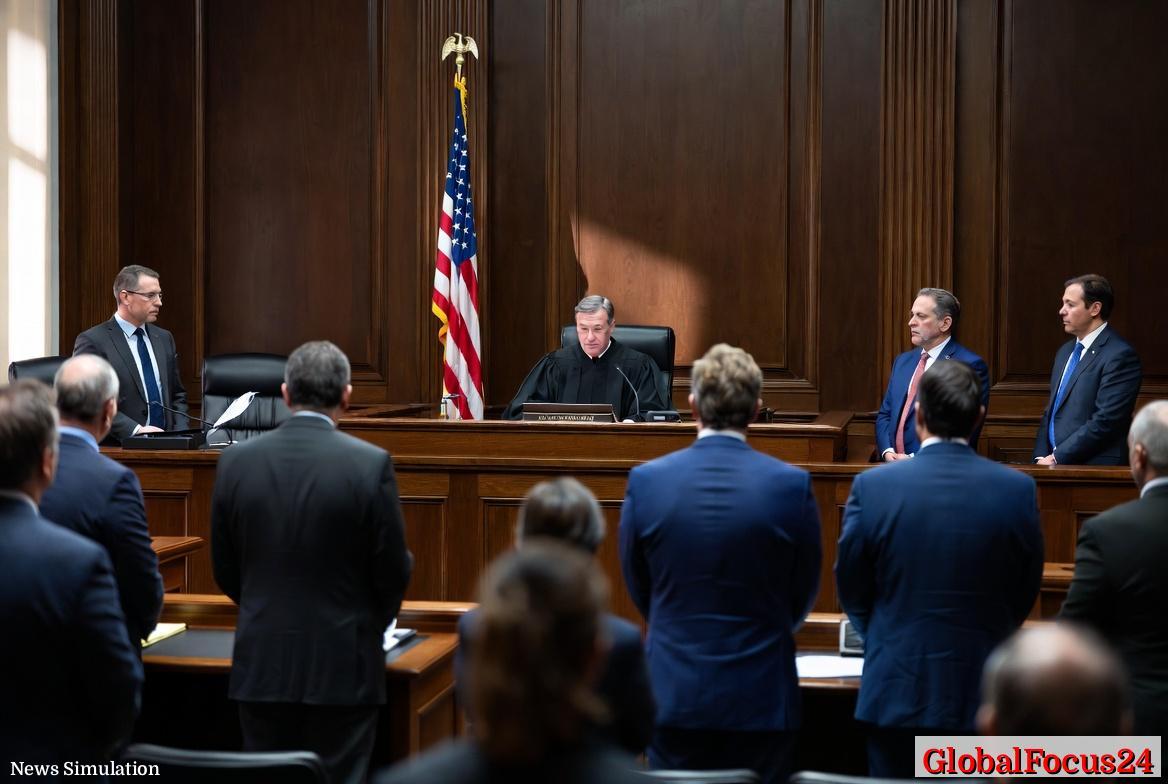
A federal judge has issued a preliminary injunction halting the $6.2 billion merger between Nexstar Media Group and Tegna, marking a significant moment in the evolving landscape of U.S. media consolidation. The ruling, delivered by U.S. District Judge Troy Nunley in California, determined that the combination is likely to violate federal antitrust law by substantially reducing competition in local television markets.
The decision comes after a coalition of eight states, alongside satellite television provider DirecTV, filed suit to block the transaction. The plaintiffs argued that the merger would create excessive concentration in the ownership of local television stations, ultimately harming consumers through higher costs and diminished local journalism.
Under the court order, Nexstar must allow Tegna to continue operating independently while the case proceeds. The injunction is set to take effect April 21, casting uncertainty over a deal that had already received regulatory clearance from federal agencies.
Antitrust Concerns Drive Legal Challenge
At the center of the dispute is the Clayton Act, a cornerstone of U.S. antitrust law designed to prevent mergers that could substantially lessen competition or create monopolistic market conditions. Judge Nunley concluded that the plaintiffs demonstrated a strong likelihood that the Nexstar–Tegna merger would violate this statute.
The states involved in the lawsuit—including California, Colorado, and New York—argued that combining the two broadcasting giants would give the resulting entity outsized control over local television markets. Such consolidation, they warned, would reduce competitive pressure on pricing and content quality.
DirecTV, which relies on negotiations with broadcasters to carry local channels, supported the states’ position, emphasizing that increased market concentration would give Nexstar greater leverage in retransmission consent negotiations. These negotiations determine the fees paid by pay-TV providers to carry local stations, costs that are often passed on to consumers.
Impact on Pay-TV Costs and Consumers
One of the most immediate concerns highlighted in the ruling is the potential for rising pay-TV bills. Judge Nunley agreed with arguments that a combined Nexstar–Tegna entity would have enhanced bargaining power to demand higher fees from cable and satellite providers.
This dynamic has been a recurring issue in the television industry, where disputes over carriage fees can lead to temporary blackouts of local channels. As broadcasters grow larger through mergers, their negotiating leverage increases, often resulting in higher retransmission fees.
Consumers, in turn, may face increased subscription costs or reduced access to local programming during disputes. The court found that this risk was not hypothetical but consistent with historical trends in the industry.
Concerns Over Local News Quality
Beyond pricing, the ruling also addressed concerns about the quality and diversity of local news coverage. The states argued that Nexstar has a track record of consolidating news operations in markets where it owns multiple stations, leading to reduced staffing and fewer independent voices.
Judge Nunley cited this pattern in his decision, noting that there was little evidence to suggest the company would change its approach following the merger. The court expressed concern that newsroom consolidation could diminish the breadth and depth of local reporting, particularly in smaller or mid-sized markets.
Local television remains a primary source of news for many Americans, especially in regions where alternative media options are limited. Any reduction in local coverage could have broader implications for civic engagement and community awareness.
Regulatory Approval and Judicial Pushback
The ruling represents a notable divergence from the position taken by federal regulators. Both the Federal Communications Commission (FCC) and the Department of Justice had cleared the merger prior to the lawsuit, with the FCC granting a waiver that allowed the combined company to exceed national ownership limits.
Current FCC rules cap a single broadcaster’s reach at 39% of U.S. television households. The Nexstar–Tegna merger would extend that reach to approximately 60%, a significant expansion that drew scrutiny from critics.
In his order, Judge Nunley emphasized that regulatory approval does not override antitrust enforcement. He stated that the FCC does not have authority to resolve antitrust issues or prevent federal courts from applying competition laws.
This distinction underscores the dual oversight framework governing media mergers in the United States, where regulatory approval and antitrust compliance operate as separate, though sometimes overlapping, processes.
Industry Context: A Decade of Media Consolidation
The blocked merger is part of a broader trend of consolidation in the U.S. media industry, particularly among local television station owners. Over the past decade, companies such as Nexstar, Sinclair Broadcast Group, and Gray Television have expanded aggressively through acquisitions, seeking scale to compete in a rapidly changing media environment.
Several factors have driven this consolidation:
- Declining traditional TV viewership as audiences shift to streaming platforms.
- Increased competition for advertising revenue from digital platforms.
- Rising costs associated with producing local news and acquiring programming.
By acquiring additional stations, broadcasters aim to achieve economies of scale, streamline operations, and strengthen their negotiating position with advertisers and distributors.
However, this trend has also raised concerns about reduced competition, fewer independent news voices, and increased market power concentrated in a handful of companies.
Regional Comparisons and Market Concentration
The impact of consolidation varies significantly across regions. In large metropolitan areas with multiple media outlets, the effects may be less pronounced due to greater competition. However, in smaller markets, where only a few stations operate, consolidation can have a more substantial impact.
For example:
- In mid-sized cities, a single company owning multiple stations may control a majority of local broadcast content.
- In rural areas, consolidation can lead to shared newsrooms serving multiple communities, reducing localized reporting.
- In highly competitive urban markets, consolidation may still influence advertising rates and retransmission fees, though consumers have more alternatives.
The Nexstar–Tegna merger would have affected hundreds of stations nationwide, amplifying these regional dynamics and potentially reshaping local media ecosystems.
Economic Stakes for Broadcasters
From an economic perspective, the merger represented a strategic move to strengthen financial resilience in a challenging industry. Nexstar has argued that scale is essential to sustain investment in local journalism and technological innovation.
The company maintains that combining resources with Tegna would enable greater efficiency and improved content offerings. Supporters of consolidation often point to the need for broadcasters to compete with large streaming platforms and digital media companies that operate on a global scale.
However, critics contend that cost savings achieved through consolidation often come at the expense of local employment and editorial diversity. The court’s ruling reflects skepticism about whether the economic benefits claimed by Nexstar would outweigh the potential harm to competition and consumers.
Legal and Industry Implications
The preliminary injunction does not permanently block the merger but signals significant legal hurdles ahead. Nexstar has indicated it will appeal the decision to the Ninth Circuit Court of Appeals, setting the stage for a potentially lengthy legal battle.
The outcome could have broader implications for future media mergers, particularly in the local television sector. A sustained legal challenge may slow the pace of consolidation and encourage closer scrutiny of deals that significantly expand market reach.
Industry analysts note that the ruling may also embolden state-level enforcement of antitrust laws, especially in cases where federal regulators have approved transactions.
Uncertain Path Forward
As the legal process unfolds, both companies face uncertainty about the future of the deal. The requirement for Tegna to operate independently during the injunction period preserves the status quo but complicates integration plans and financial projections.
For consumers, the decision represents a temporary safeguard against potential price increases and changes in local news coverage. For the broader media industry, it serves as a reminder that consolidation efforts remain subject to rigorous legal scrutiny, even after regulatory approval.
The case highlights the ongoing tension between economic efficiency and competitive safeguards in an industry undergoing rapid transformation. As traditional broadcasting adapts to digital disruption, the balance between scale and competition will continue to shape the future of local media in the United States.