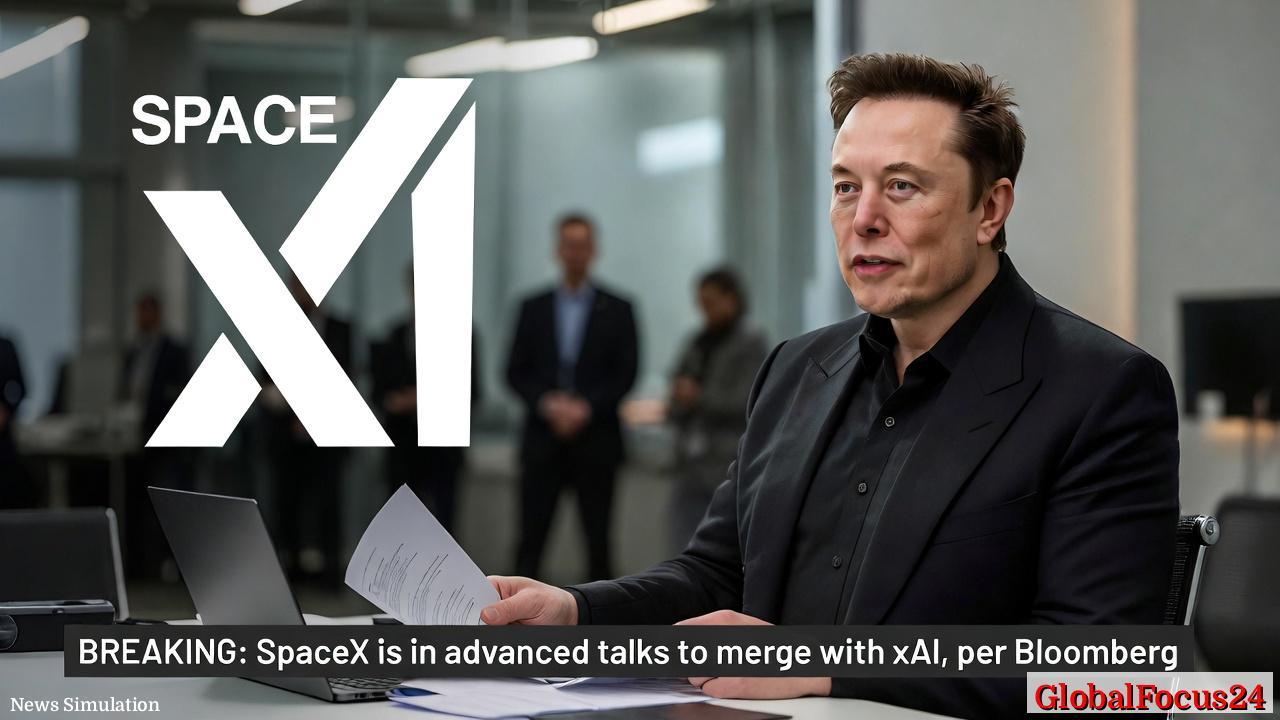
SpaceX and xAI Merge in Advanced Talks, Poised for Historic IPO Momentum
In a development reshaping the technology and aerospace landscape, SpaceX and xAI are reportedly in advanced merger discussions that could yield the largest initial public offering in history in the near term. The potential combination would unite SpaceX’s proven space launch capabilities, satellite infrastructure, and vertical integration with xAI’s rapidly expanding artificial intelligence research and product ecosystem.Leadership at both companies has signaled a willingness to explore a transaction that could redefine how private spaceflight, satellite networks, and AI technologies scale in parallel, with implications across finance, manufacturing, cybersecurity, and global communications.
A look back at the context that makes this moment significant helps underscore the potential stakes. SpaceX, established as a leading private entrant in the aerospace sector, disrupted traditional launch economics through reusable rocket technology and a cadence of missions that expanded commercial, scientific, and national-security access to space. The company’s portfolio includes heavy-lift capabilities, a growing constellation of satellites designed to deliver broadband and Earth observation services, and a broader vision of enabling human life beyond Earth. By contrast, xAI has positioned itself at the intersection of cutting-edge AI research and practical applications, pursuing scalable models, agent-based systems, and AI-powered tools geared toward enterprise, industry, and consumer use cases. The proposed merger would, in effect, span both the “how to reach space” and “how to interpret data and automate decisions” questions that define twenty-first-century technology strategy.
Industry analysts emphasize that the strategic rationale centers on several core synergies. First, operational efficiency and capital allocation could be sharpened through a unified governance framework that aligns spacecraft development, satellite networks, and AI product roadmaps under a common long-term plan. A combined entity could optimize procurement, manufacturing, and software integration while reducing duplication in research and development, data centers, and engineering talent pools. Second, cross-pollination between space systems and AI capabilities could accelerate advances in autonomous operations, resilient communications, and edge computing. SpaceX’s launch cadence and ground infrastructure could provide real-world data and testing grounds to train and validate AI models at scale, while xAI’s software platforms might unlock new mission planning, anomaly detection, and predictive maintenance for space assets.
Economists point to several potential macroeconomic impacts should the merger advance toward a public listing. A successful IPO of unprecedented scale would inject substantial liquidity into technology and aerospace markets, potentially influencing investor expectations for related start-ups and venture-backed ventures in high-growth sectors. The deal could also stimulate supplier ecosystems, from propulsion and manufacturing to silicon and cloud services, as companies seek to participate in a larger, diversified aerospace-AI conglomerate. Moreover, a merged entity could be well positioned to capitalize on global demand for satellite-based communications, remote sensing data, and AI-enabled services across sectors such as logistics, healthcare, finance, and energy.
Regional comparisons offer useful context for assessing potential geographic and economic effects. In the United States, California and Texas anchor much of the innovation ecosystem surrounding both space and AI, with a concentration of research universities, engineering talent, and venture funding. A combined SpaceX-xAI company would reinforce the state’s leadership in space flight and AI development, while potentially enhancing regional supply chains and high-skilled employment. In Europe, governments have emphasized sovereign communication capabilities and resilience in critical infrastructure; a joint SpaceX-xAI entity could influence collaborations on satellite-enabled networks and AI safeguards, potentially shaping regulatory dialogues and public-private partnerships. Across Asia, rapidly expanding AI markets and space-related initiatives create a backdrop in which a large, diversified tech company could play a pivotal role in international collaboration, export controls, and global standards.
From a market-access perspective, the merged group would likely pursue strategic partnerships with government agencies, telecommunications providers, and defense-related customers while pursuing civilian, commercial, and scientific missions. The ability to offer integrated services—from launch and satellite connectivity to AI-driven analytics and decision-support tools—could unlock new revenue streams. However, investors would weigh potential regulatory scrutiny, antitrust considerations, and national security implications, given the dual-use nature of launch capabilities, space assets, and AI technologies. Thorough regulatory reviews would be essential to ensure fair competition, data governance, and export controls while preserving the company’s strategic flexibility to innovate.
Historical context highlights how transformative corporate consolidations have shifted technology ecosystems. In aerospace, mergers and collaborations have historically accelerated the development of reusable launch systems, propulsion breakthroughs, and satellite networks. In AI, major platforms have grown through a combination of internal development, strategic acquisitions, and open collaboration with research institutions. A combined SpaceX-xAI enterprise would be a living cross-section of these trends—melding hardware-intensive, capital-intensive space ventures with software-driven, scalable AI platforms. The historical lesson for observers is that successful integrations hinge on disciplined governance, clear mission alignment, and a culture that can absorb disruption while maintaining rigorous safety, security, and reliability standards.
Strategic leadership and governance questions will likely come to the fore as discussions move toward implementation. Stakeholders would need to decide on corporate structure, board composition, executive accountability, and the distribution of stock and control rights. A thoughtfully designed governance model could preserve the innovative vigor of both organizations while ensuring that safety, regulatory compliance, and stakeholder interests remain paramount. Transparency with investors and the public about risk management, cyber resilience, and data ethics would also be central to sustaining confidence through the transition.
Technological implications for the combined entity are extensive. In space systems, the union could foster more resilient satellite constellations, enhanced telemetry and command-and-control networks, and integrated ground infrastructure. For AI, the collaboration could accelerate research into generalizable models, energy-efficient computing, and AI governance mechanisms that address bias, interpretability, and accountability. The convergence of these threads might yield new products and services, including end-to-end mission planning software, autonomous spacecraft operations, and customer-ready AI analytics platforms that translate raw telemetry into actionable insights across industries.
Public sentiment and workforce considerations are likely to accompany any merger of this scale. Public reaction typically tracks the balance between awe at ambitious goals and concern about disruptions, pricing, and job stability. A well-executed integration would prioritize workforce planning, retraining opportunities, and clear communication about how roles evolve as the company grows. In regional markets, the presence of a major, globally visible employer can influence talent pipelines, university collaborations, and local innovation ecosystems, reinforcing a cycle of investment in STEM education and advanced manufacturing capabilities.
Logistics and sector-specific timing will matter. If the merger progresses toward an IPO, timing would need to align with favorable market conditions, regulatory clearance, and investor appetite for cross-disciplinary technology platforms. A successful listing would likely attract attention from a broad set of investors seeking exposure to aerospace growth, AI scalability, and the convergence of hardware and software in mission-critical applications. Market observers will watch for disclosures about capital allocation plans, dividend strategies, debt levels, and the pace at which the company intends to scale its satellite and AI operations globally.
Risk factors accompanying such a large-scale transaction are substantial and multi-layered. Technological risk includes the possibility of integration challenges between different engineering cultures and product roadmaps, as well as potential cybersecurity vulnerabilities that could arise from expanded digital interfaces. Regulatory risk encompasses oversight from national and international agencies concerned with space traffic management, dual-use technology controls, and data privacy concerns related to AI-enabled services. Financial risk centers on valuation accuracy, capital structure, and the ability to realize projected synergies within a credible timeframe. Strategic risk involves market shifts, competitor movements, and the potential for rapid changes in demand for space-based communication or AI offerings.
In summary, the reported advanced talks between SpaceX and xAI signal a major inflection point at the crossroads of space exploration, satellite connectivity, and artificial intelligence. The proposed merger envisions a unified platform capable of propelling humanity’s ambitions beyond Earth while simultaneously accelerating AI-powered transformations across multiple sectors. If realized, the combination could redraw competitive boundaries, set new benchmarks for initial public offerings in the tech landscape, and catalyze a broader wave of investment in space-enabled AI-enabled infrastructure.
Public and industry observers will continue to monitor developments as negotiations proceed. Analysts emphasize that the outcome will depend on a combination of strategic fit, regulatory clearance, and the ability to translate anticipated synergies into tangible, sustainable growth. For now, the market remains attentive, weighing the potential for a landmark IPO against the practical realities of merging two complex, high-growth organizations with ambitious visions for the future.