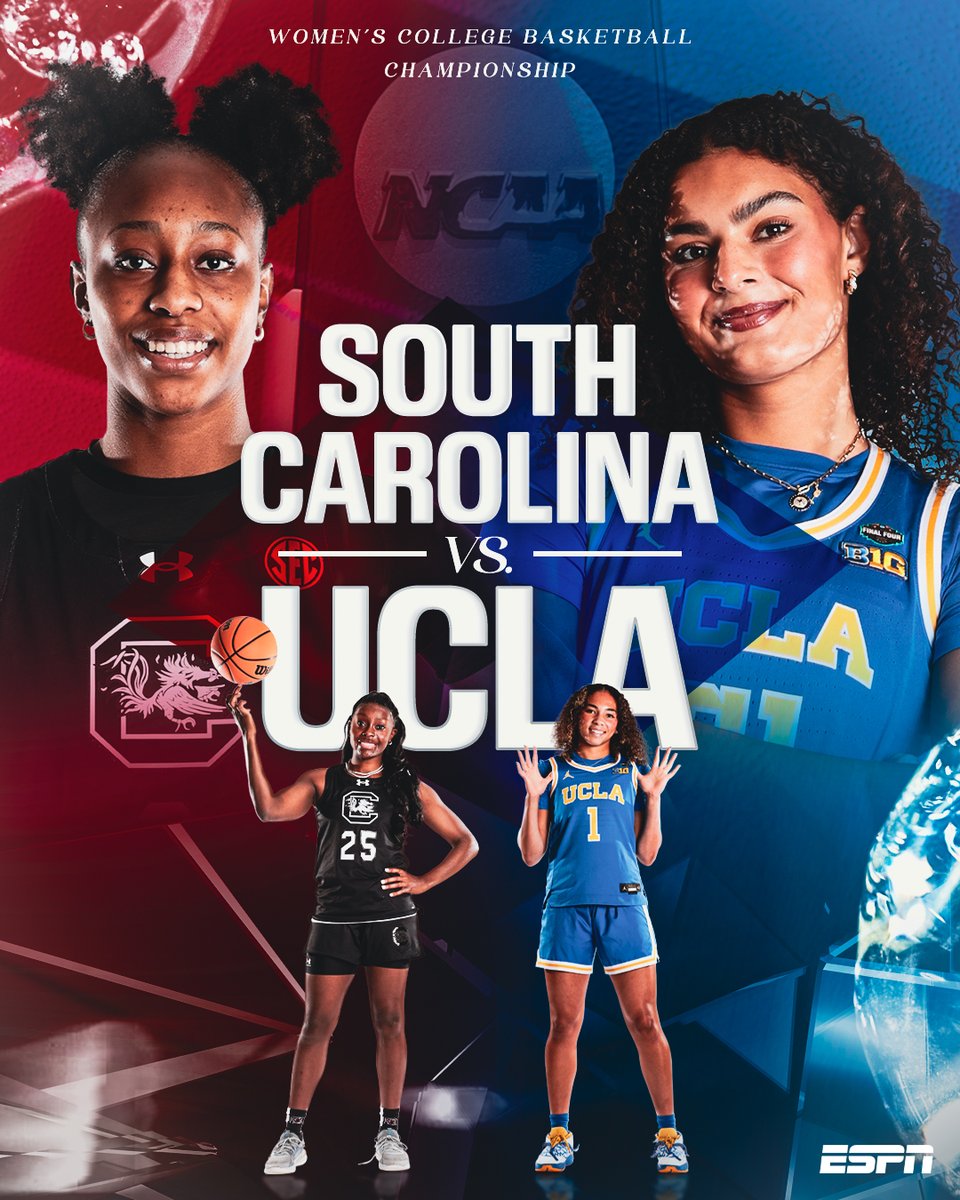
South Carolina and UCLA Set for High-Stakes Clash in NCAA Women’s Basketball National Championship
A Title Game Years in the Making
When South Carolina and UCLA tip off on Sunday in the NCAA Women’s Basketball National Championship on ABC, the matchup will mark a meeting between two programs that have spent years reshaping the national landscape of women’s college basketball. The Gamecocks arrive as a powerhouse built under coach Dawn Staley’s decade-long reign of dominance, while the Bruins, helmed by Cori Close, have crafted a steady rise to national prominence anchored by speed, defense, and versatility.
The contest has the makings of a classic—experience versus hunger, power versus pace, and two distinct basketball cultures colliding at the peak of their evolution. For fans of the women’s game, the championship represents both a culmination of the 2026 tournament and a window into its future.
South Carolina’s Road Back to the Summit
South Carolina’s run through the NCAA Tournament has showcased the depth and discipline that have become hallmarks of Dawn Staley’s program. After losing several key players to the WNBA over the past two seasons, many analysts questioned whether the Gamecocks could sustain their intensity. Yet, the team responded with a nearly flawless campaign, reclaiming the No. 1 seed and sweeping through March Madness with poise.
The Gamecocks’ semifinal victory was an exercise in patience and power. Anchored by dominant post play and relentless rebounding, South Carolina imposed its will against a gritty opponent, extending its record to more than 35 wins on the year. The win reflected a familiar formula—elite defense, unselfish tempo, and a coach whose fierce focus translates into every possession.
Historically, South Carolina’s rise encapsulates one of NCAA basketball’s most significant transformations. When Staley took over in 2008, South Carolina was not considered a basketball school. Within a decade, she turned Columbia into a hub of elite talent, guiding the team to multiple Final Fours and two national titles. Sunday's contest could add another chapter to that legacy—a chance to solidify the program as the decade’s defining dynasty.
UCLA’s Emergence as a National Contender
For UCLA, the road to the title game represents the crest of a wave long in motion. The Bruins have long been a West Coast institution in men’s basketball, boasting a record-setting legacy under John Wooden. But in recent years, the women’s program has taken on a new identity—one rooted in resilience and innovation rather than historic inheritance.
Head coach Cori Close has been methodical in building UCLA’s foundation. Through focused recruiting and strategic player development, she’s molded a roster that combines athleticism with acute court intelligence. As a result, UCLA’s tournament run has been a display of tactical adaptability, highlighted by quick rotations, a disciplined transition game, and consistent perimeter shooting.
UCLA’s semifinal victory electrified fans across the country. It wasn’t just the statistical performance that stood out but the visible chemistry and confidence the Bruins carried from tip-off to final buzzer. For a program that last reached the Final Four in 2018, breaking through to the championship signals a milestone moment and underscores the university’s growing influence in women’s athletics.
Contrasting Styles Promise a Captivating Final
The stylistic contrast between South Carolina and UCLA gives Sunday’s game a unique level of intrigue. South Carolina relies on physicality and defensive endurance—the ability to control tempo and dominate the boards. UCLA counters with agility and perimeter accuracy, running smooth offensive sets designed to create space and exploit mismatches.
In many ways, the matchup mirrors broader regional basketball identities. The Southeast has traditionally emphasized inside presence and team defense, staples of SEC basketball culture. The West Coast, by contrast, often prioritizes mobility and guard play, reflecting Pac-12’s long-standing tradition of fluid offense. Together, these factors ensure a dynamic viewing experience—a battle not only of teams but of philosophies.
Key players will be pivotal in determining the outcome. South Carolina’s frontcourt has been nearly impossible to contain, commanding double teams and opening lanes for shooters. UCLA, meanwhile, features one of the nation’s most unpredictable backcourts, able to pivot in rhythm and capitalize on defensive lapses. The championship could hinge on which side manages to impose its tempo early.
Historical Perspective and Broader Impact
This meeting between South Carolina and UCLA marks one of the most compelling title matchups in recent NCAA women’s basketball history. It’s the first time the Gamecocks and Bruins have ever met in a national championship game, and the encounter speaks volumes about the sport’s geographic and generational evolution.
For most of NCAA history, women’s basketball dominance was concentrated among programs like Tennessee, Connecticut, and Baylor—teams that defined eras through sustained success and superstar athletes. The 2026 championship continues a trend toward wider parity, signaling a new period where multiple conferences compete at the highest level. Both South Carolina and UCLA embody this shift, using recruitment pipelines and regional pride to strengthen their competitive platforms.
The game also arrives at a pivotal moment for women’s sports visibility. Television ratings for the tournament have climbed sharply over the past five years, driven by increasing audience engagement, growth in grassroots participation, and landmark endorsement deals. South Carolina’s return to the championship provides a familiar anchor, while UCLA’s breakthrough ensures fresh energy and expanded national interest.
The Economic Ripple Effect of a Growing Sport
Beyond the hardwood, the economic impact of this championship reverberates through college sports and regional economies. For Columbia, South Carolina, Staley’s success has become a magnet for tourism, campus enrollment, and local business growth. Each deep tournament run brings thousands of visitors and millions in broadcast-driven exposure, reinforcing the value of athletic success as a community catalyst.
In Los Angeles, UCLA’s advancement amplifies the city’s year-round sports identity. The Bruins’ success feeds local economies tied to merchandise sales, arena traffic, and alumni engagement. It also highlights the enduring vitality of Pac-12 athletics—even as conference realignments challenge traditional college rivalries. For student-athletes, the cultural visibility of such achievements carries long-term significance, paving the way for professional careers and sponsorship opportunities that were once rare in women’s basketball.
These ripple effects reflect a broader trend: the commercial and cultural rise of women’s collegiate sports. With increasing media coverage and athlete empowerment movements reshaping public perception, NCAA women’s basketball has emerged as both an athletic spectacle and an economic engine—one capable of commanding prime television slots and national attention comparable to the men’s tournament.
Regional Legacy and Future Outlook
When Sunday’s championship unfolds, it won’t just decide a trophy—it will clarify the balance of power in college basketball’s changing landscape. For the SEC, another South Carolina title would affirm the conference’s continued grip on the sport’s elite tier. For the Pac-12, a UCLA victory could symbolize a new frontier for West Coast dominance in women’s athletics.
The matchup also reflects deeper institutional legacies. South Carolina’s journey from underdog to perennial contender is a testament to long-term investment and leadership stability. UCLA’s ascent—marked by diverse recruiting and commitment to player development—illustrates how historic universities can reinvent themselves within modern formats. The result is a convergence of tradition and transformation, perfectly staged for championship drama.
Fans have already turned the national spotlight toward Cleveland, where anticipation is palpable. Tickets sold out in record time, and broadcast networks anticipate significant viewership spikes, particularly from younger demographics and first-time championship watchers. The energy mirrors that of landmark finals in past decades—moments that defined generations of players and fans alike.
The Stakes on Sunday
While every championship carries emotion and tension, the 2026 NCAA Women’s Basketball Final brings rare layers of meaning. For South Carolina, it’s a pursuit of sustained excellence—a chance to conclude another undefeated season and fortify its dynasty. For UCLA, it represents validation: that years of steady progress and belief can culminate in national glory.
The outcome will resonate far beyond one night’s scoreboard. Whether a dominant SEC empire continues or a new West Coast era begins, Sunday’s contest will echo through recruiting circuits, media narratives, and fan communities. In a sport increasingly defined by parity and personality, the South Carolina–UCLA clash encapsulates both tradition and transformation at once.
As the teams prepare to take the court under the bright lights of championship Sunday, one reality stands clear—the women’s game has never felt bigger, faster, or more compelling. And in this moment of national spotlight, two programs separated by more than 2,000 miles will meet to decide not only a title but a new chapter in NCAA basketball history.