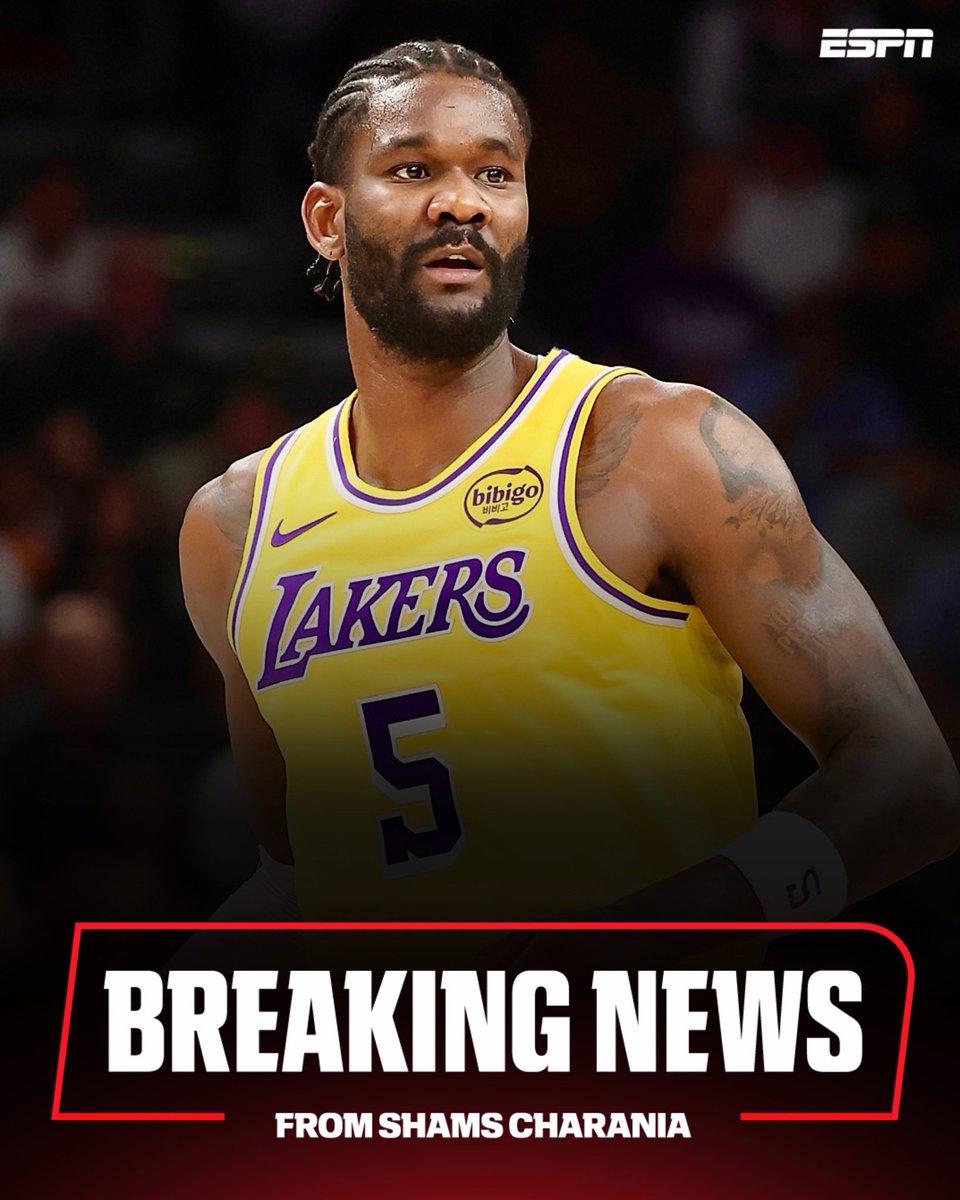
Lakers Trade Deandre Ayton to Wizards for Jaden Hardy and Future Picks in Latest Roster Shake-Up
Lakers and Wizards Agree to Multi-Asset Ayton–Hardy Deal
The Los Angeles Lakers are trading center Deandre Ayton to the Washington Wizards in exchange for guard Jaden Hardy and two Washington second-round draft picks in 2031 and 2032, according to multiple reports on Friday. The agreement continues an active offseason for the Lakers, who have already reshaped their frontcourt and draft capital in the wake of recent major moves. For Washington, the trade adds another established big man to a young core built around recent high draft picks and emerging talent.
Key Details of the Trade Package
Under the reported terms, the Wizards will send Jaden Hardy and their second-round selections in 2031 and 2032 to Los Angeles in exchange for Ayton. Ayton, who recently picked up a player option worth approximately $8.1 million, moves into a new role in Washington while giving the Lakers additional financial and roster flexibility. Hardy, 23, arrives in Los Angeles with two years and roughly $12 million remaining on his contract, including a team option for the 2027–28 season.
League cap experts have noted that Washington can absorb Ayton into an existing $13.4 million trade exception created in a prior deal involving Kelly Olynyk, an exception that is set to expire in early July. This mechanism allows the Wizards to add Ayton without sending matching salary, easing the financial logistics of the trade and preserving flexibility for future moves.
Deandre Ayton’s Journey and On-Court Profile
Ayton, a former No. 1 overall pick, has already experienced a winding NBA journey that has taken him from a franchise cornerstone to a movable veteran asset. After early seasons defined by his interior scoring, rebounding, and rim protection, his role evolved as teams around the league prioritized spacing and switchable defense. His move to the Lakers was framed as a chance to solidify their center position, but the team’s rapidly shifting roster vision has now led to a quick pivot.
In Washington, the Wizards reportedly view Ayton as a low-risk option who can either anchor second-unit lineups or start alongside highly touted young big man Alex Sarr, the No. 2 pick in the 2024 draft. The presence of Anthony Davis in Washington’s frontcourt gives the team three high-profile bigs with different skill sets, creating a rotation that can be tailored to matchups and developmental priorities.
Jaden Hardy’s Upside and Fit with the Lakers
Hardy’s arrival in Los Angeles provides the Lakers with a young scoring guard who has already shown flashes of efficiency and shot-making at the NBA level. After joining Washington last season, Hardy averaged 12.6 points on 44.3 percent shooting, including 42 percent from three-point range, in 23 games. Those numbers underscore his potential as a floor-spacer and secondary playmaker in a guard-heavy league that increasingly values off-the-dribble shooting.
Originally drafted in the second round in 2022 after a season with the G League Ignite, Hardy’s path has mirrored that of several modern guards who develop through multiple stops before finding a defined role. For the Lakers, he brings depth behind their primary creators and the possibility of evolving into a long-term rotational piece if his shooting consistency holds. His team option gives Los Angeles both cost control and flexibility, an important factor for a franchise operating under the constraints of the current collective bargaining agreement.
Lakers’ Roster Strategy and Draft Capital Rebuild
This trade arrives shortly after the Lakers sent significant draft assets to acquire center Walker Kessler, a move that left their future pick cupboard notably thinned. The two Wizards second-round picks in 2031 and 2032 help replenish some of that lost capital, giving the team additional assets that can be used either to draft young talent or facilitate further trades. Second-round selections have become increasingly valuable in an era of deep drafts and cost-conscious roster construction, particularly for teams seeking productive contributors on manageable contracts.
Los Angeles now has a slightly more diversified asset pool, including those new second-rounders and at least one future first-round pick swap, after previous deals had strained their long-term flexibility. The decision to move Ayton, who had a substantial salary commitment, reflects a broader trend of the Lakers targeting players and picks that align with both competitive goals and the realities of a tightening tax structure.
Wizards’ Frontcourt Vision and Internal Economics
From Washington’s perspective, adding Ayton deepens a frontcourt that already features Alex Sarr and Anthony Davis, giving the team a mix of youth, experience, and size. Ayton’s contract folds into their cap structure via the Olynyk trade exception, allowing the Wizards to retain flexibility while evaluating whether he can serve as a long-term complement to Sarr. The team’s ability to take on Ayton without sending a comparable salary suggests confidence in their financial position and willingness to invest in frontcourt depth.
Economically, the deal shifts Washington’s resources from future second-round picks and a scoring guard toward a proven big man, a trade-off that may appeal in a league where dependable size can stabilize lineups in both regular season and playoff environments. If Ayton performs well, he could either become a core piece or a mid-term trade asset in future transactions, giving the Wizards optionality in their rebuilding process.
Historical Context: Big Men on the Move
The Ayton–Hardy trade fits into a broader historical pattern of centers being frequently moved as teams adjust to evolving offensive styles and cap dynamics. Over the past decade, the NBA has seen numerous notable big men—ranging from rim-running centers to post-centric scorers—change teams as organizations weigh the value of traditional size against spacing and versatility. Ayton himself has already experienced multiple trades, illustrating how franchise expectations and timelines can shift around a player once projected as a long-term cornerstone.
Second-round picks have also gained importance over time as franchises increasingly find impactful contributors outside the first round, making the Lakers’ acquisition of future seconds a meaningful part of the deal. Historically, contending teams have often used second-rounders as key sweeteners in trade packages, and Los Angeles now has more such ammunition after spending heavily in prior moves.
Regional and Conference Landscape Comparisons
Within the Western Conference, the Lakers’ choice to move Ayton and lean more heavily on other frontcourt options reflects the region’s competitive balance, where versatility and depth are at a premium. Rival teams have increasingly constructed lineups that can play multiple styles, from small-ball units to double-big formations, pushing Los Angeles to emphasize flexibility over a single, traditional center solution. Bringing in Hardy adds another perimeter option to a guard rotation designed to keep pace with high-powered offenses across the West.
In the Eastern Conference, Washington’s decision to add another big body aligns with a landscape where several teams rely on dominant interior players and physical defense. By pairing Ayton with Sarr and Davis, the Wizards are signaling a willingness to meet that physicality with size and rebounding, even as they continue to develop their offensive identity. The move gives them a frontcourt structure that can be compared to other East franchises that have built around multiple bigs, aiming to control the glass and protect the rim while young guards and wings grow into larger roles.
Economic Impact on Team-Building and Cap Strategy
On a league-wide economic level, the trade highlights how franchises now balance mid-tier salaries, draft capital, and exceptions under a more restrictive cap and tax environment. By moving Ayton’s salary and acquiring Hardy’s more modest deal plus future second-round picks, the Lakers gain greater control over their payroll trajectory and the flexibility to navigate punitive tax thresholds. This recalibration can influence decisions on future free-agent signings and extensions, especially as Los Angeles seeks to remain competitive while managing long-term financial commitments.
For Washington, absorbing Ayton via a trade exception demonstrates strategic use of financial tools to add proven talent without sacrificing core players or major cap space. Such moves can help a rebuilding team accelerate progress while maintaining the ability to pivot if its roster blueprint changes in the coming years. The shift from picks and a developing guard to an established big man encapsulates the constant economic trade-offs teams make between present reliability and future potential.
Early Reactions and Future Outlook
Reaction around the league has focused on the distinct priorities reflected in the deal: the Lakers emphasizing asset recovery and perimeter scoring, and the Wizards doubling down on frontcourt size. Analysts have noted that Hardy’s combination of age, shooting, and contract structure fits well with Los Angeles’ need for supporting offense, while Ayton’s arrival gives Washington another experienced option to stabilize lineups around young talent.
The long-term impact of the trade will hinge on several variables: Ayton’s performance and role in Washington, Hardy’s development in Los Angeles, and how the Lakers deploy their newly acquired second-round picks in the years ahead. With both franchises at critical junctures—one reshaping a roster after major moves, the other assembling a new identity around recent additions—this deal stands as a significant chapter in their ongoing efforts to compete in a rapidly evolving NBA landscape.