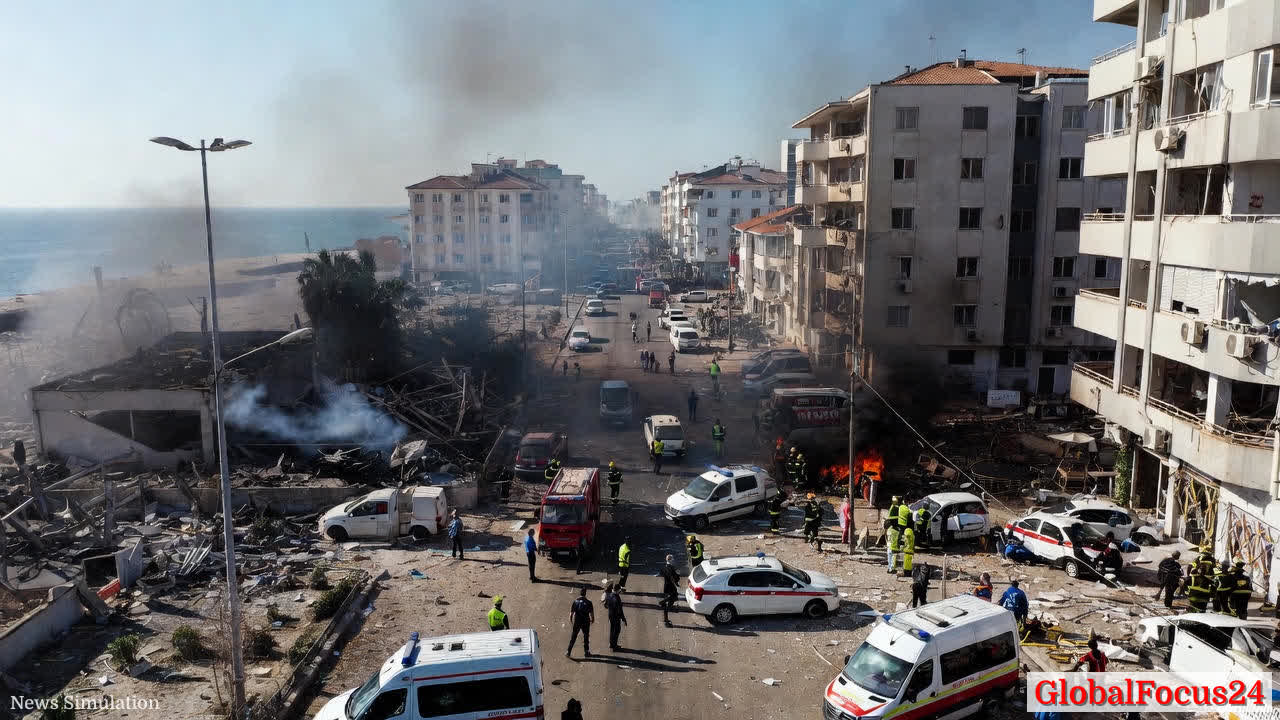
Rising Tensions Escalate as Saudi Coalition Targets Mukalla in Yemen Over Arms Shipment Claims
In a development that underscores the fragility of a Yemen conflict already marked by complex regional rivalries, Saudi-led coalition forces have launched a bombing campaign aimed at the port city of Mukalla. The strikes, described by officials as a response to the alleged arrival of a weapons shipment destined for a separatist faction, signal a notable intensification in the broader struggle between Saudi Arabia and the United Arab Emirates over who wields influence in Yemen’s volatile landscape. The incident, which unfolds against a backdrop of shifting alliances and persistent humanitarian concerns, is likely to reverberate across regional security calculations, maritime policy, and international diplomacy for months to come.
Historical context and the arc of the Yemen conflict
The conflict in Yemen has evolved through multiple phases since 2014, when Houthi forces seized the capital, Sanaa, and challenged the internationally recognized government. A multinational coalition, led by Saudi Arabia and including the United Arab Emirates, intervened the following year with airstrikes and a campaign designed to restore the government. The early period saw rapid battlefield shifts, with the Houthis asserting control over northern Yemen and the coalition pursuing a broad strategy that combined airpower, land operations, and a blockade that affected civilians and commercial supply lines.
Over time, the conflict broadened beyond Yemen’s borders, drawing in regional rivalries and proxy dynamics that sharpened sectarian and political fault lines. The UAE’s involvement, originally framed around counterterrorism and regional influence, gradually shifted toward broader objectives, including support for local factions and governance initiatives in southern Yemen. Tensions between Riyadh and Abu Dhabi have occasionally surfaced in operational disagreements and policy pivots, reflecting divergent priorities even as both parties remained formally aligned against the Houthis.
Mukalla’s strategic significance
Mukalla sits along Yemen’s southern coast, overlooking a critical portion of the Bab al-Mandab strait and the Gulf of Aden. Its port serves as a logistical hub for cargo, humanitarian aid, and commercial traffic transiting the Red Sea corridor. Control over Mukalla has long been contested because of its proximity to maritime routes that are vital for global energy shipments and regional trade. In recent years, the city has also been a focal point for security operations against various militant groups that exploit the chaos of the civil war to establish footholds or expand influence.
The economic lifeblood of Mukalla is tethered to its port, where cargo throughput, fuel distribution, and local commerce create a network of jobs and ancillary industries. Any disruption to port access or security conditions around the city can ripple outward to regional supply chains, affect shipping schedules, and influence the balance of power among local authorities, transitional governance structures, and international aid organizations operating in southern Yemen. The current strikes therefore carry both immediate humanitarian implications and longer-term economic resonance for the region.
Regional comparisons and broader implications
The Yemen crisis has generated a spectrum of regional responses as neighboring states recalibrate their security postures. In the Gulf, Bahrain, Kuwait, Oman, and Qatar have maintained varying degrees of engagement with Yemen-related diplomacy, humanitarian efforts, and stabilization initiatives, while Saudi Arabia and the UAE have concentrated on security operations designed to curb perceived threats and preserve supply routes. The Mukalla strikes should be examined in the context of these broader dynamics, including maritime security in the Red Sea and the Gulf of Aden, where commercial traffic and critical aid deliveries depend on stable lanes of passage.
Regional actors outside the peninsula have also weighed in, with major powers emphasizing the importance of de-escalation and protection of civilian lives. International organizations have repeatedly called for humanitarian access, cease-fire agreements, and negotiated settlements that address the root causes of the conflict without expanding sectarian divides. While the exact provenance of the weapon shipment cited by coalition officials remains contested, the incident highlights how external influence, arms trafficking networks, and regional rivalries continue to shape frontline realities in Yemen.
Economic impact and supply chain considerations
From an economic standpoint, the risk premium associated with maritime disruptions in the Red Sea region has become a salient concern for shipping companies, insurers, and commodity traders. The sudden targeting of a port city like Mukalla raises questions about port security protocols, risk mitigation for fuel and cargo transfers, and the readiness of local authorities to maintain orderly operations in the face of conflict-driven disruptions. Even short-term interruptions can have cascading effects: increased insurance costs, rerouting of vessels, and potential delays in critical humanitarian shipments, including food, medicine, and essential supplies for Yemen’s vulnerable population.
The broader macroeconomic implications extend to regional markets dependent on stable freight routes. Countries that rely on energy exports or imports through the Bab al-Mandab corridor may experience fluctuations in transit costs and time-to-market for goods. In the longer run, sustained instability along Yemen’s southern coastline could incentive diversification of supply routes, greater investment in regional security infrastructure, and renewed emphasis on maritime domain awareness initiatives across the Indian Ocean and the western Indian Ocean littoral.
Humanitarian and civilian considerations
The humanitarian dimension of the Yemen conflict remains stark. Civilians have borne a heavy burden from airstrikes, ground fighting, and the blockade that has restricted access to essential goods and services. International aid organizations have faced ongoing challenges in delivering relief, with security concerns, bureaucratic hurdles, and damaged infrastructure complicating operations. In this context, any escalation near Mukalla has the potential to disrupt aid corridors, hinder medical logistics, and intensify the plight of communities already grappling with food insecurity, displacement, and limited access to basic services.
Public reaction in Yemen and among neighboring communities reflects a mix of concern, resilience, and a desire for durable solutions. Local traders, port workers, and residents often demonstrate a practical focus on safety and livelihoods, even as families cope with the shocks of renewed violence. Across the region, observers emphasize the urgency of protecting civilian lives, upholding international humanitarian law, and fostering pathways to reconciliation that address the structural drivers of conflict.
Security and strategic assessments
Analysts are closely watching how this escalation influences security arrangements along Yemen’s southern coast and in the broader Red Sea theater. The incident may prompt adjustments in maritime patrols, intelligence sharing, and joint training exercises among coalition partners and regional allies. It could also affect the posture of local governance authorities in Mukalla and surrounding districts, including contingency planning for evacuation routes, shelter capacity, and civilian liaison mechanisms with humanitarian agencies.
The potential for spillover into other arenas—such as border security, counterterrorism operations, and inter-state diplomacy—means that stakeholders will analyze this development through multiple lenses. The objective for many observers is to prevent a broader regional confrontation while maintaining pressure on factions perceived as destabilizing actors. The balance between military actions and diplomatic engagement will likely shape policy conversations in capitals and international forums in the weeks ahead.
Environmental and logistical factors
Environmental considerations, including the coastal ecosystem and weather patterns in the Gulf of Aden, can influence both the immediate tactical environment and longer-term recovery efforts. Wind, sea state, and sea conditions affect search and rescue operations, cargo handling, and the movement of wounded personnel. Logistical planning for relief deliveries, reconstruction support, and economic recovery must account for these natural variables while ensuring that humanitarian access remains unobstructed.
From a logistical standpoint, the region’s infrastructure—ports, roads, and power networks—faces varying degrees of fragility. Rebuilding or reinforcing critical facilities post-conflict typically requires coordinated international assistance, transparent governance, and sustained investment. The Mukalla incident underscores how logistics performance and security conditions intersect to dictate the pace of economic and humanitarian relief in a fragile setting.
Policy implications for regional stability
Policymakers in the Gulf and beyond will likely consider several policy avenues in response to the Mukalla strikes. First, renewed emphasis on maritime security frameworks in the Red Sea and Gulf of Aden could lead to expanded joint patrols, enhanced threat assessment capabilities, and improved information-sharing mechanisms. Second, diplomatic engagement with regional actors—aimed at de-escalation, humanitarian access, and a negotiated path to stability—may gain urgency as stakeholders seek to prevent a cycle of retaliatory actions. Third, sanctions or regulatory measures could be contemplated to curb illicit arms flows and to deter actors who exploit the conflict to advance narrow strategic objectives at the expense of civilians.
Economists and strategic thinkers may also argue for resilience-building initiatives in port cities across Yemen and neighboring states. Investments in port security, redundancy in critical supply chains, and diversification of logistics corridors can help communities weather future shocks. While such measures require funding and political will, they are increasingly viewed as essential components of a comprehensive approach to regional stability that balances security with humanitarian needs.
Public communication and information environments
In conflict zones, access to reliable information can be as important as physical security. Local authorities, international organizations, and independent media outlets play critical roles in conveying accurate updates about strikes, casualties, and humanitarian conditions. Authorities often face the challenge of countering misinformation while providing timely, factual data to residents and the international community. The situation in Mukalla highlights the enduring importance of transparent communication channels, verified reporting, and coordinated messaging among aid organizations, governance bodies, and security forces to prevent panic and maintain public trust.
Conclusion: ongoing uncertainty and the path forward
The bombing campaign targeting Mukalla marks a consequential moment in Yemen’s long-running crisis. By tying the strikes to alleged arms movements from the United Arab Emirates, officials are illustrating how regional rivalries continue to shape battlefield dynamics, civilian safety, and economic activity along Yemen’s southern coast. While the exact strategic calculations behind the decision may be debated, the immediate effect is a heightened sense of urgency for humanitarian access, regional diplomacy, and resilient port operations that can withstand the pressures of conflict.
As the region processes the implications, observers will look for signs of de-escalation, renewed negotiations, and practical steps to protect civilians while addressing the security concerns that fuel such confrontations. The coming weeks promise to test the resolve of regional partners, international organizations, and local communities as they navigate a fraught landscape where every strike reverberates through markets, ports, and livelihoods along one of the world’s most important maritime corridors.