U.S. Restaurants Face Worsening Dishwasher Shortage as Labor Pressures Mount
A Hidden Crisis in the Kitchen
Across the United States, restaurants are grappling with one of the toughest labor challenges in years: finding and keeping dishwashers. Once considered a reliable entry-level job for immigrants and young workers, dishwashing has become one of the hardest roles to fill in an industry already stretched by pandemic recovery, tighter immigration rules, and shifting workforce expectations.
More than 12 million people currently work in restaurants and bars nationwide, yet operators report tens of thousands of vacancies for dishwashers each year. The shortage is not just an inconvenience—it strikes at the operational heart of an industry famed for tight margins, fast turnover, and exacting cleanliness standards. Without dishwashers, kitchen flow breaks down, service slows, and even top-tier dining rooms can grind to a halt.
Inside a Typical Morning in the Kitchen
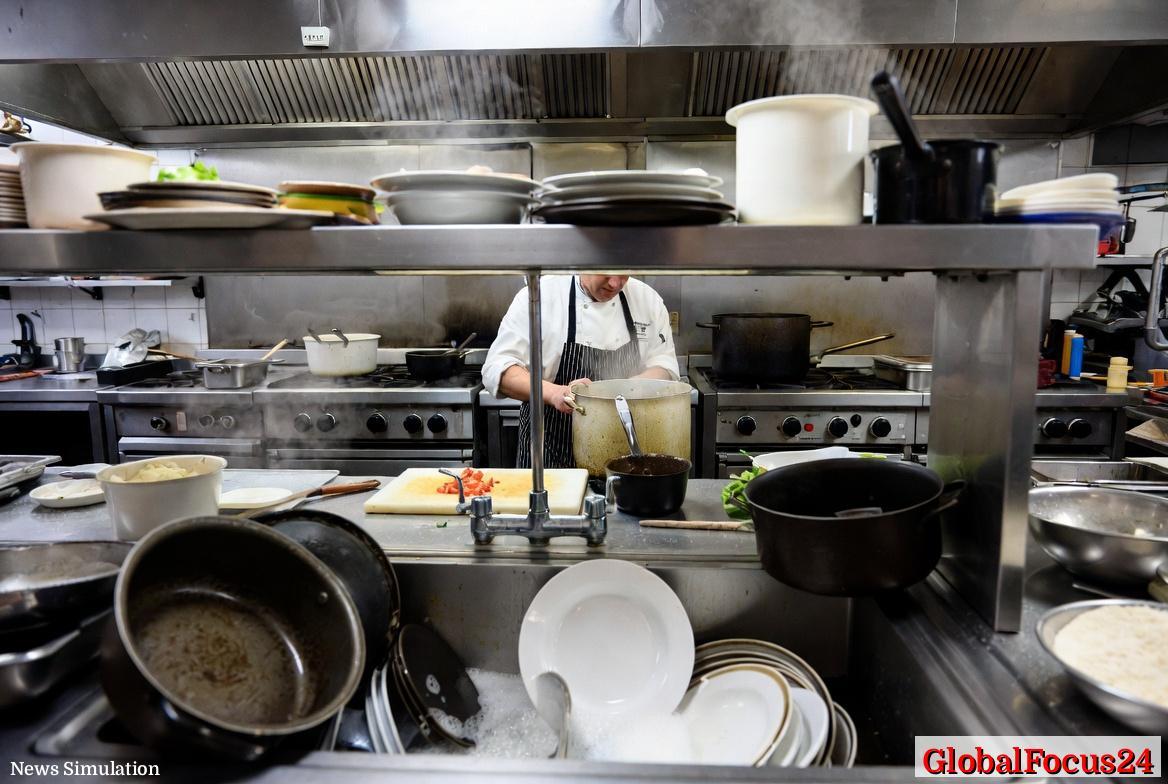
At a First Watch restaurant west of Chicago, the breakfast rush begins before dawn. Workers like Beto “Rodrigo” Mejía Fermine and Luciano Vera step into the humid, clanking utility room behind the grill line and confront the morning’s debris—stacked trays, sticky plates, and pans caked with scrambled egg residue and avocado mash. For hours, they blast and scrub, feeding a conveyor of industrial dishwashers that never stops humming until the final guest leaves.
Their duties extend far beyond washing—mopping floors, hauling trash, and wiping down equipment long after the kitchen closes. It is grueling, essential work that has come to embody the restaurant labor problem in miniature: demanding, physical, and often underappreciated.
“The dishwasher role is critical,” said Chris Tomasso, chief executive of First Watch Restaurant Group, which operates over 600 locations across the country. “It’s not glamorous, but without it, nothing else functions.”
Rick Cardenas, the CEO of Darden Restaurants—the parent of Olive Garden—echoed this concern, identifying dishwashing as his “primary hiring worry.”
The Structural Strain on Restaurant Labor
The dishwasher shortage highlights deeper structural strains within the service economy. The job’s average annual pay, about $32,500, ranks among the lowest in hospitality. Turnover is notoriously high; every time a dishwasher leaves, operators spend an average of $2,700 to hire and train a replacement.
For many, the hardships outweigh the paycheck. In Tucson, Arizona, one longtime dishwasher described chaotic conditions—dropped plates, screaming managers, endless hours in heat and steam. “It’s not a profession I’d recommend to anyone who has another choice,” he admitted. That attitude, mirrored in countless kitchens, fuels the steady churn.
Foreign-born employees make up roughly one-fifth of the national restaurant workforce. Enhanced immigration enforcement policies have added new friction. Owners now face both legal scrutiny and practical labor shortages, with fewer undocumented workers available to fill back-of-house positions.
According to a National Restaurant Association survey, 54 percent of full-service establishments reported below-average applicant pools for dish and kitchen support jobs last year. Association leaders have described a mounting sense of “unrest” among operators struggling to balance compliance with maintaining a safe, adequately staffed workplace.
Declining Youth Participation Deepens the Gap
While immigration tightening has compounded the challenge, another quiet shift has accelerated it: fewer American teenagers and young adults are entering the hourly workforce. In the 1980s and 1990s, dishwashing was a common first job—a gateway into hospitality careers. But today’s younger generation leans toward gig work, digital opportunities, or unpaid internships aligned with college goals.
In 2000, nearly 52 percent of U.S. teens were part of the labor force during summer months; by 2024, that figure had fallen below 36 percent. This absence in entry-level positions has transformed recruitment pipelines across the service industry.
Creative Efforts to Retain and Reward Staff
Faced with persistent vacancies, some restaurant groups have begun experimenting with new incentives. Union Square Hospitality Group offers free meals and family dining discounts to dishwashers. At Chicago’s John’s Food and Wine, the owners went further—introducing a 20 percent service fee distributed directly among hourly staff. That change turned heads last year when dishwashers there earned an average of $70,000—a striking contrast to the national median.
Elsewhere, sushi chain Kura Sushi imported robotic dishwashing units from Japan to manage peak periods and reduce burnout. But most small and midsized operations lack the budget or space to automate. Instead, they lean on steady raises, flexible schedules, and clearer promotion paths.
At First Watch, dishwashers average $17.21 an hour, higher than many competitors. The company says turnover among all hourly staff is lower than the industry average, though rates remain elevated for dishwashers. Out of over 1,500 dishwashing employees, only about 5 percent have stayed more than five years.
Tomasso attributes that longevity gap to the physical intensity of the job. “We see it as both a starting point and a potential career ladder,” he said, noting that many current kitchen supervisors began scrubbing pans. “Our goal is to provide breaks, meals, and advancement opportunities so that hard work doesn’t go unnoticed.”
Historical Context: The Backbone of American Dining
Dishwashing has long served as the undercurrent of the U.S. restaurant industry. In the 20th century, the position was often the first rung for immigrants chasing stability in major cities. Greek, Italian, and later Mexican and Central American newcomers filled kitchens coast to coast, forming the backbone of hospitality’s low-wage workforce.
These workers, often unseen by diners, kept America’s culinary expansion viable. From the diner booms of the 1950s to the casual dining surge of the 1990s, dishwashers powered an industry that today generates nearly $1 trillion annually in sales.
When immigration flows shift—whether through policy changes, economic downturns, or global health crises—the ripple effects hit restaurants first. The current shortage, then, is not just a temporary hiccup but part of a recurring cycle tied to U.S. labor policy and economic opportunity.
An Uneven Recovery Across Regions
The labor gap differs dramatically by region. In high-cost coastal states such as California and New York, operators cite housing affordability as a major deterrent. Even with higher minimum wages—$16 or more an hour—workers struggle to make ends meet. As a result, urban areas compete fiercely for available kitchen staff, often poaching from smaller establishments.
In contrast, parts of the Midwest and South report marginally better retention thanks to lower living costs and tighter-knit labor markets. Yet rural restaurants face their own difficulties: fewer potential hires within commuting distance and limited access to public transportation.
Some cities have experimented with incentive programs. In Denver, workforce agencies offer hospitality training stipends to attract displaced workers. In Florida, several community colleges have added “back-of-house operations” courses aimed at younger students. Results remain tentative, but industry groups hope these interventions can widen the talent pool.
Economic Impact on the Broader Sector
The consequences extend beyond the kitchen. Staffing shortages drive higher operating costs, force menu reductions, and limit operating hours. Some independent restaurants now close two days a week purely due to lack of staff. Chain operators, though more resilient, also feel the squeeze—with rising wages, recruitment bonuses, and automation investments eating into profit margins.
Economists estimate that persistent unfilled dishwashing positions could shave several billion dollars annually from industry productivity, especially in high-volume casual dining. Reduced service capacity slows table turnover, curbing both customer satisfaction and revenue per square foot.
Consumers, too, are seeing the effect—longer wait times, more limited hours, and occasionally higher menu prices to offset labor costs. In a low-margin business, even seemingly small disruptions ripple outward quickly.
Technology and the Future of the Dish Pit
Automation looms as both promise and threat. Robotic dishwashers, conveyor sensors, and water-saving rinse systems can improve efficiency, but they often require upfront investments beyond the reach of smaller operators. Additionally, dishwashing areas are cramped, irregular, and humid—conditions that challenge even advanced robotics.
Still, technological progress continues. Startups are piloting modular systems capable of sorting and scrubbing dishes autonomously. If adopted broadly over the next decade, such systems could ease shortages and free up human labor for higher-value kitchen roles like prep cooking and expediting. But the transition will take time, infrastructure spending, and staff retraining.
The Human Side of a Low-Visibility Job
Despite its anonymity, dishwashing remains the oxygen of restaurant service. General managers know it well. “Without them, our operation would cease,” said one at First Watch’s Geneva, Illinois, location. “You can replace a server with another tomorrow—but lose your dishwasher on a Saturday morning, and you’ll feel it within minutes.”
For workers like Mejía Fermine and Vera, the pride comes less from recognition and more from rhythm—the steady hum of machinery, the teamwork under pressure, the satisfaction of keeping pace during chaos.
Their work rarely makess, but their absence increasingly does. As immigration policies tighten, wages climb, and younger generations look elsewhere, America’s restaurants struggle to solve a simple, high-stakes problem: who will wash the dishes tomorrow?
Looking Ahead
The industry’s future may depend on reimagining what dishwashing means—transforming it from a transient, low-status job into a gateway for career mobility. That could require a cultural shift in how restaurants handle wages, scheduling, and respect for back-of-house staff.
Economic cycles will ebb and flow, and so will enforcement climates, but one constant remains: the sound of running water behind every successful meal service. For now, however, that sound is growing fainter in kitchens nationwide.