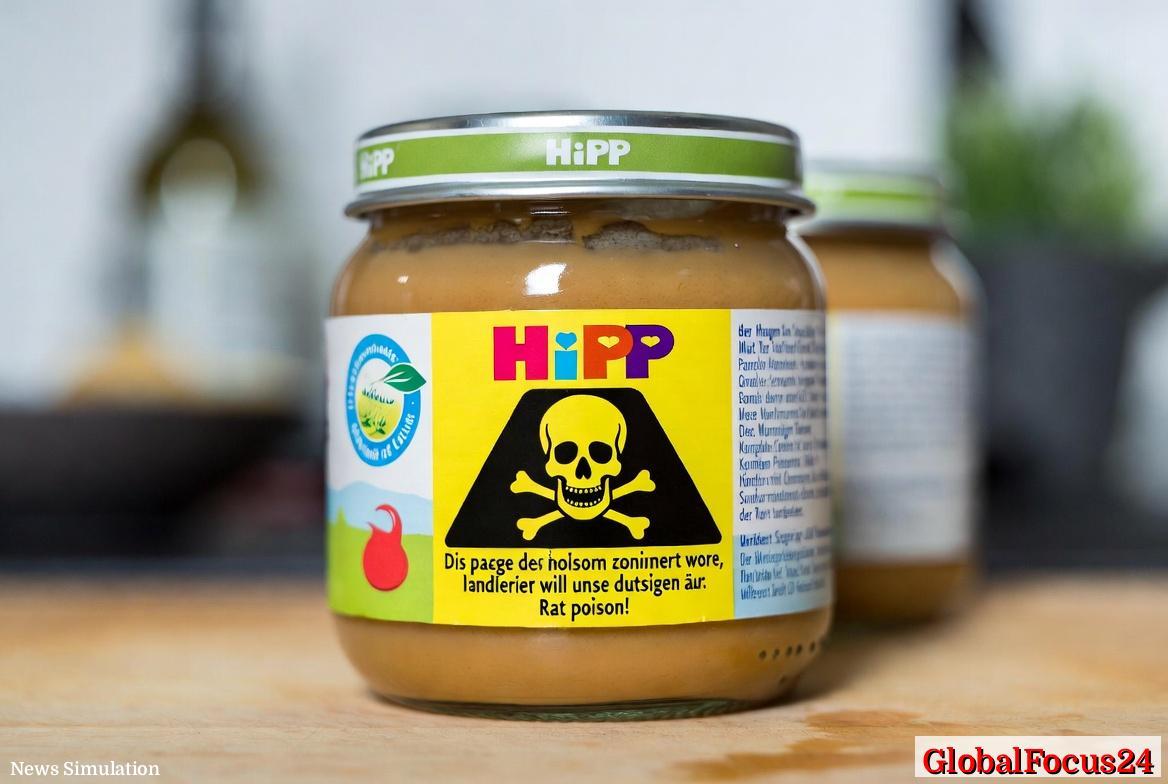
Austria Baby Food Tampering Scare Triggers Widespread Recall and Cross-Border Food Safety Alert
Police Warning After Poison Found in Baby Food Jar
Authorities in Austria have launched a major food safety investigation after rat poison was discovered in a jar of baby food, prompting urgent warnings to consumers and a sweeping product recall across multiple countries. The incident, reported in the eastern Austrian region of Burgenland, has raised serious concerns about product tampering and the integrity of retail supply chains in Central Europe.
Police confirmed that the contaminated jar contained carrot and potato purée intended for infants. The tampering was identified by a customer before the product was consumed, preventing potential harm. However, investigators believe at least one additional poisoned jar may still be in circulation, prompting heightened vigilance among consumers and retailers alike.
Officials have urged parents and caregivers to carefully inspect all baby food products for signs of tampering, including damaged lids, broken seals, unusual odors, or unauthorized markings. The case is being treated as a criminal act, with authorities working to trace the source and determine whether the contamination was isolated or part of a broader attempt to disrupt the food supply.
Nationwide Recall and Retail Response
In response to the discovery, HiPP, a major German-based manufacturer of organic baby food, issued a full recall of its jarred purées sold in Spar supermarkets throughout Austria. The company emphasized that the contamination did not originate from its production facilities and that all affected jars left the factory in sealed, safe condition.
Spar, one of Austria’s largest supermarket chains with more than 1,500 outlets nationwide, has removed all HiPP baby food jars from shelves as a precaution. The recall extends to stores operating under the Eurospar, Interspar, and Maximarkt brands. Customers have been advised to return any purchased products for a full refund and to avoid consumption under any circumstances.
The recall has also spread beyond Austria’s borders. Retailers in the Czech Republic and Slovakia reported similar cases of tampered jars, with laboratory tests confirming the presence of toxic substances consistent with rat poison. As a precautionary measure, stores in both countries have withdrawn HiPP jarred baby food from sale.
Spar has additionally removed the affected products from shelves in other European markets, reflecting the growing concern over potential cross-border contamination and the need for coordinated safety measures.
Health Risks and Medical Guidance
Health authorities have issued clear guidance regarding potential symptoms associated with ingestion of poisoned food products. The Austrian Agency for Health and Food Safety warned that exposure to rodenticides can cause serious medical complications, particularly in infants.
Parents whose children may have consumed the affected baby food are advised to seek immediate medical attention if symptoms arise. Warning signs include:
- Unusual bleeding or bruising
- Extreme weakness or lethargy
- Pale skin or signs of anemia
- Nausea or vomiting
Medical professionals emphasize that early intervention is critical in cases involving toxic substances, especially for young children whose bodies are more vulnerable to chemical exposure.
Criminal Investigation and Supply Chain Concerns
Investigators are focusing on the possibility that the tampering occurred after the products left the manufacturer’s facilities, likely within the retail distribution chain. This has raised broader concerns about supply chain security, particularly in high-volume grocery networks where products pass through multiple handling points before reaching consumers.
Food safety experts note that while industrial food production is subject to strict quality controls, the retail environment presents different challenges. Open shelving, customer access, and limited monitoring in some areas can create opportunities for malicious interference.
Authorities have not disclosed specific details about suspects or motives, but the incident has intensified calls for enhanced surveillance, tamper-evident packaging, and stricter in-store monitoring protocols.
Historical Context of Food Tampering Incidents
Although rare, food tampering cases have occurred periodically across Europe and globally, often prompting widespread public concern and regulatory changes. One of the most notable examples remains the 1980s Tylenol poisoning case in the United States, which led to the introduction of tamper-evident packaging standards now widely used across the food and pharmaceutical industries.
In Europe, isolated incidents involving contaminated food products have occasionally surfaced, typically involving deliberate acts rather than manufacturing failures. These cases tend to trigger swift recalls and reinforce the importance of traceability systems that allow authorities to track products from production to point of sale.
The current situation in Austria reflects a similar pattern: a localized act with broader implications for consumer trust and industry practices.
Economic Impact on Retailers and Manufacturers
The financial consequences of the recall are expected to be significant, particularly for retailers forced to remove entire product lines from shelves. For Spar and its affiliated brands, the temporary loss of a major baby food supplier could disrupt inventory and affect consumer traffic, especially among families with young children.
HiPP, while not responsible for the contamination, faces reputational risks that could influence consumer confidence. The company has moved quickly to distance its production processes from the incident, but brand perception often suffers in the wake of high-profile recalls, regardless of fault.
Industry analysts note that such events can lead to increased operational costs, including:
- Product recalls and logistics expenses
- Enhanced security measures in stores and warehouses
- Public communication and crisis management efforts
- Potential legal liabilities
In the broader European market, the incident may prompt retailers to review supplier relationships and invest in additional safeguards to prevent similar occurrences.
Regional Comparisons and Cross-Border Coordination
The spread of tampered products into neighboring countries highlights the interconnected nature of Europe’s food distribution networks. Austria, the Czech Republic, and Slovakia share closely linked retail systems, allowing products to move efficiently across borders—but also increasing the risk of contamination spreading quickly if not contained.
European Union food safety regulations provide a framework for cross-border coordination, enabling rapid alerts and product withdrawals when hazards are identified. The current case has activated these mechanisms, with national authorities sharing information and aligning recall strategies.
Compared to other regions, Europe’s integrated approach to food safety has proven effective in limiting the impact of such incidents. However, the situation underscores the need for continuous vigilance, particularly as supply chains grow more complex and consumer expectations for safety remain high.
Consumer Reaction and Public Awareness
The discovery of poisoned baby food has understandably caused alarm among parents and caregivers. Social media platforms have seen a surge in discussions حول product safety, with many users sharing advice on how to identify tampered goods and urging others to remain cautious.
Retailers have responded by increasing in-store announcements and providing clear guidance at points of sale. Some stores have introduced additional staff presence in baby food aisles to reassure customers and monitor product integrity.
Consumer advocacy groups have also called for greater transparency in how such incidents are handled, emphasizing the importance of timely communication and accessible information.
Broader Context of Recent Food Safety Recalls
The tampering incident comes amid a period of heightened attention to infant food safety in Europe and beyond. Earlier in the year, major manufacturers including Nestlé and Danone issued recalls of infant formula products across more than 60 countries after contamination with cereulide, a toxin that can cause severe gastrointestinal symptoms.
In the United Kingdom alone, health authorities reported that at least 36 infants were affected by the contaminated formula, though none of the cases were life-threatening. Unlike the current situation, those recalls were linked to production-related contamination rather than deliberate tampering.
Together, these events have reinforced the critical importance of rigorous safety standards at every stage of the food supply chain—from manufacturing to retail.
Ongoing Investigation and Safety Measures
As the investigation continues, Austrian police and food safety agencies are working closely with international partners to identify the source of the tampering and prevent further incidents. Surveillance footage, product tracking data, and forensic analysis of the contaminated jars are المتوقع to play key roles in the inquiry.
Consumers are advised to remain vigilant but not alarmed, as authorities emphasize that the risk appears limited to specific products within a defined distribution network. Baby food sold through other retailers and HiPP’s infant formula products have not been affected by the recall.
The incident serves as a stark reminder of the importance of food safety awareness and the need for robust systems to protect consumers—especially the most vulnerable—from harm.