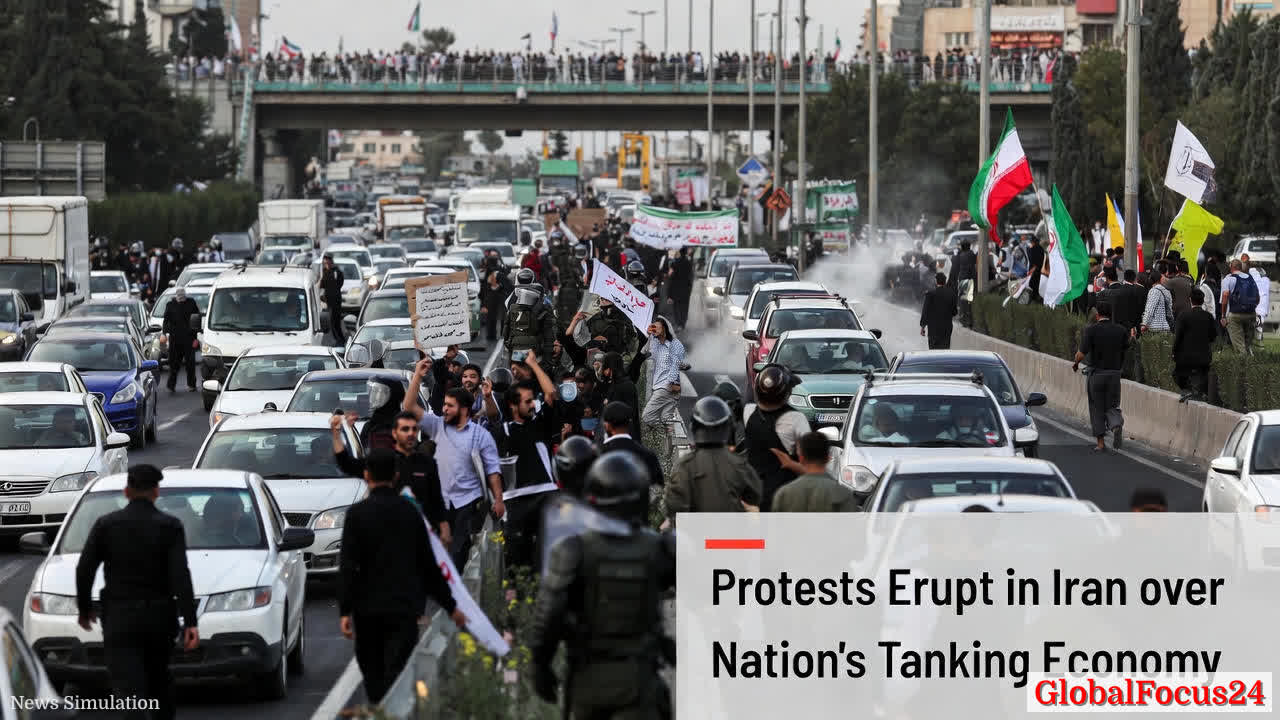
Protests Erupt Across Iran Amid Economic Crisis
In cities across Iran, thousands of demonstrators have taken to streets and major roadways, marking a pronounced spike in public unrest driven by the nation’s worsening economic conditions. The protests, which began with a mix of traders, students, and labor groups, have evolved into a broad expression of frustration with rising prices, a devalued currency, and a perceived gap between policymaker choices and everyday economic realities. As communities confront inflation that outpaces wages and a persistent sense of financial precarity, the demonstrations have drawn attention from markets, regional neighbors, and international observers keen to understand the potential ripple effects on stability and trade in the region.
Historical context helps illuminate the current moment. Iran’s economy has weathered a succession of shocks over the past decade, including sanctions regimes that have restricted access to global financial systems and technology imports, as well as fluctuations in oil revenue tied to global demand and production policies. The result has been a persistent pressure on the rial and a growing cost of living that has, at times, eroded household purchasing power. The most recent cycle of protests follows a pattern seen in earlier periods of economic stress, when price spikes, currency volatility, and perceptions of uneven economic benefits can spark rapid mobilization at scale. Analysts note that the contemporary wave of demonstrations is notable for its breadth—encompassing urban centers, university districts, and key commercial corridors—indicating a national-level demand for policy clarity and economic relief.
Economic impacts stand at the forefront of what observers describe as a cross-cutting crisis. Consumers report tightening budgets as the cost of staples—food, medicine, and essential utilities—climbs while wage growth remains stagnant. Small businesses and informal traders, who form a substantial portion of urban commerce, face higher operating costs and tighter credit conditions, compounding the sense of financial fragility. The friction between demand for relief measures and the fiscal constraints faced by the government creates a delicate balance for policymakers: delivering targeted subsidies and stable financial policy without provoking unintended consequences in inflation expectations or external market confidence. In this environment, the pace and direction of monetary policy, exchange rate management, and public investment decisions carry outsized importance for ordinary citizens and for the broader economy.
Regional comparisons reveal a nuanced landscape. In neighboring economies facing similar macro challenges, authorities have employed a mix of stabilization measures, social support programs, and structural reforms to cushion households from volatility. Some jurisdictions have pursued currency stabilization strategies paired with targeted subsidies that cushion the most vulnerable while gradually reorienting subsidy frameworks toward efficiency and sustainable public finance. The Iranian context presents a distinct set of constraints and opportunities, including its own fiscal space, energy pricing dynamics, and the role of domestic industries in employment creation. Observers watch how the government might calibrate policy signals to restore confidence, manage inflationary expectations, and protect essential goods markets, all while navigating international sanctions, remittance flows, and the resilience of supply chains within the country.
Public reaction during the demonstrations reflects a broad spectrum of sentiment. Footage and firsthand accounts depict streets filled with protesters chanting for relief and greater transparency in economic governance. The scale of participation underscores a grassroots concern that transcends a single demographic or region, spanning students, traders, and labor groups. Counter-demonstrations, with displays of national symbolism and organized show-of-support events, emphasize that the public’s outlook is not monolithic. Some segments of the population advocate for stability and continuity, while others signal a demand for policy shifts that could realign subsidy budgets, exchange-rate policy, and investment priorities. The dynamic environment makes it difficult to predict short-term outcomes, but it is clear that the public’s attention remains firmly fixed on the practical consequences of monetary and fiscal management.
Authorities have responded with a combination of rhetoric, security measures, and the stated intent to engage with concerns raised by protesters. Reports indicate that law enforcement has employed crowd-control tactics in some locations, including measures intended to disperse gatherings. In parallel, government officials have pledged to listen to grievances and to consider policy adjustments aimed at alleviating immediate pressures on households. The balance between maintaining public order and allowing peaceful assembly is a core challenge for the authorities, particularly in urban centers where demonstrations can escalate rapidly or spread to other regions. Analysts emphasize the importance of maintaining proportional and lawful responses that protect civil liberties while ensuring public safety.
From a policy perspective, several avenues commonly discussed in expert circles emerge as potential tools to address the economic strain. Short-term relief could take the form of targeted subsidies for essential goods, social safety nets for vulnerable populations, and measures to stabilize prices on staple items. Medium-term strategies often center on improving currency stability, enhancing access to affordable credit for small businesses, and incentivizing productive investment in key sectors such as manufacturing, agriculture, and services. Long-term considerations typically focus on structural reforms that increase economic resilience, reduce import dependence, and bolster export potential. In shaping any approach, policymakers must weigh the benefits of supportive measures against the risks of inflationary pressure, fiscal deficits, and external financial repercussions.
The ripple effects of the protests extend beyond domestic borders, affecting regional trade dynamics and investor sentiment. Iran’s economy sits at a crossroads where macroeconomic stability intersects with social well-being, and the international community monitors how policy choices influence energy markets, sanctions compliance, and regional security. Global observers scrutinize currency movements, import substitution efforts, and the pace of any reforms that could reopen channels for trade and investment. The potential for policy adjustments to enhance economic certainty—such as transparent subsidy reform, predictable exchange-rate regimes, and targeted social programs—offers a pathway to restoring confidence among both domestic and international stakeholders.
Civic engagement and public discourse are shaping the narrative surrounding the crisis. Community conversations, social networks, and traditional media coverage contribute to a broader sense of awareness about the structural factors behind the economic strain and the potential remedies under consideration. The public’s willingness to participate in dialogue, express grievances, and advocate for concrete policy changes can influence the tempo and direction of reform. In this context, credible communication from authorities—clarifying policy intentions, timelines, and expected impact—emerges as a critical component in managing expectations and reducing the likelihood of misinterpretation or misinformation.
Looking ahead, the trajectory of the economic crisis and the protests will likely hinge on a combination of policy clarity, social support measures, and external economic conditions. If the government can articulate a coherent, credible plan that addresses immediate needs while laying out a credible path toward long-term stabilization, the risk of prolonged unrest may be tempered. Conversely, if policy signaling remains ambiguous or if economic pressures intensify without relief, public demonstrations could persist or spread, complicating governance and market stability. The situation remains fluid, with local factors—such as regional economic variation, weather-related disruptions, and the effectiveness of subsidy delivery—playing a pivotal role in shaping outcomes in the weeks and months ahead.
In sum, the current wave of protests in Iran reflects a nation grappling with a high-stakes intersection of economic necessity, political legitimacy, and social cohesion. The demonstrations illuminate the lived experiences of citizens navigating price shocks, currency volatility, and the persistent challenge of translating macroeconomic policy into tangible improvements in daily life. Observers, policymakers, and international partners alike are watching closely to see how leadership, civil society, and market forces respond as the country seeks a path toward greater economic resilience and social stability in the face of ongoing pressures.